West
Squatter exploits California laws targeting Malibu homeowners for decades

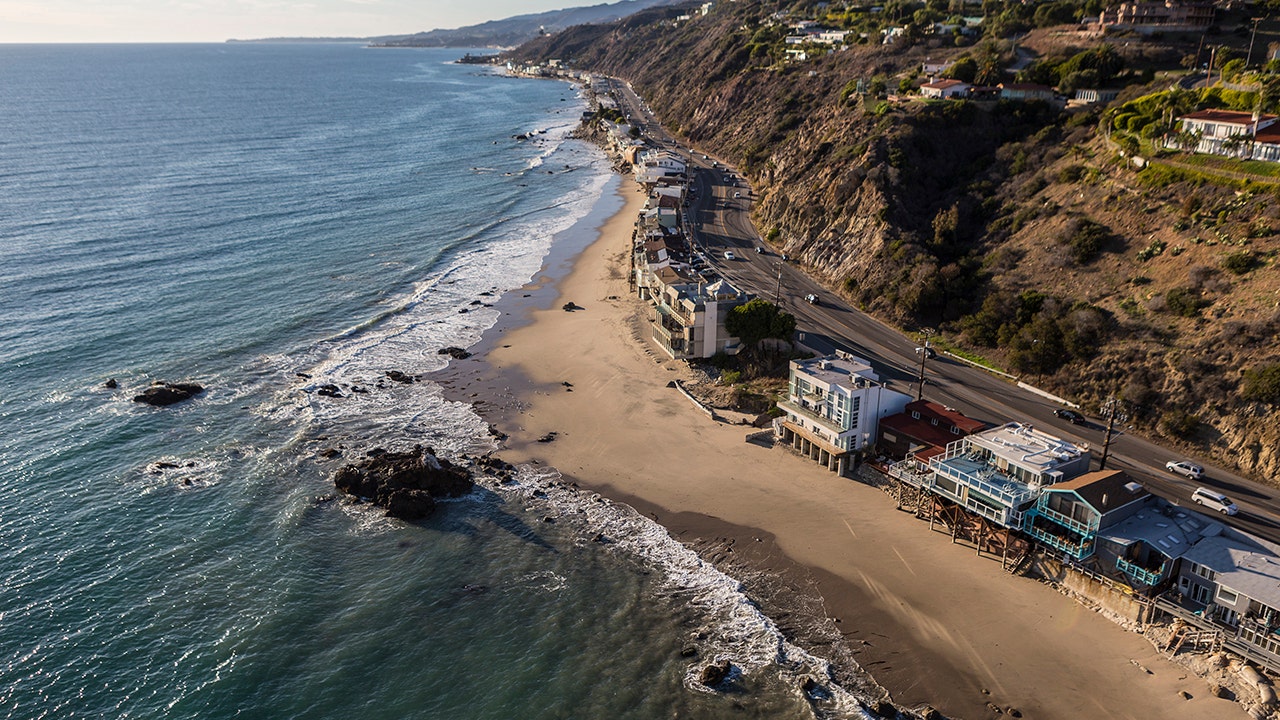
A Malibu real estate agent warned California homeowners about the need to protect themselves after a serial squatter reportedly targeted the beachfront community for years, a problem she said could become worse after the Los Angeles wildfires.
“I don’t know how she got away with it for so long in Malibu with the amount of people that she did,” Liz Benichou, a Malibu real estate agent and lifelong resident of the area, explained to Fox News Digital about the accusations against Ellie Mae McNulty. “It’s a very small, tight-knit community. You see the same people. You get this familiarity. You think that everyone’s like you because we’re all doing the same thing, so you kind of gain that trust. You live in this bubble in Malibu.”
McNulty, an actor and screenwriter, according to her biography, allegedly swindled dozens of Malibu homeowners over the last decade, charming her way into their lives before becoming a nightmare roommate, Vanity Fair first reported.
“First of all, how she’s been able to do this for so many years without getting caught, I think that just has to do with her overall charm. I think she’s a predator, and she finds people that are weak that she can prey on,” Benichou said.
ESSENTIAL PHONE NUMBERS FOR LOS ANGELES-AREA RESIDENTS AND HOW YOU CAN HELP THEM
Aerial view of homes along Pacific Coast Highway in Malibu, California.
According to Vanity Fair, McNulty met 65-year-old Alden Marin in 2021 at a beach at Point Dume, where the two shared a pleasant exchange, before Marin opened his home to her, as she claimed she was “waiting for her new place to get ready.”
But days quickly turned to weeks, then a month, then two, and Marin’s sister reported a change in McNulty happened, and she continued to make excuses about why she could not provide rent.
“People really feel as though it’s a very tight-knit, secure community. Why would anyone want to take advantage of that? But again, people do. And it’s almost easy to get away with if you’re consistently showing your face, like this predator seemed to do,” Benichou said.
“People in L.A. want to see people who seem special. And she portrayed that special thing. She’s like, ‘OK, I’m an actor. I know these people. I have these connections.’ So you kind of get blinded by that. And this is coming from someone who went to Beverly Hills High School. I grew up in L.A. so I’ve seen this throughout my entire life.”
LOS ANGELES WILDFIRES: LAWSUIT ALLEGES VIDEO SHOWS WHAT STARTED EATON FIRE
Waves crash against luxury homes on Broad Beach in Malibu, California, on Oct. 27, 2015. (Reuters/Lucy Nicholson)
Marin’s family claimed that McNulty “unleashed a campaign of psychological terror” on him that landed him in a medical facility. While he was in care, the family reported that McNulty changed all the locks on the home and uncovered that Marin was not her first victim, according to Vanity Fair’s report.
The family took the matter to court and a judge eventually ordered McNulty to leave the property, Vanity Fair reported. Fox News Digital reached out to McNulty for comment.
Benichou said that this is not the only example of someone who has pulled schemes like this in the Golden State. She said that there could be more scamming like this in response to the wildfires.
“I feel like it’s something that, unfortunately, we see a lot of, especially out here in California, because people do have really big hearts and they want to help, and they want to see the best in people,” Benichou said.
LOS ANGELES WILDFIRES: SECOND CALIFORNIA REAL ESTATE AGENT CHARGED WITH PRICE GOUGING VICTIMS
Kite surfers are pictured at Zuma Beach in Malibu, California, on May 14, 2020. (Reuters/Mario Anzuoni)
“It’s such a mental illness that they really don’t see what they are doing. It’s so pathological,” Benichou said about people running these types of squatting schemes. “They don’t see what they’ve done is wrong at all. So, for her, it seems as though she feels entitled to it. And even though she’s getting bad press, she’s still getting attention.”
California, known for being one of the most tenant-favorable states in the country, protects tenants from certain rent increases, and they may also be protected from certain types of evictions.
“If you’re in a place for more than 14 days, I think within six months, you can claim it as your own,” Benichou explained, referring to California’s tenancy laws.
State law also mandates that guests who occupy a room in a house, even if they are not paying and have no contract, can be considered “tenants at will.”
CALIFORNIA OWNER OF SQUATTER-INFESTED HOLLYWOOD HILLS MANSION APOLOGIZES, OFFERS TO REPAY TAXPAYER FUNDS
The state’s laws were created to prevent landlords from unfairly evicting renters.
A spokesperson for the California Department of Justice told Vanity Fair that not paying rent, being a “nuisance” and “engaging in criminal activity on the premises” are all considered “just cause for eviction” under state law.
As Benichou pointed out, evictions can take months, even years, and police are not allowed to forcibly remove a resident, but can “persuade” the person to leave the home.
“California is a state that’s known to be very soft on crime and squatting is a crime. It doesn’t seem to me that much is going to change, especially after the fires, after all of these people have lost their homes. You can’t just throw people out on the streets,” Benichou said.
SQUATTER LAWS IN CALIFORNIA ALLOW POTENTIAL TENANCY RIGHTS AFTER 30 DAYS IN A PROPERTY
Benichou added that since California is a sanctuary state, she believes it’s going to take a lot of work to get the tenancy laws to ever change.
“It’ll take a lot of work to get these laws to change, to be more in the favor of the homeowner. This is just something I see time and time again. So unless homeowners really band together and try to actually make these changes happen, it’s going to be more in the favor in California of the tenant because it is a sanctuary state,” Benichou said.
“And that doesn’t just stop at immigration or anything. It kind of continues on into housing. And it’s why we have had a housing crisis, and it’s been made even worse now. So it’s just going to get a bit more difficult after the fires, unfortunately.”
‘SQUATTER HUNTER’ WARNS WORST INTRUDERS IN AMERICA ARE THOSE WHO HAVE ‘NOTHING TO LOSE’
A view of debris of houses at Malibu Beach during the Palisades Fire in Los Angeles on Jan. 12. (Tayfun Coskun/Anadolu via Getty Images)
The wildfires weren’t the first crisis to expose the housing crisis in California, as Benichou said she really saw corruption and schemes come to light during the COVID-19 pandemic.
“I think a lot of people took advantage during COVID of being able to stay in their places because of that moratorium. And I think now a lot of people are going to use this (the fires) as an excuse,” she explained.
“But on the flip side of that, there are also tenants that I represented that have landlords trying to get more money out of them than what they were previously paying before the fires. So there are two sides to this coin right now after the fire. And now, there are new laws that have been put into place where you can’t just evict someone. But I do see landlords who are now trying to kind of get the tenants to leave on their own volition,” Benichou said.
Benichou was referring to emergency orders by California Gov. Gavin Newsom put into place in response to the wildfires that will prevent price gouging and prohibit such price hikes of more than 10% in Los Angeles County through March 8. The restrictions apply to existing tenants and new leases during the emergency period, according to the order.
This beachfront home was destroyed by the Palisades Fire. (BACKGRID)
“In the face of natural disaster, we should be coming together to help our neighbors, not attempting to profit off of their pain,” California Attorney General Rob Bonta said in a previous press release.
Cal Fire reported that more than 12,000 homes, businesses and schools have been lost to the fires and more than 100,000 people have had to leave their homes.
Bonta’s office said in order to protect Californians affected by the Southern California wildfires, the Department of Justice is investigating and prosecuting price gouging and has sent more than 650 warning letters, with more coming, to hotels and landlords who have been accused of price gouging.
“There are so many sides to this,” Benichou said. “And it’s hard because there are great tenants and there are great housing providers and then there are those who take advantage of every single situation. And unfortunately, because of the fact that we live in California, and certain cities within Los Angeles, like Santa Monica, for example, have rent control, so it’s harder to get a tenant out in Santa Monica than it is in, say, Burbank, which doesn’t have rent control.
“So there’s so much that goes into this whole tenant housing provider. And unless there are laws that change that are changed throughout California, you still have to deal with all the city laws.”
Stepheny Price is a writer for Fox News Digital and FOX Business. Story tips and ideas can be sent to stepheny.price@fox.com
Read the full article from Here


SALT LAKE CITY (KUTV) — A part-time wildland firefighter is asking Utah leaders for more job protections after he said he was told he would lose his full-time job for accepting a call to respond to the Iron and Cherry fires.
Israel Justice has worked as a part-time wildland firefighter for 22 years. For the past seven years, he has also worked full time for an Ogden-based mechanical company.
Justice said his employer had previously accommodated the emergency nature of wildfire deployments, but that recently changed.
“This job requires, you know, last-minute, kind-of show-up-and-go,” Justice said. “They call you, and you have to leave immediately and respond to these incidents.”
MORE | Wildfire
Justice is currently assigned to the fire line. He said he does not know whether he will have a job to return to when his assignment ends.
“They were recently bought out by a larger corporation, and they’re not willing to work under the same terms we had before, where I would be free to leave and come back,” Justice said.
2News reached out to the company to ask about its unpaid leave policy, what has changed and whether Justice will have a job to return to. The company did not respond.
Justice said the uncertainty has forced him to choose between job security and answering a critical call for help.
“I don’t believe it’s asking much that these companies make a small sacrifice so we can come out here and serve,” he said.
Justice said he wants wildland firefighters to receive employment protections similar to those provided to National Guard members and certain volunteers.
“We’re out here doing the same job, putting our lives on the line to help others,” Justice said. “We’re out here serving and doing our part for the country, and all I ask is that we get a little protection so that when we get back home, we know we’ll still have a job and can continue to care for our families.”
Justice said the pressure of fighting a wildfire while not knowing whether he will be able to support his family when he returns makes an already dangerous job even more difficult.
He has written to Gov. Spencer Cox and Rep. Blake Moore asking for stronger employment protections for wildland firefighters and informing them of his situation. He said he has not heard back.
Rep. Moore provided the following statement:
“Our office hasn’t heard from this constituent about his situation, but we would encourage employers where they can to allow their employees to go fight the fires. I’m grateful to the many firefighters and first responders working to keep our communities safe, and I’m praying for their safety during this time.”
____

Bagel shop manager Fernando Mejia was arrested by federal agents just over a year ago in the Port Washington store’s parking lot. Since then, including Monday evening, members of the Port Washington community have kept a weekly vigil to honor Mejia, who they consider one of their own, and bring attention to how his abrupt arrest, and ultimate deportation, left a void in his family, at his workplace and among anyone in town who knew him.
For 52 consecutive Mondays, they have flocked to the Main Street side of the Port Washington Long Island Rail Road station as a tribute to Mejia and their other immigrant neighbors who have been arrested by U.S. Immigration and Customs Enforcement agents and never returned home. The weekly 7 p.m. effort, dubbed the “Port Shines a Light in a Sea of Darkness” vigil by organizers, began a few weeks after Mejia’s June 12 arrest and has continued, even after he agreed to self deport and return to family in his native El Salvador.
Vigil co-organizer Jeff Seigel, 68, told the crowd of about 75 people — many toting handwritten protest signs — that Mejia was “doing well, although well is a relative term.”
Mejia is unable come back to Port Washington to see his teenage daughter, who stood in the crowd Monday evening and who Seigel said flies to El Salvador for visits.
Fernando Mejia was arrested by federal agents on June 12, 2025 outside the Port Washington bagel shop he managed. Credit: Courtesy: Lauren Wax
“He came here when he was about 20 years old, and here in the United States is where he became a man,” Seigel, 68, said. “He worked very hard, always. And it is here in the United States where he became a father. … After five months in detention, he could no longer wait to see if the immigration court would rule in his favor.”
Mejia, the former manager of Schmear Bagel & Cafe on Main Street, one block west of where each vigil is held, was one of about 3,000 Long Islanders arrested by federal immigration agents through March 10 as part of President Donald Trump’s ramped-up deportation push since his return to power, Newsday previously reported.
Mejia had just started his car in the bagel shop’s parking lot about 6:30 a.m. on June 12 to make a delivery when federal agents converged and placed him under arrest. Over the months that followed, Mejia bounced from facility-to-facility — first in Manhattan, then in Newark, Louisiana and Miami. He does not have a criminal record, his attorney, Bryan Richard Pu-Folkes, previously told Newsday. Pu-Folkes said at the time Mejia was likely detained due to a January 2006 deportation order from the Executive Office for Immigration Review for unlawful presence in the country.
Pu-Folkes did not immediately return a phone message Monday seeking comment. Mejia could not be immediately reached for comment.
The weekly efforts help community organizers raise awareness and funds for legal fees and even food for immigrants in the community. Another goal, said Stan Lacy, also a vigil organizer, is distributing whistles throughout the community. As Lacy and other members of Port Washington’s Rapid Response Network drive around Port Washington and encounter ICE agents, they blow whistles to alert immigrants of their presence.
After a trio of arrests “a little over a month ago,” ICE’s presence has been “relatively quiet,” he said.
Fellow organizer Stacey Mellus told Newsday the weekly vigils sometimes draw immigrants thankful for the community support, but not so much “when more ICE activity is in the area, when the climate gets a little more hot.”
“I witnessed one of those abductions here, you’re never going to get over something like that,” Mellus, 50, of Port Washington, said. “I’m never going to get over seeing people separated from their families, people yelling ‘don’t take my husband.’ “
Wyoming
At 6,000-year-old crossing, Gov. Gordon OKs Wyoming’s first-ever designated pronghorn migration route

Some Green River Basin pronghorn migrate more than 200 miles. Now, Wyoming has designated the landscapes they move through in an effort to protect the route.
by Mike Koshmrl, WyoFile
SUBLETTE COUNTY — Gov. Mark Gordon heralded Wyoming’s first-ever designation to protect a pronghorn migration corridor — a more than 2 million-acre web of habitat — at Trapper’s Point, which he called a “wonderful passageway.”
“How incredibly valuable it is that you are standing here today,” Gordon told the crowd, “to witness this remarkable moment.”
Gordon commemorated the moment with his feet planted on the narrow bulge of high country that splits the Green and New Fork rivers. Thousands of years ago, the site was a well-used hunting ground for Native Americans — it’s the earliest known killing and processing site for pronghorn in North America. Now it boasts a wildlife overpass.
No pronghorn were to be seen during the especially windy Friday afternoon gathering, which attracted 75 attendees from nearby Pinedale and other western Wyoming communities.
Now Trapper’s Point is officially classified as a “bottleneck” for the Sublette Pronghorn Herd — one of 13 such bottlenecks. That classification is supposed to prevent any surface-disturbing activity, with the intent that pronghorn can keep passing through Trapper’s Point for generations to come.

Protecting the ability of the fleet-footed, tawny-and-white ungulates to migrate is a “key factor” in sustaining their population, Wyoming Game and Fish Director Angi Bruce said.
“This becomes even more important in severe winters or extreme droughts,” Bruce said. “Pronghorn are long overdue for recognition.”
Pronghorn in Sublette, Teton, Sweetwater and Lincoln counties travel a long road — some migrate more than 200 miles to escape harsh winters, trekking south into the lower Green River Basin, a semi-arid sweep of sagebrush steppe between Pinedale and Rock Springs. Then in the spring, they retrace those paths, returning to summer ranges, lush with verdant vegetation, even going as far as Grand Teton National Park.
There was also a long road of bureaucracy to get to this point.
Nearly three decades of effort preceded the formal designation of the migration routes used by the Sublette Pronghorn Herd, which is the farthest-traveling and among the largest pronghorn herds in the West.
Jackson Hole biologists long knew that the valley’s pronghorn left in the winter. But details were hazy on where they went and how they got there until around the turn of the century. Using data from tracking collars, biologists like Joel Berger, Steve Cain, Hall Sawyer and Doug Brimeyer helped delineate the route.
 Wyoming ecologist Hall Sawyer fits a tracking collar onto a migratory pronghorn near the Tetons in 1998. Twenty-seven years later, state wildlife managers are pressing to designate the pronghorn herd’s migration path. Photo: Mark Gocke // Wyoming Game and Fish Department
In 2008, a Bridger-Teton National Forest plan amendment established a portion of the path as the nation’s first designated wildlife migration corridor.
Popularized by its branding as the “Path of the Pronghorn,” the route has received press in national publications like High Country News and the New York Times.
But the southern reaches of the migration through the energy-rich Green River Basin have faced major political opposition since the early 2000s. Wyoming first attempted to protect those travel corridors in 2019, under a policy administered by the Wyoming Game and Fish Department. That effort was halted after a coalition of industry trade groups and counties protested.
Then, in early 2020, Gordon revamped the migration policy with an executive order. Still, the Sublette Pronghorn Herd proposal gathered dust, even as development threatened the route.

Game and Fish revived efforts to protect the migration in late 2023 and early 2024. Biologists pulled together one of North America’s most comprehensive migration datasets, benefiting from approximately two decades of GPS collar information collected from more than 400 pronghorn.
Some controversy followed the process until near the end. There was a debate about whether to designate the migration’s two easternmost segments, in the Red Desert and east of Farson. The Game and Fish Department proposed excluding the routes, but was overridden by its commission. Then Gordon upended that decision, excluding the two segments.
Vetting the migration corridor through a Gordon-appointed working group was the second-to-last step in the designation process.
“Today’s designation demonstrates that voluntary, locally driven conservation works,” said Robb Slaughter, who chaired the group, during the commemoration at Trapper’s Point.
Time will tell if that’s the case. Wyoming’s migration policy is, by design, permissive of development. Private land is exempt from protections, and designation is not an assurance that new stressors won’t be added to the landscape.

“Today is not the end of the process,” Slaughter said. “It’s the beginning of the next chapter. Continued monitoring, adaptive management, research, and cooperation will ensure these recommendations remain effective as conditions change.”
But Friday was the end of the migration designation process. The governor’s informal OK — no signature was needed — was the last step, said Sara DiRienzo, the governor’s deputy policy advisor.
Wildlife advocates celebrated the moment.
“This is historical,” Bruce said. It’s the first effort to protect the full length of a pronghorn migration corridor in the nation, she said.
WyoFile is an independent nonprofit news organization focused on Wyoming people, places and policy.
-
 Tennessee2 minutes ago
Poet laureate of Tennessee Margaret Britton Vaughn dies at 87
-

 Texas9 minutes ago
Texas Lands Major Commitment From In-State DL
-

 Utah12 minutes ago
Utah firefighter fears job loss after answering wildfire call
-

 Vermont17 minutes ago
Police searching for missing Troy woman
-
 Virginia24 minutes ago
Virginia to allow recreational marijuana to be sold in retail stores beginning in 2027
-
Washington27 minutes ago
Port Washington weekly vigils honor community members arrested by ICE
-

 Wisconsin32 minutes ago
3 dead after crash involving UTV, truck in western Wisconsin
-

 West Virginia39 minutes ago
Judge blocks West Virginia SNAP soda ban, restoring benefits for soft drinks


