West
Idaho prosecutors want to block Bryan Kohberger from arguing an 'alternative perpetrator' left blood at scene

Police found blood on a handrail at the home of four Idaho student murder victims and more on a glove outside.
The samples came from two unidentified but different men. Prosecutors say those samples shouldn’t come into play at trial if the defense intends to argue that they suggest a mystery man stabbed the undergrads to death and not the defendant.
Idaho prosecutors are asking a Boise judge to block Bryan Kohberger’s defense from arguing an “alternative perpetrator” theory unless he can first prove it’s relevant to the case under the state’s rules of evidence.
BRYAN KOHBERGER DEFENSE SOUNDS ALARM ON UNIDENTIFIED BLOOD AT STUDENT MURDERS HOME
Bryan Kohberger appears in court in Moscow, Idaho on Thursday, October 26, 2023. Kohberger appeared in court in an attempt to overturn his grand jury indictment for the 2022 murders of four college students in their home. (Kai Eiselein/Pool)
Kohberger is accused of killing four University of Idaho students in a six-bedroom house on King Road, just steps away from campus. The victims were known to host parties, some of which resulted in police calls and bodycam video.
They were three housemates – Madison Mogen, 21, Kaylee Goncalves, 21, and Xana Kernodle, 20 – and Kernodle’s boyfriend, Ethan Chapin, 20, who lived at the Sigma Chi fraternity house about 200 yards away but was spending the night. All four had been killed by multiple stab wounds.
SIGN UP TO GET TRUE CRIME NEWSLETTER
Investigators have argued that the unidentified blood samples from two unknown males don’t matter as much as the knife sheath found under Mogen’s body. Prosecutors allege it had Kohberger’s DNA on the snap. She was killed next to Goncalves.
WITNESS TO IDAHO MURDERS SAYS INTRUDER WITH BUSHY EYEBROWS CARRIED VACUUM OUT OF CRIME SCENE
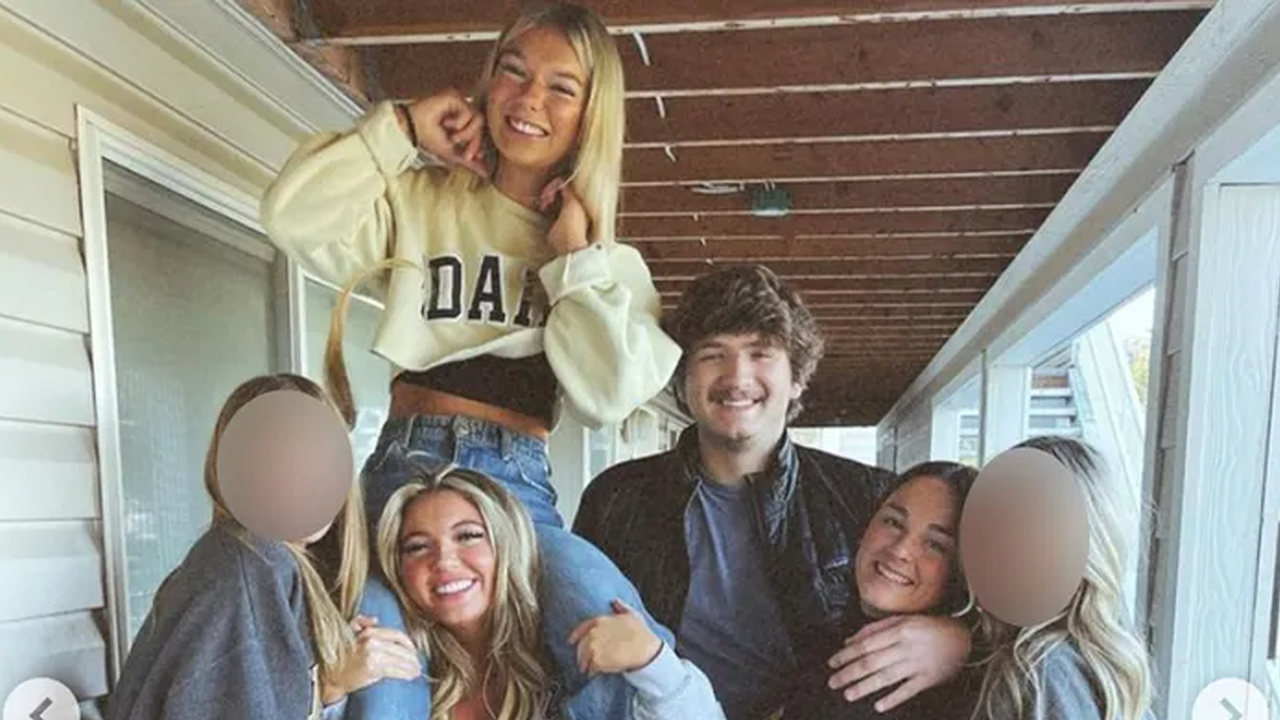
Madison Mogen, top left, smiles on the shoulders of her best friend, Kaylee Goncalves, as they pose with Ethan Chapin, Xana Kernodle, and two other housemates in Goncalves’ final Instagram post, shared the day before the four students were stabbed to death. (@kayleegoncalves/Instagram)
“The State respectfully submits that the Defendant should be precluded from offering or arguing alternative perpetrator evidence without first meeting the relevance and admissibility thresholds of [Idaho Rules of Evidence] 401, 402 and 403,” Latah County Prosecuting Attorney Bill Thompson wrote in a court filing last week made public Tuesday.
Those rules govern the relevance and admissibility of evidence.
GET REAL-TIME UPDATES DIRECTLY ON THE TRUE CRIME HUB
A watchman parked outside 1122 King Road on Dec. 11, 2022, four weeks after four students were stabbed to death inside. The home was later demolished. (Michael Ruiz/Fox News Digital)
Thompson cited an Idaho Supreme Court decision that found, “If the defendant proffers evidence which merely tends to mislead the jury that another person committed the crime, or the evidence is not relevant because it does not tend to make the defendant’s involvement more probable or less probable, then it is within the trial court’s discretion to find the evidence inadmissible.”
IDAHO JUDGE DENIES BRYAN KOHBERGER DEFENSE MOTION TO SUPPRESS KEY EVIDENCE
“Mere inferences that another person could have committed the crime will most likely not be relevant.”
However, with the sources of the two blood samples in question, defense attorney Anne Taylor told Ada County Judge Steven Hippler at a hearing last month that it could mean Kohberger, 30, is not related to the crime at all.
FOLLOW THE FOX TRUE CRIME TEAM ON X
Defense attorney Anne Taylor visits the King Road crime scene on January 3, 2023. The house was the scene of a quadruple homicide in November 2022, with the victims all being students at the University of Idaho. (Derek Shook for Fox News Digital)
Edwina Elcox, a Boise-based defense attorney who is following the case, predicted the defense would use that evidence to “muddy the waters” and try and show reasonable doubt at trial.
Kohberger’s highly anticipated trial is scheduled to begin on Aug. 11.
He could face the death penalty if convicted.
Before he was granted a change of venue, Latah County Judge John Judge entered not guilty pleas on Kohberger’s behalf at his arraignment in May 2023.
Read the full article from Here

Colorado
Southern Colorado remains in drought despite recent storms; NWS urges caution ahead of Fourth of July

COLORADO SPRINGS, Colo. (KKTV) – Recent rounds of heavy rain, hail and thunderstorms have brought much-needed moisture to southern Colorado, but experts say the storms have done little to ease the region’s ongoing drought.
Much of southern Colorado remains in moderate to exceptional drought, according to the latest U.S. Drought Monitor, with long-term moisture deficits continuing to impact soils and vegetation.
“A couple thunderstorms, a few days of off-and-on scattered rain, really isn’t going to do anything to fix that,” said Michael Garberoglio, a meteorologist with the National Weather Service in Pueblo.
Garberoglio said it will take widespread, sustained precipitation over weeks or months to significantly improve drought conditions.
“We need much more moisture over a much larger area for a much longer period of time to really start negating these exceptionally dry conditions we’ve been under,” he said.
The persistent drought is raising concerns ahead of the Fourth of July holiday, when many Coloradans are expected to celebrate with fireworks and outdoor gatherings.
“I really can’t understate the danger,” Garberoglio said. “It’s a very volatile situation. We just have not gotten enough water and it’s become frankly unsafe.”
He said fire danger can vary significantly from one location to another, even within the same county, meaning some areas remain dry enough for a single spark to ignite a wildfire.
“These fires can spread over multiple acres in just a couple of short minutes and can impact much more than anyone would initially expect,” Garberoglio said. “These little things can have months of impacts if people aren’t cautious.”
Garberoglio urged residents to follow local fire restrictions and guidance from emergency officials before using fireworks or participating in activities that could spark a fire.
“When you’re keeping things in mind and listening to the professionals, it’s not just for you, but you’re helping out your family, your neighbor,” he said.
Copyright 2026 KKTV. All rights reserved.

HONOLULU (HawaiiNewsNow) – A drive-by shooting road rage incident in Kailua has prompted an attempted murder police investigation.
According to the Honolulu Police Department, at around noon Sunday, an unknown man driving a white Ford van was involved in an alleged road rage incident with a 25-year-old man and his 24-year-old female passenger while they were inside their vehicle.
Police said the suspect allegedly displayed his handgun and then fired, hitting the vehicle.
No one was hurt.
Police said the investigation is ongoing and anyone with information is asked to call 911 or CrimeStoppers at (808) 955-8300.
Copyright 2026 Hawaii News Now. All rights reserved.

The 16th annual Idaho Patriot Thunder Ride was postponed after June 26’s severe thunderstorm created unsafe weather and road conditions for riders and event-goers.
RELATED | ACHD crews continue to respond to flooding after severe thunderstorm
Originally scheduled for June 28, the annual ride honors active military, veterans and fallen soldiers. 100% of the event’s proceeds will go to Operation Warm Heart and the Idaho Guard & Reserve Family Support Fund.
Organizers say the event will be rescheduled for Sunday, July 26.
“The safety of our riders, volunteers, and the public will always be our top priority,” Idaho Patriot Thunder Ride said in a Facebook post. “While we know many have been looking forward to this event, we believe postponing is the right decision to ensure a safe and enjoyable ride for everyone.”
All events and scheduled activities will take place in July at the originally scheduled time blocks, organizers said.
The motorcyclists will ride in a law enforcement-escorted motorcade along eastbound I-84.
ITD warns that drivers should expect temporary ramp closures, rolling slowdowns and delays from Meridian to Mountain Home during the event.
-

 Colorado10 minutes ago
Southern Colorado remains in drought despite recent storms; NWS urges caution ahead of Fourth of July
-

 Connecticut13 minutes ago
CT Lottery Cash 5, Play3 winning numbers for June 28, 2026
-

 Delaware18 minutes ago
6 things to know about Delaware actor Ryan Phillippe
-

 Florida24 minutes ago
Mothers gather in Florida to honor children lost to gun violence
-
Georgia28 minutes ago
Georgia Lottery Cash 3, Cash 4 results for June 28, 2026
-

 Hawaii33 minutes ago
Suspect sought in Kailua drive-by shooting
-
Idaho40 minutes ago
Severe weather postpones 16th annual Idaho Patriot Thunder Ride
-
Illinois43 minutes ago
Illinois Lottery Pick 3, Pick 4 results for June 28, 2026

