West
Idaho prosecutors want to block Bryan Kohberger from arguing an 'alternative perpetrator' left blood at scene

Police found blood on a handrail at the home of four Idaho student murder victims and more on a glove outside.
The samples came from two unidentified but different men. Prosecutors say those samples shouldn’t come into play at trial if the defense intends to argue that they suggest a mystery man stabbed the undergrads to death and not the defendant.
Idaho prosecutors are asking a Boise judge to block Bryan Kohberger’s defense from arguing an “alternative perpetrator” theory unless he can first prove it’s relevant to the case under the state’s rules of evidence.
BRYAN KOHBERGER DEFENSE SOUNDS ALARM ON UNIDENTIFIED BLOOD AT STUDENT MURDERS HOME
Bryan Kohberger appears in court in Moscow, Idaho on Thursday, October 26, 2023. Kohberger appeared in court in an attempt to overturn his grand jury indictment for the 2022 murders of four college students in their home. (Kai Eiselein/Pool)
Kohberger is accused of killing four University of Idaho students in a six-bedroom house on King Road, just steps away from campus. The victims were known to host parties, some of which resulted in police calls and bodycam video.
They were three housemates – Madison Mogen, 21, Kaylee Goncalves, 21, and Xana Kernodle, 20 – and Kernodle’s boyfriend, Ethan Chapin, 20, who lived at the Sigma Chi fraternity house about 200 yards away but was spending the night. All four had been killed by multiple stab wounds.
SIGN UP TO GET TRUE CRIME NEWSLETTER
Investigators have argued that the unidentified blood samples from two unknown males don’t matter as much as the knife sheath found under Mogen’s body. Prosecutors allege it had Kohberger’s DNA on the snap. She was killed next to Goncalves.
WITNESS TO IDAHO MURDERS SAYS INTRUDER WITH BUSHY EYEBROWS CARRIED VACUUM OUT OF CRIME SCENE
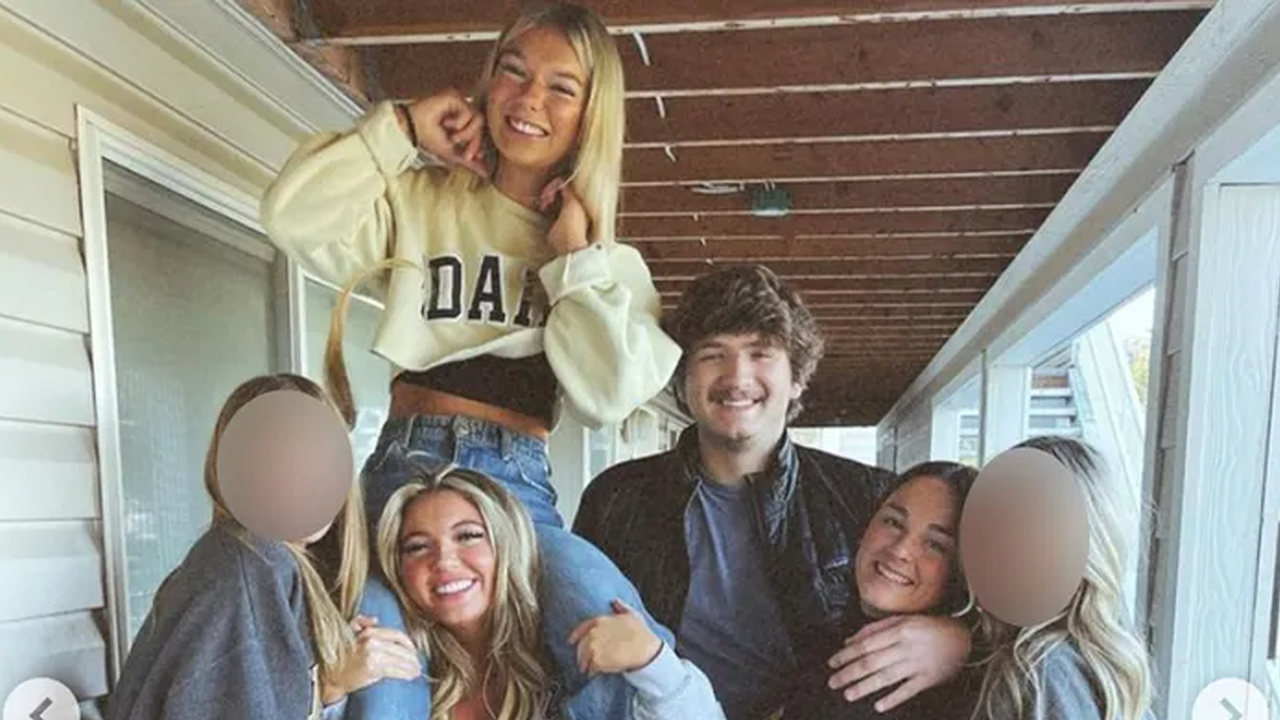
Madison Mogen, top left, smiles on the shoulders of her best friend, Kaylee Goncalves, as they pose with Ethan Chapin, Xana Kernodle, and two other housemates in Goncalves’ final Instagram post, shared the day before the four students were stabbed to death. (@kayleegoncalves/Instagram)
“The State respectfully submits that the Defendant should be precluded from offering or arguing alternative perpetrator evidence without first meeting the relevance and admissibility thresholds of [Idaho Rules of Evidence] 401, 402 and 403,” Latah County Prosecuting Attorney Bill Thompson wrote in a court filing last week made public Tuesday.
Those rules govern the relevance and admissibility of evidence.
GET REAL-TIME UPDATES DIRECTLY ON THE TRUE CRIME HUB
A watchman parked outside 1122 King Road on Dec. 11, 2022, four weeks after four students were stabbed to death inside. The home was later demolished. (Michael Ruiz/Fox News Digital)
Thompson cited an Idaho Supreme Court decision that found, “If the defendant proffers evidence which merely tends to mislead the jury that another person committed the crime, or the evidence is not relevant because it does not tend to make the defendant’s involvement more probable or less probable, then it is within the trial court’s discretion to find the evidence inadmissible.”
IDAHO JUDGE DENIES BRYAN KOHBERGER DEFENSE MOTION TO SUPPRESS KEY EVIDENCE
“Mere inferences that another person could have committed the crime will most likely not be relevant.”
However, with the sources of the two blood samples in question, defense attorney Anne Taylor told Ada County Judge Steven Hippler at a hearing last month that it could mean Kohberger, 30, is not related to the crime at all.
FOLLOW THE FOX TRUE CRIME TEAM ON X
Defense attorney Anne Taylor visits the King Road crime scene on January 3, 2023. The house was the scene of a quadruple homicide in November 2022, with the victims all being students at the University of Idaho. (Derek Shook for Fox News Digital)
Edwina Elcox, a Boise-based defense attorney who is following the case, predicted the defense would use that evidence to “muddy the waters” and try and show reasonable doubt at trial.
Kohberger’s highly anticipated trial is scheduled to begin on Aug. 11.
He could face the death penalty if convicted.
Before he was granted a change of venue, Latah County Judge John Judge entered not guilty pleas on Kohberger’s behalf at his arraignment in May 2023.
Read the full article from Here


SALT LAKE CITY — A first-of-its-kind monument that could become one of the largest bronze sculptures in the western United States is under construction in Utah.
Surrounded by sculptures lining his home, sculptor Sabin Howard refines his model for what will become the Grand Liberty Arch, a 60-foot-long, 36-foot-tall bronze monument depicting American history.
“It’s based upon geometric solids and how they move in and out of space,” Howard said.
The Grand Liberty Arch tells the story of America through a series of bronze reliefs.
“It is an arch to honor what we can be and is built to celebrate our nation’s 250th year with pride for the original American virtues and ideals,” Howard wrote in the monument’s proposal.
The front of the monument depicts the birth of America, including the Revolutionary War and the Declaration of Independence. Visitors walking through the arch will see the Declaration of Independence and the Constitution displayed on the interior walls alongside an eternal flame.
The opposite side portrays westward expansion and the 20th century, from World War I through space exploration. The two ends depict emancipation and the Civil War.
Each figurine is deeply symbolic. One recurring figure throughout the monument is Lady Liberty.
“Because that liberty is here. It’s a symbol,” Howard said.
Another figure carries a shield, representing the protection of freedom.
The monument features 56 sculpted figures, some standing up to 12 feet tall.
One of those figures, carrying an American flag, is modeled after a Texas veteran. Howard said the veteran served in two wars and, shortly before returning from Afghanistan, stepped on an explosive device that resulted in the loss of his leg.
“He has a tremendous amount of strength and courage,” Howard said. “He’s still going forward, so we’ve been wounded, we’ve been injured, yet we still have the courage to proceed forward.”
Many of the models Howard found in the Beehive State were at local CrossFit. Howard wanted bodybuilders and athletes for his artistic style, something he described as putting a movie on a monument.
“It’s a superhero’s version of American history,” Howard said.
The $55 million monument has been approved by the Capitol Preservation Board and Gov. Spencer Cox for a site above the Capitol. A circular plaza will surround the arch, symbolizing unity and a beacon of guiding light.
Partnering with the American Preparatory Academy, Howard hopes it will design lessons and programs that allow students to recite founding texts and perform at the monument.
Howard will work alongside three or four sculptors, including two from the Beehive State. He has most of the project funded, but is still seeking donors.
“This will show the world what’s going on in Utah,” Howard said.
At 62, decades of dedication have led Howard to this moment.
“It took 42 years to get here,” Howard said.
Howard couldn’t even draw when he was 19 years old, yet he was determined to try.
“I decided one afternoon, I’m going to make art like Michelangelo, Leonardo and Raphael,” Howard said.
Becoming a sculptor for Howard is about more than mastering technique.
“You’re not only developing your skills, you’re also developing your ability to tell a story through visual narrative,” Howard said.
The story Howard is telling, he said, has never been presented on this scale before.
“What I’m basically doing is I’m manifesting a universe,” Howard said.
A universe that was inspired by his previous creations, and most recently, a monument for the nation.
After more than 75,000 hours of sculpting and after roughly four decades, Howard was commissioned to create the National World War I Memorial in Washington, D.C., featuring 38 figures.
The WWI model took six months to complete. Although the Grand Liberty Arch will be a larger monument, Howard said the current model took only three weeks, not because it’s less complicated, quite the opposite.
Howard attributes his successes to his belief in God.
“I operate with the assumption that someone has my back and Christ and God and light and truth are what drives things forward,” Howard said. “You cannot accomplish things of such magnitude if you do not have faith in something larger than yourself.”
That faith ultimately brought Howard to Utah.
“I was told, ‘Go make a monument for your country. Go make a monument to represent who we are and what our history is,’” Howard said. “There is no human commissioner here. It’s my maker.”
Howard was encouraged by Sen. Mike Lee to make Utah home to his monument, and Howard agreed that the faith-based communities would appreciate the monument more than any other location.
“I don’t think there’s another place in the country that could manage a sculpture of this magnitude or meaning except Utah,” Howard said. “Nothing like this has ever happened.”
The monument’s magnitude in size alone makes the project significant, and Howard called it akin to the Sistine Chapel with how many figurines and symbols will be portrayed.
“When they go look at a monument like that, they’re hit in the gut in a very visceral, alchemical way,” Howard said.
Howard’s six-foot model of the Grand Liberty Arch will be displayed during Independence Day weekend in the Capitol Rotunda.
He will begin sculpting the full-sized monument in July, hoping to install a new panel every 15 months. Howard plans to complete the monument in time for Utah to host the 2034 Winter Olympics.
The Key Takeaways for this article were generated with the assistance of large language models and reviewed by our editorial team. The article, itself, is solely human-written.


Most 18-year-olds focus on deciding what they want to do after high school.
Alyssa Shade already knows.
The Yoder teen already is a certified EMT, a red-carded wildland firefighter and a member of the all-volunteer Yoder Fire Department.
Another 18-year-old, J.R. Ruiz, joined the department only a few months ago. He recently returned from a wildfire-severity assignment in Colorado and, this past week, was helping on the South Fork Fire near Cody.
Behind them is another generation waiting in the wings. Fire Chief Justin Burkart’s 17-year-old son, Jayden, is already part of the department, while his 16-year-old daughter, Maykayla, recently joined as a junior firefighter.
In a profession where volunteer departments nationwide are struggling to recruit younger members, Yoder appears to be on a different track.
How does a town of just 134 people keep producing firefighters sought out and trusted to fight some of the nation’s biggest wildfires?
The answer starts with volunteers investing in one another.
“We’re 100% volunteer,” Burkart told Cowboy State Daily.
Beyond Wyoming
The tiny Goshen County community sits along U.S. Highway 85 south of Torrington, surrounded by hay fields and open prairie.
The Yoder Volunteer Fire Department protects roughly 248 square miles and serves about 700 residents throughout its fire district.
Yet those volunteers routinely deploy across the West, cutting fire lines with bulldozers, staffing engines on major incidents and supporting wildfire operations from Colorado to Virginia.
“We have a reputation of really sending out some professional firefighters to these incidents,” Burkart said. “It’s not a game to us. It’s something that we really take some pride in.”
Burkart joined the department as an 18-year-old in 1999 after discovering federal wildfire assignments could help pay for college.
“I found out it was a good way for me to pay for college,” he said.
Today, the department routinely sends engines, a water tender and two dozers on federal assignments, with about 22 members participating regularly in the federal fire program.
Last year, Yoder firefighters collectively spent about three months helping battle wildfires in California. Burkart said the department paid roughly $1 million to firefighters and seasonal personnel through federal assignments in 2025.
For a department staffed entirely by volunteers, those assignments have become far more than an opportunity to earn extra income.
“They’ll have more contact with live fire over a two-week period than most volunteers would have in a three- or four-year period,” Burkart said.
The knowledge comes home.
Heather Trompke, who serves on a Rocky Mountain incident management team, works in the finance section tracking personnel and equipment time during major incidents.
“We get to bring all of this stuff back,” Trompke said. “We can train and show how to fill out documents properly, and that translates into a smoother fire for everyone else when they go out.”
“There’s always something to learn in wildland firefighting,” added firefighter Bailey Powell. “It doesn’t matter if you’ve been doing it for 60 years or five.”
-

With flames consuming palm trees behind him, Yoder firefighter Shane Tromke pauses during a federal wildfire assignment. (Yoder Volunteer Fire Department) -
Father and daughter Robert and Alyssa Shade are volunteers who work side-by-side. (Yoder Volunteer Fire Department) -
Yoder firefighters spend countless hours training on specialized equipment and techniques before deploying incidents across the West. (Yoder Volunteer Fire Department) -
Alyssa Shade is only 18, but she is confident that wildland firefighting is going to be a part of her future. (Yoder Volunteer Fire Department)


Growing Firefighters
Like volunteer departments across America, Yoder faces a challenge that has nothing to do with flames.
Recruiting.
“If you look nationwide, the volunteer fire service is aging out,” Burkart said. “The younger generation is not really involved in that.”
Instead of waiting for volunteers to walk through the station doors, Yoder and neighboring Goshen County departments are trying to grow their own.
Robert Shade helps coordinate a countywide junior firefighter program that introduces teenagers to the fire service before they turn 18.
“Right now, nationally, pretty much every trade, every job there is, there’s a lack of young people getting involved,” Shade said.
Junior firefighters learn equipment familiarization, truck maintenance, hose deployment, pump operations and safety procedures before becoming full firefighters.
“They’re the future,” Shade said. “We’ve got to make sure that we get them involved.”
Rather than keeping the program confined to Yoder, departments across Goshen County work together so young firefighters train alongside one another.
“We’re reaching out and kind of working with the whole county,” Shade said. “It helps everyone get to know each other.”
The program appears to be paying off.
Shade started attending meetings as a teenager after encouragement from her boyfriend, who happens to be Burkart’s son.
“I kind of started coming for fun,” she said. “Then I got a true understanding of everything, and it just became really interesting.”
-
Flames creep across the landscape behind Yoder Volunteer Fire Department trucks. The tiny Goshen County department has become an outsized force in Wyoming’s wildfire response efforts. (Yoder Volunteer Fire Department) -
Firefighters with the Yoder Volunteer Fire Department serve roughly 248 square miles in Goshen County. (Yoder Volunteer Fire Department) -
Pink fire retardant streams from an air tanker above a dozer carving a containment line during a wildfire operation. (Yoder Volunteer Fire Department)


A Family Tradition
Volunteer firefighting isn’t just passed from one generation to the next in Yoder.
It’s often passed around the dinner table.
Burkart’s wife left this week for a federal wildfire assignment in Colorado. Robert Shade serves alongside daughter Alyssa.
“There are families on the department,” Shade said. “Husbands and wives, fathers and sons, fathers and daughters.”
For him, volunteering alongside Alyssa is one of the most rewarding parts of the job.
“It’s a lot of fun to go out with Alyssa and do what we both love,” he said.
The work isn’t without sacrifice.
“When the pager goes off, you could be at a dinner with your family,” Burkart said. “You could be at your kid’s birthday party. You could be at a track event for your kids.”
And the sacrifice isn’t limited to firefighters.
“It’s not only the members that have to make that sacrifice,” he said. “It’s also the family.”
When firefighters deploy on federal assignments, the department still has to answer calls at home.
“We do have a lot of members that deploy nationally, but we also have to protect home when they’re gone,” Burkart said.
That responsibility is shared with neighboring departments through mutual-aid agreements.
Last year alone, Yoder firefighters assisted neighboring agencies 26 times, while local farmers and ranchers helped firefighters cut fire lines during large grass fires.
Yoder’s firefighters have built something much larger than a volunteer department.
They’ve built a pipeline to answer the call.
One generation trains the next.
Kolby Fedore can be reached at kolby@cowboystatedaily.com.
-
South Dakota2 minutes ago
SD Lottery Millionaire for Life winning numbers for June 28, 2026
-
Tennessee9 minutes ago
TN Lottery Cash 3 Evening, Cash 4 Evening winning numbers for June 28, 2026
-

 Texas11 minutes ago
After historic floods, Texas Hill Country Little League is back
-

 Utah17 minutes ago
Sculptor to build $55 million monument depicting American history in Utah
-
Vermont24 minutes ago
VT Lottery Pick 3, Pick 3 Evening results for June 28, 2026
-

 Virginia27 minutes ago
Virginia farmers devastated by late spring frost may be eligible for federal aid
-

 Washington32 minutes ago
Opinion: Washington just taxed the world’s best anti-poverty program
-

 Wisconsin39 minutes ago
Wisconsin’s Most Wanted: John Luckett has history of drug, gun charges

