West
Fire at Washington state indoor gun range leaves 1 dead, 1 injured


An investigation is underway at an indoor gun range in Washington state after a deadly fire on Sunday night.
The Tacoma Fire Department said crews responded to a fire with reported occupants at a business in the 400 block of Puyallup Avenue at around 6:16 p.m. on Sunday.
Upon searching the building, Tacoma fire crews found one person dead and another person injured. Those people have not been identified.
FIREFIGHTER PULLS 2-YEAR-OLD FROM BURNING APARTMENT BUILDING IN DRAMATIC RESCUE
The Tacoma Fire Department responded to a deadly fire at the Bull’s Eye Indoor Range on Sunday night. (@TacomaFire/X)
Limited details are available, but the incident took place at Bull’s Eye Indoor Range. According to the business’ website, it is open from 11 a.m. to 7 p.m. every day.
Witnesses told FOX 13 Seattle that they heard an explosion before the fire erupted, which caused ammunition to pop from the heat.
A 10:40 p.m. update from the fire department said the flames were under control and an investigation into what caused the incident is underway.
Tacoma police are also investigating the circumstances surrounding the death.
Fox News Digital has reached out to Tacoma police, Tacoma fire and Bull’s Eye Indoor Range for more details.
This is a developing story. Check back for updates.
Read the full article from Here


San Francisco police officers arrested 20 people late Saturday night in SoMa after breaking up an unauthorized “Stud Alley” block party with hundreds of participants, according to the police department. It marked the second round of arrests of Pride attendees this weekend after police arrested five people at the tail end of the Trans March on Friday.
Police officers arrived near Kissling and 11th streets at 10:58 p.m. and “encountered an unsanctioned and unpermitted block party” that had about 300 participants and a D.J., according to a statement from the San Francisco Police Department. The following details are based on the department statement and social media videos; two participants reached by Mission Local declined to comment.
The department said that the large crowd “prompted the response of additional SFPD resources.” Social media footage shows dozens of officers marching through SoMa streets armed with batons, wearing riot helmets and carrying plastic zip-ties.
Officers then gave an order to disperse, the department said, and told the D.J. to leave the area. The D.J. left but the partygoers did not, the department said, and officers tried to “disperse the crowd.” Two people “resisted,” the department said, and officers arrested them.
Several people also “vandalized two vehicles passing through the area,” the department said, and made them “inoperable.” The two vehicles may have been Waymos: One online video shows two Waymos in the street blinking hazard lights, and appears to show one officer telling others that the Waymos had been vandalized.
The party then reformed a few blocks later at Washburn Street about two blocks away, the department said, with about 200 people; the police shut that gathering down as well.
Footage from the scene shows a line of officers in tactical gear advancing rapidly on the crowd, shoving people out of the alleyway before forming a cordon line to block the street. In total, 18 people were arrested on Washburn Street, the department said, for “obstructing or delaying a peace officer and unlawful assembly.”
The department said that “makeshift barricades” had been set up to keep officers at bay; at one point in a video, an officer moves several large rocks that were placed in the street. Two officers sustained minor injuries, the department said.
SoMa has been the site of unsanctioned “Stud Alley” parties on the Saturday evenings of Pride weekend for at least the past six years. The parties have made headlines in past years for graffiti, broken windshields and outraged neighbors.
The organizers of Stud Alley posted an announcement this year that they would not host a party, saying that the party had recently “outgrown itself,” but reminded past party-goers of the unofficial slogan that is frequently graffitied onto walls around the party: Every alley is Stud Alley.
Jesse, a bartender at the nearby bar the Willow, reported seeing cops “everywhere” after the Saturday incident, when people “fled” to the bar to escape. He did not report hearing of any incidents of violence between party-goers and police.
The arrests mark the second encounter between Pride-goers and police this weekend. On Friday, at the end of the Trans March, police officers arrested five marchers for alleged vandalism and assault after march-goers allegedly spray-painted several statues and a person.
On Sunday afternoon, Washburn and Kissling streets still bore signs of the party. Spray painted on the walls of buildings were “Fuck SFPD,” “No Cops at Pride,” and “Every Alley Stud Alley.”


The Mariners have made the first move in what’s sure to be a rip-roaring Trade Deadline season, acquiring INF Buddy Kennedy from the Giants in exchange for cash considerations.
Kennedy was designated for assignment by San Francisco earlier this morning as outfielder Heliot Ramos returned from the Injured List.
Advertisement
The 5’10” infielder has spent most of the season with Triple-A Sacramento, hitting well, even for the PCL. He’s in the 78th percentile for xWOBA, has a nearly identical K% and BB% (12.6%/12.1%) and rarely whiffs. This all has come out to a .322 batting average and a 152 wRC+. He’s made just a minimal impression in the bigs this season, with 8 plate appearances in 7 games, and zero hits.
Kennedy is likely to head to Tacoma. He can play 3B and 2B in a pinch, and will likely backfill Patrick Wisdom’s role if Wisdom is called up to take over right-handed pinch hitting duties from the currently-employed Rob Refsnyder.
The 27-year-old has not found much traction in the five years since his debut with Arizona in 2022. He’s amassed less than 200 plate appearances across 74 games, with a career 50 wRC+. On the mound, Kennedy has made one appearance this season, pitching one inning and giving up four runs, all earned.
-
 Lifestyle16 minutes ago
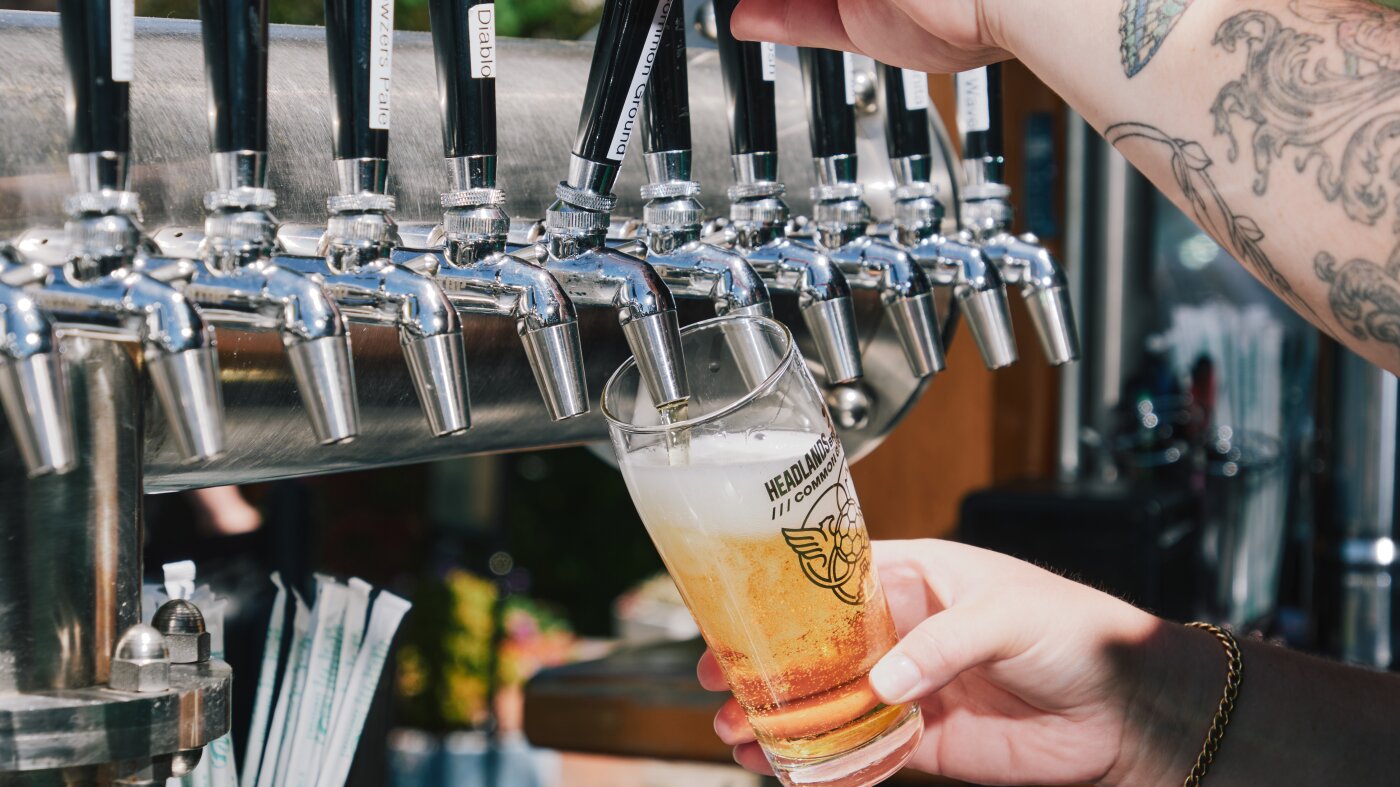
3 World Cup rivals find ‘Common Ground’ in a cross-border beer
-

 Technology28 minutes ago
The Flipper Zero creators’ Busy Bar productivity display will go on sale next month
-

 World31 minutes ago
Families watch in horror as skydiving plane crashes in France, killing all 11 aboard
-

 Politics36 minutes ago
DOJ launches grand jury probe into Marxist mogul Neville Roy Singham’s funding of leftist groups
-

 Health43 minutes ago
America’s lifespan has doubled since 1776 — experts reveal what changed
-

 Sports46 minutes ago
Thekla embarrasses Stardom’s Starlight Kid after retaining AEW World Women’s Championship at Forbidden Door
-

 Technology51 minutes ago
AI may spot deadly heart risk in a routine ECG
-
 Business58 minutes ago
SpaceX IPO sparks race for luxury housing in Southern California

