Denver, CO
How Denver landed NWSL franchise to bring women’s professional sports back to Colorado


The plan to bring a National Women’s Soccer League team to Colorado began with a 10-year-old girl demanding answers.
Eloise Hubbard sat with her dad, Ben Hubbard, watching the Rapids at Dick’s Sporting Goods Park a few summers ago and grilled the entrepreneur about Denver’s lack of a professional women’s sports team. A soccer player herself, Eloise knew of the world-class women’s soccer talent the state has produced. So how could its largest city not have a team?
“As I tried to explain it, my own answers were honestly unacceptable,” Hubbard recalled. “… ‘But why,’ she kept asking, and it forced me to ask those questions of myself. As an entrepreneur, I get hooked on things, and I saw an opportunity.
“I thought it was crazy we didn’t have any women’s pro sports teams, and that someone should do something about it.”
So Hubbard did.
Hubbard, the CEO of a Denver software company who previously served as chief of staff at the United States Agency for International Development, founded For Denver FC in the summer of 2022.
That grassroots movement to rally the city around a bid for an NWSL franchise paid off this month when the league awarded Denver its 16th team. The to-be-named franchise will begin play in 2026 under controlling owner Robert Cohen with a new stadium in the Denver metro expected to soon follow.
The franchise will be officially unveiled Thursday at 5 p.m. during a fan rally at Number 38 in RiNo — ending Denver’s status as the largest American city without a professional women’s sports franchise.
It marks a watershed moment in Colorado sports history. Before this, the state’s lone pro women’s sports team was the Colorado Xplosion of the American Basketball Association from 1996-98.
The efforts of For Denver FC led the NWSL to Denver, which beat out fellow finalists Cincinnati and Cleveland with a $110 million expansion fee. That is more than double the expansion fees paid by the league’s two other newest teams, Bay FC and BOS Nation FC, and is a record fee for a women’s pro sports franchise.
And it all started with a daughter pressing her dad for answers.
“When I first started brainstorming this concept, a lot of people looked at me like I have three heads and it was a pipe dream,” Hubbard said. “Now we’re here, making history.”
Multi-year effort — and big money
At the center of Denver’s new NWSL franchise is Cohen — the man behind the $110 million expansion fee.
Cohen, the chairman and CEO of IMA Financial Group, has been on more than 20 non-profit boards in a variety of leadership roles. That included founding and serving as chairman of the Denver Sports Commission.
The 62-year-old Denver resident, who was also part of a recent push to land a WNBA team, says he decided to back an NWSL franchise because “the opportunities this can create for our youth and our community can be transformative.” In addition to Cohen, the team’s ownership group also includes Mellody Hobson (who is part of the Broncos’ ownership) as well as Jason Wright (former president of the Commanders) and FirstTracks Sports Ventures LLC.
“When you put together the ability to do something for the community, do something for women and professional sports, and do something for the next generation, it becomes pretty compelling,” Cohen said.
Cohen’s cash, and his commitment to building a new stadium for the team, was a differentiator for Denver. The latter was part of the league’s requirement in awarding the bid.
But Cohen said the efforts of For Denver FC were just as critical to prove to NWSL commissioner Jessica Berman that Colorado had a community ready to back a new franchise.
“For several years (ahead of the official bid process), For Denver FC had already woven themselves into that fabric into the community, and they have ambassadors across the state that are engaging with all the youth programs as well as the youth teams that exist,” Cohen said. “That separated us in the expansion bid process.”
Besides Hubbard, the other key members behind For Denver FC were Tom Dunmore, Jordan Angeli and Nicole Glaros.
Dunmore has experience in sports marketing and sports startups, including helping bring the Indy Eleven soccer team to Indianapolis as well as playing a role in the launch of Major League Cricket. Angeli is a former NWSL player, current broadcaster and analyst. And Glaros, who was one of the founding employees at Techstars, applied her experience in venture capitalism and incubation to the effort.
Together, the foursome had a firm plan by the summer of 2023, when they used the Women’s World Cup as a mobilization moment to launch their campaign.
For Denver FC’s first event was a watch party of the USWNT’s World Cup opener at Number 38, where over 1,500 people showed up and maxed out the bar’s capacity. USWNT star and Golden native Lindsay Horan appeared in a promotional video for the event calling for the NWSL to come to Denver.

“We wanted to create something that was a broadly ownable concept for our community… and in that way, For Denver FC felt cool,” Hubbard said. “It was a bit of, ‘If you build it, they will come.’ And visually, that party captured the opportunity at hand.”
With the help of a marketing rollout that included billboards and merchandise sales, the momentum continued. There was a For Denver FC watch party for every USWNT match of that World Cup. During those events and others coordinated around the metro, the campaign collected postcards from residents stating why they wanted an NWSL team in Denver.
When Berman came to Denver for an NWSL site visit last September, For Denver FC presented her with a basket filled with those postcards.
“The intangible factor of community support is one, as a city, that you can sort of pretend you have,” Hubbard said. “But because what we did was authentic, it just sort of came through. When she carried the basket of postcards out of that event, that was a moment you can’t manufacture.”
The stadium location
With the bid secured, now comes “drinking from the proverbial firehose,” as Cohen said with a laugh.
The franchise has about 14 months to get off the ground before its inaugural match in March 2026. The team’s name is still to be decided, and Cohen said the branding process will include community input.
For now, the most pressing issue is where the team will play.
The team plans to use a temporary venue while a new stadium is being built. The franchise is looking at several spots around metro Denver as their temporary home, one of which is Metro State University. Those interviewed by The Post offered no indication that Dick’s Sporting Goods Park, the metro’s lone soccer-specific stadium, is under serious consideration to be the team’s temporary home.

Ultimately, Cohen says the plan is to have a training facility that is a separate location from the new stadium. Cohen was tight-lipped about where the stadium will be, citing ongoing negotiations, but Denver mayor Mike Johnston said the team is considering a few sites around Denver.
The mayor anticipated a deal would be finalized in the next few months, and that the stadium would be privately funded.
“This will be a purpose-built facility for women’s soccer, and we will make sure it is in the city and county of Denver,” Johnston said.
“We want to build something that’s integrated into the community where folks could live, work, play, eat, drink and watch a game all at the same time. We will definitely be looking for that to be the concept wherever the team ends up.”
CU Buffs coach Danny Sanchez, who has been to soccer stadiums across the globe, believes the best landing spot to make the team successful is downtown Denver.
“At the end of the day, what’s going to be key for this team is where they put the stadium,” Sanchez said. “There’s got to be stuff around it, and it’s got to be an event. If you put it in the right spot, it’ll become a thing to do and it will draw (non-soccer diehards) who don’t want to go to Avs, Broncos or Nuggets games and spend a fortune.”
While the stadium situation gets ironed out, the team’s other pressing to-do is finding a GM, coach and players. There is no expansion draft, so the team will fill its roster by negotiating with free agents in the league and abroad.
In that process, former Real Colorado executive director and current Chicago Red Stars head coach Lorne Donaldson said it’s “very important” for the Denver NWSL club to get Colorado players on its roster.
“Anybody with a high profile from Colorado, who is looking to get back to playing here, if I’m the owner, I am looking at them and figuring out how to get one or two of them back in Colorado,” Donaldson said.
There are currently 15 Colorado players on NWSL rosters, including USWNT members Mallory Swanson, Ryan Williams, Sophia Smith and Jaelin Howell. Janine Sonis (nee Beckie) is a Canadian national team player, while Horan plays for Lyon in the Première Ligue.

Among those players, Horan is under contract with Lyon until summer 2026, Smith has a player option with the Portland Thorns for the 2026 season and Howell is under contract with NJ/NY Gotham Football Club through 2025.
No matter what happens, as Windsor alum Michaela Moran explained, having a local NWSL team is a “a dream come true” for local elite talents.
“We’ve been waiting for this so long,” said Moran, 24, who has played professionally for AaFK Fortuna in Norway the last two seasons. “To even have the option to one day play professionally in my home state is just the coolest thing ever. It makes you want to work so much harder to even have a chance.”
Impact, and future, of franchise
Those within the Colorado youth soccer scene expect the NWSL franchise to have a tangible impact at the grassroots level.
There’s currently about 45,000 girls playing in the state from age four to 19, according to Nate Shotts, CEO of the Colorado Soccer Association. He believes that number will increase with the arrival of professional soccer in the state.
“The national team has done so well, and the NWSL has been very successful, and because of that you start seeing these young girls finding their role models on the biggest stage and someone they strive to be in a professional world,” Shotts said. “That’s a big motivator.”
John Carroll, president of the Colorado Rush, agrees.
“The more the new team is willing to work with the local clubs and provide those opportunities to be a part of it, not just in games but in trainings and the educational piece, the more we will see a huge impact and importance to this girls soccer community in Colorado,” Carroll said.
While the Denver franchise is just setting out to find its footing locally, the NWSL has hit its stride nationally.
Angeli recalled making a $13,000 salary in the second year of the league. The league’s new CBA calls for a $48,500 minimum salary in 2025, a figure that will increase each year up to $82,500 in 2030. Fueled by a women’s sports record four-year, $240 million TV deal signed in 2023, Berman said last week the league’s expansion efforts are “not done.”
All of that projects stability for a league that has come a long way since launching in 2013 and seeing four teams fold in its first seven years.
“We’re now at a place in the growth of the league is where the dream and the reality of what the situation is,” Angeli said. “It’s found a really sustainable spot.”
In Denver, Cohen hopes he can capitalize on the league’s momentum by building “the preeminent professional soccer team, not only in the NWSL but in the world.”

“I want this franchise to be the beacon that everybody’s looking to,” Cohen said.
As Cohen chases that grand ambition, he’s got his WNBA dream in his back pocket.
He said the process is “still ongoing” to bring a women’s professional basketball team to a state that consistently sells out USWNT friendlies and earlier this month set an attendance record for a women’s professional hockey game in the U.S. when the PWHL came to Ball Arena.
As it turns out, Eloise Hubbard was on to something when she took to prodding her father.
“We hope this is the first step to more women’s pro sports franchises in the city,” Mayor Johnston said. “We would love to see an WNBA team call Denver home, and we will stay on that as our next goal. … There’s an incredibly rabid fanbase for women’s sports here in Denver, and it’s just going to continue to grow. If I were the commissioner of any women’s sports league, I would be putting Denver at the top of my list.”
Want more sports news? Sign up for the Sports Omelette to get all our analysis on Denver’s teams.
Originally Published:



DENVER (KDVR) — More sunny and hot conditions are in Denver’s weather forecast for the rest of the weekend and into next week.
Denver weather tonight: Mainly clear
Saturday night will stay mainly clear and warm. Low temperatures will fall to the mid 60s, which is about 5 degrees warmer than normal for this time of year.
Denver weather tomorrow: Sunny, hot
Sunday will be sunny, breezy and hot with wind gusts out of the south southwest picking up to 20-30 mph. High temperatures will climb to the mid 90s, which is more than 5 degrees warmer than normal for this time of year, but well below the daily record of 102 set in 2024.

Looking ahead: Hot week ahead
Sunshine and a warming trend continues on Monday. High temperatures will reach just below the daily record of 100 degrees set in 2003.

More sunny and dry conditions are on the way through the workweek. Every day will start with a low in the 60s, then plenty of sunshine helping to boost high temperatures to the mid to upper 90s.

There is a slight chance for showers, mostly in the High Country, that return by the end of the week and the start of the weekend.

Getty
Peyton Watson #8 of the Denver Nuggets is a potential Lakers free-agent target.
The Los Angeles Lakers are still exploring means to improve their roster ahead of the upcoming season. Moves have been made already, but there are opportunities to add more talent around Luka Doncic.
One potential target for L.A. is Denver Nuggets star, Peyton Watson. In a proposed multi-team deal involving the Miami Heat and New Orleans Pelicans, the Lakers could land the high upside talent.
In the deal:
Both Watson and Jones have been linked with a move to L.A. this offseason, but no deal has been able to push forward. This proposal offers a chance to get both with one swing.
Lakers’ Outline for Acquiring Peyton Watson Through Trade

GettyDALLAS, TEXAS – JANUARY 14: Peyton Watson #8 of the Denver Nuggets handles the ball during a game against the Dallas Mavericks at American Airlines Center on January 14, 2026 in Dallas, Texas.
Watson, 23, is a restricted free agent, which makes any approach difficult. The Nuggets could match any offer to retain him and are reportedly planning to do so.
The 6-foot-8 star is coming off a breakout season in Mile High City, averaging 14.6 points, 4.9 rebounds, 2.1 assists and 1.1 blocks per game. He shot 49.1% from the field and 41.1% from three while starting 40 of his 54 appearances.
Watson’s camp is reportedly seeking north of $25 million per year which is unfavorable for the Nuggets at this point. Denver already has huge commitments to Nikola Jokic, Jamal Murray, Anthony Gordon and Christian Braun.
The Lakers can capitalize on the Nuggets’ need to move for pieces for flexibility and pitch a move for Watson. There would be adequate space to fit in the incoming star with the outgoings in this framework.
The Lakers can offer Watson a multi-year deal that doesn’t affect their flexibility. Vanderbilt’s outgoing deal is the most notable, which is why the Lakers have put him at the top of their moving list for now.
Watson’s Upside and Adding Herb Jones to the Roster

GettyLuka Doncic #77 of the Los Angeles Lakers passes the ball as he is pressured by Herbert Jones #2 and Jeremiah Fears #0 of the the New Orleans Pelicans during the second quarter of an 2025 Emirates NBA Cup game at Smoothie King Center on November 14, 2025 in New Orleans, Louisiana.
The Lakers would also get Jones out of this trade from the Pelicans. He is on a three-year, $68 million extension going through 2028-29 with a player option. His cap hit for 2026-27 sits at around $14.9 million.
With Watson and Jones, the Lakers would be bringing in roughly $38 million worth of salary, adding both Saddiq Rey for depth while sending out only about $26 million. This scenario would push L.A. well over its luxury limit but not into restrictive zones.
A potential lineup having Watson and Jones alongside Doncic, Austin Reaves and the newly acquired Walker Kessler, is positioned to be a strong core.
The real hurdle is getting Denver to move on from Watson. The franchise is committed to keeping him, even if it means giving up one of their more seasoned stars. They did activate a qualifying offer, making him restricted and they intend to match offers. Although a sign-and-trade is not impossible and the Lakers can work with that.
Adel Ahmad Adel is a writer with over five years of experience covering the NBA. His work has appeared on various media platforms, both national and local. More about Adel Ahmad
Denver, CO
One tree at a time: Denver nonprofit works to close shade gap as heat dome threatens neighborhoods

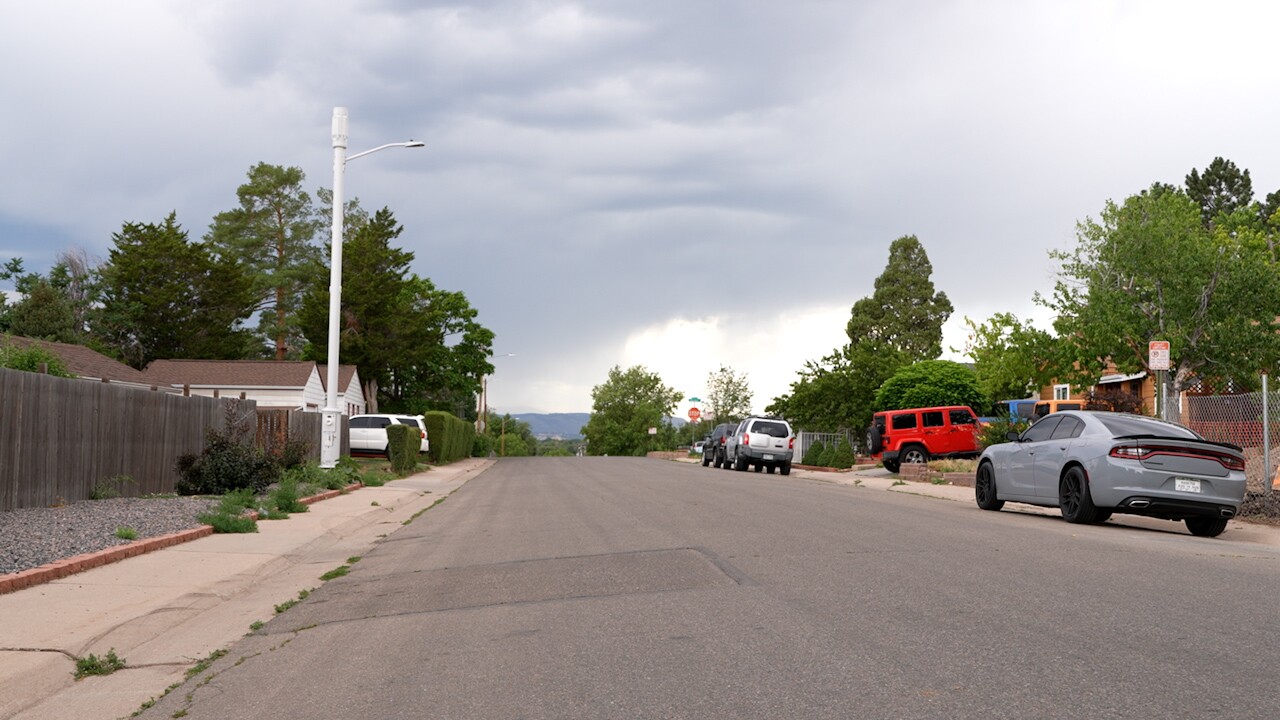
DENVER — Some Denver neighborhoods are far more vulnerable to this weekend’s incoming heat dome than others — and the difference comes down to trees.
The Valverde neighborhood on the city’s west side has about 9% canopy cover, leaving residents with little shade as temperatures climb toward triple digits.
▶️ WATCH: Denver7’s Claire Lavezzorio learns more about The Park People and how it is helping neighborhoods in Denver.
One tree at a time: Denver nonprofit works to close shade gap as heat dome threatens neighborhoods
Kim Yuan-Farrell, executive director of The Park People, a nonprofit that plants trees in underserved neighborhoods, said the disparity across Denver is stark.
“We have some neighborhoods that have wonderful canopy cover, like 20 to 30% of those neighborhoods are forested. Then a number of our neighborhoods have really low canopy cover, between four or 8% where it’s just significantly less,” Yuan-Farrell said.
Denver7
The Park People identified 28 neighborhoods in need of more tree cover, including Westwood, Globeville and Northeast Park Hill.
Trees can cool an area by 15 to 20 degrees, making a significant difference.
The National Weather Service (NWS) warned the heat dome could last through next weekend.
“The exceptional thing about this is how long it will last,” said NWS meteorologist Russell Danielson. “If you do have trees to take shelter under, it does actually cool down the temperature a decent amount.”
Yuan-Farrell said trees are more than a comfort — they are a critical piece of urban infrastructure.
Denver7
“We really consider it a really essential element of green infrastructure, a real nature-based solution to a lot of these really serious local environmental problems,” Yuan-Farrell said.
In the map below, explore Denver’s libraries and rec centers that welcome the public in from the heat during business hours.
When asked whether Denver has a long road ahead, she did not hesitate.
“We have a lot of work ahead of us,” Yuan-Farrell said. “And we really need our whole community to get involved in that.”
The Park People plant anywhere from 1,200 to 2,000 trees a year. You can apply for one in your yard. Planting is set to begin in September.

Denver7 | Your Voice: Get in touch with Claire Lavezzorio
Denver7’s Claire Lavezzorio covers topics that have an impact across Colorado. If you’d like to get in touch with Claire, fill out the form below to send her an email.
-
 Lifestyle15 minutes ago
Love Island and Pre-Teen Punks with Jason Narducy : Wait Wait… Don’t Tell Me!
-

 Technology27 minutes ago
Oregon’s Attorney General withdraws effort to delay Paramount and Warner Bros. merger
-

 World30 minutes ago
Gunfire shatters Toronto Latin street festival, leaving at least 2 dead and multiple wounded
-

 Politics35 minutes ago
Sen. Lindsey Graham dead at 71 after ‘brief and sudden’ illness, office says
-

 Health42 minutes ago
Last American to use an iron lung dies at 78 years old after childhood polio diagnosis
-

 Sports45 minutes ago
Conor McGregor’s long-awaited Octagon return cut short by apparent knee injury seconds into UFC 329
-

 Technology50 minutes ago
Robotaxi pit stops could pop up near you
-
 Business57 minutes ago
‘Moana’ debuted just 10 years ago. Why Disney is remaking it as a live-action movie

