Business
Vince McMahon and others are sanctioned for destroying evidence in WWE shareholder lawsuit

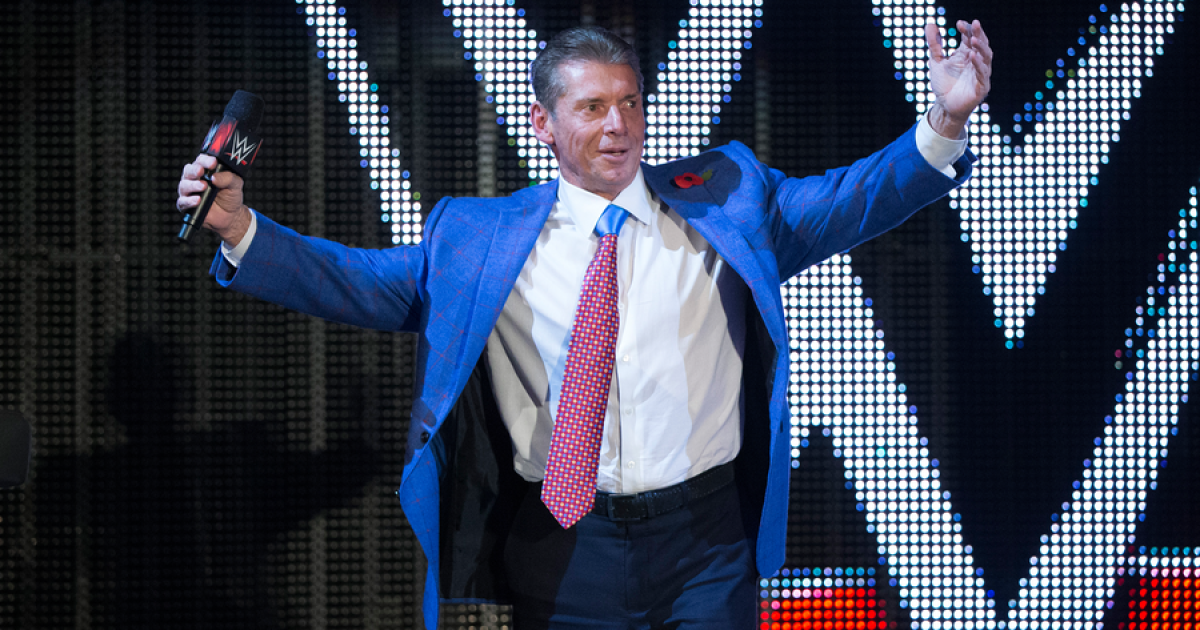
A Delaware Court of Chancery judge delivered a blow to wrestling impresario Vince McMahon and other World Wrestling Entertainment officials earlier this week.
Judge J. Travis Laster, vice chancellor of the Delaware Court of Chancery, issued sanctions for “spoliation of evidence” in the shareholder lawsuit over the 2023 merger between Ultimate Fighting Championship and WWE.
Laster ruled on Tuesday that WWE executives destroyed evidence by using the auto-delete setting on the messaging app Signal, enabling potentially relevant communications to be deleted.
The ruling means the court will operate under the assumption that five potentially damaging statements are true while allowing the defendants to rebut them.
The statements, according to the ruling, include that McMahon’s decision on the merger was “influenced” by Endeavor Executive Chairman Ari Emanuel’s “promise” to provide him with a continued role at the company and to indemnify him and provide legal support as federal investigators were looking into claims of alleged sexual misconduct.
McMahon pursued a deal with Endeavor in 2022 before WWE initiated its strategic review process, and both McMahon and then-WWE President Nick Khan worked with The Raine Group, a strategic financial advisor, “to steer the process to Endeavor and away from other potential bidders,” the ruling states.
In September 2023, entertainment giant Endeavor, the parent company of UFC, acquired WWE and merged the two sports entities to form a new, publicly traded company, TKO Group Holdings, in a deal worth $21.4 billion.
A month later, a group of shareholders filed suit against McMahon and other company officials in Delaware Chancery Court, claiming McMahon orchestrated a “sham sale process.”
Representatives for McMahon, WWE and TKO were not immediately available for comment.
According to the suit, McMahon, WWE’s controlling shareholder, turned down higher offers and excluded other bidders who would have ousted him and instead chose a deal that favored Endeavor’s Emanuel, a “close friend and longtime ally,” enabling McMahon to continue running WWE and shielding him from federal investigations related to a raft of sexual misconduct claims.
The complaint also alleges that the $21.4-billion deal undervalued the company and was “far below the offers” WWE’s board could have received from other interested parties had they “made any effort to negotiate in good faith.”
The litigation is related to the 2022 investigation by WWE’s board that found that McMahon made at least $14.6 million in payments between 2006 and 2022 for “alleged misconduct.” McMahon has denied claims of misconduct.
The settlements were made to women, including WWE employees, who alleged that McMahon initiated unwanted sexual contact and coerced women into performing sexual acts on him. In one case, first reported by the Wall Street Journal, a woman claimed that McMahon sent her unsolicited nude photos of himself.
McMahon’s alleged misconduct became the subject of ongoing investigations by the Securities and Exchange Commission and the U.S. Department of Justice.
“I am confident that the government’s investigation will be resolved without any findings of wrongdoing,” McMahon said in a statement to The Times in 2023.
Last January, the SEC announced it had settled charges against McMahon alleging he had violated federal securities laws by failing to disclose a pair of settlement agreements to WWE worth $10.5 million.
McMahon agreed to pay more than $1.7 million in a civil penalty and in reimbursement to WWE, without admitting or denying the agency’s findings. Federal prosecutors also have dropped their criminal investigation.
In January 2024, McMahon resigned as executive chairman of the board of TKO Group, one day after a former WWE employee, Janel Grant, sued the company, McMahon and former head of talent relations John Laurinaitis, alleging sexual assault, trafficking and emotional abuse.
Grant claimed that McMahon agreed to pay her $3 million in exchange for her silence.
The shareholder trial is set to begin on June 8. McMahon, Emanuel, Khan, TKO President Mark Shapiro, and WWE Chief Content Officer Paul “Triple H” Levesque are expected to testify.

Business
Commentary: While Trump declares that U.S. is enjoying ‘best economy ever,’ manufacturing jobs have been disappearing
Based on the words of President Trump, America is well on the way to becoming a “global superpower in manufacturing” — indeed, as he declared in a Father’s Day social media post, we are already experiencing the “BEST ECONOMY EVER.” (Capitalization’s his.)
Here’s what the government’s own statistics tell us: Manufacturing investment has crashed during his watch, with construction spending in the manufacturing sector down 26.4% from Trump’s inauguration through May, to $174.8 billion. That’s the lowest figure since February 2023, when the economy was in the midst of a post-pandemic recovery.
White House spokesman Kush Desai told me by email that “the last two jobs reports” showed manufacturing job growth. The Bureau of Labor Statistics reported a seasonally-adjusted decline of 2,000 manufacturing workers in May and a gain of 3,000 in June. But the June 2026 figure was 38,000 jobs, or about 0.3% below the level in June 2025, and 75,000 or about 0.6% below the level in January 2025, when Trump took office.
Desai said that “thanks to President Trump’s proven agenda of tariffs, deregulation, and tax cuts, American manufacturing will continue to rebound.”
There’s little mystery about what has come between Trump’s ambition and the real world. To a large extent it’s Trump’s economic program, particularly his tariff policies and, more recently, his war with Iran. Those have injected a level of uncertainty for corporate managements pondering whether to spend money on expansion that they haven’t had to confront in years.
From where we’re standing, we are not seeing signs of a manufacturing renaissance in the U.S.
— Didi Caldwell, Global Location Strategies
The tariffs and the war have driven up manufacturers’ costs for raw materials and overseas shipping. The general economic atmosphere doesn’t help. U.S. gross domestic product growth came in at a 2.1% annualized rate in the first quarter of this year, but the Federal Reserve Bank of Atlanta expects it to have fallen to 1.3% in the second quarter ended June 30.
Meanwhile, the University of Michigan consumer confidence index reached 44.8 in May, its lowest level ever (though it improved to 49.5 in June). Wages have been rising modestly, according to the Bureau of Labor Statistics, but those gains have been eaten up by higher prices, especially for gasoline and food.
To put things another way, the actual figures show the U.S. economy to be sputtering, and the “vibe economy” as measured by consumer confidence is doing even worse.
Now that Trump’s second term is about to reach its 18-month mark, let’s unpack the factors causing the discrepancy between his ambitions and claims, and the reality.
Trump declared economic victory just as his term was starting. On March 20, 2025, he proclaimed a “manufacturing renaissance” in the U.S. That was based on what he said were “trillions of dollars in new investments” he had “already secured in tech-based manufacturing.”
A White House statement said “the list of manufacturing wins is endless.” The provided list was a roster of announcements, not groundbreakings, much less completed ventures.
Business executives quite properly have taken these pledges with mounds of salt. “Announcements are what people say they’re going to do, but dollars spent is what’s actually happening,” Didi Caldwell, chief executive of a firm that helps companies find factory sites, told the Financial Times. “From where we’re standing, we are not seeing signs of a manufacturing renaissance in the U.S.”
Indeed, at least some of these announcements have had the flavor of performative efforts to satisfy Trump’s amour propre and extract government concessions.
For example, Apple Chief Executive Tim Cook appeared with Trump at the White House in August to announce a $600-billion U.S. spending plan to take place over four years. That was a $100-billion increase over its previously-announced program.
More to the point, however, it incorporated spending with suppliers that Apple had been working with for years. Mentioned in the news announcement was a commitment to buy cover glass for iPhones from Corning. But Corning has been supplying that glass since the first iPhone appeared in 2007. In any case, the announcement appeared to secure a commitment from Trump to exempt Apple from tariffs imposed on imported chips.
Apple’s announcement Wednesday that it will spend $30 billion to buy chips from Broadcom was similarly ambiguous. The announcement didn’t provide details about the terms of the commitment or the timing of its expenditures. I asked Apple for details and whether the deal was related to a desire to remain in Trump’s favor, but didn’t hear back.
A similar phenomenon occurred during Trump’s first term; Trump had built much of his 2016 presidential campaign on a promise to increase manufacturing jobs in the United States. He blamed shrinkage in the manufacturing sector on trade agreements such as NAFTA and the policies of the Chinese, and took credit when an American manufacturer agreed to create or save jobs in the United States.
As I reported in 2019, many of those arrangements turned out to be exaggerated or bogus, or predated Trump’s claim. Some disappeared as soon as public attention turned elsewhere, or were outweighed by job cuts made elsewhere by the same companies.
Trump’s tariffs appear to have had a direct effect on manufacturing employment in the U.S. Since Trump’s inauguration, the manufacturing sector has shed about 75,000 jobs, or 0.6%. After April 2, 2025, when he announced global “liberation day” tariffs supposedly as a response to years of unfair treatment of American exports, the decline picked up pace, with a shrinkage of 68,000 manufacturing jobs.
The Supreme Court invalidated those tariffs in February, but others are still in place, including tariffs on imported steel and aluminum and on goods from China. Nor has he ceased threatening partners with trade wars. As recently as Tuesday, he said he would cut off all trade with Spain because of that country’s disagreement with him over its defense spending and its criticism of his Iran war.
As it happens, Spain is one of the few countries with which the U.S. has a trade surplus. That means that any cutoff, which trade experts think will be unlikely, would come at a cost to the U.S.
One might have hoped that Trump had learned a lesson from his first-term trade war with China. That conflict provoked a sharp contraction in the manufacturing economy, with the Institute for Supply Management’s purchasing managers index falling to 49.1 by mid-2019. (A reading below 50 signifies contraction.)
The ISM index began to recover toward the end of Trump’s term but fell again during the pandemic. Lately it has been falling again, to 53.3 in June from 54 in May.
The Iran war is another deadweight on domestic manufacturing. That’s partially the consequence of blockages of the Strait of Hormuz, the crucial thoroughfare not only for middle eastern oil, but also for such industrial inputs as fertilizer and aluminum. Cement, concrete, olive oil and spices are also among commodities produced in the region that use the strait as an outlet to reach the outside world.
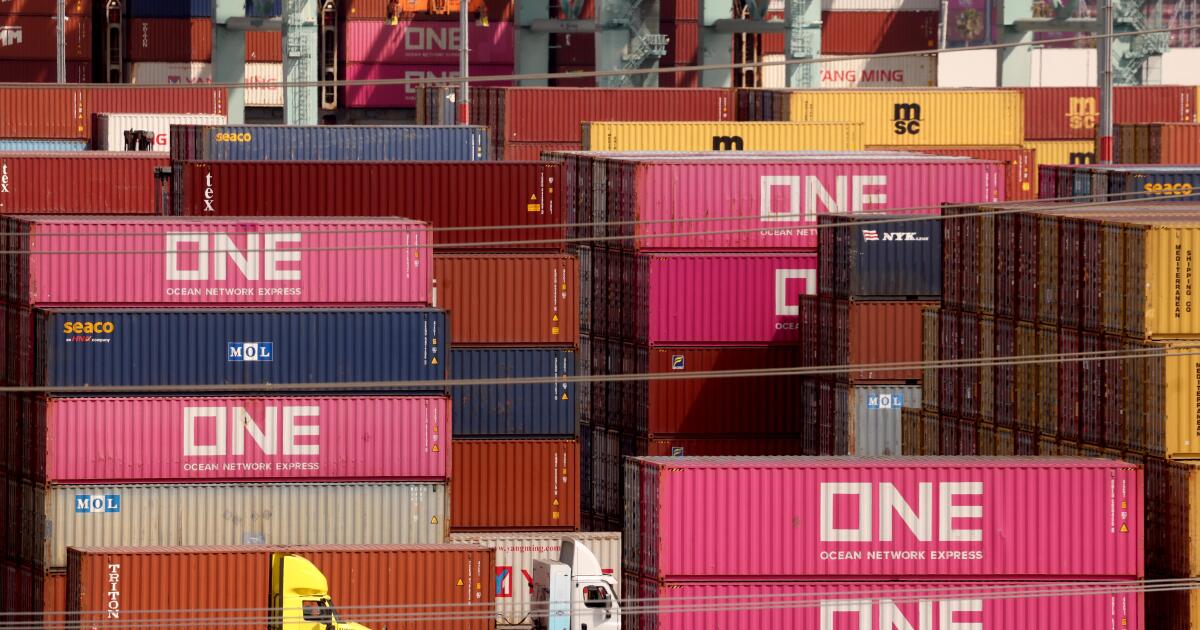
Uncertainties in the region, tensions between the U.S. and China, and heightened concerns over the safety of shipping overall have driven up shipping costs between the far east and the U.S. The price of shipping a benchmark 40-foot container from China to the West Coast has nearly quadrupled to $6,687 now from about $1,700 just before the Iran war began, according to an index maintained by the cargo firm Freightos — even though shipping prices typically decline during this time of year.
There can be little doubt that the U.S. would benefit from an industrial policy — if it’s coherent. China supplanted America as the world’s leading exporter of manufactured goods in 2010, and the gap has only widened since then. China’s dominance may be hard to reverse, as it’s built on lower labor costs and transport infrastructure that enjoys focused government investment.
Tariffs could be a component of a new industrial policy, but Trump’s tariffs aren’t rationally geared to protecting domestic industries that need protection. They’re expressions of his whims, and as such they’re totally ineffective. If there are government investment policies targeting industries that need assistance, they’re not apparent to economists or industrialists.
Trump can talk as much as he likes about a golden age for U.S. manufacturing, but from his first term through this one, it’s nothing but talk. And talk, of course, is cheap.

Walt Disney Co.’s “Moana” lost its way at the box office this weekend as the company’s latest live-action remake opened to a sluggish $43 million in the U.S. and Canada.
The domestic haul for “Moana” underperformed studio expectations, which ranged from $60 million to $65 million. Globally, the film brought in a total of $95 million on a production budget of about $250 million.
Despite its lackluster debut, the film still came in first at the box office during a weekend where it had few new competitors in the family film space.
The “Moana” franchise has been a box-office and streaming juggernaut. The original 2016 animated movie brought in more than $643 million worldwide and is the most-watched movie on Disney+, while a 2024 sequel grossed more than $1 billion at the global box office. On the merchandise side, more than 22 million “Moana”-themed toys have been sold. “Moana” also appears in the Disney theme parks.
But the theatrical reception for the live-action film may signal that audiences think there’s been too much “Moana” in just 10 years. (The 2024 film sequel was originally set to be a streaming series before it was moved to Disney’s theatrical calendar.)
Most of Disney’s previous live-action remakes have come decades after the original animated movie, such as 2025’s “Lilo & Stitch,” which arrived 23 years after its animated predecessor and grossed more than $1 billion in worldwide box office receipts.
The theatrical haul for the latest “Moana” may also have suffered from poor reviews — the film got a 34% on aggregator Rotten Tomatoes, with several critics highlighting its nearly frame-by-frame similarity to the original film. The audience score on Rotten Tomatoes, however, was 90%.
Still, as the last of this summer’s major family films, “Moana” could see a longer tail in theaters, particularly with many children still on break from school. Disney’s live-action “Mufasa: The Lion King” opened in 2024 to a middling $35 million, but ended up grossing more than $722 million globally through the holiday season.
Universal Pictures and Illumination’s “Minions & Monsters” came in second at the domestic box office this weekend with $20.5 million. Disney and Pixar’s “Toy Story 5” continued its strong run with an $18.5-million haul, enough for third place and contributing to a total global gross of $879.1 million.
Warner Bros.’ “Evil Dead Burn” ($13.7 million) and Angel Studios’ “Young Washington” ($6.4 million) rounded out the top five.
Also notable this weekend: Lionsgate’s musical biopic “Michael” crossed $1 billion in worldwide box office revenue, the first time that the studio has reached that milestone and the second film this year after “The Super Mario Galaxy Movie” to hit that mark.

California cardrooms welcomed a court decision to let them continue to allow visitors to bet on blackjack, one of their most lucrative games.
A San Francisco Superior Court judge struck down regulations that would ban cardrooms from offering blackjack in California.
Authorities wanted to close what some consider a legal loophole allowing cardrooms to offer blackjack and games in which players play against the house. Those types of games are supposed to be offered only in Native American casinos, but cardrooms were getting around the restriction by using designated outside dealers.
In the June 30 ruling, Judge Richard Darwin said Atty. Gen. Rob Bonta and the California Bureau of Gambling Control exceeded their authority by introducing the change.
The California Department of Justice officially introduced the proposed regulations in May 2025, and responded to over 1,700 public comments.
The California Office of Administrative Law green-lit the rules in February, and they were set to go into effect on April 1, but in March, the California Gaming Assn. filed a suit to invalidate them.
In May, Darwin filed a preliminary injunction, temporarily blocking the state from imposing the new rules.
There are more than 70 cardrooms across California employing about 20,000 workers, according to the California Gaming Assn. It estimated that the changes could cut the number of cardroom jobs in half and significantly reduce the industry’s positive economic impact.
A 2019 analysis commissioned by the group estimated that tax revenue generated by California cardrooms was roughly $500 million a year.
Kyle Kirkland, the president of the California Gaming Assn. and owner of Club One Casino , said the regulation would have not only affected the cardrooms themselves, but also the cities and communities that rely on the money they generate.
“We give the city of Fresno a million dollars a year in table tax revenue, and they were actively asking me how could they budget for this going forward, given the impact that it’s going to have,” he said.
At Club One, about 60% of revenue comes from blackjack, Kirkland said.
“I can’t survive on the other 40%,” he said.
If the regulations had gone into effect, Kirkland said he would have had to lay off nearly 200 of the cardroom’s 250 employees.
Cardrooms in L.A. County generate more than $2 billion in economic activity and support more than 9,000 jobs.
Kirkland said the regulations would have especially affected cities like Bell Gardens and Hawaiian Gardens, where casinos represent nearly 70% of the general fund.
In the City of Commerce, the Commerce Casino generates 40% of the city’s general fund, and employs 2,200 people. When the regulations were first passed, Mayor Kevin Lainez said the city was “devastated”.
In response to the potential revenue losses, the city declared a state of fiscal emergency, and introduced a higher sales tax.
Lainez said the city would have had to make cuts to senior programs, public safety services and capital improvement projects.
“We’ve responsibly built our budgets and shaped them around the revenue that the cardroom generates, so along with all of the other businesses here in the city, right, and we’ve developed some quality of life services that our community really relies on, and so for this to no longer be hanging over our heads is a relief to our community,” he said.
The ban wouldn’t have affected Native American casinos.
Proposition 1A, passed by California voters in 2000, gave tribes the right to conduct Nevada-style gambling, such as casino-banked card games, on reservations.
Cardrooms have continued to offer blackjack and other banked games such as baccarat by giving players the option to take turns dealing the game and by relying on third-party businesses that employ people to act as bankers.
The Bureau of Gambling Control for years accepted the practice, which attorneys representing cardrooms say is “completely legal” and has been approved by Bonta’s predecessors, but the state’s new rules crack down on the use of these third-party businesses and tighten rules for “player-dealers.”
While the California Gaming Assn.’s suit was successful, Kirkland said he expects the Justice Department to appeal, and said the conflict is far from over.
“There’s not really a lot of celebration,” he said. “It’s concerning that the attorney general would think that that was a valid way of going out and regulating the cardroom industry, so I’m just wondering what’s the next step, what’s coming behind, but at least in this battle, it was a pretty strong and resounding victory.”
-

 Indiana4 minutes ago
ACLU of Indiana sues over conditions at Monroe County Jail
-

 Iowa10 minutes ago
Northwest Iowa woman taken to the hospital after rollover
-
 Kansas16 minutes ago
Pilot of crop duster plane survives crash Monday in NE Kansas
-

 Kentucky22 minutes ago
Kentucky State Police seeks public vote for national cruiser contest – Winchester Sun
-

 Louisiana28 minutes ago
Louisiana-based study: Bariatric surgery holds promise for young patients
-

 Maine34 minutes ago
High heat and humidity likely to bring storms to Maine
-

 Maryland40 minutes ago
Dog who called Maryland shelter home for 7 years finally adopted: “There wasn’t a dry eye in the house”
-

 Michigan46 minutes ago
Michigan reports 2,640 Cyclospora cases; Lettuce identified as possible source of outbreak

