Denver, CO
Handful of migrants choose to battle bitter cold in Denver encampment


DENVER — A handful of migrants who did not want to stay in city shelters are battling the bitter cold in an encampment in north Denver.
“We really want people to be inside. That’s where they’re supposed to be right now,” said Amy Beck, an advocate for people experiencing homelessness.
Beck is among a group of volunteers that’s helping the migrants.
“We are keeping them safe while they go through this, really, their first serious storm as they experience this and understand what the weather can be like in Colorado,” said Beck.
Denver
Denver clearing out migrant encampment under bridge ahead of cold temperatures
5:15 PM, Jan 10, 2024
The city moved many migrants indoors before the cold weather arrived, but Beck said a small group of them refused to go.
“For various reasons, people either don’t want to or can’t go inside,” said Beck. “I’m not going to force them. I can’t force them to do that. What we can do is just keep them safe.”
Beck said many migrants don’t like the idea of living in a congregate setting with many different people surrounding them, leaving little space for privacy.
Eight to 10 migrants staying at the encampment were sleeping in their tents when Denver7 visited Monday morning. Beck and other advocates check on them often and show them how to stay as warm as possible.
“Everyone understands in the camp to use the hand warmers and feet warmers,” Beck said. “They’re all wearing three pairs of feet warmers per foot.”
Beck said volunteers also set up warming tents for them.
Follow Up
Migrants who were living under Denver bridge moved into city shelter
5:20 PM, Jan 11, 2024
Beck expects the encampment, which is located in an area away from the view of most people, will grow as soon as the city’s severe weather shelters close and people staying at those shelters return to the streets.
“We’re expecting that that could be up to a couple hundred people,” Beck said.
A spokesperson with the City and County of Denver said the number of migrants arriving in Denver has slowed in the last few days, likely due to the winter weather. They expect numbers to go back up once the cold weather moves out.
As for Beck, she knows more winter weather will eventually come. She said most of the migrants, who are from Central and South America, likely won’t be prepared.
“They haven’t experienced this in the past. And so, they really don’t have any concept of how bad it can be,” said Beck.
She hopes it won’t be as brutal as what the region is experiencing now.
Beck said the group of advocates she is working with does not need any more donations at this time.
“We have enough tents and blankets and enough gear, enough heat to keep people going for right now,” said Beck.
Handful of migrants choose to battle bitter cold in Denver encampment
Here’s how you can help refugees and immigrants coming to Denver
If you’d like to help as the city responds to this migrant crisis, you can do so with donations — either material or monetary. If opting for the former, the city is asking for the following items:
- Socks (new/unopened only)
- Bras – small/medium/large
- Women’s clothing – small/medium/large
- Men’s clothing – small/medium
- Winter hats – gender neutral and kids/one size fits all
- Winter gloves – men’s, women’s and kids/small and medium sizes
- Scarves – various sizes
- Closed toed or winter shoes for children
- Closed toed or winter shoes for women sizes 4, 5, 6 and 7
Those items can be dropped off at the following locations:
Community Ministry
1755 S. Zuni St. Denver, CO 80223
Monday – Thursday from 8 a.m. to 12 p.m.
Para Ti Mujer
150 Sheridan Blvd. Suite 200 Lakewood, CO 8O226
Monday, Wednesday, or Friday from 9 a.m. to 3 p.m.
Colorado Changemakers Collective
12075 E. 45th Ave. Denver, CO 80239
Monday – Friday from 9 a.m. to 3 a.m.
Before heading out the door though, please call ahead to ask about any specific instructions for drop-off.
If you want to donate your time, you can donate money to the Newcomers Fund.
The Follow Up
What do you want Denver7 to follow up on? Is there a story, topic or issue you want us to revisit? Let us know with the contact form below.



DENVER (KDVR) — More sunny and hot conditions are in Denver’s weather forecast for the rest of the weekend and into next week.
Denver weather tonight: Mainly clear
Saturday night will stay mainly clear and warm. Low temperatures will fall to the mid 60s, which is about 5 degrees warmer than normal for this time of year.
Denver weather tomorrow: Sunny, hot
Sunday will be sunny, breezy and hot with wind gusts out of the south southwest picking up to 20-30 mph. High temperatures will climb to the mid 90s, which is more than 5 degrees warmer than normal for this time of year, but well below the daily record of 102 set in 2024.

Looking ahead: Hot week ahead
Sunshine and a warming trend continues on Monday. High temperatures will reach just below the daily record of 100 degrees set in 2003.

More sunny and dry conditions are on the way through the workweek. Every day will start with a low in the 60s, then plenty of sunshine helping to boost high temperatures to the mid to upper 90s.

There is a slight chance for showers, mostly in the High Country, that return by the end of the week and the start of the weekend.

Getty
Peyton Watson #8 of the Denver Nuggets is a potential Lakers free-agent target.
The Los Angeles Lakers are still exploring means to improve their roster ahead of the upcoming season. Moves have been made already, but there are opportunities to add more talent around Luka Doncic.
One potential target for L.A. is Denver Nuggets star, Peyton Watson. In a proposed multi-team deal involving the Miami Heat and New Orleans Pelicans, the Lakers could land the high upside talent.
In the deal:
Both Watson and Jones have been linked with a move to L.A. this offseason, but no deal has been able to push forward. This proposal offers a chance to get both with one swing.
Lakers’ Outline for Acquiring Peyton Watson Through Trade

GettyDALLAS, TEXAS – JANUARY 14: Peyton Watson #8 of the Denver Nuggets handles the ball during a game against the Dallas Mavericks at American Airlines Center on January 14, 2026 in Dallas, Texas.
Watson, 23, is a restricted free agent, which makes any approach difficult. The Nuggets could match any offer to retain him and are reportedly planning to do so.
The 6-foot-8 star is coming off a breakout season in Mile High City, averaging 14.6 points, 4.9 rebounds, 2.1 assists and 1.1 blocks per game. He shot 49.1% from the field and 41.1% from three while starting 40 of his 54 appearances.
Watson’s camp is reportedly seeking north of $25 million per year which is unfavorable for the Nuggets at this point. Denver already has huge commitments to Nikola Jokic, Jamal Murray, Anthony Gordon and Christian Braun.
The Lakers can capitalize on the Nuggets’ need to move for pieces for flexibility and pitch a move for Watson. There would be adequate space to fit in the incoming star with the outgoings in this framework.
The Lakers can offer Watson a multi-year deal that doesn’t affect their flexibility. Vanderbilt’s outgoing deal is the most notable, which is why the Lakers have put him at the top of their moving list for now.
Watson’s Upside and Adding Herb Jones to the Roster

GettyLuka Doncic #77 of the Los Angeles Lakers passes the ball as he is pressured by Herbert Jones #2 and Jeremiah Fears #0 of the the New Orleans Pelicans during the second quarter of an 2025 Emirates NBA Cup game at Smoothie King Center on November 14, 2025 in New Orleans, Louisiana.
The Lakers would also get Jones out of this trade from the Pelicans. He is on a three-year, $68 million extension going through 2028-29 with a player option. His cap hit for 2026-27 sits at around $14.9 million.
With Watson and Jones, the Lakers would be bringing in roughly $38 million worth of salary, adding both Saddiq Rey for depth while sending out only about $26 million. This scenario would push L.A. well over its luxury limit but not into restrictive zones.
A potential lineup having Watson and Jones alongside Doncic, Austin Reaves and the newly acquired Walker Kessler, is positioned to be a strong core.
The real hurdle is getting Denver to move on from Watson. The franchise is committed to keeping him, even if it means giving up one of their more seasoned stars. They did activate a qualifying offer, making him restricted and they intend to match offers. Although a sign-and-trade is not impossible and the Lakers can work with that.
Adel Ahmad Adel is a writer with over five years of experience covering the NBA. His work has appeared on various media platforms, both national and local. More about Adel Ahmad
Denver, CO
One tree at a time: Denver nonprofit works to close shade gap as heat dome threatens neighborhoods

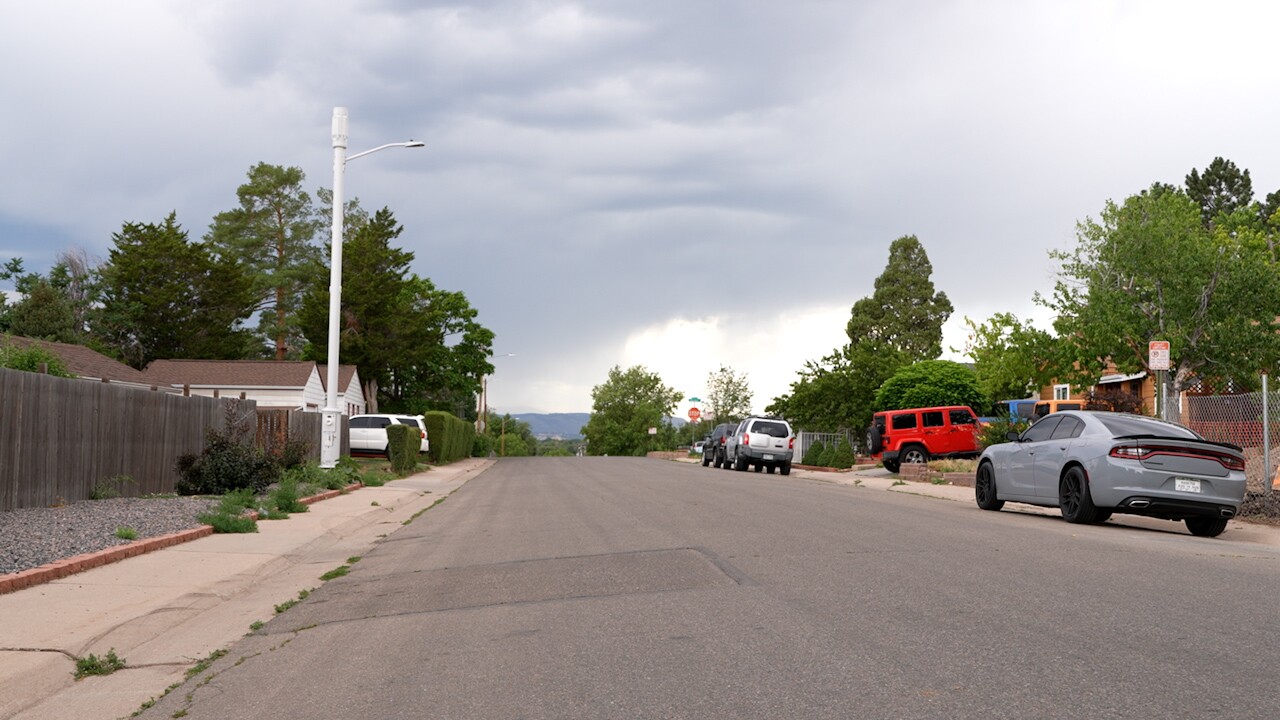
DENVER — Some Denver neighborhoods are far more vulnerable to this weekend’s incoming heat dome than others — and the difference comes down to trees.
The Valverde neighborhood on the city’s west side has about 9% canopy cover, leaving residents with little shade as temperatures climb toward triple digits.
▶️ WATCH: Denver7’s Claire Lavezzorio learns more about The Park People and how it is helping neighborhoods in Denver.
One tree at a time: Denver nonprofit works to close shade gap as heat dome threatens neighborhoods
Kim Yuan-Farrell, executive director of The Park People, a nonprofit that plants trees in underserved neighborhoods, said the disparity across Denver is stark.
“We have some neighborhoods that have wonderful canopy cover, like 20 to 30% of those neighborhoods are forested. Then a number of our neighborhoods have really low canopy cover, between four or 8% where it’s just significantly less,” Yuan-Farrell said.
Denver7
The Park People identified 28 neighborhoods in need of more tree cover, including Westwood, Globeville and Northeast Park Hill.
Trees can cool an area by 15 to 20 degrees, making a significant difference.
The National Weather Service (NWS) warned the heat dome could last through next weekend.
“The exceptional thing about this is how long it will last,” said NWS meteorologist Russell Danielson. “If you do have trees to take shelter under, it does actually cool down the temperature a decent amount.”
Yuan-Farrell said trees are more than a comfort — they are a critical piece of urban infrastructure.
Denver7
“We really consider it a really essential element of green infrastructure, a real nature-based solution to a lot of these really serious local environmental problems,” Yuan-Farrell said.
In the map below, explore Denver’s libraries and rec centers that welcome the public in from the heat during business hours.
When asked whether Denver has a long road ahead, she did not hesitate.
“We have a lot of work ahead of us,” Yuan-Farrell said. “And we really need our whole community to get involved in that.”
The Park People plant anywhere from 1,200 to 2,000 trees a year. You can apply for one in your yard. Planting is set to begin in September.

Denver7 | Your Voice: Get in touch with Claire Lavezzorio
Denver7’s Claire Lavezzorio covers topics that have an impact across Colorado. If you’d like to get in touch with Claire, fill out the form below to send her an email.
-
 News12 minutes ago
Messi and Argentina survive another close call to reach the World Cup semifinals
-

 Los Angeles, Ca2 hours ago
19-year-old arrested, accused of distributing marijuana to minors across Riverside County
-

 Detroit, MI2 hours ago
Phillies end the Tigers’ winning streak at 6 with a 4-2 victory
-

 San Francisco, CA2 hours ago
Giants select Barry Bonds’ nephew Peyton in third round
-

 Dallas, TX2 hours ago
Mark Cuban takes legal action against the Dallas Mavericks ownership over proposed arena deal
-

 Miami, FL2 hours ago
South Florida businesses report economic boom, as FIFA officials estimate a billion dollar economic impact
-

 Boston, MA2 hours ago
Forecast: Looking ahead to toasty temps next week
-

 Denver, CO2 hours ago
Denver weather: Warming trend continues this weekend and into next week

