If you have an event taking place in the Denver area, email information to carlotta.olson@gazette.com at least two weeks in advance. All events are listed in the calendar on space availability.
Sunday
Orchard Farmers Market — 9 a.m.-2 p.m., Orchard Town Center, 14535 Delaware St., Westminster; orchardfarmersmarket.com.
Advertisement
Sunday Funday Series — Watch polo from the sidelines with cocktail bar, food trucks, mingle with players and ponies and more, 10 a.m.-3 p.m., Denver Polo Club, Sedalia, $35 and up. Tickets: denverpoloclub.com.
Back to School Bee Bash — Kids’ games and crafts, Beatrice the bee mascot, live music and more, 11 a.m.-5 p.m., Denver Premium Outlets, 13801 Grant St., Thornton; tinyurl.com/bvemcrdv.
Stanley Summer Music Series — Noon-2 p.m., West Patio, Stanley Marketplace, 2501 N. Dallas St., Aurora; stanleymarketplace.com/stanley-events.
Miguel Espinoza Fusion with Michele Castro — 5 p.m., Levitt Pavilion, 1380 W. Florida Ave., Denver, free GA — open lawn, $35 VIP. Tickets: levittdenver.org.
Advertisement
—
Sammy Hagar — With Loverboy, 7 p.m., Red Rocks Amphitheatre, 18300 W. Alameda Parkway, Morrison, go online for prices. Tickets: axs.com.
Success! Thank you for subscribing to our newsletter.
—
Nitty Gritty Dirt Band — 7 p.m., Paramount Theatre, 1621 Glenarm Place, Denver, $49 and up. Tickets: ticketmaster.com.
Lord Buffalo — With DBUK, 7:30 p.m., Skylark Lounge, 140 S. Broadway, Denver, $18.08. Tickets: skylarklounge.com.
Advertisement
The Greeting Committee — With Toledo, 8 p.m., Bluebird Theater, 3317 E. Colfax Ave., Denver, $23.50. Tickets: axs.com.
D’Aydrian Harding: The Stay Sober Summer Tour — 8 p.m., Ogden Theatre, 935 E. Colfax Ave., 935 E. Colfax Ave., Denver, $39.50. Tickets: axs.com.
The Bouncing Souls — 8 p.m., Gothic Theatre, 3263 S. Broadway, Englewood, $37.50 and up. Tickets: axs.com.
Monday-Jan. 5
”Shadow and Light: Patrick Marold” — Denver Botanic Gardens, 1007 York St., Denver, go online for prices; botanicgardens.org.
As the Denver Broncos design a new stadium for Burnham Yard, one of the most critical elements — with some of the highest potential for backlash from neighbors and the team’s fans — will be the plan for getting people to and from the site.
Questions about parking, traffic management, transit access and accessibility have emerged as major concerns for neighbors of the future stadium during early community meetings in west Denver organized by the city and the team.
“It is probably the No. 1 topic that we’re hearing,” said Troy Halouska, the vice president of the La Alma Lincoln Park Neighborhood Association.
Lindsey Noble, a resident of the neighborhood, said in an interview with The Denver Post that she and her neighbors were “pretty concerned about traffic and parking” from the events the new stadium would host — which the team has said would go well beyond Broncos home games.
Advertisement
“They (the Broncos) are creating these problems, and some of the solutions I have heard have to do with altering our neighborhood or changing streets,” she said. “These aren’t things we want.”
The Broncos are still early in the process of laying out plans for the abandoned rail yard as the team aims to build a stadium by 2031. The team has already released some transportation-related details, including proposed changes to street crossings with the Regional Transportation District’s light rail tracks, potential parking options for events, and plans for connections to existing pedestrian and bike infrastructure.
The team plans to build more than just a stadium, though. Alongside their home field, the Broncos want to create a mixed-use entertainment district that uses the space year-round. Like other modern stadiums, it would have restaurants, open space and, potentially, hotels or apartments outside the venue.
Burnham Yard can be seen through the windows of an RTD light rail train as a passenger sits in their seat on Thursday, March 19, 2026, in Denver. (Photo by Timothy Hurst/The Denver Post)
Officials with the Broncos say they have heard the worries from nearby residents about the massive development’s potential impact on their neighborhoods. They say they’re looking for ways to integrate the site into the community — without flooding nearby streets with thousands of cars and people.
Generally, the team plans to address those concerns by designing the site in such a way that eventgoers are guided in through the north and south ends of the site, rather than being routed through the mostly residential neighborhood to the east.
Advertisement
The site itself, once the rail yard is cleared, will be nestled between two rail corridors — freight lines to the west and RTD’s light rail tracks to the east. Entities connected to the Broncos have been buying up properties beyond the banana-shaped rail yard for the stadium and surrounding district.
A passenger crosses the tracks at the RTD 10th/Osage Station with the north end of Burnham Yard visible in the background on Thursday, March 19, 2026, in Denver. (Photo by Timothy Hurst/The Denver Post)
A bit farther to the west of the site is Interstate 25, and the north and south boundaries are generally West 13th Avenue and West Sixth Avenue. An early conceptual plan the team submitted to the city shows how its designers plan to connect local streets through the site. One new street would connect West Eighth Avenue to Osage Street, for instance, incorporating city plans to lower part of Eighth’s current viaduct.
Josh Brooks, a principal at Sasaki, the architecture firm designing the site’s master plan, said during a community meeting in February that the team plans to design the area so that noise and visual impacts are pushed as far from the residential neighborhood as possible.
“Our intention is to ensure this is an integrated community, a mixed-use development that really serves as an extension of the city and becomes part of the shared memory of the community,” Brooks said.
One of the things that most attracted the team to Burnham Yard was its connectivity with other areas. Located near I-25, Sixth and Eighth avenues, an RTD station, walking paths and planned bike lanes, the site won’t need massive changes to help bring in visitors.
But that doesn’t mean the team won’t have plenty of work to do on that front.
Advertisement
A large crowd gathers in a gymnasium for a community meeting hosted by the Denver Broncos at the La Alma Recreation Center to share preliminary concepts for the proposed new stadium and mixed-use community at Burnham Yard in Denver on Feb. 12, 2026. (Photo by RJ Sangosti/The Denver Post)
During the February community information meeting at the La Alma Recreation Center, the Broncos conducted a quick survey of attendees to ask what their top concerns were. The most-selected item was “traffic congestion during games/events,” followed closely by “impacts to housing expenses.”
The design for the site will focus on connecting existing roads and pedestrian paths and easing those neighborhood concerns, Brooks said.
The Broncos will work with the city in the coming months to develop a small-area plan, which will set out the design for the expanse surrounding the stadium site. While the stadium itself will be privately financed, the team has said, the city and state could be on the hook for infrastructure improvements nearby.
The city already plans to pay for improvements to two major road connections, the nearby Sixth and Eighth avenue viaducts, as part of bond projects passed by voters last fall.
Train crossings and transit access
One advantage of the Burnham Yard site is that it already has an RTD rail station next to it, making transit access easier. But the 10th and Osage station is accessible only from the east, with Burnham Yard west of the tracks. So it would need to be reconstructed to allow pedestrian access from both directions.
Working together with RTD, the Broncos are proposing changes to several light rail crossings. At 13th Avenue, the team has suggested a bridge for trains to pass over the street, with a place for drivers, cyclists and pedestrians to cross beneath.
Advertisement
EVERYDAY ACCESS: A map included in the Denver Broncos’ large development review pre-application filed with Denver’s planning department in November 2025 shows a conceptual plan for transportation access to the Burnham Yard stadium neighborhood. Orange lines identify planned vehicle routes. Dotted orange lines are shared streets and dashed blue lines show existing freight and light rail lines. (Courtesy Denver Department of Community Planning and Development)
At 12th and 9th avenues, team officials are proposing a separated-grade crossing for cyclists and pedestrians to also pass underneath the light rail tracks.
Eleventh, 10th and 8th avenues would have at-grade crossings. Halouska, with the La Alma Lincoln Park Association, said residents would like as few at-grade crossings as possible to prevent collisions or other safety hazards.
Besides concerns about transit crossings, Noble expressed worry that there also might not be enough light rail cars on a game day to transfer everyone who arrives and departs that way.
A spokesperson for RTD said there was no one available to discuss the transit agency’s plans for the area.
“RTD is regularly meeting with the project team and other partners to provide feedback and ask questions about their proposed stadium plans. Specific information about any proposed changes to RTD’s services or operations is not yet available,” RTD’s Pauline Haberman said.
What about parking?
Other concerns about the plan center on where those who drive to the stadium will park.
Advertisement
Halouska said even when his group tries to host meetings about other topics, parking is the concern its leaders hear about the most from the neighborhood.
“The Broncos have said themselves they really want this area to be activated 300 days a year, and so folks in the neighborhood are very concerned about what kind of impact that will have on parking,” he said. “We really need more details from the team and the city.”
EVENT DAYS: A map included in the Denver Broncos’ large development review pre-application filed with Denver’s planning department in November 2025 shows a conceptual plan for handling game and event day access to a new stadium in Burnham Yard. Streets with solid blue lines would be the primary access routes, while dashed blue lines are for limited access routes. Streets with red lines would be closed around events. Potential parking is shaded yellow. (Courtesy Denver Department of Community Planning and Development)
Team officials have said they plan to provide the same amount of parking at the new site as Empower Field has — which is roughly 7,000 spots. But instead of a stadium surrounded by surface parking, officials are proposing making use of parking structures and shared parking systems.
Noble said the on-site parking spots could make a big difference in the impact to the neighborhood.
The city could also add resident-only parking permit rules for the surrounding streets, much like a longstanding system in the Jefferson Park neighborhood around Empower Field.
A spokesperson for the Department of Transportation and Infrastructure said the same system is possible for Burnham Yard, but it’s too early to know specifics of how it would work.
Advertisement
“We won’t begin designing anything until we understand how the site will work, where impacts could occur, and there’s a focused conversation on (residential parking permits),” Nancy Kuhn wrote in an email.
Halouska said that could help, but only if the parking permits are regularly enforced.
“Having the permits is a fine idea — though it does cost money to get a permit — but if it’s not enforced, then it’s kind of pointless,” Halouska said.
Bike and pedestrian access
It won’t just be public transportation and cars getting people to events or the new development. The Broncos also plan to build connections to surrounding bike and pedestrian infrastructure, like the South Platte River Trail and the bike lane along 13th Avenue, Brooks said.
There could also be a connection to the proposed 5280 urban trail, which as envisioned by planners would weave through several neighborhoods that include La Alma Lincoln Park, Golden Triangle, Capitol Hill, LoDo and Ballpark. The effort, led by the Downtown Denver Partnership, is not yet fully under construction. About a quarter of the plan is in “next steps development,” according to the DDP.
Advertisement
Noble said she hoped the team would find some ways to encourage people to travel to the stadium without driving.
“Really, I think incentivizing people to ride their bike and take public transportation is the way to go to mitigate the impacts,” she said. “Make it easy. Make it affordable.”
Officials say they will wrap up the community-informed small area plan, which will provide policy guidance for city decision-makers, by the end of this year. It will include resident feedback and ideas about housing, sidewalks, open space and grocery access, among other things.
The Broncos and the city plan to host their next community meeting in May.
Get more Colorado news by signing up for our Mile High Roundup email newsletter.
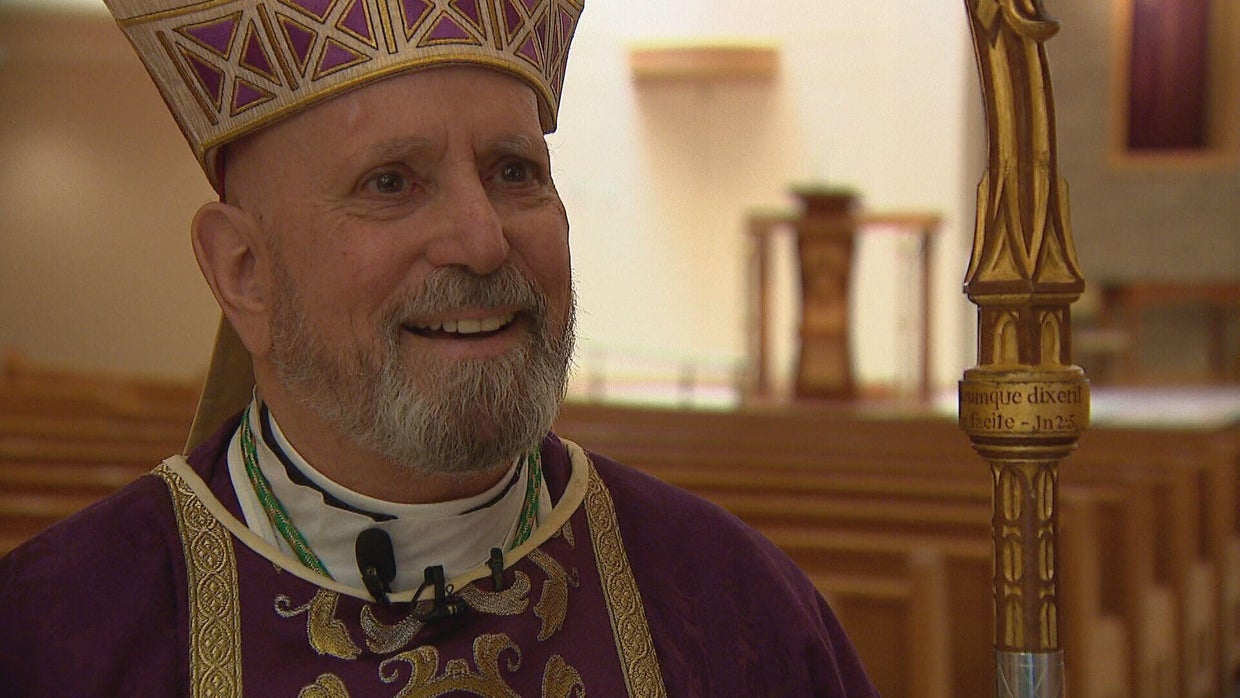
On Sunday, a special Mass was held to say goodbye to the archbishop of the Archdiocese of Denver, Samuel J. Aquila.
Aquila was appointed as the diocese’s archbishop in 2012 and submitted his resignation last year as he neared his 75th birthday, in accordance with Canon Law. Pope Leo XIV accepted his resignation in February and appointed his successor, Archbishop-designate James R. Golka.
Aquila (left) and Golka (right)
Advertisement
Dan Petty/DenverCatholic
A Mass of Thanksgiving was held at the Light of the World Catholic Church on Sunday to bid farewell to the man who led the diocese for nearly 14 years and to thank him for his service. Aquila was ordained as a priest in the Archdiocese of Denver in 1976, and this year marks his 50th anniversary as a priest.
As archbishop, Aquila spoke out against abortion and called on officials to find a balance between protecting the United States’ borders and welcoming immigrants.
Aquila says that during his time as archbishop, the diocese has received many blessings and seen significant growth, including an increase in the number of young families.
Archbishop Aquila at the Mass of Thanksgiving
Advertisement
CBS
“I think that the Lord has blessed this archdiocese tremendously, especially since World Youth Day in 1993; things really began to change here. Many new apostolates were born from the visit of Pope John Paul II, of Saint John Paul II. And there is a very deep awareness of how God providentially watches over this archdiocese,” said Aquila. “And so, I am handing off a very blessed archdiocese with many young families and many people who are deeply committed to the gospel.”
He shared a feeling of gratitude and joy for the opportunity to serve the diocese, knowing the faithful, and leading people to Christ. Aquila hopes that his community has found a deeper love of Christ and the sacraments through his service and an understanding of the importance of being missionary disciples.
“Of being those who go out themselves and invite others to encounter Christ and to come to know Jesus Christ. And proclaiming the, what we call the ‘kerygma,’ the basic good news of the gospel, or the joy of the gospel. That in Jesus Christ sin and death have been conquered, and He is the one that is the way to the Father,” Aquila said.
Archbishop Aquila
Advertisement
CBS
He said he hopes the diocese continues to grow in faith and that he believes Golka will be a good shepherd of that faith.
“The blessing is that my successor is an incredibly good man whose heart is on fire for Jesus Christ,” he shared. “And so, it’s like running a race and handing off the baton and saying, ‘Okay, you run with it.’ And knowing that Archbishop-designate Golka, who will be Archbishop Golka on Wednesday, that he will be one who continues caring for the gospel and making disciples for Christ.”
Golka’s installation as the new archbishop will begin with evening prayers at the CoBank Arena at the National Western Complex on March 24, followed by an Installation Mass the next day. A Mass of Taking Possession of the Cathedral will take place on March 26 at the Cathedral Basilica of the Immaculate Conception.
Sabrina Ortengren had almost no hope when she and her husband Jay sat down with an autism therapy provider in Evergreen in 2022.
All of the specialized schools in their home state of Virginia had deemed their son Ethan’s needs too severe to manage. The family had made the three-day journey west based on reports that autism services in Colorado would be better, but in the upheaval of a move, Ethan had gotten worse and thrown his father into a wall.
After a week in Children’s Hospital Colorado, he was doing better, but she couldn’t imagine anyone would want to work with a 14-year-old with the build of a lineman and a history of aggression.
“We were telling them every awful thing we could think of, so they’d know upfront,” she said.
Advertisement
Rebecca Urbano Powell, who owns Seven Dimensions Behavioral Health, could tell Ethan was going to be a challenging student, but she was confident he could make progress with applied behavior analysis, a therapy focused on breaking down tasks and using repetition to help people with autism learn to function more independently. The technicians working with him had to wear pads at times during the first year to limit injuries when he lashed out, but then, something began to shift.
Ethan Ortengren, 18, who has autism, takes a break from assembling a Lego set during therapy at Seven Dimensions Behavioral Health in Evergreen, Colorado, on March 16, 2026. (Photo by RJ Sangosti/The Denver Post)
Ethan began learning to express himself through a combination of short spoken phrases and pointing to icons on a tablet. He developed enough self-regulation that his parents felt safe taking him to restaurants and stores, confident that he wouldn’t bolt into traffic or hurt someone. He started to develop passions, such as building with Legos, riding over “bumpity bump” mountain passes and listening to 1980s hair bands, Jay Ortengren said.
His therapy “changed how our family is able to live,” Sabrina Ortengren said. “It gave him a life, and us with him.”
But the Ortengrens worry that Ethan and others like him in Colorado may not be able to get applied behavior analysis — known as ABA therapy — as easily in the future. The state agency that funds Medicaid is asking lawmakers to lower the rate paid to providers to help balance the budget and to allow more chances to review payments. The department is also seeking a new requirement that behavioral technicians doing most of the front-line therapy get certified, following a federal audit that flagged most bills for the service as questionable.
Kim Bimestefer, executive director of the Colorado Department of Health Care Policy and Financing, said the state has to make changes if Medicaid is going to continue paying for ABA therapy. Colorado’s payments to providers quintupled in six years, reaching $287 million in the fiscal year that ended in June.
Advertisement
Practices owned by private-equity firms that were “exploiting” the lack of standards for autism care accounted for a significant share of that increase, she said.
“Ultimately, evidence-based guidelines and best-practices assessments — which exist in most every other area of care — would enable Medicaid programs and commercial carriers to drive the right care, at the right price, in the right setting, for the right patient outcome for autistic children, thereby curbing the current outrageous, profit-driven provider behaviors,” Bimestefer said in a statement.
Colorado is facing a budget deficit as high as $1.5 billion, making Medicaid cuts almost inevitable, because the program accounts for about one-third of the state’s spending. In the current year, the Department of Health Care Policy and Financing’s budget, the vast majority of which goes to Medicaid, reached $18 billion, including about $10 billion in federal funds.
In addition, the U.S. Department of Health and Human Services’ Office of the Inspector General found Colorado may have overpaid ABA providers by about $78 million in 2022 and 2023, based on a sample of claims it reviewed. The OIG report recommended the state repay almost $43 million to the federal government, though Colorado is contesting the way it calculated that number.
Sayeena Normanleier, a registered behavior technician, left, and Dezart Stover, a behavior technician, right, help Ethan Ortengren, 18, assemble a Lego set during autism therapy at Seven Dimensions Behavioral Health in Evergreen, Colorado, on March 16, 2026. (Photo by RJ Sangosti/The Denver Post)
Two sides pointing fingers
The Department of Health Care Policy and Financing and therapy providers have dramatically different takes on the OIG’s findings.
Colorado officials say autism therapy providers, especially those owned by private-equity investors, saw an opportunity to make money in a new field without much federal guidance. Providers say the state failed to provide clear guidance about how they should document their work and is punishing them for its mistakes.
Advertisement
The OIG focuses on whether payments followed Medicaid’s rules and can’t determine if anyone attempted to defraud the program, said assistant regional inspector general Kim Kennedy.
In about one-third of the sample of bills the OIG examined, enough evidence existed to conclude the state shouldn’t have paid because the bills didn’t have the right documentation, the provider didn’t have the necessary credentials, or the child didn’t have a relevant diagnosis recorded. In the remainder, the documentation was too poor to say one way or the other.
Without sufficient records, states have no way of knowing whether providers just didn’t document the high-quality sessions they offered, or if Medicaid has paid for little more than babysitting, Kennedy said.
“You could not tell what’s a good provider, a bad provider or a fraudulent provider from the documentation,” she said. “It’s not just a payment issue. It’s a quality of care issue.”
The OIG found similar problems in Maine, Wisconsin and Indiana, and is working on audits of three additional states, which haven’t been publicly identified. Medicaid has only consistently covered ABA therapy since about 2015, and states may still be learning how to make sure providers are following rules and giving necessary care, Kennedy said.
Advertisement
Urbano Powell, who is president of the Colorado Association for Behavior Analysis, said the Department of Health Care Policy and Financing has itself to blame for the findings, because it didn’t provide clear information about how to document sessions with clients, told providers to use the wrong billing codes for services, and continued to pay claims now flagged as problematic.
The state is sending a message with the cuts that it doesn’t value people with developmental disabilities, she said.
“Budgets are important, but I think humans are more important,” Urbano Powell said.
Bimestefer countered that some providers have pushed families toward more hours than necessary to maximize their payments. Those providers also billed for time that clearly wasn’t eligible, such as when children took play breaks or naps, she said.
Ethan Ortengren, 18, who has autism, right, places his hand on his father Jay Ortengren’s hand after his father arrives for a visit during Ethan’s school day at Seven Dimensions Behavioral Health in Evergreen, Colorado, on March 16, 2026. (Photo by RJ Sangosti/The Denver Post)
All medical specialties have rules for filling out their notes, and ABA providers shouldn’t need the state to tell them that copying and pasting the same summary for each session, as the inspectors found in some cases, wasn’t good enough, Bimestefer said.
“The industry has to evolve,” she said. “In the meantime, we have to hold bad actors accountable.”
Advertisement
Nationwide, Medicaid payments for autism behavioral therapies increased from about $660 million in 2019 to $2.2 billion in 2023, and the number of companies offering the services roughly doubled.
In some cases, states reimbursed providers hundreds of dollars for an hour of therapy, even though the workers providing it had little education beyond high school, according to The Wall Street Journal. The average rate was $61. Indiana was particularly prone to high spending because it reimbursed providers 40% of whatever they billed, rather than setting an hourly rate for therapy.
Certification and reviewing payments
Two of Colorado’s proposals, increasing payment reviews and requiring behavior technicians to get certified, appear targeted at problems the OIG report found. The state pays board-certified behavior analysts to assess children, develop care plans and supervise the technicians doing much of the hands-on work with clients.
Currently, Colorado doesn’t require specific credentials for behavior technicians.
In December, the department asked the state Medical Services Board to pass an emergency rule requiring the roughly 2,000 technicians without credentials to complete a certification. About 6,600 technicians had already completed the process, which includes about 40 hours of coursework, on-the-job training and a test. The board ultimately didn’t pass the rule, but the department plans to try again this year.
Advertisement
The credentialing is one part of a rule to create regulations specific to ABA, said Adela Flores-Brennan, Medicaid director at the Department of Health Care Policy and Financing. Right now, providers operate under the rules for services to screen and treat young children, she said.
“It’s mostly about who can provide the services, what services can be billed,” she said of the proposed regulations.
Most providers support requiring technicians to get certified, but they need a grace period so that new hires can complete their training while they work, said Will Martin, a board-certified behavior analyst at Soar Autism Services, which has 15 locations in the Denver area and one in Colorado Springs.
The certification requirement would have little impact on the state’s budget. Legislative staff estimated that increasing reviews before and after payments to ABA providers go out could save about $10 million in the coming fiscal year, though.
Unlike prior authorization, which happens before the patient gets a service, pre-payment review occurs after the service but before reimbursement, while post-payment review could force providers to pay Medicaid back. Pre-payment reviews would likely be the bigger problem, because they could mean providers wait as long as six months for reimbursement on services they already provided, Martin said.
Advertisement
Medicaid currently does pre-reviews of payments for non-emergency medical transportation because of fraud in that field, and the pauses for review are typically less than three months, Flores-Brennan said. Post-payment review takes longer because the state has to dive into medical records, she said.
Legislative staff also said the state general fund could save about $2.7 million in the coming year by lowering Medicaid’s rate from 100% of the average paid by comparable states to 95%. The state would pay about 47 cents less for time spent assessing a child and $8.49 less for ABA therapy delivered in a group.
Colorado had raised that rate in 2023 because nine providers had left the state, and lawmakers were worried about access, Martin said. Lowering it risks creating the same problem again, he said.
Ethan Ortengren, 18, who has autism, left, and Dezart Stover, a behavior technician, walk down a hallway at Seven Dimensions Behavioral Health as they head outside for exercise in Evergreen, Colorado, on March 16, 2026. (Photo by RJ Sangosti/The Denver Post)
‘Fearful for what’s going ot happen’
Urbano Powell said she already had to stop taking new clients covered by Medicaid because the $80 per hour rate doesn’t cover her costs, especially since she can’t bill for time supervising technicians or working with parents, which takes up about half of her day.
School districts pay for the therapy that full-time clients such as Ethan receive during classroom hours, but Medicaid or private insurance pays for any services outside that time, she said.
“I can barely support myself and my husband at this point,” she said. “I really am fearful for what’s going to happen to our Medicaid families in Colorado.”
Advertisement
When Colorado raised its rates in 2023, the group of comparable states included Nebraska, despite the department’s request to exclude it as an outlier, Bimestefer said. Nebraska has since lowered its rates, and states are adjusting after overpaying for a time, she said.
The number of providers increased steadily from 88 in fiscal year 2017 to 373 in fiscal year 2024, and pushing providers to stop prescribing more hours than necessary will free up sessions for additional children, Bimestefer said.
“We’ll be fine,” she said.
While a few providers probably are overprescribing therapy or providing less care than they bill for, the majority are trying to help kids reach their potential based on their best clinical judgment, Martin said. The state should focus on auditing outlier providers, such as those giving every client 40 hours of therapy each week, rather than reviewing payments for everyone or cutting rates, he said.
“A rate cut is something that is like a sledgehammer,” he said.
Advertisement
The state also needs to weigh cutting costs now against saving money in the future by allowing children to function more independently when they grow up, Martin said. More-intensive therapy before children turn 5 increases the odds they won’t need as much support as adults, though obviously not everyone will be able to hold a job and live on their own, he said.
“Their investment in children early in their developmental window would literally pay dividends over time,” he said.
While Ethan, who is now 18, probably will need some support throughout his life, he has far exceeded their initial goals of learning to pay attention for five minutes and not harming himself or others, Sabrina Ortengren said.
Jeffco Public Schools will continue to pay for his therapy until he turns 21, and Urbano Powell has started talking to his parents about gradually introducing skills he could use in a supported work environment.
That seemed impossible four years ago, when they moved to Colorado in a last-ditch effort to keep him out of an institution, she said.
Advertisement
“We’re, probably for the first time, excited to see where his future goes,” she said.
Sign up for our weekly newsletter to get health news sent straight to your inbox.