Lifestyle
This painting is missing. Do you have it?

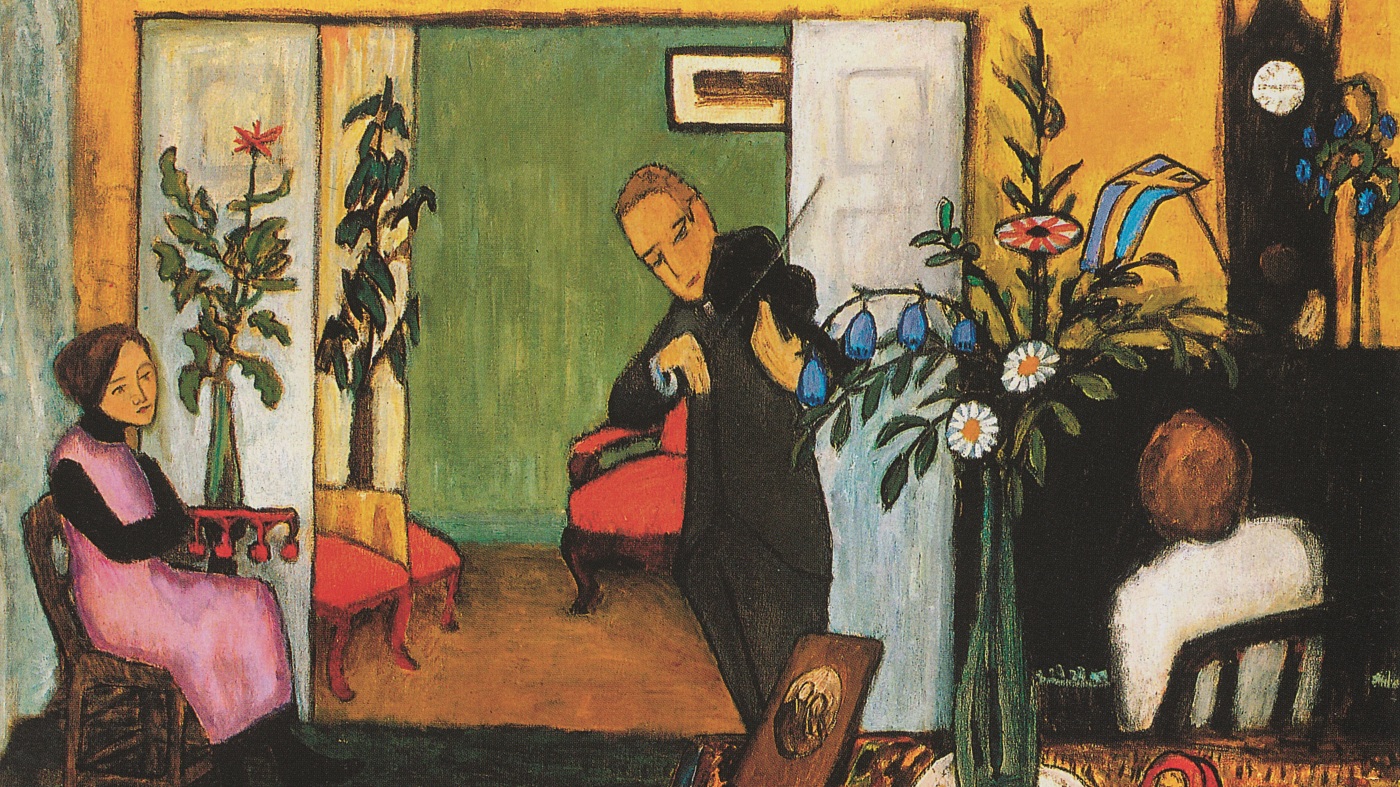
The missing 1916 painting Music, by Gabriele Münter. Its whereabouts have been unknown to the public since 1977. Oil on canvas. (Private collection. © 2025 Artists Rights Society (ARS), New York/VG Bild-Kunst, Bonn)
The Guggenheim, New York
hide caption
toggle caption
The Guggenheim, New York
This is a story about a missing painting, from an artist you may never have heard of. Though she helped shape European modern art, German artist Gabriele Münter’s work was quickly overshadowed in the public’s mind by her 12-year relationship with noted abstract artist Wassily Kandinsky.
She met Kandinsky in Munich in 1902, and with his tutoring, she “mastered color as well as the line,” she told a German public broadcaster in 1957. Together with other artists, they founded an avant-garde arts collective called Der Blaue Reiter (The Blue Rider) in 1911.
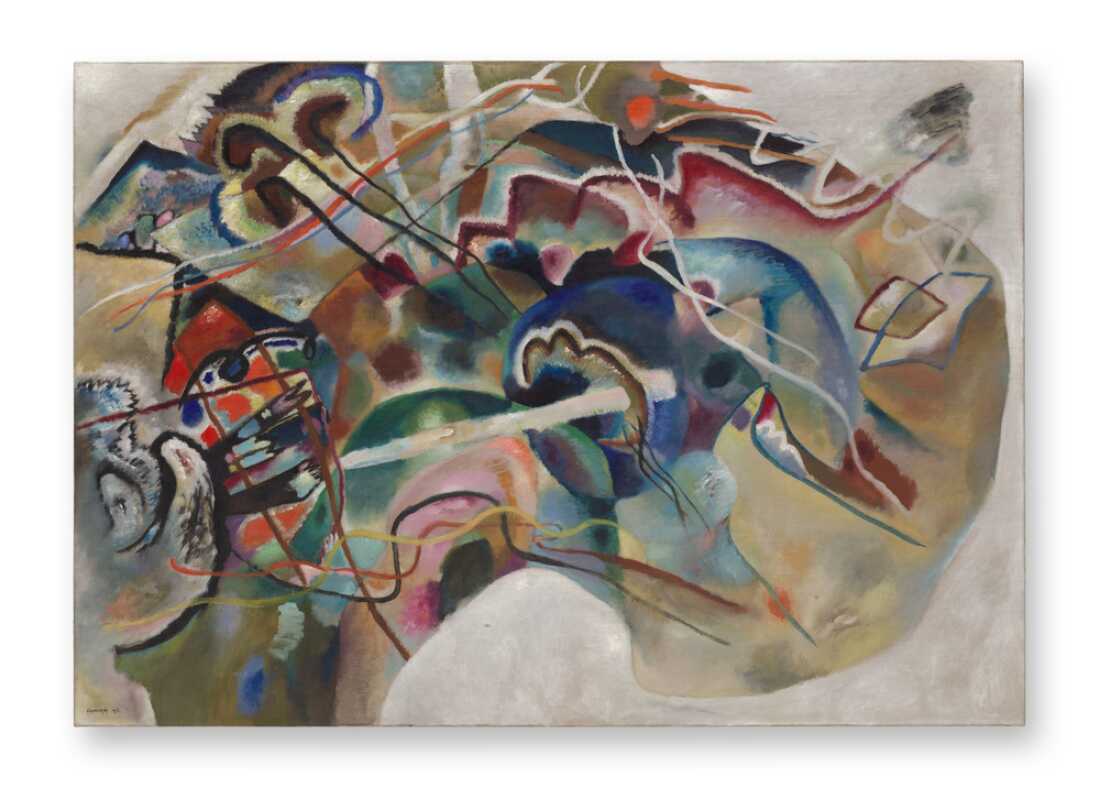
Wassily Kandinsky’s Painting With White Border (Bild mit weißem Rand), 1913. Oil on canvas, Guggenheim Museum, New York City.
Allison Chipak/The Guggenheim, New York
hide caption
toggle caption
Allison Chipak/The Guggenheim, New York
At the time, most modern artists, like Kandinsky, were moving toward more and more abstract work. Not Münter. In her paintings, people look like people and flowers look like flowers. But her dazzling colors, simplified forms and dramatic scenes are startlingly fresh; her domestic scenes are so immediate that they feel like you’ve interrupted a crucial, private moment.
“Gabriele Münter was so pioneering, so adventurous in her adherence to life,” said Megan Fontanella, curator of modern art and provenance at the Guggenheim Museum in New York City. “She is revitalizing the still life, the landscape, the portrait genres, and presenting them in these really fresh and dynamic ways.”
Yet, perhaps due to her relationship with Kandinsky, her work was rarely collected by important museums after her death in 1962 (she herself said she was seen as “an unnecessary side dish” to him), and so her paintings largely disappeared from the public eye.
Now Münter is having a moment, with exhibitions this year in Madrid and Paris, as well as one currently at the Guggenheim in New York. The New York show is an expansive one and includes American street photography in the late 1890s, alongside over 50 paintings, from her dazzlingly colored European landscapes to portraits capturing the expressive faces of people she knew.

Gabriele Münter’s Self-Portrait in Front of an Easel (Selbstbildnis vor der Staffelei), circa 1908-1909. Oil on canvas. (© 2025 Artists Rights Society (ARS), New York/VG Bild-Kunst, Bonn)
Bruce M. White/Princeton University Art Museum/Art Resource, N.Y.
hide caption
toggle caption
Bruce M. White/Princeton University Art Museum/Art Resource, N.Y.
Yet, when Fontanella was putting “Gabriele Münter: Contours of a World” together, there was one painting she couldn’t find: Music, from 1916.
In it, a violinist is playing in the center of a yellow room, with two people quietly listening. It’s set in a living room — but because it uses her wild colors and flattened figures, it feels vibrant and dramatic, not cozy or saccharine.
Fontanella said this painting is important because it provides a window into Münter’s life after she separated from Kandinsky, who had gone on to marry someone else. She was struggling financially, and she was no longer the promising young person she once was. But Fontanella said the painting shows she had found a new creative circle.
“There’s something really uplifting about that. You know, it speaks to her resilience, her sense of adaptation,” Fontanella said. Instead of showing those years as dark and challenging, it is serene and warm, joyful. “I think that’s really important because especially with a woman artist, it’s so easy to get tripped up in her biography and really see it colored by her romantic relationships when, in fact, the paintings tell a different story.”
Fontanella said she used every tool available to her to find Music. She worked with Münter’s foundation and contacted owners of collections in Europe and the United States, from institutions to private collectors. She read correspondence and catalogs from past exhibitions.

Gabriele Münter’s From the Griesbräu Window (Vom Griesbräu Fenster), 1908. Painting on board. (© 2025 Artists Rights Society (ARS), New York/VG Bild-Kunst, Bonn)
Städtische Galerie im Lenbachhaus und Kunstbau München, on permanent loan from the Gabriele Münter and Johannes Eichner Foundation, Munich
hide caption
toggle caption
Städtische Galerie im Lenbachhaus und Kunstbau München, on permanent loan from the Gabriele Münter and Johannes Eichner Foundation, Munich
It’s not unusual for art to vanish from public view if it’s not held at an institution. Private collectors often want to keep their holdings quiet. If they don’t sell a particular work at an auction or lend it to a museum, only a very small number of people might know that it still exists and where it is.
Fontanella was able to trace Music to its last known owner — a German collector named Eugen Eisenmann, who had the painting in 1977.
“There was a moment where the collection was starting to be broken apart and dispersed and no longer being held by subsequent relatives or family members,” she said.
Then the trail ended.
Not the end of the story
But just because the painting hasn’t surfaced yet doesn’t mean it never will. Take the story of a piece called There are combustibles in every State, which a spark might set fire to. —Washington, 26 December 1786, depicting Shays’ Rebellion, one of 30 works in the Struggle series by artist Jacob Lawrence. A 2020 traveling exhibition organized by the Peabody Essex Museum in Salem, Mass., had brought the works together for the first time in 60 years.

Five of the paintings couldn’t be located, and the curators put placeholders where those paintings should have been: black-and-white photographs of the canvases if they existed, blank spaces if they didn’t.
“We didn’t have any image of it. There really was no trace,” said Sylvia Yount, the curator in charge of the American Wing at the Metropolitan Museum of Art. She co-curated the Met’s presentation of the exhibition with curator Randall Griffey. “We had decided to leave the missing panels as kind of an absence, to really underline the absence. There was a blank on the wall.”
And, then, the miracle.
A visitor to the exhibition went home, contacted a friend “and said, ‘I think you might have one of these missing panels,’” Yount explained.
The friend did. When Yount, Griffey and art conservator Isabelle Duvernois went to see the painting — which was just across Central Park from the Met in an apartment on the Upper West Side — “we walked in and immediately knew it was right,” Yount said.
Within about two weeks, it was hanging in the exhibition. Incredibly, not long later, a second panel was found. Because that one needed some conservation work and a new frame, it didn’t join the series at the Met, but it did become part of the show later as it traveled across the United States.
That kind of thing “doesn’t happen every day,” Yount said, laughing.
Could it happen again?
But Fontanella hopes that it could happen for Münter’s painting. She included a photograph of it in the catalog so that people would know what to look for.
“What I always hope with stories like this is that the painting will resurface in its own time, you know, when it wants to be discovered,” Fontanella said. “But there’s been so much genuine interest in Gabriele Münter as an artist, as a person, that I feel it’s only just on the horizon that this painting will come to light.”
“Gabriele Münter: Contours of a World” is on view at the Guggenheim in New York through April 2026.
Ciera Crawford edited this story for broadcast and digital. Chloee Weiner mixed the audio.


Can you say no to a friend’s wedding?
Getty Images/Getty images
hide caption
toggle caption
Getty Images/Getty images
Are we spending too much on other people’s weddings?
Going to a friend’s weddings can be so fun and meaningful… but it can also really hurt your wallet. A survey by LendingTree found that 31% of people who had been to a wedding in the past five years had accrued debt to attend. So what’s driving up the cost of weddings for guests? And what makes it so hard to say no to these expenses?
Brittany breaks it down with Allyson Rees, senior analyst at trend forecasting firm WGSN, and Annie Joy Williams, assistant editor at The Atlantic.
This episode was produced by Liam McBain, with additional support from Corey Antonio Rose. It was edited by Neena Pathak. Our Supervising Producer is Cher Vincent. Our Executive Producer is Barton Girdwood. Our VP of Programming is Yolanda Sangweni.
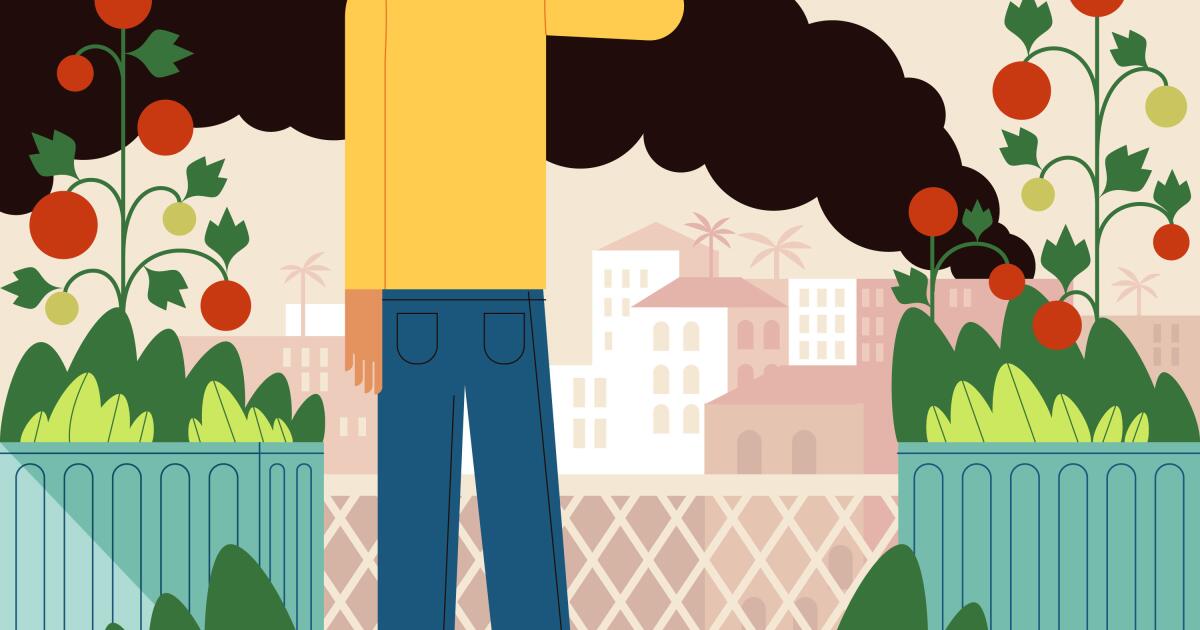
After the eight-day-long fire in a 500,000-square-foot Boyle Heights warehouse, eastern Los Angeles residents are contending with putrid smells, soot and potentially hazardous airborne chemicals after heavy plumes of smoke spread throughout the city. But those who grow food in nearby neighborhoods may also be wondering: How will the fires affect the plants and produce in my garden?
The Boyle Heights warehouse, owned by Lineage — a global temperature-controlled storage facility operator — housed 85 million pounds of frozen food and other products. In the days since the fire, local emergency visits for smoke inhalation and throat pain spiked while agencies still scramble to measure the amount of PM 2.5 — harmful fine particles — and heavy metals, like lead and arsenic, in the air.
According to researchers, any toxic airborne chemicals would likely stem from the charred foam insulation, metal exterior, burned solar panels and any lithium batteries that might have been present inside the warehouse.
After a fire, heavy metal particles can spread through ash and smoke over gardens and inhibit growth, said Olukayode Jegede, an agricultural toxicologist and assistant professor at UC Davis. Since the warehouse fire is so recent and cleanup has just begun, Jegede said the precise impact on gardens can’t be measured until comprehensive soil tests are conducted in the area.
While the L.A. city government hasn’t announced plans for soil testing, the Contaminant Level Evaluation and Analysis for Neighborhoods project at USC is offering free contaminant testing for Boyle Heights and East L.A. residents. Residents can collect soil samples and deliver them to Boyle Heights City Hall and other locations for an evaluation of lead, arsenic, chromium and mercury levels.
The good news is produce, plants and roots can still be preserved. According to Jegede, many of the soil tests conducted last year in the Altadena area after the Eaton fire showed that gardens and poultry were not as contaminated as one might expect.
“Quite a number of the soils we tested [in Altadena] were not really contaminated,” Jegede said. “We weren’t seeing many soils with concerning elevated levels of metal, so gardeners should not be too alarmed when these things happen.”
Nevertheless, there are several measures that gardeners can take to keep themselves, their children, plants and produce safe from potentially harmful contaminants stemming from the fire. Researchers, gardening experts and horticulturists offered some guidance on the handling, recultivation and cleanup that can keep you and your garden in good health.
How do I remove ash and contaminants from my garden?
Altadena horticulturist Leigh Adams said Boyle Heights plants and produce already live in a difficult environment, surrounded by industrial warehouses that spread contaminants daily.
“That area has been used industrially for 100 years, and the soil is impacted by many, many, many things,” Adams said. “Low-income neighborhoods and gardens usually don’t have a lot of resistance against dominant manufacturing.”
This means that the contamination of gardens in eastern L.A. won’t be as catastrophic as compared with those in Altadena, a more suburban environment, Adams said. But fallen ash still poses major health risks if ingested or inhaled.
An advisory from University of California Agricultural and Natural Resources last year recommended suiting up in an N95/KN95 mask, long sleeves, pants, close-toed shoes and gloves before attempting to deal with ash in the garden to limit exposure to potentially toxic contaminants. The advisory added that individuals should make sure all of this gear is cleaned thoroughly before bringing it back inside.
Once in the proper gear, Adams recommends removing the top two inches of topsoil from gardens, where the highest concentration of contaminants will settle after a fire. Using a plastic bag to collect the soil and disposing of it in the garbage — not green yard waste bins — will help to reduce the spread of airborne chemicals.
Gardeners with raised beds are advised to remove approximately six inches of soil, because excess ash can raise the pH level and prevent nutrients from soaking into the soil bed.
After this, watering the garden gently but plentifully will help to promote soil health and get rid of most of the ash present on plant leaves and stems. Adams said replacing the top two inches of soil with store-bought mulch or straw will help to contain any remaining ash and prevent it from spreading any further.
Experts say to avoid using leaf blowers if ash is present in the garden because they can send particles airborne. Doing so will increase the likelihood of heavy metal particles, which can carry lung irritants and carcinogens, being spread and inhaled.
A Boyle Heights resident keep a watchful eye on the fire at the 5,000-square-foot commercial building, which stores 85 million pounds of frozen food.
(Genaro Molina / Los Angeles Times)
Is it safe for me to eat produce from my garden?
Several studies, including one from the UC Cooperative Extension of Sonoma County, have shown that consuming produce in a fire-affected area poses minimal health risks.
Jegede said most root vegetables like potatoes and carrots, along with any fruit that has an outer layer, can be washed to remove potential contaminants, even if they were covered in ash. Peeling the outer layer of your produce can also help to reduce potential risks, he said.
Lettuce and other leafy foods with multiple layers pose a higher risk of contamination, but with a vigorous wash and peeling the outer layers, even the greens can be saved. The County of Los Angeles Department of Public Health recommends soaking leafy produce and fuzzy fruits like peaches in a 10% white vinegar and 90% water mixture.
Jegede said if the leaves or fruit are too delicate to wash or ash is still visible, it would be best to dispose of the produce.
How can I tell if my soil is contaminated?
After ridding your garden of visible ash, you might wonder how to tell if your plants will still thrive in the soil.
At-home soil tests that measure for alkaline, fertility and pH levels are widely available and can be purchased for $15 to $100 (for more detailed results) online. But Jegede said these tests can’t tell the full story of soil health.
Comprehensive soil testing is “something you can’t do properly at home,” Jegede said. “In labs, we are testing for metals like lithium and zinc, stuff that an at-home test will not show … If it comes to the point that you’re worried about your soil, I would just send it out to a lab.”
Wallace Laboratories in El Segundo, Babcock Laboratories in Riverside, Waypoint Analytical in Anaheim and other labs offer more detailed soil tests that measure heavy metal particles in addition to other fertility factors. Prices at Wallace Laboratories can range from $115 to $295 for a complete compost test.
The soil below two inches should be unharmed, Adams said, so long as new compost is set and plants are watered plentifully, which will promote natural biological cycles.
“What you’re doing is capping the soil, so that moisture stays in there, and instead of being dirt, it’s a living system called soil,” Adams said. “The more carbon we can get into our soil, the better.”
What can I do to help my soil recover?
For the last 12 years, Adams has been working with Metabolic Studio, a Los Angeles-based art and research hub focused on environmentalism, on methods for bioremediation, the practice of using additional fungi, plants and compost to decontaminate ash and break down contaminants.
Adams said straw, mushrooms, corn, rye and sunflowers are great bioremediators that can help to repair damage to soils. She said certain samples she’s worked on with Metabolic Studio have gone from testing at high heavy metal levels to nearly contaminant-free.
But for a more immediate fix, wash your produce, water your plants and have a little patience during ash cleanups. Your garden should look better in no time, Adams and Jegede said.

Inde Navarrette and Michael Johnston in Obsession.
Focus Features
hide caption
toggle caption
Focus Features
Two big horror films, Obsession and Backrooms, just smashed all box office expectations. So much of their success has been driven by Gen Z, which is now the biggest moviegoing demographic. But what makes a movie a Gen Z movie? Today we’re bringing you an episode of NPR’s It’s Been a Minute. Host Brittany Luse talks about this trend with Sam Adams and Reanna Cruz.
If you want to hear more about these movies, check out these episodes:
In ‘Obsession,’ love hurts. It really, really, really hurts.
‘Backrooms’ brings YouTube horror to the big screen
Zendaya brings ‘The Drama,’ we bring the spoilers
Connect with Pop Culture Happy Hour:
Letterboxd / Facebook
Our weekly newsletter
Support Pop Culture Happy Hour+
-

 Kentucky9 minutes ago
Kentuckians deserve honesty about McConnell’s health | Letters
-

 Louisiana12 minutes ago
Leadership Louisiana Health Fellows Welcomes Inaugural Class – Leaders for a Better Louisiana
-

 Maine17 minutes ago
A hard lesson for Democrats in Maine. Plus, we have some news about Ed Markey. – The Boston Globe
-

 Maryland24 minutes ago
Governor Moore Announces Awardees for $1.23 Million Investment to Help Maryland Workers Thrive in a Changing Economy
-

 Michigan27 minutes ago
‘Big Brother’ season 28 to premiere this week. One guest from Michigan
-

 Massachusetts27 minutes ago
Cool off this summer at these 10 splash pads in central Massachusetts
-

 Minnesota39 minutes ago
EF2 tornado injures two, damages homes near Detroit Lakes, Minnesota
-

 Mississippi42 minutes ago
Mississippi’s first Dutch Bros now open in Pearl

