Lifestyle
‘It’s behind you!’ How Britain goes wild for pantomimes during the holidays


The Wicked Witch ‘Adelphaba’ (played by Gigi Zahir) on stage at the Pleasance Theatre in North London
Ella Carmen Dale/Handout
hide caption
toggle caption
Ella Carmen Dale/Handout
LONDON — Foreboding music begins. A scary green witch announces her arrival with a cackle. It’s the opening of Wicked Witches, a British holiday-time play known as a “pantomime,” at a North London theater.
But soon after she walks on stage, it’s clear the witch isn’t happy with the audience.
She says the audience is being too quiet, and should boo her as loudly as they can, because she is the “villain” of the pantomime. She leaves the stage and comes back on — and this time, the audience does what it’s told, heckling with loud boos.
Throughout the two-hour play, the audience is expected to join in, shouting out classic lines that most people who attend already know, even if they haven’t seen this play. Pantomimes are famous for crowds calling out catch phrases e like “it’s behind you!” — to alert the actors to something, or someone, they can’t see on stage.
All across Britain during the festive period, families attend pantomimes — often shortened to “pantos” — which help get them into the Christmas spirit. Pantomimes are usually based on a well-known story, often a fairy tale, which is then given a bawdy twist. Traditionally, they feature female characters, or “dames,” played by a man in drag, and include lots of music, particularly pop parodies.
The show at the Pleasance Theatre is inspired by The Wizard of Oz and Wicked. Its storyline imagines a blizzard that brings Dorothy (whose name has changed to Dor) back to Oz, 20 years after that first visit. But in many ways, the plot comes second to the silly jokes, innuendos, and songs.

Actor Sir Ian McKellen playng Toto the Dog in a video clip for the Wicked Witches pantomime.
Pleasance Theatre
hide caption
toggle caption
Pleasance Theatre
Pantomimes are also known for featuring celebrities and public figures. This one features politician Jeremy Corbyn, who used to lead Britain’s Labour Party He appears on video as the Wizard of Oz-lington, a pun on Islington, the area of London he represents, now as an independent, in Parliament. Even more exciting is actor Ian McKellen — famous for playing Gandalf in the Lord of the Rings films — who is seen in a video clip as Toto the dog.
The Wicked Witches pantomime in North London was actually written by an American, Shane “ShayShay” Konno, who comes from California’s Bay Area but has lived in the United Kingdom for 12 years. “I didn’t grow up in the U.K., and when I moved here, starting to understand pantomime felt like a huge cultural hurdle,” Konno says.
Pantomime has its roots in Italian commedia dell’arte, a form of theater that dates back to the 16th century. In Britain, it has gradually developed over the years. “The actual history of pantomime is it started in East London, and it used to be this huge thing where the whole community would come together,” Konno explains.
Konno is nonbinary, and their pantomime is consciously inclusive of LGBTQ people, featuring a nonbinary character in the lead role of Dor, and a message that people should accept people who are different from them. “I wanted to make something that made an explicitly LGBT version of The Wizard of Oz and Wicked, because that’s such a beloved franchise for the queer community,” Konno says.
There are two versions: one for families with children, and one just for adults. But Konno says they aren’t as different as you might think. Many of the ruder jokes remain in the family-friendly show, but they are carefully disguised. “When a quite rude joke is said, but one that goes over the kids’ heads, it does tickle the adults in the room more than it would in an adult show because they’re like, ‘Oh my goodness, I can’t believe that they said that in front of the children,’” Konno says.

Characters perform on stage at the Wicked Witches pantomime in north London, on Dec. 6.
Robbie Griffiths/NPR
hide caption
toggle caption
Robbie Griffiths/NPR
Most theaters around Britain have an annual pantomime in the festive period — and it’s often their most popular production of the year. Johnny McKnight, from Paisley, a town near Glasgow, Scotland, has been performing and writing pantomimes in Scotland for 20 years, and says it’s a vital part of many British people’s Christmas celebrations.
“I’ve always said to everybody, when you do a pantomime, and you’re doing 12 shows a week, you’re giving people the gift of their Christmas ritual, their Christmas night out,” McKnight says. McKnight often plays the role of the dame, dressing up in drag.
McKnight has seen different generations of the same families grow up watching his shows, and explains that pantomime is often the first time that children in Britain ever visit the theater. “A lot of the time it’s a child’s first entry point,” McKnight says. “It was certainly mine — my first entry point into live theater.”
At the Wicked Witches show in North London, there are lots of children at the theater for the first time. Imogen Coackley is 8 years old, and attending with her father Alex and 5-year-old sister Emily. Imogen explains that she likes the pantomime because “they say very funny jokes and talk to the audience.”
McKnight says that seeing children enjoy his shows is one of the best parts of the job. “There’s something … magical in that, that you’re creating something accessible that talks to its audience rather than at them, that asks them to participate,” he says.


Can you say no to a friend’s wedding?
Getty Images/Getty images
hide caption
toggle caption
Getty Images/Getty images
Are we spending too much on other people’s weddings?
Going to a friend’s weddings can be so fun and meaningful… but it can also really hurt your wallet. A survey by LendingTree found that 31% of people who had been to a wedding in the past five years had accrued debt to attend. So what’s driving up the cost of weddings for guests? And what makes it so hard to say no to these expenses?
Brittany breaks it down with Allyson Rees, senior analyst at trend forecasting firm WGSN, and Annie Joy Williams, assistant editor at The Atlantic.
This episode was produced by Liam McBain, with additional support from Corey Antonio Rose. It was edited by Neena Pathak. Our Supervising Producer is Cher Vincent. Our Executive Producer is Barton Girdwood. Our VP of Programming is Yolanda Sangweni.
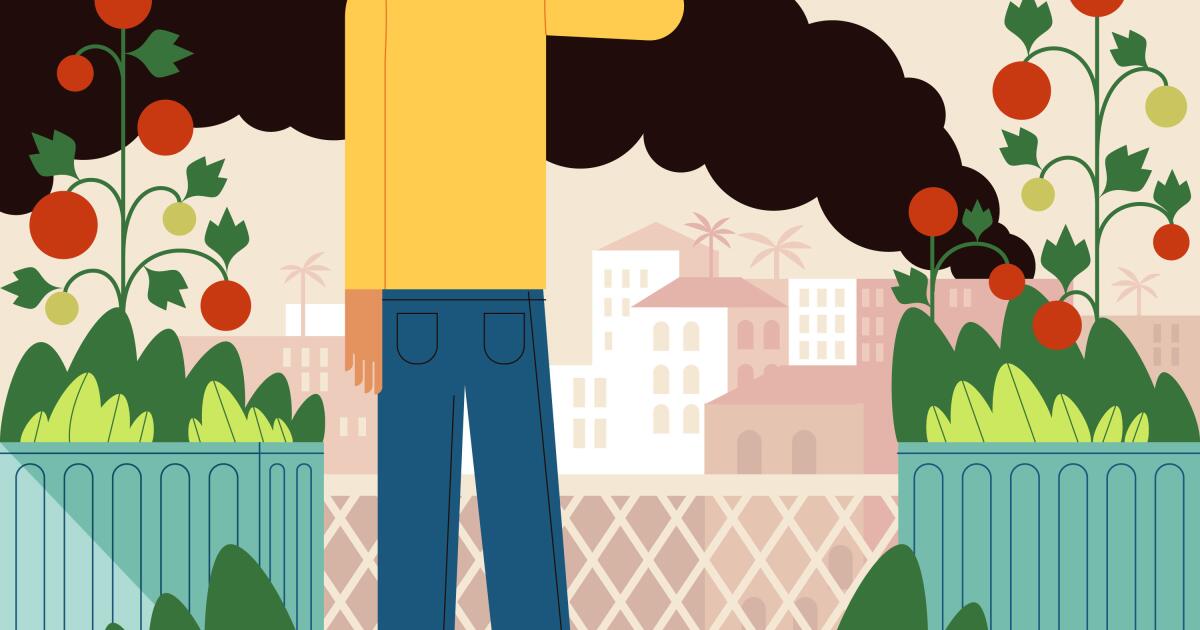
After the eight-day-long fire in a 500,000-square-foot Boyle Heights warehouse, eastern Los Angeles residents are contending with putrid smells, soot and potentially hazardous airborne chemicals after heavy plumes of smoke spread throughout the city. But those who grow food in nearby neighborhoods may also be wondering: How will the fires affect the plants and produce in my garden?
The Boyle Heights warehouse, owned by Lineage — a global temperature-controlled storage facility operator — housed 85 million pounds of frozen food and other products. In the days since the fire, local emergency visits for smoke inhalation and throat pain spiked while agencies still scramble to measure the amount of PM 2.5 — harmful fine particles — and heavy metals, like lead and arsenic, in the air.
According to researchers, any toxic airborne chemicals would likely stem from the charred foam insulation, metal exterior, burned solar panels and any lithium batteries that might have been present inside the warehouse.
After a fire, heavy metal particles can spread through ash and smoke over gardens and inhibit growth, said Olukayode Jegede, an agricultural toxicologist and assistant professor at UC Davis. Since the warehouse fire is so recent and cleanup has just begun, Jegede said the precise impact on gardens can’t be measured until comprehensive soil tests are conducted in the area.
While the L.A. city government hasn’t announced plans for soil testing, the Contaminant Level Evaluation and Analysis for Neighborhoods project at USC is offering free contaminant testing for Boyle Heights and East L.A. residents. Residents can collect soil samples and deliver them to Boyle Heights City Hall and other locations for an evaluation of lead, arsenic, chromium and mercury levels.
The good news is produce, plants and roots can still be preserved. According to Jegede, many of the soil tests conducted last year in the Altadena area after the Eaton fire showed that gardens and poultry were not as contaminated as one might expect.
“Quite a number of the soils we tested [in Altadena] were not really contaminated,” Jegede said. “We weren’t seeing many soils with concerning elevated levels of metal, so gardeners should not be too alarmed when these things happen.”
Nevertheless, there are several measures that gardeners can take to keep themselves, their children, plants and produce safe from potentially harmful contaminants stemming from the fire. Researchers, gardening experts and horticulturists offered some guidance on the handling, recultivation and cleanup that can keep you and your garden in good health.
How do I remove ash and contaminants from my garden?
Altadena horticulturist Leigh Adams said Boyle Heights plants and produce already live in a difficult environment, surrounded by industrial warehouses that spread contaminants daily.
“That area has been used industrially for 100 years, and the soil is impacted by many, many, many things,” Adams said. “Low-income neighborhoods and gardens usually don’t have a lot of resistance against dominant manufacturing.”
This means that the contamination of gardens in eastern L.A. won’t be as catastrophic as compared with those in Altadena, a more suburban environment, Adams said. But fallen ash still poses major health risks if ingested or inhaled.
An advisory from University of California Agricultural and Natural Resources last year recommended suiting up in an N95/KN95 mask, long sleeves, pants, close-toed shoes and gloves before attempting to deal with ash in the garden to limit exposure to potentially toxic contaminants. The advisory added that individuals should make sure all of this gear is cleaned thoroughly before bringing it back inside.
Once in the proper gear, Adams recommends removing the top two inches of topsoil from gardens, where the highest concentration of contaminants will settle after a fire. Using a plastic bag to collect the soil and disposing of it in the garbage — not green yard waste bins — will help to reduce the spread of airborne chemicals.
Gardeners with raised beds are advised to remove approximately six inches of soil, because excess ash can raise the pH level and prevent nutrients from soaking into the soil bed.
After this, watering the garden gently but plentifully will help to promote soil health and get rid of most of the ash present on plant leaves and stems. Adams said replacing the top two inches of soil with store-bought mulch or straw will help to contain any remaining ash and prevent it from spreading any further.
Experts say to avoid using leaf blowers if ash is present in the garden because they can send particles airborne. Doing so will increase the likelihood of heavy metal particles, which can carry lung irritants and carcinogens, being spread and inhaled.
A Boyle Heights resident keep a watchful eye on the fire at the 5,000-square-foot commercial building, which stores 85 million pounds of frozen food.
(Genaro Molina / Los Angeles Times)
Is it safe for me to eat produce from my garden?
Several studies, including one from the UC Cooperative Extension of Sonoma County, have shown that consuming produce in a fire-affected area poses minimal health risks.
Jegede said most root vegetables like potatoes and carrots, along with any fruit that has an outer layer, can be washed to remove potential contaminants, even if they were covered in ash. Peeling the outer layer of your produce can also help to reduce potential risks, he said.
Lettuce and other leafy foods with multiple layers pose a higher risk of contamination, but with a vigorous wash and peeling the outer layers, even the greens can be saved. The County of Los Angeles Department of Public Health recommends soaking leafy produce and fuzzy fruits like peaches in a 10% white vinegar and 90% water mixture.
Jegede said if the leaves or fruit are too delicate to wash or ash is still visible, it would be best to dispose of the produce.
How can I tell if my soil is contaminated?
After ridding your garden of visible ash, you might wonder how to tell if your plants will still thrive in the soil.
At-home soil tests that measure for alkaline, fertility and pH levels are widely available and can be purchased for $15 to $100 (for more detailed results) online. But Jegede said these tests can’t tell the full story of soil health.
Comprehensive soil testing is “something you can’t do properly at home,” Jegede said. “In labs, we are testing for metals like lithium and zinc, stuff that an at-home test will not show … If it comes to the point that you’re worried about your soil, I would just send it out to a lab.”
Wallace Laboratories in El Segundo, Babcock Laboratories in Riverside, Waypoint Analytical in Anaheim and other labs offer more detailed soil tests that measure heavy metal particles in addition to other fertility factors. Prices at Wallace Laboratories can range from $115 to $295 for a complete compost test.
The soil below two inches should be unharmed, Adams said, so long as new compost is set and plants are watered plentifully, which will promote natural biological cycles.
“What you’re doing is capping the soil, so that moisture stays in there, and instead of being dirt, it’s a living system called soil,” Adams said. “The more carbon we can get into our soil, the better.”
What can I do to help my soil recover?
For the last 12 years, Adams has been working with Metabolic Studio, a Los Angeles-based art and research hub focused on environmentalism, on methods for bioremediation, the practice of using additional fungi, plants and compost to decontaminate ash and break down contaminants.
Adams said straw, mushrooms, corn, rye and sunflowers are great bioremediators that can help to repair damage to soils. She said certain samples she’s worked on with Metabolic Studio have gone from testing at high heavy metal levels to nearly contaminant-free.
But for a more immediate fix, wash your produce, water your plants and have a little patience during ash cleanups. Your garden should look better in no time, Adams and Jegede said.

Inde Navarrette and Michael Johnston in Obsession.
Focus Features
hide caption
toggle caption
Focus Features
Two big horror films, Obsession and Backrooms, just smashed all box office expectations. So much of their success has been driven by Gen Z, which is now the biggest moviegoing demographic. But what makes a movie a Gen Z movie? Today we’re bringing you an episode of NPR’s It’s Been a Minute. Host Brittany Luse talks about this trend with Sam Adams and Reanna Cruz.
If you want to hear more about these movies, check out these episodes:
In ‘Obsession,’ love hurts. It really, really, really hurts.
‘Backrooms’ brings YouTube horror to the big screen
Zendaya brings ‘The Drama,’ we bring the spoilers
Connect with Pop Culture Happy Hour:
Letterboxd / Facebook
Our weekly newsletter
Support Pop Culture Happy Hour+
-

 Tennessee4 minutes ago
In-N-Out’s fifth Tennessee location is opening soon. Here’s how many stores are planned
-

 Texas7 minutes ago
Triple-digit heat returns to North Texas before weekend storms bring relief
-

 Utah12 minutes ago
Planned 60-foot long Liberty Arch in Utah sparks patriotism, but also concerns
-

 Vermont19 minutes ago
Vermont offers money to replace diesel vehicles with electric
-

 Virginia22 minutes ago
Virginia reports 10 cases of cyclosporiasis
-

 Washington27 minutes ago
Washington law says to alert the public when doctors are accused of misconduct. It can take months
-

 Wisconsin34 minutes ago
Former Wisconsin judge to be sentenced after conviction in obstructing arrest of Mexican immigrant
-

 West Virginia37 minutes ago
West Virginia town’s entire police force fired after ex-sergeant claims evidence room was broken into

