West
Columbine High School shooting survivor dies nearly 26 years after massacre

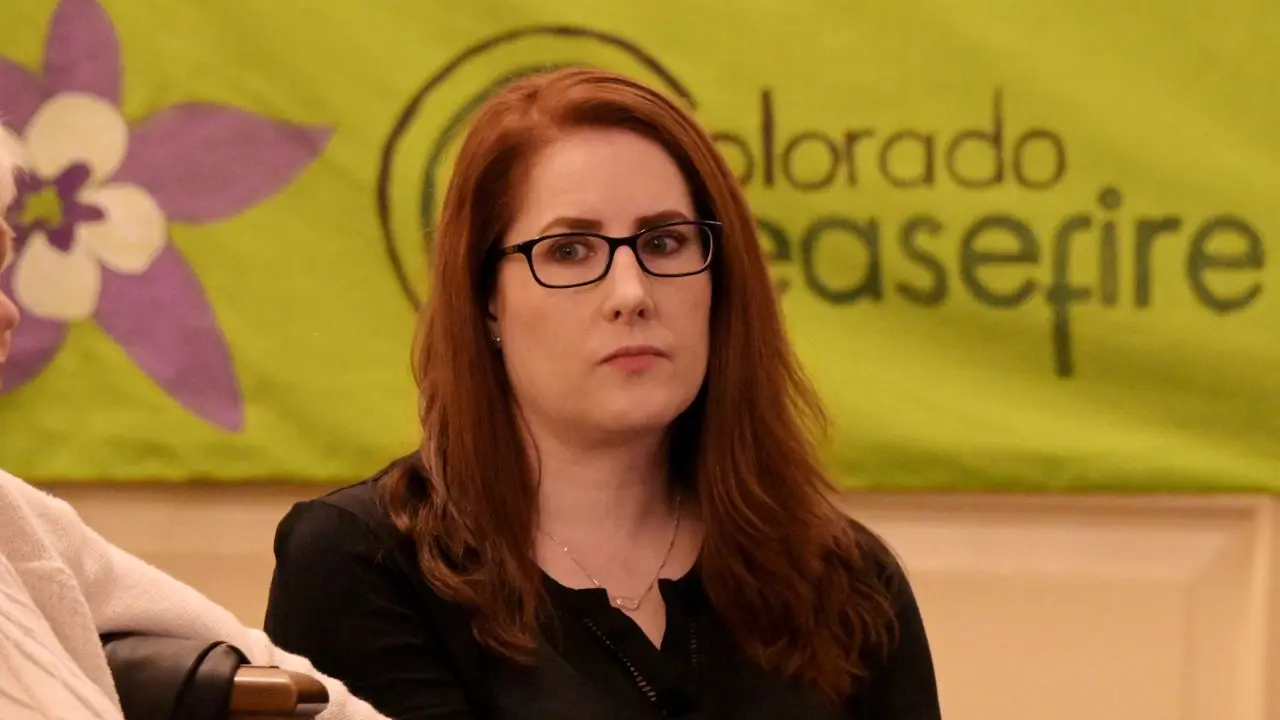
Anne Marie Hochhalter, who was shot and paralyzed in the Columbine High School mass shooting in 1999, died on Sunday of natural causes, Fox News Digital has learned. She was 43.
Hochhalter, one of 23 people who were injured and survived the Littleton, Colorado, massacre, was confined to a wheelchair for the remainder of her life due to her injuries and is being remembered as a “pillar of strength” in her community.
She was shot in the back and chest as she ate with friends in the school’s cafeteria. Twelve students and one teacher were killed in the attack when twelfth-grade students Eric Harris and Dylan Klebold opened fire. The shooters then killed themselves.
Anne Marie Hochhalter, who was paralyzed during the 1999 attack on Columbine High School, pictured in April 2024. Hochhalter died on Sunday. (Hyoung Chang/The Denver Post)
SCHOOL SHOOTING PROTOCOLS CHANGED AFTER COLUMBINE TO AN ‘EVERY SECOND COUNTS’ APPROACH: EXPERTS
Frank DeAngelis, her former principal, announced Hochhalter’s passing and said she was admired for her resilience and tenacity.
“My Columbine Rebel Family. It is with great sadness and sorrow that I share with you that Anne Marie Hochhalter passed away … of natural causes,” DeAngelis said in a statement provided to Fox News Digital.
“Anne Marie was a 2000 graduate. She was a pillar of strength for me and so many others. She was an inspiration and exemplified never giving up. Please keep her family in your thoughts and prayers. She will be missed but never forgotten. Rebels for Life. We love you Anne Marie Hochhalter.”
DeAngelis said that funeral arrangement details have not yet been released.
Columbine school shooting survivor Anne Marie Hochhalter (right) talks with Sue Townsend, the mother of shooting victim Lauren Townsend, during a 25th Year Remembrance ceremony on April 19, 2024, at First Baptist Church of Denver in Denver, Colorado. Hochhalter died on Sunday. (Marc Piscotty/Getty Images)
Hochhalter’s younger brother Nathan was also at the school at the time of the shooting. He was trapped in a classroom with about 30 other students as the gunfire rang out. After four hours later SWAT officers rescued them.
Several months after the shooting, their mother, Carla Hochhalter, took her own life after struggling with depression, per reports.
COLUMBINE SHOOTING 20TH ANNIVERSARY: SURVIVORS REFLECT ON HOW MASSACRE CHANGED THEIR LIVES FOREVER
Anne Marie Hochhalter spoke out in 2016 in support of Sue Klebold, shooter Dylan Klebold’s mother, who released a book reflecting on the mass shooting, especially concerning her relationship with grief and battles with shame, Fox 21 reported.
Hochhalter wrote a lengthy Facebook post at the time in which she wasn’t sure if she would ever read the book but said she had forgiven the mass murderer’s mother.
In 2012, Hochhalter also spoke publicly in support of the families and survivors of the Sandy Hook Elementary School shooting in Newtown, Connecticut.
Last April, a vigil was held on the eve of the 25th anniversary of the Columbine shooting which Hochhalter attended. She said at the time that she was unable to attend a vigil marking the 20th anniversary due to her suffering from post-traumatic stress disorder (PTSD).
“I’ve truly been able to heal my soul since that awful day in 1999,” Hochhalter wrote in an April 2024 post, adding that everyone’s grief and healing journey is completely different.
“It ebbs and flows, triggered by certain moments, taking us back to memories we once thought were frozen in time.” She wrote.
“I’ve had that happen quite a bit this anniversary, memories from that time period I thought were buried forever have come back to the surface, happy memories of being a teenager who was so focused on the boring mundane things like music videos, basketball, sleepovers at my friends’ houses, and finally beating Tetris on the computer (I was very proud of that accomplishment).”
“No bad memories have affected me this time. It’s like my heart has wanted to flood my mind with happiness instead of trauma.”
People visit the Columbine Memorial, April 17, 2024, in Littleton, Colo. The 12 students and a teacher killed in the Columbine High School shooting will be remembered Friday, April 19, 2024, in a vigil on the eve of the 25th anniversary of the tragedy. (AP Photo/David Zalubowski)
She went on to write about her feelings of sadness about those who had lost their lives that day but said she felt their presence at the vigil.
“When the song ‘Over the Rainbow’ started playing, I looked at the empty chairs and suddenly felt all of them sitting there, with smiles on their faces, wanting us to remember the good times. The happy memories,” she wrote.
“They would want us to remember and laugh at their silly goofy antics when they were alive, instead of focusing on how their lives sadly ended. Those 13 are always with us. They’re never forgotten. We are Columbine.”
Read the full article from Here


San Francisco police officers arrested 20 people late Saturday night in SoMa after breaking up an unauthorized “Stud Alley” block party with hundreds of participants, according to the police department. It marked the second round of arrests of Pride attendees this weekend after police arrested five people at the tail end of the Trans March on Friday.
Police officers arrived near Kissling and 11th streets at 10:58 p.m. and “encountered an unsanctioned and unpermitted block party” that had about 300 participants and a D.J., according to a statement from the San Francisco Police Department. The following details are based on the department statement and social media videos; two participants reached by Mission Local declined to comment.
The department said that the large crowd “prompted the response of additional SFPD resources.” Social media footage shows dozens of officers marching through SoMa streets armed with batons, wearing riot helmets and carrying plastic zip-ties.
Officers then gave an order to disperse, the department said, and told the D.J. to leave the area. The D.J. left but the partygoers did not, the department said, and officers tried to “disperse the crowd.” Two people “resisted,” the department said, and officers arrested them.
Several people also “vandalized two vehicles passing through the area,” the department said, and made them “inoperable.” The two vehicles may have been Waymos: One online video shows two Waymos in the street blinking hazard lights, and appears to show one officer telling others that the Waymos had been vandalized.
The party then reformed a few blocks later at Washburn Street about two blocks away, the department said, with about 200 people; the police shut that gathering down as well.
Footage from the scene shows a line of officers in tactical gear advancing rapidly on the crowd, shoving people out of the alleyway before forming a cordon line to block the street. In total, 18 people were arrested on Washburn Street, the department said, for “obstructing or delaying a peace officer and unlawful assembly.”
The department said that “makeshift barricades” had been set up to keep officers at bay; at one point in a video, an officer moves several large rocks that were placed in the street. Two officers sustained minor injuries, the department said.
SoMa has been the site of unsanctioned “Stud Alley” parties on the Saturday evenings of Pride weekend for at least the past six years. The parties have made headlines in past years for graffiti, broken windshields and outraged neighbors.
The organizers of Stud Alley posted an announcement this year that they would not host a party, saying that the party had recently “outgrown itself,” but reminded past party-goers of the unofficial slogan that is frequently graffitied onto walls around the party: Every alley is Stud Alley.
Jesse, a bartender at the nearby bar the Willow, reported seeing cops “everywhere” after the Saturday incident, when people “fled” to the bar to escape. He did not report hearing of any incidents of violence between party-goers and police.
The arrests mark the second encounter between Pride-goers and police this weekend. On Friday, at the end of the Trans March, police officers arrested five marchers for alleged vandalism and assault after march-goers allegedly spray-painted several statues and a person.
On Sunday afternoon, Washburn and Kissling streets still bore signs of the party. Spray painted on the walls of buildings were “Fuck SFPD,” “No Cops at Pride,” and “Every Alley Stud Alley.”


The Mariners have made the first move in what’s sure to be a rip-roaring Trade Deadline season, acquiring INF Buddy Kennedy from the Giants in exchange for cash considerations.
Kennedy was designated for assignment by San Francisco earlier this morning as outfielder Heliot Ramos returned from the Injured List.
Advertisement
The 5’10” infielder has spent most of the season with Triple-A Sacramento, hitting well, even for the PCL. He’s in the 78th percentile for xWOBA, has a nearly identical K% and BB% (12.6%/12.1%) and rarely whiffs. This all has come out to a .322 batting average and a 152 wRC+. He’s made just a minimal impression in the bigs this season, with 8 plate appearances in 7 games, and zero hits.
Kennedy is likely to head to Tacoma. He can play 3B and 2B in a pinch, and will likely backfill Patrick Wisdom’s role if Wisdom is called up to take over right-handed pinch hitting duties from the currently-employed Rob Refsnyder.
The 27-year-old has not found much traction in the five years since his debut with Arizona in 2022. He’s amassed less than 200 plate appearances across 74 games, with a career 50 wRC+. On the mound, Kennedy has made one appearance this season, pitching one inning and giving up four runs, all earned.
-
 Lifestyle8 minutes ago
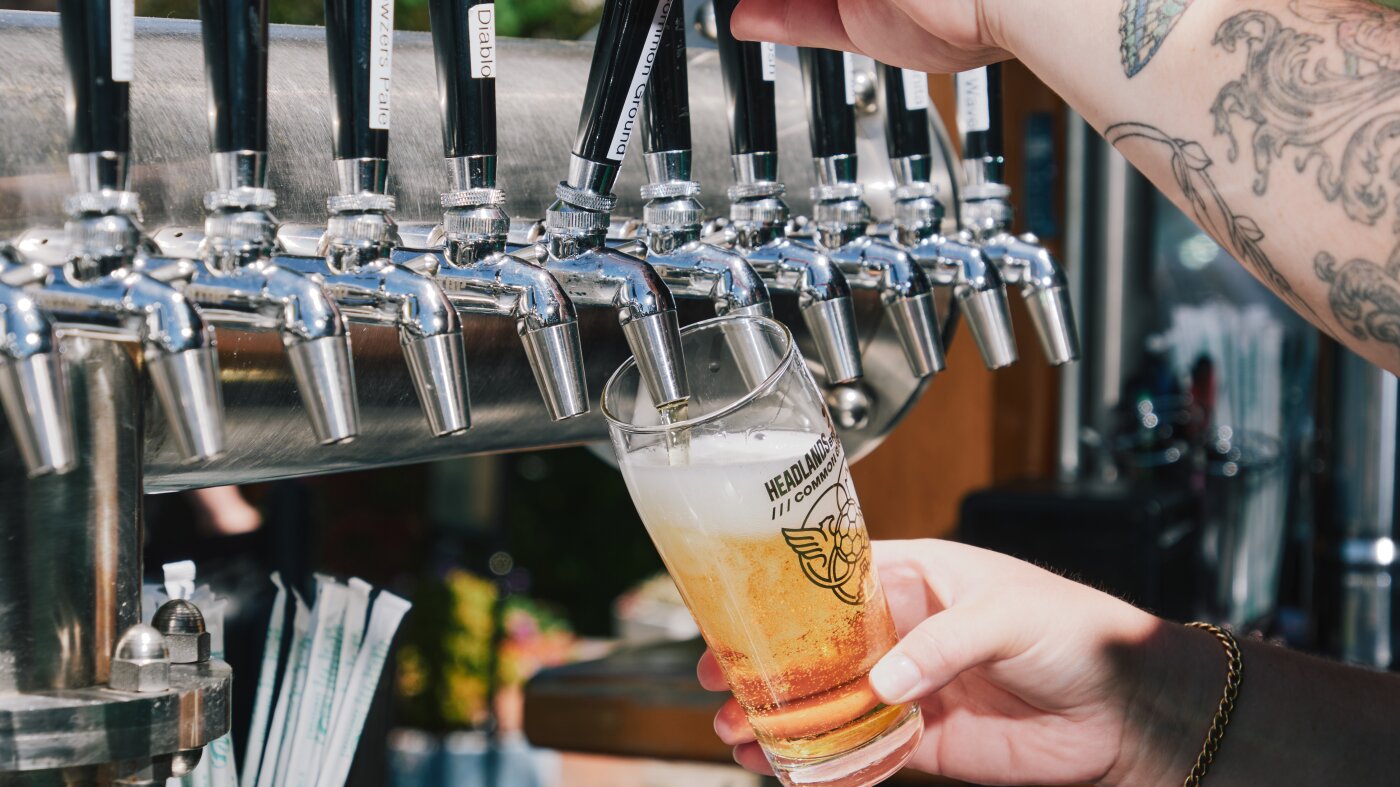
3 World Cup rivals find ‘Common Ground’ in a cross-border beer
-

 Technology20 minutes ago
The Flipper Zero creators’ Busy Bar productivity display will go on sale next month
-

 World23 minutes ago
Families watch in horror as skydiving plane crashes in France, killing all 11 aboard
-

 Politics28 minutes ago
DOJ launches grand jury probe into Marxist mogul Neville Roy Singham’s funding of leftist groups
-

 Health35 minutes ago
America’s lifespan has doubled since 1776 — experts reveal what changed
-

 Sports38 minutes ago
Thekla embarrasses Stardom’s Starlight Kid after retaining AEW World Women’s Championship at Forbidden Door
-

 Technology43 minutes ago
AI may spot deadly heart risk in a routine ECG
-
 Business50 minutes ago
SpaceX IPO sparks race for luxury housing in Southern California

