Colorado
Colorado campaign highlights deadly fentanyl risks on fire engine


Adams County Fire Rescue’s Engine 11 has a new look. For the next three to six months, it will feature a fentanyl awareness wrap to help protect people from the deadly drug.
“As Engine 11 serves this community, folks will easily see our display on both sides, showing that five out of every 10 pills out there contain a potentially lethal dose of fentanyl. Think about that for a minute—that’s a 50/50 shot,” DEA Special Agent in Charge Jonathan Pullen said.
Fentanyl poisoning is a crisis that has impacted both the nation and Colorado.
“A recent study earlier this year reported that 22 teenagers die every week from drug overdoses,” said Adams County Fire Rescue Chief Troy Patterson.
“We cannot trust pills given to us by friends or family if they are not prescribed by a doctor. Please do not take them. You are gambling with your life,” Adams County Fire Rescue Lt. Ben Ramos said.
The issue has even touched the Adams County Fire Rescue family. In September 2019, Ramos lost his older brother Anthony to fentanyl poisoning. Anthony Ramos was 33 years old.
Ben Ramos says losing his brother has profoundly changed his life and perspective. He urges everyone to discuss the dangers of fentanyl with their loved ones, even if the conversation is difficult.
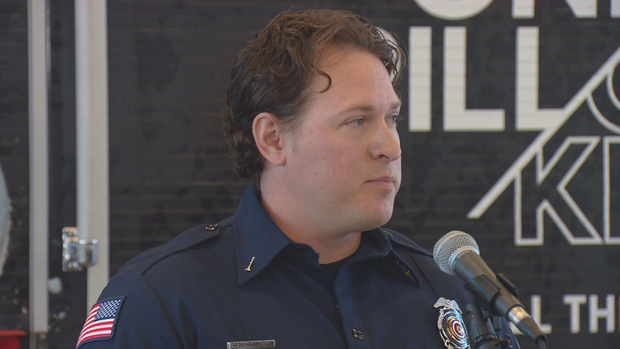
“I miss my brother every day. He was truly an amazing person — charismatic, easygoing, and hilarious. He was loved by many and is dearly missed. To protect and save your loved ones, you must have this conversation. Though it’s hard for me to stand here and talk about this today, you just might save a life,” Ben Ramos said.
The messaging on the truck is displayed in both English and Spanish to reach Adams County’s large Spanish-speaking population.




Colorado
Where to watch Philadelphia Phillies vs. Colorado Rockies: Live stream, start time, TV channel, odds for Sunday, April 5

The Philadelphia Phillies (5-3) will try to complete a three-game sweep over the Colorado Rockies (2-6). The Phillies won the series’ first two games by limiting the Rockies to a single run in each. Philadelphia’s Taijuan Walker is scheduled to start against Colorado’s Tomoyuki Sugano.
How to Watch Philadelphia Phillies vs. Colorado Rockies
-
Time: 3:10 p.m. ET / 12:10 p.m. PT
-
Where: Coors Field, Denver
-
TV Channels: Rockies.TV, NBCSP+
Advertisement
Team records
-
Philadelphia Phillies: 5-3 (No. 3 in NL East)
-
Colorado Rockies: 2-6 (No. 5 in NL West)
Odds
-
Spread: Colorado Rockies +1.5
-
Moneyline: Colorado Rockies +145 / Philadelphia Phillies -175
Starting pitchers
Philadelphia Phillies: Taijuan Walker (0-1, ERA: 11.57, K: 2, WHIP: 2.79)
Colorado Rockies: Tomoyuki Sugano (0-0, ERA: 1.93, K: 4, WHIP: 0.86)
Weather: 63°F at first pitch
Ballpark: Capacity: 50,144 | Roof: Open | Surface: Grass
Weather: 63°F at first pitch
Ballpark: Capacity: 50,144 | Roof: Open | Surface: Grass
Colorado
Hooters Colorado Shoots Bikini Calendar Photos In The Mountains & Refuses To Die, Nacho Hat & Is Nike Dead?

Plus: The colors are starting to pop from Augusta National.
Quick observations — in no particular order — from Florida while Mrs. Screencaps packs up the kids this Saturday morning for the long journey back to rainy Ohio
- Our kids must’ve thrown a pool ball or pool football 3,000 times on this trip. If they end up needing Tommy John surgery in June, it was due to this trip.
- We spent the last three days in Orlando and not once did the boys ask if we could go to a Disney or Universal property. At about $900 for a Disney park and $1,000 for Universal, it was a big relief. There’s a clear dilemma right now based on the prices: Do modern middle-class families have the money to blow on one day at these parks? Yes, but at some point, as in our case, you have to take a stand financially. The parks have reached the tipping point. We cannot be the only family in this situation. We saw my cousin this week in Florida, and she was talking about how her and her husband bought an acre of land in a beautiful part of Michigan for $1,800 last year. Meanwhile, Disney can suck a family dry for $1,300 after entrance, parking and food in a matter of hours. I vote for buying land. The same can be said for Mrs. Screencaps. My ears perked up when she showed interest in picking up some land. That was something I haven’t heard out of her before.
- Like many generations before me, I’m going to miss this weather when we hit the Ohio River, and it’s instantly 54, rainy and cloudy.
- However, I don’t know how people in Florida deal with highway traffic, or traffic in general for trips to grocery stores. I get it when I see people on Twitter parroting the line, “We’re full. No northerners are allowed in.”
- Did I mention how nice it was to not check email, Slack messages or DMs? So relaxing. I sat there in a cabana the last two days at the pool listening to music, watching the boys throw the football and never once did I wonder what people were sending me on social media or via email.
- Publix needs to figure out its Greek pasta salad. What they’re selling IS NOT Greek pasta salad.
- Gas was $4.29 at the final stop on I-75 before you go across the Everglades. It was one of the first questions my dad asked me when we rolled into his place just off Marco Island on Monday. It was officially on his mind.
- I hope our boys understand how fortunate they are to have two things in their lives: (1.) a grandfather who keeps his boat in a Marco Island boat house where they drop it in the water and have it ready for you when you pull up to the dock, and (2.) a grandmother who has a beautiful 9-hole golf course at her trailer park. Boys, those are the amenities that make these trips special, let me tell you. We might not have dropped $1,300 at Disney, but we had some fun.
- Speaking of golf, Screencaps Jr. had his first official 9-hole round of golf at my mom’s place and it was a special father-son moment. There I was having to teach him everything about golf etiquette, what club to use and how to handle himself on a green. As I told the text group, now I know why Diesel gets so emotional over moments with his own boys. Last Saturday, I had one of those moments with Screencaps Jr. On the Par 3 course, he had a couple of blowup holes, a couple of doubles and even a bogey. You better believe I made him count every stroke. Start them young. If they learn to shave strokes at 13, just think of how they’ll keep score at 33.
- We just happened to drive by the strip-mall Hooters in Kissimmee the other night and there was one lone middle-aged guy, maybe 58, sitting at the outdoor bar on a pretty pleasant Thursday night. I don’t want the iconic brand to die, but young, red-blooded men just aren’t showing up for a beer and wings. It’s sad, but it’s the world we’re living in.
— Keith in Indian Rocks Beach writes:
Hey Joe, if you need a place to park to take the kids to the beach, hit me up.
Kinsey:
Next time, Keith. I was so in the moment and ignoring my work email that I just saw this — a week later.
I looked up Keith’s address. He’s definitely right on the water.
— Chuck writes:
I dont see many Kinseys out there. Enjoy your vacation. Good luck to you and Outkick.
Kinsey:
From one Kinsey to another, thanks for the email, Chuck. I’ve enjoyed this vacation. Now it’s time to get home and get rolling on Spring, the mowing season, baseball season, track season and planting season for Mrs. Screencaps.
Is Nike about to get Wendy’s’d?
While I was ignoring the world in Florida, Nike stock was dropping like a rock. Of course the LIBS say this has nothing to do with the DEIs inside Nike joining forces with Kap or all the Alphabet Mafia messaging the company has pounded for years.
And don’t forget about how Nike promoted Lizzo-sized mannequins in 2022 only to have Lizzo turn her back on the fatty lifestyle.
Nike marketing chose a path. Combine that with changing tastes in culture and you have a brand in a free-fall.
Masters kits are arriving
— Mark writes:
Look what just showed up!! I’m a 60 year old man acting like a teenager right now! Food box arrives tomorrow!!
Kinsey:
Enjoy those drink cups, Mark. Those are about to become the best drink cups in your cabinet. Cherish them. Don’t let your friends walk off with them.
######################
That is it this morning. I know it’s a short one, but Mrs. Screencaps is ready to roll. The 3.5L V6 Honda Odyssey is ready to roll. We have a 13-hour day in front of us. It’s time to get back to reality.
I’ll see you guys again on Monday.
Have a great weekend and Happy Easter.
Numbers from :
Stuff You Guys Sent In & Stuff I Like :

One community in Douglas County is preparing to break ground on a new fire station.
Castle Rock Fire and Rescue Department’s Station 156 will be located in the northeast portion of town.
The new station will serve Cobblestone Ranch and Terrain, two growing subdivisions. It will include a 13,000-square-foot fire station and a 13,000-square-foot logistics center.
“When I started 1986, we had two fire stations,” Fire Chief Norris Croom told CBS Colorado. “We were an all-volunteer department.”
In the 40 years Croom has been with the fire department, a lot has changed.
“7,500 people were in town,” Croom said. “Right now, we’re at about 87,000 people, and this will be our sixth fire station.”
Croom is presently the chief of a fire department that’s four times bigger and serves a much larger community.
“Just mind boggling that it’s grown so fast,” said Judy Barnett, who lives in the Castle Oaks community.
For 30 years, Barnett has also watched the town grow from her backyard.
“Just overnight, you look out, and there’s another house,” Barnett said.
Her rural home in northeast Castle Rock is getting more suburban, with the addition of communities like Cobblestone Ranch and Terrain.
“The Terrain pretty much surrounds us on the west side,” Barnett said.
Croom says his department is being stretched thin in those areas.
“We’re seeing response times as long as 14 to 15 minutes,” Croom explained.
But, soon, Castle Rock Fire and Rescue will break ground on a solution, a new fire station on Castle Oaks Drive.
“We believe that we’ll be able to cut those response times in more than half,” Croom said.
Fleet maintenance work is done at Castle Rock’s public safety training facility, but that work will soon have a new home. A logistics center will be built along with the new fire station.
Croom says the logistics center will provide a centralized location for equipment and space for maintenance work.
“As far as our equipment is concerned, we’ve got it stored throughout all of our different stations,” Croom said. “So, if you need hazmat equipment, you might have to go to Station 5. If you need wildland equipment, you might have to go to this station. We’ll be able to take all of that out of those stations and consolidate it into one central location.”
The total cost of the facility is $21.5 million. It’s being paid for with TABOR timeout dollars, a general fund loan, capital impact fees and certificates of participation. Twelve firefighters will be needed to staff the new station. Croom says the money to hire more firefighters comes from a ballot measure passed by Castle Rock voters in 2024.
“We do worry about fires as of lately. We’re surrounded by scrub oak,” Barnett said. “As dry as it is, it, you know, and it wouldn’t take much.”
The new Station 156 is just minutes from Barnett’s home, and will serve her community, as well as Terrain and Cobblestone Ranch.
“I think that’s great because, of course with all the growth around here, there’s a lot more chance of having a fire,” Barnett said. “The hard thing about growth is all the people, but then that good thing is that we get those kind of amenities.”
The station will break ground next week, and it’s expected to be operational in 2027.
“As the town continues to grow and as the community continues to grow, us being able to keep up with that growth is significant,” Croom said.
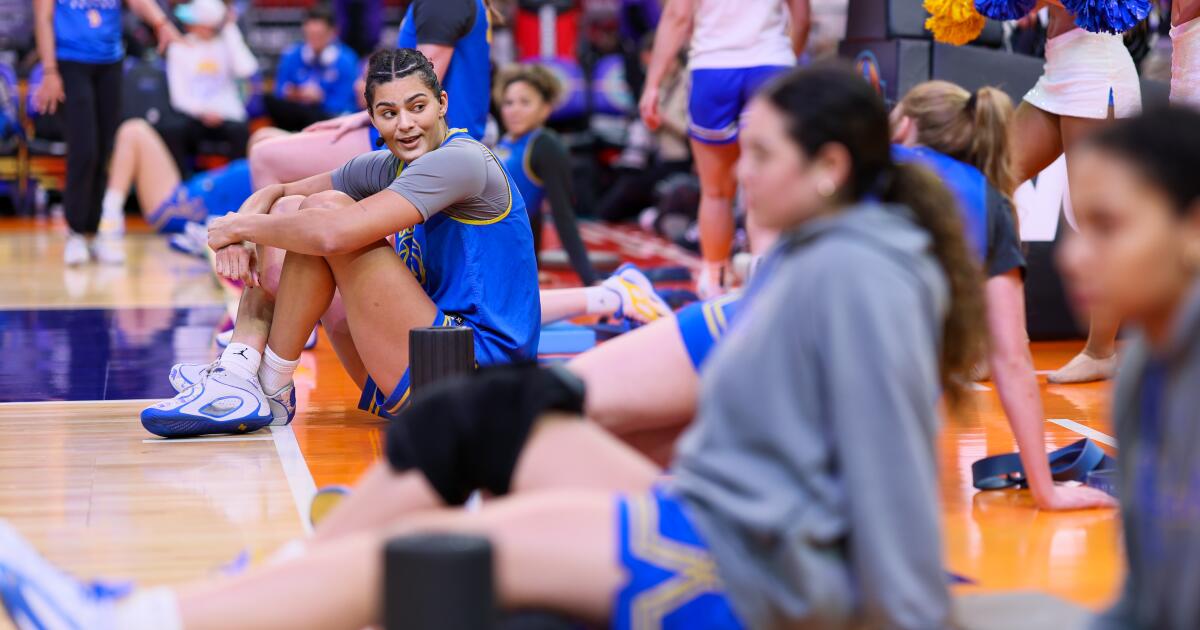
Three keys for UCLA as it faces South Carolina for an NCAA national championship

Hamas armed wing says disarmament demands not acceptable

Trump issues fiery new threat against Iran as details of US aviator’s rescue emerge

Strong storms leave trail of damage across Metro Detroit — cleanup could take weeks

NY Mets announce lineup vs. San Francisco Giants for Sunday game

Florida High School Football Rankings: Top 25 teams – Oct. 21

How old is Bo Nix? What to know about Oregon quarterback ahead of 2024 NFL Draft

Cleary's 21 help Le Moyne down Central Connecticut State 69-64 in OT

99th annual Pony Swim held in Virginia

Indiana Members Credit Union announced as new anchor tenant at Bottleworks District
Hamas armed wing says disarmament demands not acceptable
Trump issues fiery new threat against Iran as details of US aviator’s rescue emerge

DHS slams Democrat Sen Chris Van Hollen claim, says illegal alien caused crash while fleeing ICE

Zelenskyy warns US-Iran war could divert critical aid from Ukraine

After the Minnesota surge, ICE is moving to a quieter enforcement approach
-

 South-Carolina1 week ago
South Carolina vs TCU predictions for Elite Eight game in March Madness
-

 Atlanta, GA16 hours ago
1 teenage girl killed, another injured in shooting at Piedmont Park, police say
-

 Vermont1 week ago
Skier dies after fall at Sugarbush Resort
-

 Movie Reviews3 days ago
Vaazha 2 first half review: Hashir anchors a lively, chaos-filled teen tale
-

 Politics1 week ago
Trump’s Ballroom Design Has Barely Been Scrutinized
-

 Atlanta, GA1 week ago
Fetishist ‘No Kings’ protester in mask drags ‘Trump’ and ‘JD Vance’ behind her wheelchair
-
 Entertainment4 days ago
Inside Ye’s first comeback show at SoFi Stadium
-

 Politics1 week ago
JD Vance says he was ‘obsessed’ with UFOs, believes aliens are actually ‘demons’