West
Colorado newspapers stolen after publishing report on teenager's alleged rape at police chief's home

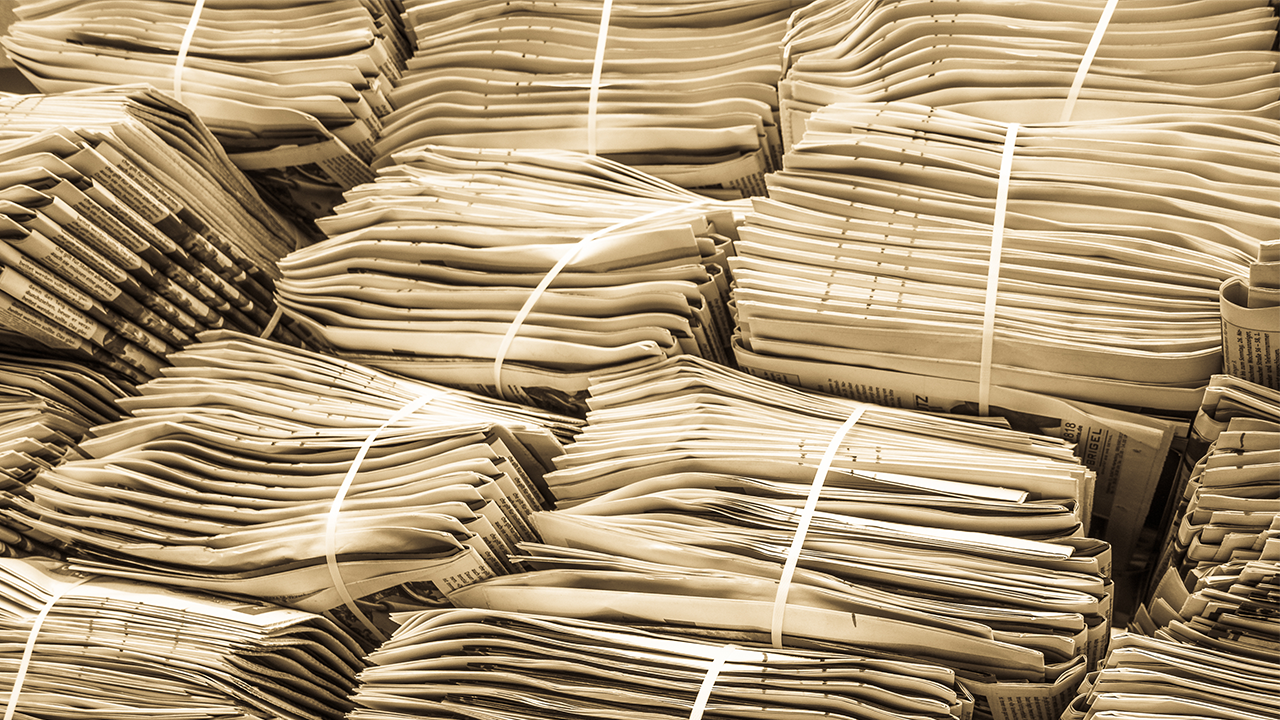
A newspaper in a Colorado town said hundreds of copies of its latest issue were stolen after it published a report about a teenage girl who was allegedly raped at the home of a police chief.
The 17-year-old girl told investigators she was repeatedly raped by three different teenagers at a party in May 2023, according to the Ouray County Plaindealer’s report. The newspaper reported that the alleged rape happened at Ouray Police Chief Jeff Wood’s home, but Wood himself has not been accused of any crime.
An affidavit from the Colorado Bureau of Investigation, which was obtained by the Plaindealer, says that the suspects had been drinking and using drugs on the day of the alleged crime. The victim told police she went in and out of consciousness but that she had not taken any drugs.
Gabriel Trujillo, 20, Ashton Whittington, 18, and Wood’s stepson Nate Dieffenderffer, who was 17 at the time of the alleged crime and not identified by law enforcement, were arrested this week in connection with the sexual assault. Whittington is not accused of participating but of not intervening.
SEVERED HEAD, HANDS FOUND IN FREEZER OF RECENTLY-SOLD COLORADO HOME
A newspaper in a Colorado town said hundreds of copies of its latest issue were stolen after it published a report about a teenage girl who was allegedly raped at the home of a police chief. (iStock)
The three suspects in the case have all denied the allegations. They have each posted bail and have been released from jail, according to Fox 31.
The Plaindealer published the story on the front page of its Thursday issue, but its newsroom says many of the newspapers disappeared. In a Facebook post, the Plaindealer said someone stole copies of the newspaper from racks in Ouray and Ridgway.
The newspaper said someone deposited money into each newspaper box to open them before taking off with all the papers inside.
“All of our newspaper racks in Ouray and all but one rack in Ridgway were hit by a thief who stole all the newspapers. From what we know so far, it seems this person put in four quarters and took all the papers at these racks,” the Plaindealer said in a newsletter.
“It’s pretty clear that someone didn’t want the community to read the news this week,” the newsletter continued. “I’ll leave it up to you to draw your own conclusions on which story they didn’t want you to read.”
COLORADO SECURITY GUARD CHARGED IN WOMAN’S MURDER ALLEGEDLY HAD HER SEVERED HAND IN HIS POCKET WHEN ARRESTED
The newspaper said someone put four quarters into each newspaper box to open the boxes before taking off with all the papers inside. (iStock)
The Ouray County Sheriff’s Office told Fox 31 it has received calls about the missing papers and that an investigator has been assigned to the case.
A suspect was identified Friday, according to the newspaper. However, the suspect’s identity will not be disclosed until a citation is handed down. The paper said the person is not related to Woods or the three accused rapists.
The Plaindealer’s newsletter said, “We’re not going to stop doing our job, which is to shine light on important issues in our community and keep you informed. This person is not going to shut down the freedom of the press by stealing a few hundred newspapers. Our community won’t stand for it, and we won’t, either.”
“If you meant to intimidate us, you just strengthened our resolve,” the newsletter said.
Read the full article from Here


WASHINGTON — Two candidates for California governor will emerge from a massive field of 61 hopefuls in a state primary on Tuesday, when voters will also select U.S. House nominees using a new map they approved in a 2025 ballot measure.
Also on the ballot is a long list of state and local contests, including a Los Angeles mayoral race where the Democratic incumbent mayor faces more than a dozen challengers. Among them is a former reality TV personality whose candidacy has caught the eye of another former reality TV personality, President Donald Trump.
California’s top-two primary format, where all candidates run on the same ballot regardless of party, has complicated the campaign calculus in several high-profile races, including the one to replace term-limited Democratic Gov. Gavin Newsom. While Democratic candidates often welcome the opportunity to run head-to-head against a Republican in the dark blue state, the number of well-known Democrats in the race threatens to split the vote and inadvertently clear the path for two Republicans to advance to the general election, which would guarantee a Republican governor.
The Democratic field includes former U.S. health secretary Xavier Becerra, former U.S. Rep. Katie Porter, San Jose Mayor Matt Mahan, billionaire 2020 presidential candidate Tom Steyer and former Los Angeles Mayor Antonio Villaraigosa. Republicans vying for the seat include Riverside County Sheriff Chad Bianco and conservative commentator Steve Hilton, who has Trump’s endorsement.
Democrats Eric Swalwell and former state Controller Betty Yee will also appear on the ballot, although both have withdrawn from the race. Swalwell was a top contender in the campaign but withdrew on April 12 following sexual assault allegations he has denied. He resigned from Congress two days later.
In the race for control of the narrowly divided U.S. House, a new congressional map favorable to Democrats has complicated the reelection bids of several Republican House incumbents. Voters approved the new district boundaries in a Nov. 2025 referendum, which was a response to Trump’s initiative in Texas and other states to maximize the number of GOP seats heading into the fall midterm election.
In the 6th Congressional District, U.S. Rep. Kevin Kiley considered his limited options and left the Republican Party in March to run for reelection as an independent.
Republican U.S. Reps. Ken Calvert and Young Kim are competing against each other in the 40th Congressional District. Democrat Esther Kim Varet is one of several challengers hoping to snag one of two spots in the general election.
Also on the ballot is a special election in the 1st Congressional District to complete the term of the late Republican U.S. Rep. Doug LaMalfa, who died in January. The five-person field pits the Democratic state Senate President against the Republican state Assembly Minority Leader. If no candidate receives a vote majority, the top two finishers will compete one-on-one on Aug. 4. The winner will serve under the current district boundaries, not the new map going into effect in the next Congress.
A special election to fill Swalwell’s vacant 14th Congressional District seat will be held June 16, also under the current boundaries.
In the race for Los Angeles mayor, Democrat Karen Bass seeks a second term in the nonpartisan office against tech entrepreneur Adam Miller, former MTV reality show cast member Spencer Pratt, City Councilmember Nithya Raman and others. Trump recently said of Pratt, “I’d like to see him do well.”
Democrats have a significant advantage over Republicans in statewide races based on their overwhelming support in the populous areas surrounding Los Angeles, San Francisco, Sacramento and San Diego. Republicans tend to perform best in the more sparsely populated areas of northern California and the Central Valley, while running competitively in Southern California suburbs outside of Los Angeles and San Diego. A Republican has not won statewide office in California since 2006.
Here are some of the key facts about the election and data points the AP Decision Team will monitor as the votes are tallied:
When do polls close?
Polls close at 8 p.m. PT, which is 11 p.m. ET.
What’s on the ballot?
The AP will provide vote results and declare winners in contested races for U.S. House, governor, lieutenant governor, secretary of state, controller, treasurer, attorney general, insurance commissioner, state school superintendent, Board of Equalization, state Senate, State House, mayor of Long Beach, mayor of Los Angeles and Los Angeles County sheriff.
Who gets to vote?
Any registered voter in California may participate in the state primary.
How many voters are there?
As of April 3, there were about 23.1 million registered voters in California, including about 10.4 million Democrats, about 5.8 million Republicans and about 5.3 million not registered with any party.
How many people actually vote?
About 7.3 million votes were cast in the U.S. Senate primary in 2024, roughly a third of registered voters.
How much of the vote is cast early or by absentee ballot?
About 89% of vote in the 2024 U.S. Senate primary was cast before primary day.
As of Thursday, about 2.6 million ballots had already been cast in Tuesday’s election.
When are early and absentee votes released?
About four out of every five California counties release some or most of their results from mail voting in the first vote report of the night, usually before any in-person Election Day results are released. Almost half the counties release most or all of their in-person early voting results in the first vote report.
Since mail voting tends to favor Democrats and in-person Election Day voting tends to favor Republicans, the release of mail voting results at the start of the night could result in an early lead for Democratic candidates, while Republican candidates may narrow the gap as more Election Day results are counted.
How long does vote-counting usually take?
In the 2024 primaries, the AP first reported results at 11:08 p.m. ET, or eight minutes after polls closed. The last vote update of the night was at 6:01 a.m. ET with about 52% of total votes counted. The count reached 99% of total votes about two weeks later on March 20 at 7:47 p.m. ET.
When will the AP declare a winner?
The Associated Press does not make projections and will declare a winner only when it’s determined there is no scenario that would allow a trailing candidate to close the gap. If a race has not been called, the AP will continue to cover any newsworthy developments, such as candidate concessions or declarations of victory. In doing so, the AP will make clear that it has not yet declared a winner and explain why.
How do recounts work?
There are no automatic recounts in California. Any registered voter may request and pay for a recount. The AP may declare a winner in a race that is subject to a recount if it can determine the lead is too large for a recount or legal challenge to change the outcome.
Are we there yet?
As of Tuesday, there will be 14 days until the June 16 special primary in Congressional District 14, 63 days until the Aug. 4 special general election in Congressional District 1, 77 days until the Aug. 18 special general election in Congressional District 14 and 154 days until the Nov. 3 general election.
Copyright © 2026 by The Associated Press. All Rights Reserved.

DENVER (AP) — Tina Peters, the former clerk convicted of participating in a scheme to chase election conspiracy theories promulgated by President Donald Trump, was released from prison Monday after the president successfully pressured Colorado’s Democratic governor into commuting her sentence.
Peters’ release was confirmed by the Colorado Department of Corrections. The state agency said it would have no more information about the 70-year-old inmate. Her sentence was shortened by Gov. Jared Polis last month after Trump waged a lengthy pressure campaign against the governor and his state.
Peters served less than a quarter of her nine-year sentence.
Peters was the first local election official to be charged with breaching security after the 2020 election. She snuck in an outside computer expert affiliated with My Pillow Chief Executive Mike Lindell — who himself denied that Trump lost the White House in 2020 — and the person copied the county’s Dominion Voting Systems computer server as it was updated in 2021.
Peters then joined Lindell onstage at a “cybersymposium” that promised to reveal proof that the election was rigged. Video and photos of the computer system upgrade, including passwords, were posted online. The move stoked false claims that voting machines were manipulated to steal the election from Trump.
WATCH: Trump’s attempt to pardon Tina Peters runs into constitutional limits
Peters was convicted in 2024 of attempting to influence a public servant, conspiracy to commit criminal impersonation, violation of duty and other crimes by jurors in Mesa County, a Republican stronghold that supported Trump. An appeals court upheld her conviction in April, but ordered Peters to be resentenced because it said the judge who sent her to prison wrongly punished her for speaking out about election fraud.
Trump had championed Peters’ case, but because she was convicted under state law, he did not have the power to pardon her. Instead, the president pressured Polis to do so, lambasting him on social media and disinviting him to a White House meeting with other governors. The Trump administration also announced plans to dismantle the National Center for Atmospheric Research in Colorado and relocated the U.S. Space Command to Alabama.
Polis commuted Peters’ sentence on May 15. In a letter, he wrote that although Peters was convicted of serious crimes and deserved to spend time in prison, the sentence was “extremely unusual and lengthy” for a first-time non-violent offender.
Colorado Secretary of State Jena Griswold, a Democrat, on Monday released a statement warning that the release will “embolden the election denier movement” and adding that, since the clemency announcement, Peters “has continued to spread election falsehoods and conspiracies.”
A free press is a cornerstone of a healthy democracy.
Support trusted journalism and civil dialogue.

Most first-time Hawaii visitors do not know there is another airport checkpoint waiting before the flight home. No one may have thought about what was in their luggage and carry-on bags at the airport. But leaving Hawaii is where a surprise inspection happens: here’s what gets taken, what sails through, and why so many new-to-Hawaii travelers only learn the rule in line.
A reader named Justin did everything right before his first trip to Hawaii. He checked what he could bring, avoided anything questionable, and figured Hawaii would inspect him on arrival the way, say, Australia or New Zealand do.
It went the other way. He filled out a Hawaii arrival document, but no one checked anything when he landed. On departure at Kona, he had no idea the inspection was even part of leaving Hawaii.
“The first time I ever came to the islands I was diligent about not bringing anything in… I was shocked there were no inspections like you’d find in Australia or New Zealand. Before I left I picked up two papayas from a roadside stand… I was directed through the USDA checkpoint at KOA with no explanation. The inspector was rude and condescending when she took my fruit.” — Justin.
We covered the full system last fall in “Why Hawaii Trusts You Coming In But Checks Everything Going Out.” The comments then showed us something a rules explainer cannot. Even longtime travelers often do not know where TSA security ends, where Hawaii’s own agriculture check on arrival fits in, where the federal USDA inspection on the way out takes over, and why the only checkpoint they really notice is that last one, which comes after the vacation is already over.
Arriving felt like nothing, and that is the trap.
For many first-time visitors, the odd part starts before the plane even lands. They are told Hawaii has strict agricultural rules, and that part is true. The islands are vulnerable to pests, plant diseases, seeds, insects, soil, and all the other small things that can turn into very large problems once they get loose here in Hawaii.
So visitors can expect a visible inspection upon arrival. They think someone will check bags, ask questions, or at least make the process feel serious. Instead, most domestic arrivals from the mainland complete the agriculture declaration, get off the plane, collect luggage, and start vacationing.
That does not mean the agriculture form is optional. It is a legal declaration, and false information can carry consequences. Inspectors are also, at least in theory, present in baggage claim areas for declared agricultural items, so travelers who disclose something can be sent for review.
So on paper, Hawaii has rules. In practice, most arrivals are self-reported, which is where visitors get confused. If you were worried enough to check what you packed before the trip, walking in with no inspection at all feels less like being trusted and more like nobody is guarding the entry point.
The line on the way home is where this gets real.
Leaving Hawaii feels nothing like arriving. The USDA station is real, and for most visitors, it is their first direct contact with agricultural enforcement during the whole trip. Checked bags get screened before being deposited with the airline. Then carry-on bags get checked, prohibited items get flagged, and fruit or flowers bought casually can disappear at the airport.
That is what happened to Justin. He bought two papayas before flying home from Kona and had no idea they would be a problem. His flight was direct to Alaska in winter, and the idea that a tropical pest would survive the cargo hold and the cold seemed absurd to him.
Travelers’ logic and federal logic are not the same thing. The rules do not change based on whether the destination feels cold enough, or whether the passenger thinks the fruit is harmless. They are well-established and built around what can and cannot travel from Hawaii to the mainland.
A reader who said he’s an inspector at HNL told us what actually gets taken.
One comment came from a reader named Keoni, who said he works as a USDA inspector at Honolulu. We cannot verify that, so we are treating him as a reader who told us what he sees rather than as an official source. Either way, what he described sounded exactly like what travelers run into at the airport every day.
Keoni said he encounters passengers daily who unknowingly bring fresh fruit or vegetables to the checkpoint. Many do not understand why the items are being taken, and some even become argumentative. Anyone who has stood near those stations has probably seen some version of that discussion unfold.
Most visitors do not learn exactly how this works until it impacts them. You buy fruit legally in Hawaii, pack it with care, and figure you are fine. One catch is that where you bought it can determine whether it travels or is confiscated, and the USDA airport line is usually where it first gets sorted out.
The rule that surprises people most is the one about cut fruit.
Keoni also raised a question about cut fruit, saying some cut fruit may be allowed for personal consumption in about 12 ounces, while cut mango or papaya would still be taken. We do not find the 12-ounce rule anywhere in the USDA guidance, which works item by item rather than by weight, so treat it as one person’s reading and not official policy. From personal experience, we’ve regularly carried cut fruit salads and have never had them questioned by USDA. What it does show is how quickly this turns into a case-by-case guessing game, as seen in travelers asking real questions.
Fresh whole fruit is easy to understand, even when visitors do not like the answer. Papayas, mangoes, and many other fresh items are exactly the kind of thing people should assume may not travel home with them from Hawaii. The more confusing situations involve prepared food, cut fruit, salads, poke, poi, and leftovers that do not seem to fit neatly into the rules.
That confusion ran through the whole comment thread. One reader declared Costco apples on arrival, had them taken anyway, and asked flat out where the inbound prohibited list even lives. Another wrote about traveling with poi. Someone else mentioned mango chutney without the seed, while another said he turns avocado into guacamole before inspection.
None of those readers were gaming anything. They were trying to understand a system they only half get. They know TSA has its rules about food and liquids. They do not know agriculture has a separate set, and that the two do not care about the same things.
So a jar of jam or liquid guacamole may become a TSA liquid problem, while a papaya becomes a USDA problem. To the traveler, it is all just food in a bag getting inspected. To the airport, it can be security and agriculture, and even potentially customs or airline policy, depending on the item and the specifics of travel.
Coming in is not as wide open as the law says.
Several readers pushed back on the idea that Hawaii simply trusts everyone arriving, and they were right. The law is stronger than the experience feels. Domestic travelers are required to complete the agriculture declaration, and inspectors are available for items that are declared or flagged.
The rules exist. They just do not look like what visitors picture when they imagine a fragile island protecting itself. There is no universal domestic baggage x-ray line on arrival, unlike what travelers see before leaving Hawaii for the mainland.
That is what Justin reacted to. He expected the fragile island ecosystem to be protected on the way in, not mainly policed on the way out. He had already done the careful thing before arrival, then watched the serious inspection happen only when he was trying to leave.
It is why readers kept bringing up Australia and New Zealand. For years, those places have trained travelers to expect a visible inspection. We have been through plenty of those ourselves, with food sometimes confiscated but more often just checked, and inspectors even carefully cleaning the soil off our shoes. Hawaii runs it the other way, with a legal declaration on arrival and a far more visible federal inspection on departure.
Why so many visitors say the whole thing is backward.
The strongest reaction was not about papayas at all. It was about whether the whole pattern makes sense. One reader called the inbound-honor, outbound-enforcement setup dumb, and that one word speaks for more people than would put it that bluntly.
Another reader argued that dangerous pests rarely arrive in passenger luggage and are more likely to arrive via freight, cargo containers, nursery stock, or interisland movement. He said bags should be screened on arrival for other reasons too, including illegal drugs, with agricultural material as a secondary benefit.
That argument is not going away, because both sides are pointing to something. Hawaii’s ecosystem is fragile, so visitors expect to see “the gate” at entry. The mainland has agricultural interests to protect too, so the federal departure screening exists for good reason.
Readers also corrected another common misunderstanding that appeared in the comments. There is no routine agricultural inspection when simply island hopping. The outbound USDA process is tied to flights leaving Hawaii for the mainland, not to a normal Honolulu-to-Lihue or Maui-to-Kona flight. The only exception is flying Southwest interisland through Honolulu. This is because their flights do not use the interisland terminal, so USDA inspection rules apply.
What to pack and what not to leave so you’re not the one holding up the line.
The safest Hawaii food souvenirs are obviously the boring ones. Packaged coffee, macadamia nuts, chocolates, cookies, sealed snacks, and the like move create no drama. If it looks packaged to travel, it will.
Fresh produce is different. If you buy fruit from a stand, market, farm, or grocery store on your last day, do not assume it can go home just because it was easy to buy. Check the USDA rules yourself before packing it, and do not wait until the airport line to find out whether your item is allowed.
Prepared food is still something you have to think about. A sealed meal, a packaged snack, frozen poi, or cooked food is usually fine, while fresh fruit, seeds, plant material, or anything with soil can turn into trouble. Flowers are 50/50. Many will get through on careful inspection while others will not.
The best advice is the simplest. Eat the mangoes and papayas in Hawaii, buy coffee to take home, and do not count on USDA airport staff to turn a confusing rule into a pleasant conversation you’ll want to remember.
What surprised you most on your first flight home from Hawaii, and did anyone warn you about the inspection before you got to the airport?
Get Breaking Hawaii Travel News
-
Arkansas17 seconds ago
Hogs’ Season Ends in NCAA Lawrence Regional
-

 California5 minutes ago
AP Decision Notes: What to expect in California’s state primary
-

 Colorado13 minutes ago
Colorado elections clerk Tina Peters released from prison after governor commutes sentence
-

 Connecticut15 minutes ago
South Carolina man found cutting down light poles in Rocky Hill, police say
-

 Delaware20 minutes ago
Over 1,000 pets will be looking for homes at mega adoption event in Delaware
-

 Florida28 minutes ago
Man in Florida jailed after reported attempted kidnapping at church
-

 Georgia31 minutes ago
Georgia man arrested after confessing to 1989 New Jersey cold case murder, authorities say
-

 Hawaii35 minutes ago
The Hawaii Airport Check First-Time Visitors Never See Coming


