West
Colorado college student's body found in rugged terrain, police believe

Colorado authorities have recovered what they believe to be the body of missing University of Colorado-Boulder student Megan Trussell in “hard-to-reach terrain.”
Trussell, 18, was last seen in her residence hall on Sunday, Feb. 9, wearing dark-colored yoga pants, a blue/gray jacket and white platform sneakers.
“The Boulder County Sheriff’s Office has notified CUPD that a deceased person matching the description of a missing CU Boulder student was discovered this morning near mile marker 40 in Boulder Canyon,” the University of Colorado Police Department said in a Saturday statement. “CUPD is working to confirm additional details and will communicate those as soon as we are able.”
The Boulder County coroner will perform an autopsy to verify the person’s identity and determine the cause of death.
GABBY PETITO TOLD HER EX SHE WAS SCARED TO LEAVE BRIAN LAUNDRIE BUT WANTED TO, JUST BEFORE MURDER: NEW DOC
Trussell, 18, was last seen in her residence hall on Sunday, Feb. 9, wearing dark-colored yoga pants, a blue/gray jacket and white platform sneakers. (UCPD)
CUPD said it received a missing persons report for Trussell on Wednesday, Feb. 12.
SUZANNE SIMPSON MURDER CASE: TEXAS DEFENSE FOR MISSING REALTOR’S HUSBAND LOOKING FOR HOLES IN EVIDENCE TROVE
CUPD said it received a missing persons report for Trussell on Wednesday, Feb. 12. (UCPD)
The Open Space and Mountain Parks rangers notified the Boulder County Sheriff’s Office of a deceased female around 10:40 a.m. on Feb. 14.
State and local agencies have been coordinating to investigate Trussell’s disappearance and, now, possibly her death.
NYC SUBWAY RIDER WHO GAVE BIRTH ON TRAIN IDENTIFIED AS MISSING FLORIDA WOMAN: REPORT
“The decedent was found in hard-to-reach terrain, requiring a technical evacuation including the need to rappel,” the sheriff’s office said in a press release. (UCPD/ Boulder County Sheriff)
“The decedent was found in hard-to-reach terrain, requiring a technical evacuation including the need to rappel,” the sheriff’s office said in a press release. It remains unclear how Trussell disappeared last week or what may have led her to Boulder Canyon Drive.
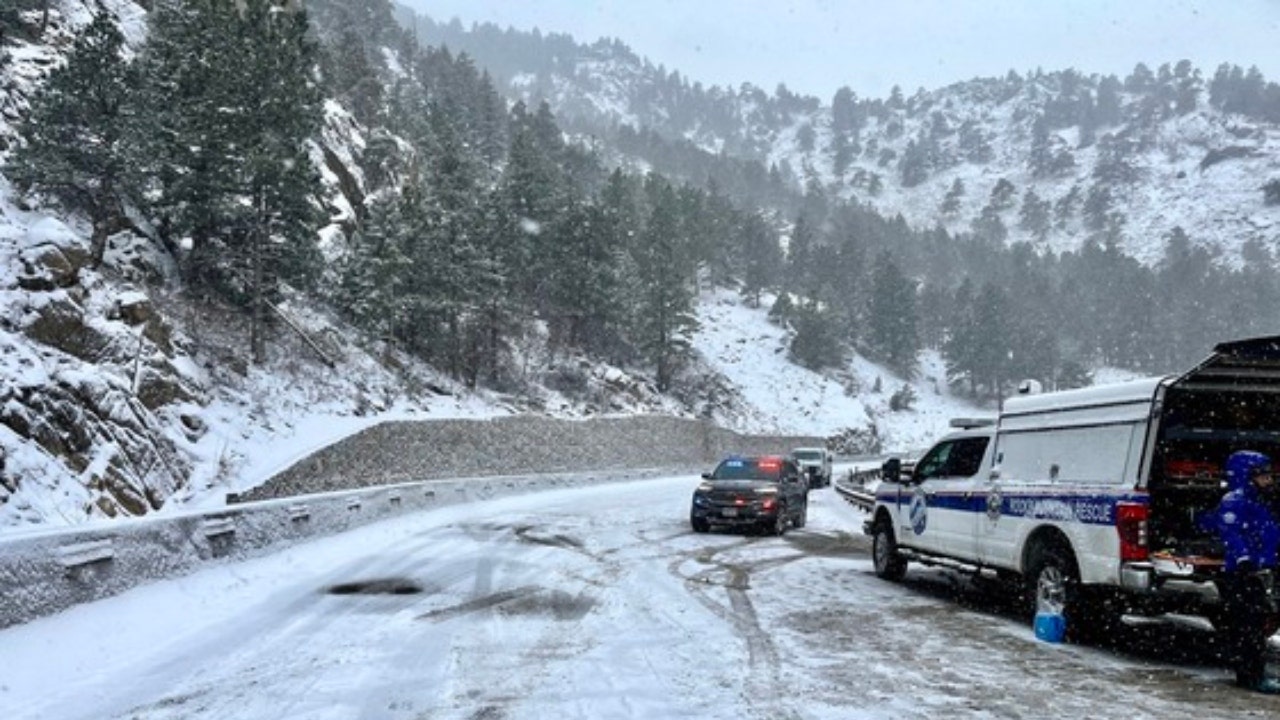
Boulder Canyon Drive was temporarily closed to allow authorities to recover the body and conduct an investigation in the area safely during “hazardous road conditions created by the weather.”
Read the full article from Here


San Francisco police officers arrested 20 people late Saturday night in SoMa after breaking up an unauthorized “Stud Alley” block party with hundreds of participants, according to the police department. It marked the second round of arrests of Pride attendees this weekend after police arrested five people at the tail end of the Trans March on Friday.
Police officers arrived near Kissling and 11th streets at 10:58 p.m. and “encountered an unsanctioned and unpermitted block party” that had about 300 participants and a D.J., according to a statement from the San Francisco Police Department. The following details are based on the department statement and social media videos; two participants reached by Mission Local declined to comment.
The department said that the large crowd “prompted the response of additional SFPD resources.” Social media footage shows dozens of officers marching through SoMa streets armed with batons, wearing riot helmets and carrying plastic zip-ties.
Officers then gave an order to disperse, the department said, and told the D.J. to leave the area. The D.J. left but the partygoers did not, the department said, and officers tried to “disperse the crowd.” Two people “resisted,” the department said, and officers arrested them.
Several people also “vandalized two vehicles passing through the area,” the department said, and made them “inoperable.” The two vehicles may have been Waymos: One online video shows two Waymos in the street blinking hazard lights, and appears to show one officer telling others that the Waymos had been vandalized.
The party then reformed a few blocks later at Washburn Street about two blocks away, the department said, with about 200 people; the police shut that gathering down as well.
Footage from the scene shows a line of officers in tactical gear advancing rapidly on the crowd, shoving people out of the alleyway before forming a cordon line to block the street. In total, 18 people were arrested on Washburn Street, the department said, for “obstructing or delaying a peace officer and unlawful assembly.”
The department said that “makeshift barricades” had been set up to keep officers at bay; at one point in a video, an officer moves several large rocks that were placed in the street. Two officers sustained minor injuries, the department said.
SoMa has been the site of unsanctioned “Stud Alley” parties on the Saturday evenings of Pride weekend for at least the past six years. The parties have made headlines in past years for graffiti, broken windshields and outraged neighbors.
The organizers of Stud Alley posted an announcement this year that they would not host a party, saying that the party had recently “outgrown itself,” but reminded past party-goers of the unofficial slogan that is frequently graffitied onto walls around the party: Every alley is Stud Alley.
Jesse, a bartender at the nearby bar the Willow, reported seeing cops “everywhere” after the Saturday incident, when people “fled” to the bar to escape. He did not report hearing of any incidents of violence between party-goers and police.
The arrests mark the second encounter between Pride-goers and police this weekend. On Friday, at the end of the Trans March, police officers arrested five marchers for alleged vandalism and assault after march-goers allegedly spray-painted several statues and a person.
On Sunday afternoon, Washburn and Kissling streets still bore signs of the party. Spray painted on the walls of buildings were “Fuck SFPD,” “No Cops at Pride,” and “Every Alley Stud Alley.”


The Mariners have made the first move in what’s sure to be a rip-roaring Trade Deadline season, acquiring INF Buddy Kennedy from the Giants in exchange for cash considerations.
Kennedy was designated for assignment by San Francisco earlier this morning as outfielder Heliot Ramos returned from the Injured List.
Advertisement
The 5’10” infielder has spent most of the season with Triple-A Sacramento, hitting well, even for the PCL. He’s in the 78th percentile for xWOBA, has a nearly identical K% and BB% (12.6%/12.1%) and rarely whiffs. This all has come out to a .322 batting average and a 152 wRC+. He’s made just a minimal impression in the bigs this season, with 8 plate appearances in 7 games, and zero hits.
Kennedy is likely to head to Tacoma. He can play 3B and 2B in a pinch, and will likely backfill Patrick Wisdom’s role if Wisdom is called up to take over right-handed pinch hitting duties from the currently-employed Rob Refsnyder.
The 27-year-old has not found much traction in the five years since his debut with Arizona in 2022. He’s amassed less than 200 plate appearances across 74 games, with a career 50 wRC+. On the mound, Kennedy has made one appearance this season, pitching one inning and giving up four runs, all earned.
-

 New York33 minutes ago
How a Global Researcher Lives on $110,000 in Long Island City
-

 Los Angeles, Ca36 minutes ago
Mass shooting at L.A. street takeover leaves 1 dead, 6 injured
-

 Detroit, MI56 minutes ago
On the front lines of chronic absenteeism: What Detroit’s Health Hubs do to get kids to school
-

 San Francisco, CA1 hour ago
S.F. police arrest 20 at 300-person SoMa block party during Pride
-
Dallas, TX1 hour ago
CJ Goodwin announces retirement after 8 seasons with Cowboys
-

 Miami, FL1 hour ago
Several people reportedly hurt in ‘mass casualty’ crash near Miami Gardens – WSVN 7News | Miami News, Weather, Sports | Fort Lauderdale
-

 Boston, MA1 hour ago
Inside Britten’s Record-Breaking Boston Waterfront Activation
-

 Denver, CO1 hour ago
Denver area events for June 29


