California
California's green agenda is targeting every mode of transportation, despite wide opposition


California’s state government, under the leadership of Democratic Gov. Gavin Newsom, is pursuing a wide-ranging climate agenda targeting the transportation sector — actions that could have major economic implications.
The California Air Resources Board (CARB), the state’s main environmental regulator, has finalized new rules mandating a rapid transition from traditional petroleum-powered modes of transportation to zero-emissions alternatives as it pursues a sweeping climate agenda. CARB has identified passenger cars, heavy-duty trucking, freight trains and harbor vessels for the changeover.
“We can solve this climate crisis if we focus on the big, bold steps necessary to cut pollution,” Newsom remarked in August 2022.
FEDERAL COURT STRIKES DOWN BIDEN’S CLIMATE RULE FOR STATES
The governor’s comments came shortly after CARB finalized regulations phasing out new gas-powered cars, and mandating 100% electric vehicle sales by 2035. Nearly 20 other states have since adopted those rules, meaning more than 40% of the country will be impacted by the mandate to some extent.
Environmentalists nationwide have set their sights on transportation because of its high carbon footprint and greenhouse gas emissions, which they say are contributing to global warming. According to the latest state data, the transportation sector accounts for 39% of California’s carbon emissions, the largest share of any sector and more than the industrial and power sectors combined.
California Gov. Gavin Newsom has repeatedly pushed policies to accelerate the electrification of his state’s transportation sector. (Getty Images)
The state’s broad effort to electrify its transportation sector is part of the California Climate Commitment unveiled by Newsom two years ago. Under the plan, the state is phasing out reliance on fossil fuels, deploying green energy, cutting greenhouse gas emissions 85% by 2045 and decreasing oil demand by a staggering 94%.
TRUCKERS CHALLENGE BIDEN ADMINISTRATION OVER CLIMATE CRACKDOWN ON ELECTRIC BIG RIGS
The new regulations have received widespread criticism from Republicans, Democrats, consumer groups and industry associations, which argue such a plan is unworkable and not feasible. In a recent federal filing, the Alliance for Automotive Innovation, which represents major automakers and supports a transition to EVs, said it had “continued concerns with the feasibility” of the plan.
A driver charges his electric vehicle at a charging station in Monterey Park, California, on Aug. 31, 2022. (Frederic J. Brown/AFP via Getty Images)
“CARB has an ideological commitment to reducing emissions from transportation,” said Diana Furchtgott-Roth, the director of the Heritage Foundation’s Center for Energy, Climate, and Environment. “They particularly don’t seem to like personal mobility, where people can go around anywhere they want in whatever kind of vehicle they want.
“So, they say people are just going to have to get used to electric vehicles, whether they like them or not, and go where the charging stations are. This seems to be an ideological, semi-religious, cultish viewpoint.”
FORMER AG WILLIAM BARR’S FREE MARKET GROUP SUES CALIFORNIA OVER EV TRUCK MANDATE
In 2023, 9.5% of new, light-duty vehicle sales were EVs, up from 7% in 2022 and 4.3% in 2021, according to data from the Alliance for Automotive Innovation. California’s regulations kick in next year, requiring 35% of model year 2026 car purchases to be electric and, one year later, requiring 43% of model year 2027 cars to be electric.
In addition to that mandate, CARB adopted the nation’s most aggressive truck electrification plan in April 2023 and, shortly thereafter, regulations targeting freight train emissions. The former mandates wide swaths of the heavy-duty vehicle sector to be electrified by 2035, and the latter requires locomotives to begin transitioning to zero-emissions technology in 2030.
Less than 1% of new truck sales in the U.S. are zero-emissions, according to the Truck and Engine Manufacturers Association. (Graham Hughes/Bloomberg via Getty Images)
The American Trucking Associations blasted the heavy-duty vehicle rule, saying it sets “unrealistic targets and unachievable timelines.” And the Association of American Railroads — which is suing California over the freight train regulations — said “there is no clear path to zero emissions locomotives.”
“Commerce is the lifeblood of the economy and transportation of goods — most of which is by trucks and a lot of it also by train,” Marlo Lewis, a senior fellow at the Competitive Enterprise Institute, said in an interview. “An efficient economy would be one where the costs of transport are as low as possible, consistent with safety and real environmental concerns.”
FEWER AMERICANS WANT TO BUY AN EV — EVEN AS BIDEN PUSHES FOR STRONGEST-EVER CLIMATE CHANGE RULES
Lewis criticized CARB’s rules targeting trucking and freight trains, saying it would have negative economic consequences and potentially lead to higher consumer prices.
The American Trucking Associations estimates that trucks transported a whopping 11.5 billion tons of freight in 2022, equivalent to about 72% of total tonnage shipped nationwide. But less than 1% of new truck sales in the U.S. are zero emissions, according to the Truck and Engine Manufacturers Association. And those electric trucks remain far costlier than diesel-powered models, they say.
In response to California’s regulations, the Association of American Railroads said “there is no clear path to zero emissions locomotives.” (Luis Antonio Rojas/Bloomberg via Getty Images)
Additionally, freight railroads haul another 1.6 billion tons of raw materials and finished goods every year, data from the Association of American Railroads shows.
“At a qualitative level, this is going to increase the cost of national transportation services — private, commercial, industrial — enormously. There’s just no doubt about that,” said Benjamin Zycher, a senior fellow at the American Enterprise Institute.
“Even if you assume and make wild assumptions about the benefits in terms of climate phenomena and all the rest, there’s just no way the benefits exceed the cost. It’s just impossible,” he added.
MAINE REJECTS SWEEPING ELECTRIC VEHICLE MANDATE IN BLOW TO GOVERNOR’S CLIMATE AGENDA
In addition, CARB recently amended its Commercial Harbor Craft regulation, requiring a wide array of vessels, including tugboats, towboats and barges, to install cleaner upgrades and newer technology. In particular, vessels must install diesel particulate filters, a major retrofit that has some groups concerned about safety.
The American Waterways Operators (AWO), which represents the tugboat, towboat and barge industry, has opposed the regulation over concerns about diesel particulate filters (DPFs) catching fire. In her opinion piece in the DC Journal, Jennifer Carpenter, president and CEO of the AWO, wrote:
“While a truck driver can run from a fire, a vessel crew’s only option may be to abandon ship, which is hazardous and always a last resort. Introducing new fire risks to heavily trafficked ports with combustible cargoes is also dangerous — imagine the threats to safety, the environment and property if a DPF ignites on a tugboat carrying 110,000 barrels of fuel.”
And the U.S. Coast Guard penned a letter obtained by Politico in February, informing CARB that it would refuse to enforce the new mandate.
Rep. Michelle Steel, R-Calif., speaks during a news conference in October 2021. (Chip Somodevilla/Getty Images)
The vessel restrictions were also subject to a recent letter from a coalition of California Republicans led by Rep. Michelle Steel. The lawmakers called on CARB to delay implementation of the rules and consider stakeholder input.
“CARB seems hell-bent on further crippling our economy and burdening our workers,” Steel told Fox News Digital. “Whether it’s an absurd mandate that 100% of new car sales be zero-emission vehicles by 2035, or a downright dangerous requirement that towing vessels install faulty diesel particulate filters, CARB has repeatedly set forth regulations that defy logic and harm people.”
Rep. Jay Obernolte, R–Calif., called the CARB rule an “overreach” and “nonsensical.”
“In the case of towing vessels, CARB is relying on untested technology that our own Coast Guard has indicated they will not be able to enforce. And when it comes to locomotives, there are no freight locomotives available that comply with the zero-emissions requirement of the CARB regulation, and the physics of weight and energy density strongly suggest there will still be none when the regulation’s target of 2030 is reached,” he said.
CLICK HERE TO GET THE FOX NEWS APP
Lys Mendez, communications director for CARB, said in a statement that the board has entered into a “Clean Truck Partnership” with heavy-duty truck manufacturers like Ford, Daimler, General Motors, Isuzu, Navistar, Volvo and others in an effort to “work toward shared goals around emissions reductions.”
“The benefits of a zero-emissions future are clear for Californians and the state continues to spur innovation that will bring better technology, savings and public health benefits for consumers,” Mendez said. “All of CARB’s regulations are developed as part of a rigorous and thorough public process, which includes significant engagement from interested parties such as regulated industries and consumers. As part of every rulemaking, CARB conducts a financial analysis, which includes an assessment of costs, cost-savings, and benefits — including from public health benefits such as reduced illness, hospitalization and death due to cleaner air.”
Fox News Digital News Editor Jenny DeHuff contributed to this report.



SAN FRANCISCO — The man accused of trying to kill OpenAI CEO Sam Altman by throwing a Molotov cocktail at his San Francisco home is set to make an initial court appearance Tuesday.
Daniel Moreno-Gama, of Spring, Texas, traveled to San Francisco last week and hurled the incendiary device at Altman’s home Friday, setting an exterior gate on fire before fleeing on foot, authorities said. Less than an hour later, Moreno-Gama went to OpenAI’s headquarters about 3 miles (5 kilometers) away and threatened to burn down the building, they said.
No one was injured at Altman’s home or the company’s offices.
Authorities said Moreno-Gama, 20, expressed hatred of artificial intelligence in his writings, describing it as a danger to humanity and warning of “impending extinction,” according to court filings.
“This was not spontaneous. This was planned, targeted and extremely serious,” FBI San Francisco Acting Special Agent in Charge Matt Cobo said during a news conference Monday.
Moreno-Gama is charged in California state court with two counts of attempted murder and attempted arson, San Francisco District Attorney Brooke Jenkins said. He tried to kill both Altman and a security guard at Altman’s residence, she alleged. Officials have not said whether Altman was home at the time.
Online state court records do not yet show whether Moreno-Gama has an attorney who can speak on his behalf.
Craig Missakian, U.S. Attorney, Northern District of California, middle, speaks during a news conference Monday, April 13, 2026, in San Francisco. Credit: AP/Jeff Chiu
Jenkins said the state charges carry penalties ranging from 19 years to life in prison.
On Monday morning, FBI agents went to Moreno-Gama’s home in a Houston suburb where they spent several hours before leaving. He has also been charged by federal prosecutors with possession of an unregistered firearm and damage and destruction of property by means of explosives. Those charges carry respective penalties of up to 10 years and 20 years in prison.
“We will treat this as an act of domestic terrorism, and together with our partners, prosecute him to the fullest extent of the law,” U.S. Attorney Craig Missakian said when announcing the federal charges Monday.
The federal court documents do not list an attorney for Moreno-Gama, and he has not yet had his first appearance in federal court.
The document in which Moreno-Gama discussed his opposition to AI also made threats against Altman and executives at other AI companies, officials said.
“If I am going to advocate for others to kill and commit crimes, then I must lead by example and show that I am fully sincere in my message,” Moreno-Gama wrote, according to authorities.
Advocacy groups that have issued grave warnings about AI’s risks to society condemned the violence.
Anthony Aguirre, president and CEO of the Future of Life Institute, said in a written statement Friday that “violence and intimidation of any kind have no place in the conversation about the future of AI.”
Another group, PauseAI, said in a statement that the suspect had no role in the group but joined its forum on the social media platform Discord about two years ago and posted about 34 messages there, none containing explicit calls to violence but one that was flagged as “ambiguous.”
Discord said Monday that it has banned Moreno-Gama for “off-platform behavior.”

Dad charged with incest after allegedly assaulting daughter
Makayla Rene Settles moved to California to chase her dreams. Two days later, her family says her biological father sexually assaulted her. She was 18. She died five months later. Now her family is fighting to make sure her accused attacker faces trial.
VENTURA COUNTY, Calif. – When Makayla Rene Settles turned 18, she left Raleigh, North Carolina, for a fresh start. She moved to Moorpark, California, to live with her biological father, Stephen Vincent Chavez, with plans to attend college and build a new life. Two days after she arrived, her family says she called terrified and asking for help.
“It was just the fear in her voice, her crying. I didn’t need details. I knew something was wrong, and I said, ‘I’m on the way,’” said Carolina Sandoval, Makayla’s mother.
Carolina says she rushed to Chavez’s home. When she saw her daughter, she was devastated.
“She’s barely walking,” Carolina said. “My brother picks her up and hugs her.”
Makayla was taken to a hospital, where a rape kit was performed. According to the family, the results came back positive for Stephen Vincent Chavez’s DNA. He was arrested that same night and charged with incest, taking advantage of a position of trust, and providing alcohol to a minor.
Her cousin, Crystal Sandoval, was in disbelief. She said, “I was screaming, I was crying. I just kept thinking, why would he do that to her? This is something she could not come back from.”
Crystal was right. Five months later, Makayla Rene Settles died by suicide.
“If I’m being honest, it feels like I handed my daughter to the devil,” said Carolina.
On the night Makayla was taken to the hospital, Sandoval says Chavez sent her a text message. It read, “I’m never drinking liquor again. I don’t want that blackout to happen again.”
Now, the family says they’ve been dealt another devastating blow. According to Crystal Sandoval, the Ventura County DA’s Office has told them the case may not go to trial because Makayla is no longer alive to testify.
“The DA was essentially saying, ‘We don’t know if we have a case because she’s no longer here,’ and when she told me that, I immediately said, ‘No, we’re not going to let that slide,’” said Crystal.
Determined to get justice, Crystal took to social media. Her videos went viral, drawing widespread outrage and prompting hundreds to promise to show up to Chavez’s next court hearing, scheduled for April 21 at the Ventura County Courthouse.
“It was like he took her sunshine away and just kind of broke her soul,” Crystal said.
The Ventura County District Attorney’s Office issued the following statement:
“We have seen the posts online and want to let the public know that our Sexual Assault Unit continues to prosecute the defendant for this extremely serious crime. This case has been filed since July 2025, when the evidence supported the filing of felony charges. As with any case, prosecutors filed charges based on the evidence. The court sets bail. Our office successfully moved to increase bail to $250K in July 2025 when the case was filed. The defendant requested that bail be reduced, but we successfully argued against that. The defendant has since posted $250K bail and is out of custody. With respect to the upcoming hearing, the April 21 date is an early disposition conference. This is a standard pretrial proceeding where the court and parties address the status of the case and set future dates as appropriate.”
Despite that statement, the family says they have already been told a trial is not guaranteed, and they are not backing down. Chavez has pleaded not guilty. His next court hearing is April 21 at 8:30 a.m. in Courtroom 14 at the Ventura County Courthouse.
California
California’s leading GOP candidate for governor reacts to Swalwell’s exit from race | CNN Politics

California’s leading GOP candidate for governor reacts to Swalwell’s exit from race
Republican Gov. candidate Steve Hilton joins CNN’s Dana Bash after one of his opponents, Rep. Eric Swalwell, exited the California governor’s race amid sexual misconduct allegations. “We desperately need change. And no Democrat can provide that,” Hilton says.

Two Detroit Pistons Facing Uncertain Roles in NBA Playoff Rotation

Meet the District 2 candidates: How should SFUSD students be assigned to schools?

Stephen Jones’ Comments Add Fuel To Dallas Cowboys NFL Draft Trade Rumors

Forward Brant Byers leaving Miami RedHawks for Penn State | Report

Biddeford woman runs Boston Marathon in honor of late mother

Florida High School Football Rankings: Top 25 teams – Oct. 21

How old is Bo Nix? What to know about Oregon quarterback ahead of 2024 NFL Draft

Cleary's 21 help Le Moyne down Central Connecticut State 69-64 in OT

99th annual Pony Swim held in Virginia

Indiana Members Credit Union announced as new anchor tenant at Bottleworks District

Video: How Stephen Miller Is Adjusting Trump’s Immigration Agenda

Biden DOJ weaponized FACE Act against pro-life Americans, 882-report alleges

Mass drone warfare is Europe’s rising security threat
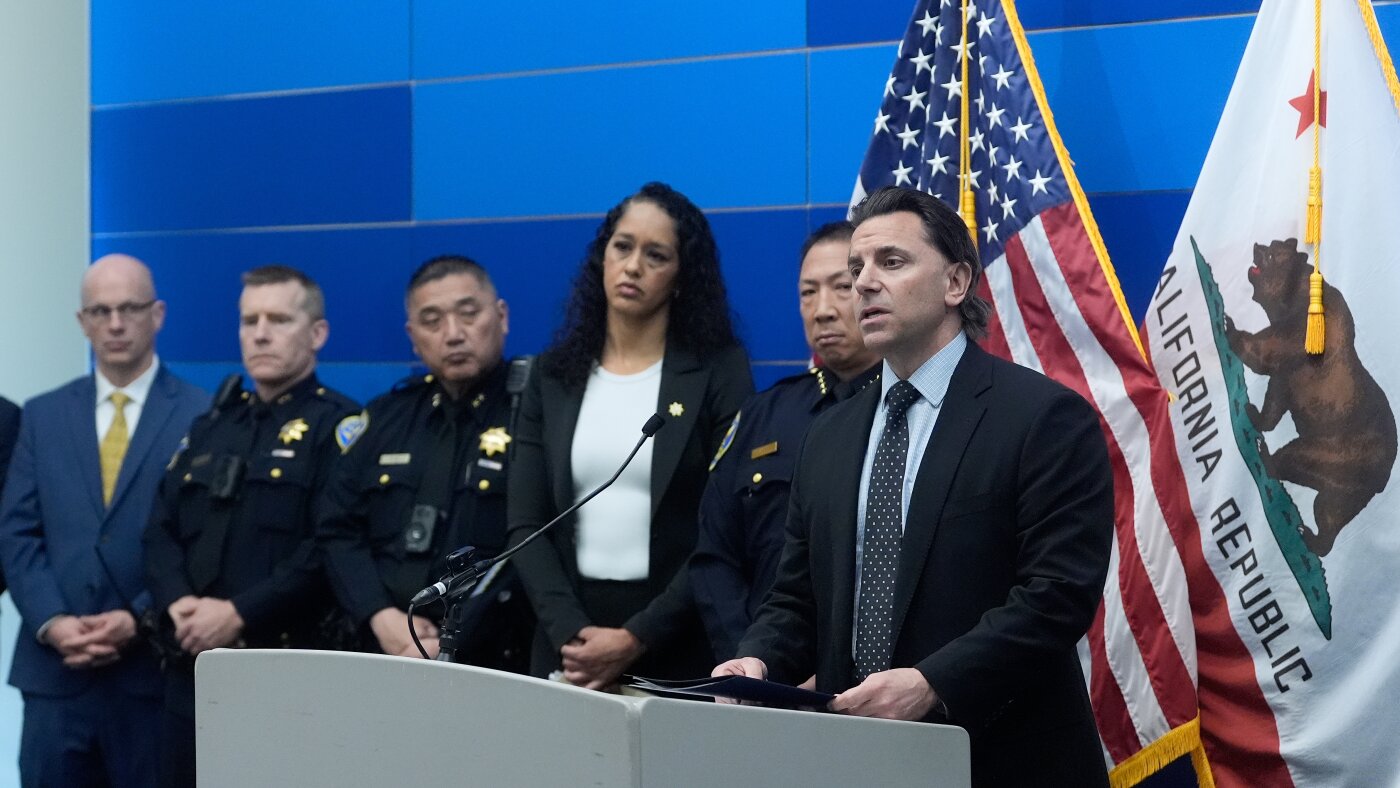
Man accused in Molotov cocktail attack of OpenAI CEO’s home charged with attempted murder

Embattled Rep Tony Gonzales announces plans to resign amid sexual misconduct allegations
-

 Atlanta, GA1 week ago
1 teenage girl killed, another injured in shooting at Piedmont Park, police say
-

 Georgia1 week ago
Georgia House Special Runoff Election 2026 Live Results
-

 Arkansas4 days ago
Arkansas TV meteorologist Melinda Mayo retires after nearly four decades on air
-

 Pennsylvania1 week ago
Parents charged after toddler injured by wolf at Pennsylvania zoo
-
 Milwaukee, WI1 week ago
Potawatomi Casino Hotel evacuated after fire breaks out in rooftop HVAC system
-

 Austin, TX7 days ago
ABC Kite Fest Returns to Austin for Annual Celebration – Austin Today
-

 World1 week ago
Zelenskyy warns US-Iran war could divert critical aid from Ukraine
-

 Politics1 week ago
FBI’s Patel delivers blunt warning to law enforcement attackers: ‘We’re going to put you down’