California
Suspect in Molotov attack at Sam Altman’s California home set to appear in court


SAN FRANCISCO — The man accused of trying to kill OpenAI CEO Sam Altman by throwing a Molotov cocktail at his San Francisco home is set to make an initial court appearance Tuesday.
Daniel Moreno-Gama, of Spring, Texas, traveled to San Francisco last week and hurled the incendiary device at Altman’s home Friday, setting an exterior gate on fire before fleeing on foot, authorities said. Less than an hour later, Moreno-Gama went to OpenAI’s headquarters about 3 miles (5 kilometers) away and threatened to burn down the building, they said.
No one was injured at Altman’s home or the company’s offices.
Authorities said Moreno-Gama, 20, expressed hatred of artificial intelligence in his writings, describing it as a danger to humanity and warning of “impending extinction,” according to court filings.
“This was not spontaneous. This was planned, targeted and extremely serious,” FBI San Francisco Acting Special Agent in Charge Matt Cobo said during a news conference Monday.
Moreno-Gama is charged in California state court with two counts of attempted murder and attempted arson, San Francisco District Attorney Brooke Jenkins said. He tried to kill both Altman and a security guard at Altman’s residence, she alleged. Officials have not said whether Altman was home at the time.
Online state court records do not yet show whether Moreno-Gama has an attorney who can speak on his behalf.
Craig Missakian, U.S. Attorney, Northern District of California, middle, speaks during a news conference Monday, April 13, 2026, in San Francisco. Credit: AP/Jeff Chiu
Jenkins said the state charges carry penalties ranging from 19 years to life in prison.
On Monday morning, FBI agents went to Moreno-Gama’s home in a Houston suburb where they spent several hours before leaving. He has also been charged by federal prosecutors with possession of an unregistered firearm and damage and destruction of property by means of explosives. Those charges carry respective penalties of up to 10 years and 20 years in prison.
“We will treat this as an act of domestic terrorism, and together with our partners, prosecute him to the fullest extent of the law,” U.S. Attorney Craig Missakian said when announcing the federal charges Monday.
The federal court documents do not list an attorney for Moreno-Gama, and he has not yet had his first appearance in federal court.
The document in which Moreno-Gama discussed his opposition to AI also made threats against Altman and executives at other AI companies, officials said.
“If I am going to advocate for others to kill and commit crimes, then I must lead by example and show that I am fully sincere in my message,” Moreno-Gama wrote, according to authorities.
Advocacy groups that have issued grave warnings about AI’s risks to society condemned the violence.
Anthony Aguirre, president and CEO of the Future of Life Institute, said in a written statement Friday that “violence and intimidation of any kind have no place in the conversation about the future of AI.”
Another group, PauseAI, said in a statement that the suspect had no role in the group but joined its forum on the social media platform Discord about two years ago and posted about 34 messages there, none containing explicit calls to violence but one that was flagged as “ambiguous.”
Discord said Monday that it has banned Moreno-Gama for “off-platform behavior.”



CALIFORNIA CITY, Calif. (KABC) — An Amber Alert was issued Friday by the California Highway Patrol for a 3-year-old child out of California City believed to be in imminent danger.
Emaria Peel, 3, was last seen Friday at about 7:17 p.m. in the area of Redwood Boulevard and 83rd Street in California City, according to police.
Authorities believe 31-year-old Charnay Mclin took Emaria. Investigators have not yet said what relationship, if any, Mclin has to the child.
The suspect was described as being 5 feet 9 inches tall, 185 pounds, with black hair and brown eyes.
The child was described as being 1 foot 6 inches, 20 pounds, with black hair and brown eyes.
Police believe they’re traveling in a gold-colored 2021 Kia Sorento with the California license plate: 36095DV
Mclin is considered armed and dangerous. Authorities wants anyone who sees them to call 911.
No further details were immediately known.
Copyright © 2026 KABC Television, LLC. All rights reserved.

A 17-year-old suspect has been arrested in Texas in connection with the deadly shooting after a high school graduation ceremony in Fairfield, California last month, police said.
Fairfield police said U.S. Marshals, accompanied by department detectives, served search and arrest warrants Friday morning at a home in the greater Dallas-Fort Worth area.
The teen was taken into custody without incident on suspicion of murder and related offenses.
Investigators said the suspect fled California and traveled to Texas within days of the June 3 shooting. He will remain in custody while awaiting extradition to Solano County.
The shooting happened after Sem Yeto Continuation High School’s graduation ceremony, which was held on the Fairfield High School campus.
Police said 18-year-old graduate Jamario Baker died at the scene. Three others – an 11-year-old child and two adults, ages 20 and 25 – were wounded.
Authorities have not released the suspect’s name because he is a minor.
Although an arrest has been made, police said the investigation remains active and detectives continue to pursue additional leads.
“While today’s announcement may provide a measure of relief to some, it does not lessen the pain felt by our community,” the Fairfield-Suisun Unified School District said in a statement.
Police plan to hold a news conference Monday at 4 p.m. to discuss the case and arrest.
Fairfield is a Northern California city about 40 miles northwest of San Francisco.

A California bill would let insurers monitor customers’ driving data in exchange for discounted premiums.
Assemblymember Tina McKinnor, the author of AB 311, said the digital monitoring, known as telematics, rewards good driving and would improve safety. In real time, telematics technology would track data such as speed, location and how a vehicle is being driven.
“We have to slow people down,” McKinnor said. “That is the whole purpose for this bill, is driver safety.”
A voter-approved law from 1988, Prop 103, required insurance rates to be based mainly on driving record, miles driven and experience. It made California the only state in the country to prohibit telematics.
McKinnor believes the law is outdated. She argued that her bill would also help good drivers who pay higher rates because of where they live.
“Where I live definitely brings my insurance up,” McKinnor said. “If we both drive the same way, we’ll get charged the same way, instead of by our ZIP code.”
California’s Department of Insurance and consumer groups oppose the bill, citing privacy concerns.
“We can’t look behind the algorithm and see what weight it’s giving to different criteria, which is a big problem,” said Jamie Court, president of Consumer Watchdog. “Auto insurance, otherwise, is transparent. This is why the Department of Insurance is opposed, because of the lack of transparency in the algorithm.”
The proposed savings in exchange for good driving might not be guaranteed. Telematics data from the Maryland Insurance Administration showed that 31% of drivers who opted into the program saw a drop in rates, 24% saw an increase and 45% saw no change to their premiums.
“This collects an awful lot of data about people, more than they know, and it’s like having Big Brother in your back seat,” Court said.
McKinnor insisted that drivers will not be forced to enroll in the program.
“It’s still opt-in in the other 49 states,” she said. “We’re not going to make this mandatory. It’ll be a per-volunteer situation.”
McKinnor’s bill passed through the legislature’s insurance committee. It’s expected to be presented to the full Senate in August.
-

 San Francisco, CA5 minutes ago
Classical music series helps reconnect downtown San Francisco community
-

 Dallas, TX10 minutes ago
Dallas police officers, paramedics recall saving woman stuck in a ravine for days;
-

 Boston, MA20 minutes ago
Red Sox win 7th straight game just hours after landing in New York
-
 Denver, CO25 minutes ago
One tree at a time: Denver nonprofit works to close shade gap as heat dome threatens neighborhoods
-

 Seattle, WA32 minutes ago
VIDEO: West Seattle Summer Fest 2026 day 1, evening report
-

 San Diego, CA35 minutes ago
The World’s Number One Wellness Retreat is Right in Our Backyard
-
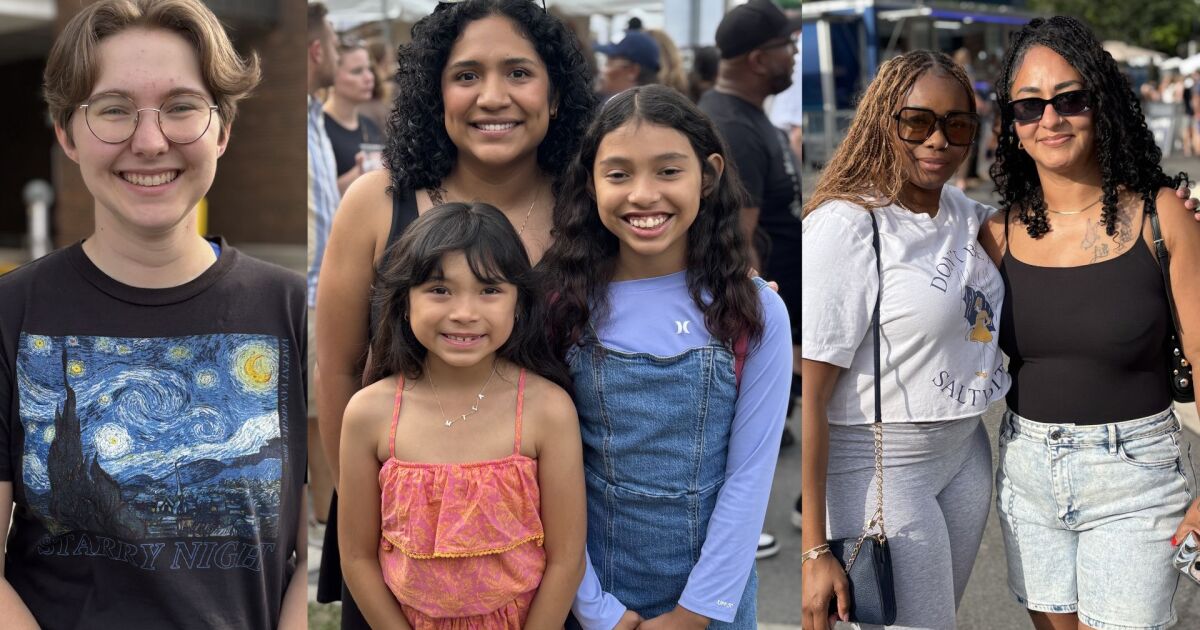 Milwaukee, WI40 minutes ago
Festivalgoers say Milwaukee’s summer events fill a gap in downtown entertainment
-

 Atlanta, GA47 minutes ago
Atlanta mentoring program brings ‘Save Our Sons Tour’ to Jacksonville’s Duval Day

