Arizona
Two Arizona Lottery players hit jackpots for big wins


PHOENIX (AZFamily) — Two lottery players in the Valley are taking home cash prizes over $1 million after hitting jackpots on Monday.
Arizona Lottery officials said a winning $1,040,000 Triple Twist Jackpot ticket was sold at a QuikTrip store near Val Vista Drive and Germann Road in Gilbert. The second winning ticket was a $1,600,000 The Pick Jackpot, which was sold at a Circle K store near 40th Street and Greenway Road in north Phoenix.
Tickets for The Pick cost $1 with drawings Monday, Wednesday and Saturday. The jackpot starts at $1 million and grows until there is a winner.
Triple Twist is a new game that costs $2 for a ticket. Drawings are Monday through Sunday, and the jackpot starts at $200,000, also growing until there is a winner.
Winners can claim their tickets from the Arizona Lottery. Click/tap here for information on claiming prizes.
See a spelling or grammatical error in our story? Please click here to report it.
Do you have a photo or video of a breaking news story? Send it to us here with a brief description.
Copyright 2024 KTVK/KPHO. All rights reserved.



Michigan wins 2026 national championship in Indianapolis
Michigan caps a dominant season by beating Connecticut to win the 2026 men national championship in Indianapolis.
After soaking up appreciation from Tucson fans for their Final Four appearance last weekend, the Arizona Wildcats received some statewide love this week.
On Thursday, April 9, the Arizona House of Representatives and state Senate both proclaimed April 9, “Arizona Wildcats Day,” honoring the UA men’s basketball team for its Final Four season.
The Wildcats then attended a UA luncheon in Scottsdale where they met with fans and school officials, all celebrating their 36-win record, Big 12 title and NCAA Tournament achievements.
The Wildcats wore gray UA basketball polo shirts and rode a bus to Phoenix that morning, appearing first on the House of Representatives floor, where they were greeted with cheers and praise from Speaker Steve Montenegro.
“This year’s squad brought the magic back in a way that unified fans across the entire state in just a short period of time,” Montenegro said. “They have represented our university and our state with heart, with discipline and with class, both on and off the court.
“I know that everyone in this chamber, and especially Wildcat fans across Arizona, share my excitement that coach Lloyd and the team is here, and they are here to stay with his vision and the culture that he’s building.”
While saying that “you guys have got a lot more important work to take care of than honoring us,” Tommy Lloyd then thanked the legislators for their support.
“We understand that you guys are truly our biggest supporters, and we know there’s boosters, there’s businesses, all those things involved,” Lloyd said. “We also understand the state of Arizona is behind everything we do, and you guys are truly our biggest donors and our biggest supporters.
“So we thank you for everything. It’s an honor to represent you guys, and you’re right, Steve, this is just the beginning. We look forward to recreating this and doing this again, and without your support, that wouldn’t be possible.”
The Arizona Senate followed with a similar proclamation, noting the Wildcats’ Big 12 regular-season and tournament titles, 36 wins and Final Four appearance — and “the national recognition it brings to our state.”
After the Senate proclamation, Senate President Warren Petersen asked Lloyd what the secret was behind why Arizona always had “awesome basketball teams.”
“I think it’s simple, because it’s something that was built before all of us came,” Lloyd said. “Coach (Fred) Snowden, coach (Lute) Olson, these guys did an amazing job building the foundation for a program that became a national program and had a ton of success.
“Coach (Sean) Miller continued to build on it. We’re fortunate for those that came before us, and we have an amazing tradition, history and a legacy.
“And we want to thank you guys, because to be honest with you, the government is our biggest supporter. We’re a state institution, and the investment you make in the University of Arizona allows us to do what we do. So we’re thankful for everyone that gets behind our program and supports it and helps us continue to build on this tradition and legacy.”
Rim shots
– Departing senior guard Jaden Bradley posted a formal thanks to UA coaches, players and fans on social media, announcing he is declaring for the NBA draft (regardless of any potential rule changes that might allow for more eligibility). “This journey has meant everything to me,” Bradley posted. “It (has) been a rollercoaster but I’ve grown, matured, and become a better man because of it.”
– Reports surfaced on April 9 that transferring Oregon guard Jackson Shelstad has canceled a planned visit to Arizona early next week. Three 247 staffers have posted predictions that he would pick Louisville, where he was scheduled to visit this weekend.

Got story updates? Submit your updates here. ›
Diana Taurasi, the iconic Phoenix Mercury player who spent her entire 20-year WNBA career with the team, was inducted into the Arizona Sports Hall of Fame on April 9. Taurasi, a three-time WNBA champion and six-time Olympic gold medalist, was celebrated for her immense impact on the Mercury and women’s basketball in Arizona.
Why it matters
Taurasi’s induction into the Arizona Sports Hall of Fame is a testament to her unparalleled achievements and legacy with the Phoenix Mercury. As one of the greatest players in WNBA history, her selection highlights the Mercury’s status as a premier franchise and the growth of women’s professional sports in the state.
The details
Taurasi was drafted by the Mercury as the No. 1 overall pick in 2004 and went on to lead the team to three WNBA championships in 2007, 2009, and 2014. She was named WNBA Finals MVP in 2009 and 2014, and WNBA MVP in 2009. Outside of the Mercury, Taurasi represented the U.S. national team, winning six Olympic gold medals, the most of any U.S. basketball player.
- Taurasi was inducted into the Arizona Sports Hall of Fame on April 9, 2026.
- Taurasi will be inducted into the Mercury’s Ring of Honor on August 16, 2026.
The players
Diana Taurasi
A legendary WNBA player who spent her entire 20-year career with the Phoenix Mercury, leading the team to three championships and winning six Olympic gold medals with the U.S. national team.
Penny Taylor
Taurasi’s wife and former teammate on the Phoenix Mercury.
Jerry Colangelo
The former owner of the Phoenix Mercury who Taurasi credits for setting the team on a path to success and longevity.
Got photos? Submit your photos here. ›
What they’re saying
“It’s just incredible. Being here for 20 years now, it’s home. Thinking back on all the things we’ve accomplished when we came in 2004, winning championships, making sure that the Phoenix Mercury were the gold standard in the WNBA.”
— Diana Taurasi, WNBA Player
“It’s the fans who did it all. We have the most loyal and amazing fans of all time. The X-Factor was always there. No matter what kind of season we were having, they were always there supporting us and building that community. It’s definitely a treat.”
— Diana Taurasi, WNBA Player
“He kind of set the path to the winning, to the longevity in being here because he’s that type of guy.”
— Diana Taurasi, WNBA Player
What’s next
Taurasi will be inducted into the Phoenix Mercury’s Ring of Honor on August 16, 2026, joining other franchise legends.
The takeaway
Diana Taurasi’s induction into the Arizona Sports Hall of Fame solidifies her status as one of the greatest players in WNBA history and a true icon of women’s basketball in the state. Her two-decade tenure with the Mercury, three championships, and six Olympic gold medals have cemented her legacy as a transformative figure who helped elevate the sport to new heights.
Arizona
Where to watch Arizona Diamondbacks vs. New York Mets: Live stream, start time, TV channel, odds for Thursday, April 9

The Arizona Diamondbacks (6-6), tied for second in the NL West, face the New York Mets (7-5), tied for second in the NL East, with the Mets favored at -160 odds. The starting pitchers are Eduardo Rodriguez for Arizona (0.00 ERA), and Nolan McLean for New York, with a 2.61 ERA. The over/under is set at 7 runs.
How to Watch Arizona Diamondbacks vs. New York Mets
-
Time: 7:10 p.m. ET / 4:10 p.m. PT
-
Where: Citi Field, Flushing, Queens, NY
-
TV Channels: SNY, Dbacks.TV, MLB Network
Advertisement
Team records
-
Arizona Diamondbacks: 6-6 (tied for second in NL West)
-
New York Mets: 7-5 (tied for second in NL East)
Odds (via BetMGM)
-
Spread: New York Mets -1.5
-
Moneyline: New York Mets -160 (59.1%) / Arizona Diamondbacks +135 (40.9%)
Starting pitchers
Arizona Diamondbacks: Eduardo Rodriguez (0-0; ERA: 0.00; K: 8; WHIP: 0.92)
New York Mets: Nolan McLean (1-0; ERA: 2.61; K: 12; WHIP: 0.87)
Weather: 44°F at first pitch

Review: ‘You, Me & Tuscany’ is an Italian rom-com fantasy, empty carbs but delicious

As we kissed, I realized a surprising truth about my date. We had history

Swalwell accused of sexually assaulting female staff member

Did you feel it? As Artemis II nears reentry, scientists want to know how far the sonic boom travels
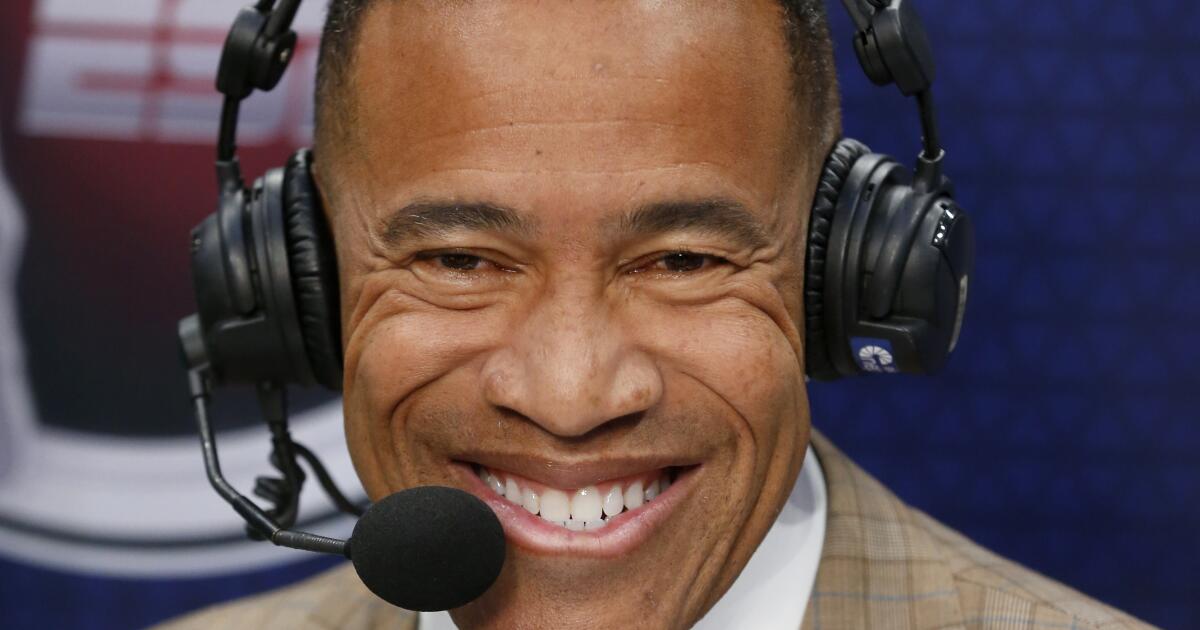
NBA, college football announcer Mark Jones is leaving ESPN after 36 years: ‘Time to move on’

Florida High School Football Rankings: Top 25 teams – Oct. 21

How old is Bo Nix? What to know about Oregon quarterback ahead of 2024 NFL Draft

Cleary's 21 help Le Moyne down Central Connecticut State 69-64 in OT

99th annual Pony Swim held in Virginia

Indiana Members Credit Union announced as new anchor tenant at Bottleworks District

NASA’s Artemis II prepares for splashdown on Earth

Trump proposes painting executive office building white

Rep Randy Fine joins House Freedom Caucus: ‘Strongest group of conservative patriots in Congress’

Trump issues NATO ultimatum to reopen Strait of Hormuz ‘within days’

Women are getting most of the new jobs. What’s going on with men?
-

 Atlanta, GA6 days ago
1 teenage girl killed, another injured in shooting at Piedmont Park, police say
-

 Movie Reviews1 week ago
Vaazha 2 first half review: Hashir anchors a lively, chaos-filled teen tale
-

 Education1 week ago
Video: YouTube’s C.E.O. on the Rise of Video and the Decline of Reading
-

 Georgia3 days ago
Georgia House Special Runoff Election 2026 Live Results
-

 Education1 week ago
Video: Toy Testing with a Discerning Bodega Cat
-

 Pennsylvania4 days ago
Parents charged after toddler injured by wolf at Pennsylvania zoo
-
 Milwaukee, WI4 days ago
Potawatomi Casino Hotel evacuated after fire breaks out in rooftop HVAC system
-
 Entertainment1 week ago
Inside Ye’s first comeback show at SoFi Stadium