Alaska
Alaska Natives want the US military to clean up its toxic waste


In June 1942, Japan’s invasion of the Aleutian islands in Alaska prompted the U.S. military to activate the Alaska territorial guard, an Army reserve made up of volunteers who wanted to help protect the U.S. So many of the volunteers were from Alaska’s Indigenous peoples — Aleut, Inupiak, Yupik, Tlingit, and many others — that the guard was nicknamed the “Eskimo Scouts.”
When World War II ended and the reserve force ceased operations in 1947, the U.S. approached the Indigenous Yupik people of Alaska with another ask: Could the Air Force set up “listening posts” on the island of Sivuqaq, also known as St. Lawrence Island, to help with the intelligence gathering needed to win the Cold War?
Viola Waghiyi, who is Yupik from Sivuqaq, said the answer was a resounding yes.
“Our grandfathers and fathers volunteered for the Alaska territorial guard,” she said. “We were very patriotic.”
But that trust was abused, Waghiyi said. The U.S. military eventually abandoned its Air Force and Army bases, leaving the land polluted with toxic chemicals such as fuel, mercury, and polychlorinated biphenyls, or PCBs, that are known as “forever chemicals” because they persist so long in the environment. The contamination was largely due to spilled and leaking fuel from storage tanks and pipes, both above ground and below ground. More chemical waste came from electrical transformers, abandoned metals and 55-gallon drums.
Now, Waghiyi is the environmental health and justice program director at the Alaska Community Action on Toxics, an organization dedicated to limiting the effects of toxic substances on Alaska’s residents and environment. Last week, the organization filed a complaint to the United Nations special rapporteur on toxics and human rights, in partnership with the U.C. Berkeley Environmental Law Clinic.
Their complaint calls for the United Nations to investigate how military waste on Sivuqaq continues to violate the rights of the people who live there, such as the right to a clean and healthy environment and Indigenous peoples’ right to free, prior, and informed consent to what happens on their land.
“By exposing the Yupik people of Sivuqaq to polluted drinking water sources, air, and soil, and by contaminating local native foods; by causing pervasive human exposure to hazardous chemicals through multiple routes; by toxifying the broader ecosystem; and by not cleaning up contamination sufficiently to protect human health and the environment, the U.S. Air Force and Army Corps of Engineers violated human rights long recognized in international law,” the complaint says.
This submission from Alaska is part of a larger, global effort to raise awareness of military toxic waste by the United Nations. The U.N. special rapporteur on toxics and human rights is collecting public input on military activities and toxic waste until April 1. The information collected will be used in a report presented to the U.N. General Assembly in October.
The two shuttered bases in Sivuqaq, Alaska, are now classified as “formerly used defense,” or FUD, sites, overseen by the U.S. Army Corps of Engineers, and more than $130 million has been spent to remove the contamination. John Budnick, a spokesman for the U.S. Army Corps of Engineers in Alaska, said the cleanup is considered complete but that the agency is reviewing the site every five years “to ensure the selected remedies continue to be protective of human health and the environment.”
“We have completed the work at Northeast Cape, but additional follow-up actions may result from the monitoring phase of the Formerly Used Defense Sites Program,” he said. The last site visit occurred last July and an updated review report is expected to be released this summer.
The federal Environmental Protection Agency, or EPA, similarly concluded in 2013 that an additional EPA cleanup wouldn’t significantly differ from what the Army Corps of Engineers is doing and declined to place the sites on the EPA’s list of hazardous waste cleanup priorities.
A 2022 study found that so far, federal cleanup efforts have been inadequate. “High levels of persistent organic pollutants and toxic metals continue to leach from the Northeast Cape FUD site despite large-scale remediation that occurred in the early 2000s,” the authors concluded.
The persisting pollution has garnered the attention of Alaska’s state Dept. of Environmental Conservation which oversees the cleanup of contaminated sites. Stephanie Buss, contaminated sites program manager at the agency, said her office has asked the U.S. Army Corps of Engineers to do additional cleanup at Northeast Cape.
“These active contaminated sites have not met closure requirements,” she said. The second former base, Gambell, was classified as completed but still lacks land use controls, she noted.
“DEC takes community health concerns seriously and will continue to provide oversight of the conditions at its active sites in accordance with the state’s regulatory framework to ensure an appropriate response that protects human health and welfare,” Buss said.
That same 2022 study found that 89 percent of the fish around the Northeast Cape base contained mercury exceeding the levels the EPA deemed appropriate for people who rely on subsistence fishing. “All fish sampled near the FUD site exceeded the EPA’s PCB guidelines for cancer risk for unrestricted human consumption,” the researchers further found. Waghiyi said the contamination displaced 130 people, and has left her friends and family with a lasting legacy of illness.
“It’s not a matter of if we’ll get cancer, but when,” Waghiyi said. Her father died of cancer. Her mother had a stillborn child. Waghiyi herself is a cancer survivor and has had three miscarriages.
“We feel that they have turned their back on us,” Waghiyi said of the U.S. military. “We wanted our lands to be turned back in the same condition when they turned over.”
The U.S. military has a long history of contaminating lands and waters through military training and battles sites, including on Indigenous lands. Citizens of the Navajo Nation in Arizona and Yakama Nation in Washington continue to raise concerns about the ongoing effects of military nuclear testing on their lands and health. In the Marshall Islands, fishing around certain atolls is discouraged due to high rates of toxicity due to nuclear testing and other military training. On Guam, chemicals from an active Air Force base have contaminated parts of the islandʻs sole-source aquifer that serves 70% of the population. Last year, a federal report found that climate change threatens to unearth even more U.S. military nuclear waste in both the Marshall Islands and Greenland.
In 2021, the Navy in Hawaiʻi poisoned 90,000 people when jet fuel leached from aging, massive underground storage tanks into the drinking water supply after the Navy ignored years of warning to upgrade the tanks or remove the fuel. The federal government spent hundreds of millions of dollars to remove unexploded ordnance from the island of Kahoʻolawe, a former bombing range in Hawaiʻi, but the island is still considered dangerous to walk on because of the risk of more ordnance unearthing due to extensive erosion.
The complaint filed last week by the Alaska Community Action on Toxics calls for the United Nations to write to U.S. federal and state agencies and call upon them to honor a 1951 agreement between the U.S. government and the Sivuqaq Yupik people that prohibited polluting the land.
The agreement said that the Sivuqaq Tribes would allow the Air Force to construct surveillance sites to spy on the Soviet Union, but they had four conditions, including allowing Indigenous peoples to continue to hunt, fish and trap where desired and preventing outsiders from killing their game. Finally, the agreement said that “any refuse or garbage will not be dumped in streams or near the beach within the proposed area.”
“The import of the agreement was clear: The military must not despoil the island; must protect the resources critical to Indigenous Yupik inhabitants’ sustenance; and must leave the island in the condition they found it, which ensured their health and well-being,” the Alaska Community Action on Toxics wrote in their complaint.
“This is a burden we didn’t create,” Waghiyi said.



There’s been a lot of chatter this week about the possible targets from JetBlue for a merger, and among them Alaska makes the most sense, but are they interested?
JetBlue Explores Merger Targets
As Matthew recently reported in JetBlue Merger Talks Analysis, JetBlue has been actively exploring potential merger scenarios with a range of partners, including United, Alaska, and Southwest. The reporting makes clear this is not idle speculation but a structured evaluation, with advisers engaged and regulatory feasibility playing a central role in how each option is being considered. At its core, the move reflects mounting pressure on JetBlue to find a sustainable path forward after years of inconsistent profitability and a failed attempt to acquire Spirit Airlines.
What stands out in his analysis is how differently each potential partner would reshape JetBlue’s future. A tie-up with United offers the most obvious network and slot advantages but would face intense regulatory scrutiny, while Alaska presents a more palatable antitrust profile with less obvious synergy. Southwest, meanwhile, represents the most unconventional path, with significant cultural and operational hurdles. Taken together, the report underscores that JetBlue is not just exploring growth, it is confronting a pivotal moment that could redefine its place in the US airline industry.
I want to dive deeper into the Alaska angle for a number of reasons.
Alaska-JetBlue Is The Most Logical
As Matthew points out, the route network is perfect for an Alaska-JetBlue merger (though this would undoubtedly be an acquisition of JetBlue by Alaska Airlines.) Alaska has an excellent position on the west coast, and out to Hawaii. It’s spreading its wings from Seattle and already has international long haul from Hawaii to Asia as well. But the northeast is extremely limited both in terms of airports served and connectivity. No one in Boston wants to fly to Seattle or Portland to connect to west coast options. The same was true for JetBlue’s experiment with operations in Long Beach trying to setup a west coast hub.
However, pairing those two lucrative coastal markets would provide incredible coverage. In a few years together, it could make sense to add a midwest hub to carry some of the load.
Alaska has also had an exceptional run as of late, has cash, highly valued stock, and a management structure the industry can trust.
Reasons Alaska Could Be Interested
If Alaska is truly interested in becoming a global carrier, it would be hard to ignore the northeast US market. Expanding into that market would be incredibly expensive and deeply embedded flag carriers would fight tooth and nail, including JetBlue assuming there was no merger. Buying into it could be a different matter. The table is already set, the customers have similar ethos: happy to fly a regional carrier with international aspirations that provides better service and has a personality.
As a defensive measure, Alaska has an opportunity to block other mergers. JetBlue is in the market and will find a suitor (if it can gain DOJ approval.) Its market is desirable, so is its fleet even if it could be run more profitably than it has been in the last few years. United has indicated that it’s open to an agreement but it’s incumbent on JetBlue to come to terms. American wanted a tie-up, had one, then years after it was disallowed by the Biden DOJ is now suing its former partner. While Matthew suggests American might want JetBlue – and it might – the carrier is probably not on the best terms with JetBlue management to construct a favorable deal and it can’t afford to run itself let alone take on more debt. Alaska can swing in and ensure that no one else gets them and expands their footprint and that alone could be worthwhile.
Buying JetBlue also helps grow its ambitions internationally. There’s little doubt that the future of trans-Atlantic international travel, especially for premium markets, is going to be on a narrowbody aircraft. Alaska, itself, is adding flights this summer to Iceland from Seattle on a 737. A base on the east coast with routes that can go to both alliance partner cities like London, Madrid, and Helsinki, and underserved premium markets in Scotland, Ireland, the Netherlands, Germany, anywhere in western Europe, helps a great deal.
It’s not just the European routes, though. JetBlue also has excellent coverage throughout the northeast and via its Fort Lauderdale hub to destinations in the Caribbean. Alaska knows leisure markets well and was the largest operator to Hawaii for many years prior to its purchase of Hawaiian. But it has zero coverage in the Caribbean outside of Cancun and Belize City. Alaska with JetBlue could become a serious bi-coastal force.
Alaska could also cement its place as a serious contender domestically while it grows its international presence.
The credit card base could be an exciting component too, and would likely end Barclays involvement in the US airline affinity space entirely. TrueBlue is valued at $5.5bn (though $2.75bn was leveraged during COVID), and Bank of America only contributed $310MM last year, for which the airline still posted a substantial loss. The carrier also sells miles to American Express, Chase, Citi, and Capital One though each specific value is murkier. The airline expected $50MM in EBIT generated from its United partnership but this would almost certainly fall away in a an acquisition.
Reasons Alaska Will Pass
Jetblue is not in good financial shape. In 2024, the carrier posted a loss of nearly $800MM and while efforts in 2025 cut these losses by almost 25%, it still lost $600MM in 2025 too. At this pace the carrier will be breakeven at the turn of the decade. The value of the airline is not what it’s currently turning over but what it could be. That said, other mergers and acquisitions typically find significant cost savings when combining. Not just by reducing common route frequencies but also by shared resources in outstations (ex. instead of JetBlue and Alaska maintaining two check-in counters and gate allotments, it can reduce its overhead costs.) But these overlaps are limited ad thus so too would be cost savings.
Alaska is primarily a Boeing carrier with JetBlue an all-Airbus airline. This changes everything about the way a combined carrier would operate. It’s not just replacement parts and maintenance contracts but training facilities and range commonality. The Mint product from JetBlue is also something that the combined airline would want to keep especially for long haul flying internationally and trans-continental routes, but would be unlikely to equip across its own fleet even on its long haul narrowbody routes. That makes it tough to integrate.
The carrier is still busy with Hawaiian and its own expansion plans without inviting a regulatory challenge, and the mess of a far greater integration with more moving parts.
Would this type of acquisition face more scrutiny from oneworld than Hawaiian? Maybe, it’s a possible factor and as the airline grows globally, it’s something it will have to consider. American Airlines likely benefits from Alaska’s network participation in the Pacific Northwest and doesn’t really put up a fight in Los Angeles. But in the Northeast it could be a different story.
Conclusion
JetBlue should absolutely consider all viable options for a merger or an acquiring partner. Alaska could be a great fit for JetBlue, and frankly, US consumers. But Alaska doesn’t need another project and that’s exactly what JetBlue would be. It requires its own turn around, there’s no fleet commonality, and no significant operational cost savings. JetBlue might be a great fit for Alaska, but probably not right now. That said, I’d love to see it and it would make the combined carrier a juggernaut and offer serious competition on the coasts and against the majors.
What do you think?


The Anchorage Daily News caught up with some of the top track and field athletes from around the state at the annual Big C Relays. The list includes a sprinter who likes to play disc golf, a pair of Spider-Man fans, a reigning state champ who can’t get enough Macklemore, and three elite athletes whose biggest influences have been their older brothers. There were also several notable performances by perennial contenders and up-and-coming talent alike.
Here’s an introduction to six track and field athletes and the top performers from the Big C Relays.
Tyce Escott, Soldotna
The Soldotna senior sprinter was the Division I boys state runner-up in the 100 meters in 2025 by 0.01 seconds, and is the reigning state champ in the 200 meters. At the Big C Relays, he competed in the 100 and finished second in the prelims with mark of 11.34 seconds, then finished fourth in the semifinals in a time of 11.37 seconds. Escott helped the Stars Mixed Swedish Medley Relay team come in first place with a time of 2:09.55.
How did you get started in track and field? “I kind of just grew up running and decided to try it as a sport when I got to middle school, and I’ve been doing it ever since.”
What is your favorite hype music genre, song or artist before an event? “I don’t usually listen to music. I’m just in my own head and do what I want to do.”
What is the best movie or series you’ve watched in the past year? “Spider-Man Homecoming.”
Favorite fictional character of all time: “Spider-Man.”
Spider-Man follow-up: Favorite Spider-Man live action actor? “I like the Tom Holland ones the best, but I like Andrew Garfield too.”
Who is the most influential or inspirational person in your life? “I look up to my older brother. He didn’t do track but he always did sports and he was known for being fast. He did football and soccer.”
Goals for this season: “I’m hoping to come back and try to get first (at state in the 100 meters), try to improve as much as I can and do the best to my ability. My goals are to hopefully win state, beat my (personal records) and just do as best as I can.”
What is your favorite non-sports leisure activity? “I play disc golf sometimes. There’s probably three or four (courses) down in Soldotna.”

Anna Green, South
The South Anchorage senior sprinter is the reigning Division I girls state champion in the 200 meters, and she also finished third in the 100 and fourth in the 400 last year at state. At the Big C Relays, she competed in the 100 meters and clocked the top times in the prelims (12.81 seconds) and the semifinals (12.86 seconds). In the finals, she came in third place with a time of 12.83 seconds and also helped the Wolverines finish third in the girls Swedish Medley Relay 1600-meter race with a mark of 4:37.22.
How did you get started in track and field? “My middle school health teacher. I was originally a hurdler and she transitioned me to a sprinter, and I’ve stuck with it ever since.”
What is your favorite hype music genre, song or artist before an event? “Macklemore! Before every race, I listen to him.”
What is the best movie or series you’ve watched in the past year? “‘Prison Break.’ It was just thrilling.”
Favorite fictional character of all time: “Donald Duck. He’s always been my favorite since childhood.”
Who is the most influential or inspirational person in your life? “My dad. He grew up in Australia and ran (track) and played soccer. I played soccer my entire life, and I’m going to run track in college, and he was a big part of that.”
Goals for this season: “I want to (record personal bests), break another school record after I broke the 400 last year and I want to try to defend my 200-meter state title.”
What is your favorite non-sports leisure activity? “Watching movies and hanging out around my house with friends.”

Benjamin Hiestand, Chugiak
The Chugiak junior thrower is the Division I boys state champion in discus and came in fourth in the shot put at state last year. At the Big C Relays, he competed in the shot put and discus, setting a new personal best in the shot with a first-place mark of 50 feet, 3.25 inches Friday. He came back on Saturday and recorded the top mark in the discus as well, 161 feet, 1 inch.
How did you get started in track and field? “My brother (Edward). I always followed what he did when I was younger so in the third grade, I did sprints because I was just following him and then he transitioned to throws, so that’s what started getting me into throws too.”
What is your favorite hype music genre, song or artist before an event? “I usually do no music so I can stay locked in and just focus.”
What is the best movie or series you’ve watched in the past year? “My favorite show is ‘Avatar: The Last Airbender’ and for movie series it’s ‘Ip Man’ for the martial arts and John Wick.”
Favorite fictional character of all time: “Zuko from ‘Avatar: The Last Airbender.’ I just like his story of how he kind of redeemed himself at the end. He showed a lot of growth.”
Who is the most influential or inspirational person in your life? “My brother. He taught me a lot and I was really thankful to have him growing up as an example.”
Goals for this season: “This season, I’ve been seeing massive breakthroughs in both shotput and discus and I’m ready to really see what I can do. … Last year I kind of ran into a slump in shot put and I didn’t really improve at all from freshman year, but this year I’ve been really hammering down on the rotational form and I’ve been seeing breakthroughs in that, and I’m really starting to feel comfortable with the rotational form.”
What is your favorite non-sports leisure activity? “Just exploring and driving around and playing video games.”

Bella Connally, Juneau-Douglas
The Juneau-Douglas sophomore sprinter is the reigning Division I girls state champion in the 100 meters and came in fifth in the 200 meters. At the Big C Relays, she competed in the 100 meters, finishing fourth in the prelims with mark of 13.03 seconds, second in the semifinals in a time of 12.90 seconds and first in the finals in a time of 12.68 seconds. She earned the title of Fastest Alaskan on the girls side.
How did you get started in track and field? “My brother. He did track and field and I saw him running all the time and I was like, ‘Whoa, that looks really cool,’ and I thought I’d be good at that too.”
What is your favorite hype music genre, song or artist before an event? “I like to listen to Frank Ocean. I like to get in my feelings and stuff. I can’t do hype music.”
What is the best movie or series you’ve watched in the past year? “‘Modern Family’ and ‘The Office.’”
Favorite fictional character of all time: “I love ‘Spider-Man.’ The Tom Holland one is my favorite.”
Who is the most influential or inspirational person in your life? “My brother.”
Goals for this season: “I’d really like to run a (personal record), I’d like to qualify for Nike Nationals, to win state again. That’d be really cool.”
What is your favorite non-sports leisure activity? “I like to do ceramics. I have a class in my high school for it, so basically every day.”

Joshua Woko, Mountain City Christian Academy
The senior from Mountain City Christian Academy was Division II boys state runner-up in the triple jump in 2025 by about an inch, placed fifth in the long jump and was part of the state champion 4×400 relay team. At the Big C Relays, he competed in long jump and recorded the second-best mark with a new personal best of 20 feet, 8.75 inches on his first attempt, and he recorded the fifth-best mark in the high jump with 5 feet, 2 inches. He also helped the Lions Mixed Swedish Medley Relay team come in fifth place with a time of 2:19.50.
How did you get started in track and field? “I started my sophomore year. It was something I was kind of debating if I should do, but I was told, ‘Just try it out,’ and when I tried it out, I saw I was good at it and I decided to do it.”
What is your favorite hype music genre, song or artist before an event? “Rap music. Kendrick and Don Toliver.”
What is the best movie or series you’ve watched in the past year? “I’m into anime, so probably ‘Jujutsu Kaisen.’ I like the energy that each character has and the bosses they have to fight.”
Who is the most influential or inspirational person in your life? “Definitely my uncle. He’s my pastor and he’s also my spiritual leader, so he helps me with life struggles, shows me the right path to take, and he’s my counselor.”
Goals for this season: “I’m trying to make sure I do my best this year because I only have one last chance. … Try to (do well) in the 400 again and then get 43 (feet) for triple (jump) and at least 21 or 22 for long jump.”
What is your favorite non-sports leisure activity? “I love watching shows, and I also love to play games like chess, and I also draw a lot.”

Ailafo Fautanu, Dimond
The Dimond junior thrower was the Division I girls state runner-up in the shot put in 2025 and placed third in the discus. At the Big C Relays, she competed in the discus and produced the fourth-best mark at 99 feet, 6 inches, and came back on Saturday and recorded the third-best mark in the shot put with a mark of 33 feet, 9.25 inches.
How did you get started in track and field? “With volleyball being my main sport, I just thought, ‘Why not fill my free time with track and field?’ and it was really fun for me and I really liked the experience, so I just decided to keep going at it.”
What is your favorite hype music genre, song or artist before an event? “No, I’m just locked in.”
What is the best movie or series you’ve watched in the past year? “‘The Miracle Season.’ I just like how the girls had something to motivate them and push them through the season and win their state championship. It’s a volleyball movie.”
Favorite fictional character of all time: “SpongeBob.”
Who is the most influential or inspirational person in your life? “My mom. She’s been a really good role model for me, she’s a hard worker, takes time out of the day to support her kids, even when she’s busy.”
Goals for this season: “Hopefully win a state championship but first reach my goals of (setting a new personal record).”
What is your favorite non-sports leisure activity? “I like skiing and going hiking. I like to hike every once in a while to get in shape and stay in shape. I like to go on sunset drives to unwind from stressful weeks.”

Top performances
Nevaeh Watkins, a Dimond junior and reigning Division I girls 100-meter hurdles and high jump state champion, had quite the first day of action at the Big C Relays. She started by setting a new meet record for the high jump with a first-place mark of 5 feet, 2 inches, and followed it up by recording the fastest time in the 100-meter hurdle prelims and semifinals, which included a new personal best of 15.25 seconds in the semis.
Seward senior and reigning Division II boys state high jump champion Olin Liljemark was the only jumper to clear 6 feet in the event on Friday, which bested his title-winning mark of 5 feet, 10 inches from last year.
Mountain City Christian senior thrower Jieaya Siatini, who is the three-time Division II shot put state champion and reigning discus state champion, won the girls discus by a wide margin. Her mark of 128 feet, 4 inches was more than 23 feet farther than second-place finisher Mattelyn Elliott of Colony (105 feet). Siatini won the girls shot put as well with a mark of 39 feet, 10.75 inches. Runner-up Lilly Davidge, a Lathrop senior, recorded a mark of 33 feet, 11.5 inches.
Chugiak senior distance runner Hannah Shaha successfully defended her Big C title in the 3,200-meter race with a time of 11:53.92, which edged out Eagle River’s Ashlyn Paynter, who came in second at 11:56.32. Shaha, the 2023 Cross Country Gatorade Player of the Year, is also the reigning Division I girls state champion in the same event.
West Valley senior Cedar Robichaud outpaced Chugiak sophomore Frederick Millen III in the boys 100-meter finals with a first-place time of 11.26 seconds to earn the title of Fastest Alaskan.
The Chugiak quartet of Luke Poland, Ahmir Walker, Elijah Udall and Frederick Millen III set a new meet record in the boys 4×100 meter race with a first-place time of 43.44 seconds, besting the previous record of 43.74.

Big C Relays
Girls
100 Meters Varsity – Finals
1. Bella Connally 12.68, Juneau-Douglas
2. Sophia Jedlicki 12.77, Soldotna
3. Anna Green 12.83, South
4. Sienna Johnson 13.04, Chugiak
5. Farrah Gamechuk 13.18, Bartlett
6. Taylor Eddington 13.22, Tri-Valley
100 Meters Pentathlon – Finals
1. Iris Haas 13.04, Delta Junction
2. Caroline Klebs 13.69, Grace Christian
3. Katie Mackin 14.07, Bartlett
4. Kathryn DeBardelaben 14.17, Soldotna
5. Hannah Bodkin 14.21, Chugiak
6. Mari Ward 15.38, Holy Rosary Academy
200 Meters Varsity – Finals
1. Taylor Eddington 26.49, Tri-Valley
2. Farrah Gamechuk 26.92, Bartlett
3. Leila Petersen 27.17, Palmer
4. Shiloh Zichko 27.44, Soldotna
5. Annelise Larsen 27.53, Colony
6. Evonna Council 28.18, East
400 Meters Varsity – Finals
1. Kendall Barnett 1:00.07, West
2. Ellie Stull 1:00.52, Dimond
3. Leila Petersen 1:01.06, Palmer
4. Petra Knox 1:01.33, Chugiak
5. Olivia Sandoval 1:01.43, Chugiak
6. Tagan Rinner 1:01.64, Grace Christian
1 Mile Varsity – Finals
1. Kendall Barnett 5:09.70, West
2. Maddison Kukuk 5:26.60, Chugiak
3. Hannah Shaha 5:33.40, Chugiak
4. Kyra Walter 5:35.18, Chugiak
5. Fiona Selvik 5:35.79, Service
6. Ashlyn Paynter 5:40.80, Eagle River
3200 Meters Varsity – Finals
1. Hannah Shaha 11:53.92, Chugiak
2. Ashlyn Paynter 11:56.32, Eagle River
3. Maddison Kukuk 11:56.57, Chugiak
4. Kyra Walter 12:05.25, Chugiak
5. Rylee Ruggles 12:15.38, Chugiak
6. Myra Kalafut 13:05.23, Homer
100m Hurdles – 33″ / 0.838m Varsity – Finals
1. Nevaeh Watkins 15.14, Dimond
2. Emilia Zych 16.25, Service
3. Emma Mersdorf 17.21, Mountain City Christian Academy
4. Sienna Johnson 17.72, Chugiak
5. Jewel Gardner 17.79, Wasilla
6. Kelsey Momblow 18.12, Eagle River
300m Hurdles – 30″ / 0.762m Varsity – Finals
1. Taylor Eddington 46.44, Tri-Valley
2. Emilia Zych 47.74, Service
3. Katrina Baisa 50.70, Kodiak
4. Mia Bukala 51.41, Redington
5. Jewel Gardner 51.51, Wasilla
6. Vera Bates 51.52, Homer
300m Hurdles – 30″ / 0.762m Pentathlon – Finals
1. Iris Haas 49.26, Delta Junction
2. Hannah Bodkin 51.58, Chugiak
3. Kathryn DeBardelaben 52.34, Soldotna
4. Caroline Klebs 53.28, Grace Christian
5. Katie Mackin 53.45, Bartlett
6. Mari Ward 59.90a, Holy Rosary Academy
4×100 Relay Varsity – Finals
1. Tri-Valley 51.74
2. Soldotna 51.78
3. Dimond 52.00
4. South 53.15
5. Bartlett 53.64
6. Service 53.83
4×800 Relay Varsity – Finals
1. Chugiak 10:00.64
2. Soldotna 10:33.53
3. Grace Christian 10:58.86
4. Homer 11:03.64
5. Service 11:08.30
6. Su Valley 11:09.36
SMR 1600m – (200-200-400-800) Varsity – Finals
1. Dimond 4:19.43
2. Chugiak 4:30.85
3. South 4:37.22
4. Soldotna 4:39.24
5. Homer 4:47.17
6. Service 4:53.56
DMR 4000m – (1,200-400-800-1,600) Varsity – Finals
1. West 13:57.66
2. Soldotna 14:03.47
3. Service 14:21.92
4. Dimond 14:31.34
5. Su Valley 15:00.59
6. Wasilla 15:01.49
Shot Put – 4kg Pentathlon – Finals
1. Kathryn DeBardelaben 26′ 2″, Soldotna
2. Hannah Bodkin 25′ 9″, Chugiak
3. Iris Haas 22′ 11″, Delta Junction
4. Mari Ward 21′ 6″, Holy Rosary Academy
5. Katie Mackin 20′ 2″, Bartlett
6. Caroline Klebs 18′ 7″, Grace Christian
Shot Put – 4kg Varsity – Finals
1. Jieaya Siatini Williams 39′ 10.75″, Mountain City Christian Academy
2. Lilly Davidge 33′ 11.5″, Lathrop
3. Ailafo Fautanu 33′ 9.25″, Dimond
4. Emilee Anderson 33′ 7″, South
5. Loseli Ofiu 32′ 7.5″, West
6. Juliet Innes 32′ 4″, Soldotna
Discus – 1kg Varsity – Finals
1. Jieaya Siatini Williams 128′ 4″, Mountain City Christian Academy
2. Mattelyn Elliott 105′ 0″, Colony
3. Emilee Anderson 100′ 0″, South
4. Ailafo Fautanu 99′ 6″, Dimond
5. Mia Christensen 98′ 7″, Wasilla
6. Dayten VanOstrand 93′ 1″, Homer
High Jump Varsity – Finals
1. Nevaeh Watkins 5′ 2″, Dimond
2. Jessie Wentworth 5′ 0″, Su Valley
3. Autumn Larson 4′ 10″, Chugiak
4. Halie Sandstrom 4′ 10″, Colony
5. Jase Emerson 4′ 10″, Service
6. Maura McDaniel 4′ 8″, Su Valley
High Jump Pentathlon – Finals
1. Hannah Bodkin 4′ 6″, Chugiak
2. Iris Haas 4′ 4″, Delta Junction
3. Kathryn DeBardelaben 4′ 4″, Soldotna
4. Caroline Klebs 4′ 4″, Grace Christian
5. Katie Mackin 4′ 0″, Bartlett
6. Mari Ward 3′ 10″, Holy Rosary Academy
Long Jump Varsity – Finals
1. Rachael White 15′ 11.5″, South
2. Emilia Zych 15′ 8″, Service
3. Reilly Sue Baker 15′ 7″, Homer
4. Darby D’Amico 15′ 6.25″, South
5. Caroline Klebs 15′ 3.25″, Grace Christian
6. Grayson Henry 15′ 3″, Soldotna
Boys
100 Meters Varsity – Finals
1. Cedar Robichaud 11.26, West Valley
2. Frederick Millen III 11.29, Chugiak
3. Abubacar Marenah 11.40, West
4. Christopher Casey 11.43, West
5. Elijah Udall 11.67, Chugiak
6. Luke Poland 12.13, Chugiak
100 Meters Pentathlon – Finals
1. William Klein 11.93, Soldotna
2. Liam Pettit 12.03, Mountain City Christian Academy
3. Calvin Musgrave 12.07, Wasilla
4. Johannes Bynagle 12.41, Homer
5. Chris Jones 12.58 Grace Christian
6. Gideon Bedingfield 12.72, Su Valley
200 Meters Varsity – Finals
1. Cedar Robichaud 22.83, West Valley
2. Frederick Millen III 22.86, Chugiak
3. Ahmir Walker 22.90, Chugiak
4. Matthew Varney 23.13, Chugiak
5. Elijah Udall 23.38, Chugiak
6. Chrystchen Font 23.49, Service
400 Meters Varsity – Finals
1. Matthew Varney 50.73, Chugiak
2. Jack Weiss 51.50, Dimond
3. Ahmir Walker 51.51, Chugiak
4.Travis Saari 52.28, Colony
5. Reubin Williams 52.54, Service
6. Ansel Alexander 52.56, West
800 Meters Pentathlon – Finals
1. Johannes Bynagle 2:05.54, Homer
2. Liam Pettit 2:17.57, Mountain City Christian Academy
3. Gideon Bedingfield 2:18.49, Su Valley
4. Chris Jones 2:19.12, Grace Christian
5. Calvin Musgrave 2:29.08, Wasilla
6. William Klein 2:29.82, Soldotna
1 Mile Varsity – Finals
1. Arlo Jespersen 4:36.22, West
2. Kohen Galloway 4:37.53, Chugiak
3. Weston Roberts 4:38.00, Kodiak
4. Jai Badajos 4:41.57, Homer
5. Breyden Nottingham 4:44.08, Mountain City Christian Academy
6. Atlin Frederick 4:48.38, West
3200 Meters Varsity – Finals
1. Weston Roberts 10:01.27. Kodiak
2. Breyden Nottingham 10:05.74, Mountain City Christian Academy
3. Henry Pysher 10:07.41, Kodiak
4. Kohen Galloway 10:08.49, Chugiak
5. Joseph Laudermilch 10:10.90, Birchwood Christian
6. Josiah Herrick 10:11.54, Colony
110m Hurdles – 39″ / 0.991m Varsity – Finals
1. Matthew Jackson 15.29, East
2. Malachi Coski 16.58, Dimond
3. Tait Ostrom 16.64, Homer
4. Chris Jones 16.98, Grace Christian
5. Brandt Rollman 17.50, Cook Inlet Academy
6. Ethan Parker 17.72, Mountain City Christian Academy
300m Hurdles – 36″ / 0.914m Varsity – Finals
1. Christian Enriquez 43.64, Kodiak
2. Jayden Yeager 43.67, Soldotna
3. Elijah Johnson 44.49, North Pole
4. Adrienne Wales 44.90, Bartlett
5. Lucas Starck 45.01, West
6. Hunter Davis 45.81, Service
300m Hurdles – 36″ / 0.914m Pentathlon – Finals
1. Liam Pettit 43.92, Mountain City Christian Academy
2. Chris Jones 44.02, Grace Christian
3. Johannes Bynagle 45.35, Homer
4. William Klein 45.41, Soldotna
5. Calvin Musgrave 46.39, Wasilla
6. Gideon Bedingfield 47.74, Su Valley
4×100 Relay Varsity – Finals
1. Chugiak 43.44
2. Grace Christian 45.85
3. Palmer 45.94
4. Soldotna 45.99
5. Service 46.05
6. Bartlett 46.07
4×800 Relay Varsity – Finals
1. Soldotna 8:39.55
2. Kodiak 8:42.88
3. Mountain City Christian Academy 8:53.99
4. Valdez 8:54.57
5. Eagle River 8:55.46
6. Grace Christian 8:56.20
SMR 1600m – (200-200-400-800) Varsity – Finals
1. Dimond 3:43.67
2. Homer 3:49.04
3. Colony 3:49.16
4. Chugiak 3:50.21
5. Soldotna 3:53.95
6. Mountain City Christian Academy 3:53.97
DMR 4000m – (1,200-400-800-1,600) Varsity – Finals
1. West 11:07.81
2. Kodiak 11:25.56
3. Homer 11:29.80
4. Soldotna 11:33.77
5. Service 11:43.26
6. West Valley 11:45.33
Shot Put – 12lb Varsity – Finals
1. Benjamin Hiestand 50′ 3.25″, Chugiak
2. Theo Huff 47′ 2″, Soldotna
3. Grant Ousley 45′ 9″, Colony
4. Tino Timu 44′ 9.75″, Kodiak
5. Kyle Petersen 44′ 5″, Valdez
6. Ryvre Howell 42′ 9″, Chugiak
Shot Put – 12lb Pentathlon – Finals
1. Liam Pettit 40′ 1″, Mountain City Christian Academy
2. Johannes Bynagle 38′ 8″, Homer
3. William Klein 33′ 2″, Soldotna
4. Chris Jones 32′ 9″, Grace Christian
5. Calvin Musgrave 32′ 2″, Wasilla
6. Gideon Bedingfield 28′ 8″, Su Valley
Discus – 1.6kg Varsity – Finals
1. Benjamin Hiestand 161′ 1″, Chugiak
2. Nolan Garner 133′ 8″, Palmer
3. Theo Huff 132′ 1″, Soldotna
4. Curtis Forbes 129′ 1″, Lathrop
5. Grant Ousley 123′ 0″, Colony
6. Matthew Innes 121′ 4″, Soldotna
High Jump Varsity – Finals
1. Olin Liljemark 6′ 0″, Seward
2. Triton Ellis 5′ 8″, Colony
3. Ryan Gossett 5′ 6″, Su Valley
3. Julian Kiefer 5′ 6″, Kodiak
5. Christian Enriquez 5′ 6″, Kodiak
6. Corde Bates 5′ 4″, Dimond
6. Corbin Gerkin 5′ 4″, Palmer
High Jump Pentathlon – Finals
1. Johannes Bynagle 6′ 0″, Homer
2. Chris Jones 5′ 2″, Grace Christian
2. Gideon Bedingfield 5′ 2″, Su Valley
2. Calvin Musgrave 5′ 2″, Wasilla
5. Liam Pettit 5′ 2″, Mountain City Christian Academy
6. William Klein 5′ 0″, Soldotna
Long Jump Varsity – Finals
1. Corde Bates 20′ 9″, Dimond
2. Joshua Woko 20′ 8.75″, Mountain City Christian Academy
3. Wilson Lawson 20′ 3.5″, Lathrop
4. Ashton Clarkson 19′ 5.75″, Grace Christian
5. Triton Ellis 19′ 2.75″, Colony
6. Corbin Gerkin 19′ 1.75″, Palmer
Mixed Results
Mixed Swedish 100-200-300-400m Varsity – Finals
1. Soldotna 2:09.55
2. Dimond 2:12.88
3. West Valley 2:15.46
4. Kodiak 2:17.39
5. Mountain City Christian Academy 2:19.50
6. West 2:19.80

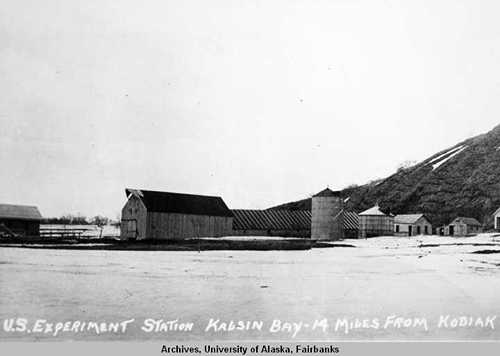 On this day in 1898, the United States Department of Agriculture would open an experimental station on Kodiak Island to experiment with cattle breeding.
The station, authorized by the 1887 Hatch Act, would open in Kalsin Bay, 14 miles to the south of present-day Kodiak
The station’s initial mission was to assess the adaptability of Galloway cattle to the island’s conditions. Different hay grains were also experimented with.
Later, Sitka Black-tailed Deer and Roosevelt Elk would be introduced to the station, deer in 1900 and elk in 1928. While initially the elk were to be released on Kodiak Island, it was determined that the possibility of competition with the cattle for winter food meant that they would instead be introduced to Afognak Island to the north.
The Kalsin Bay Station was one of several that would be established throughout Alaska.

Sunday Puzzle: Vowel Renewals

Red Rooms makes online poker as thrilling as its serial killer

Over 2 dozen children among 33 bodies pulled from Kenyan mass grave: authorities

Scathing report claims nation’s oldest labor union ‘betrayed’ MAGA members through ‘shocking’ spending

Cases of ‘white plague’ rising in US as doctors warn of ‘rebound effect’

Florida High School Football Rankings: Top 25 teams – Oct. 21

How old is Bo Nix? What to know about Oregon quarterback ahead of 2024 NFL Draft

Cleary's 21 help Le Moyne down Central Connecticut State 69-64 in OT

99th annual Pony Swim held in Virginia

Indiana Members Credit Union announced as new anchor tenant at Bottleworks District
Scathing report claims nation’s oldest labor union ‘betrayed’ MAGA members through ‘shocking’ spending

Republican US lawmaker demands Congress vote on any Iran troop deployment

So you went to a No Kings protest. Now what?

JD Vance says he was ‘obsessed’ with UFOs, believes aliens are actually ‘demons’
The EU's recipe for trade deals : easy on beef, tough on wine
-

 Sports1 week ago
IOC addresses execution of 19-year-old Iranian wrestler Saleh Mohammadi
-

 New Mexico7 days ago
Clovis shooting leaves one dead, four injured
-

 Miami, FL3 days ago
Jannik Sinner’s Girlfriend Laila Hasanovic Stuns in Ab-Revealing Post Amid Miami Open
-

 Tennessee6 days ago
Tennessee Police Investigating Alleged Assault Involving ‘Reacher’ Star Alan Ritchson
-

 Minneapolis, MN3 days ago
Boy who shielded classmate during school shooting receives Medal of Honor
-

 Technology1 week ago
YouTube job scam text: How to spot it fast
-

 Science1 week ago
Record Heat Meets a Major Snow Drought Across the West
-

 Politics1 week ago
Schumer gambit fails as DHS shutdown hits 36 days and airport lines grow