Movie Reviews
Baffling and Beautiful, Misericordia Is the Strangest of French Thrillers


Misericordia.
Photo: Janus Films
Alain Guiraudie’s Misericordia is an existential drama masquerading as a comedy masquerading as a thriller. The French director, whose best-known film Stateside remains 2014’s sunny, rambling queer mystery Stranger by the Lake, specializes in these kinds of slippery genre hybrids, movies that start off as one thing and eventually become other things, all without ever betraying their essence. Misericordia was a major critical hit in France, where it was nominated for mountains of awards and was named the best film of the year by Cahiers du Cinéma. The director’s shape-shifting narratives, forever flirting with the metaphysical, are obviously a known quantity there. It’ll be interesting to see how Misericordia plays in the U.S., where viewers don’t always enjoy having their expectations confounded.
The film begins in a somber and ominous register, as Jérémie Pastor (Félix Kysyl) returns to the small village of St. Martial where he spent his youth to attend the funeral of the baker for whom he worked and with whose family he lived. Immediately, there is tension with the baker’s son, Vincent (Jean-Baptiste Durand). He and Jérémie were once the best of friends, and perhaps even more than that; now their lives have gone in different directions, and a corrosive, inexpressible conflict seems to be brewing between them. Jérémie also grows close with Martine (Catherine Frot), Vincent’s mom, as they bond over their shared memories of the baker. We sense, again, that perhaps there was more to Jérémie’s relationship with his former boss as well. As if that weren’t enough, Jérémie seems to be quite taken with Walter (David Ayala), a portly, reclusive sad sack of a man living on the outskirts of town.
A Sirkian network of desires lurks just under the surface of the drama: Everybody seems to want somebody else. And all that sublimated desire propels the picture’s thrillerlike elements: Jérémie’s conflict with Vincent gets more dangerous, while his fascination with Walter grows. As a pure narrative, this would be mostly ridiculous, but that’s where Guiraudie’s skill as a filmmaker comes in. He and cinematographer Claire Mathon (Portrait of a Lady on Fire, Spencer) give this landscape, with its rough roads and forest canopies and dramatic cliffs, both lyrical beauty and eerie portent: Immersed in nature and removed from society, everybody’s been reduced to their base desires. As a protagonist, Jérémie also bears some similarities to Terence Stamp’s mysterious ambisexual stranger in Pier Paolo Pasolini’s classico-capitalist allegory Teorema (1968) — and just as Pasolini did, Guiraudie grasps that the more ornamentation you strip away from a tale, the purer its perversity becomes. Reason, it turns out, is the greatest luxury.
Misericordia has elements of rural noir, but it gathers both absurdity and lethality as it progresses. Guiraudie isn’t much for emotion in his actors: An unreadable person, after all, is also an unpredictable person. We start off viewing Jérémie as a victim of others’ assumptions and needs, but as he overstays his welcome in this place, his weird, stony persistence allows us to see how this man could drive everyone around him crazy. And yet, the movie doesn’t provide easy answers to any questions of motivation or morality or justice. Maybe because Guiraudie has other things on his mind. As our protagonist’s increasing desperation reaches comic proportions, we begin to realize that all along we’ve been watching a film about how to continue living in a world where our actions constantly cause misery, uncertainty, and pain.
See All



Movie Reviews
‘Fruit Gathering’ Review: A Factory Worker Falls for Her Female Colleague in a Delicate Burmese Debut

Caught between rural roots and urban opportunities, familial duty, friendship and forbidden carnal desire, young San Kyi (Nandar Myat Aung) struggles to find her place in Fruit Gathering, a sensitive Myanmar-Czechia-France co-production that just won Karlovy Vary’s top prize.
That’s an impressive achievement for Burmese writer-director Aung Phyoe, making his feature debut after several shorts. His flair for blending realist drama with more poetic, painterly imagery makes for a dreamy, hypnotic viewing experience, eased along by a confident, open-hearted performance from Nandar Myat Aung in the lead role. Fruit Gathering will be ripe for picking at further festivals, especially ones specializing in Asian and/or LGBTQ+ fare, possibly followed by niche distribution.
Fruit Gathering
The Bottom Line Juicy but not too sweet.
Venue: Karlovy Vary Film Festival
Cast: Nandar Myat Aung, Nandar Myint Lwin, Tin Tin Ei, Thida Soe Khant, Wutt Yeet Kyaw, Htet Aung Lynn, Khet Suu Myat, Min Nyo, Zun Pwint Phyu
Director/screenwriter: Aung Phyoe
1 hour 37 minutes
Self-transplanted with her mother (Tin Tin Ei) and grandmother from the countryside to industry-rich Yangon, San Kyi has so far managed to resist the pressure from her mom to get married or pursue a career in something upmarket like tech. Instead, eager for a job that doesn’t demand too much thinking, San Kyi works in a massive clothing factory, sewing seams all day in a ferociously noisy, scrap-strewn environment where the supervisor gets snotty if she takes a bathroom break without seeking permission first.
Incidentally, while the factory hardly looks inviting, the conditions don’t seem to be too bad compared to those seen in older documentaries about East and South Asian sweatshops. They’re comparable to what’s on display in, say, Chinese director Wang Bing’s doc Youth but without the company-owned residential housing. At least the workers are allowed to submit petitions circulated by labor organizers requesting better pay and more safety measures, although tellingly San Kyi refuses to sign lest she might get fired for it. A union leader (Wutt Yee Kyaw) pours scorn on her for not showing more solidarity with her colleagues.
Later, after she’s injured herself by a sewing accident, San Kyi will rethink her position on workers’ rights, but industrial relations in the textile industry are not the film’s main focus. It’s all background color, as much a part of the vivid landscape as the interludes where we see San Kyi back home visiting the mango farms and spirit-dance ceremonies of her agrarian childhood.
At least it’s at this factory that San Kyi meets Theint Theint Oo (Nandar Myint Lwin), a young co-worker around the same age as San Kyi with a radiant smile and street sense to burn. The two young women start out just hanging together during their lunch breaks but soon grow inseparable. The script suggests early on that Theint Theint may be the kind of pal who always forgets to bring enough cash for dinner. A darker interpretation might posit that she sees San Kyi as little more than a mark, but the truth probably falls somewhere in a grayer area.
Either way, by the time San Kyi is buying nearly identical blouses for the two of them to wear on strolls around town, it’s pretty clear that she’s smitten with Theint Theint. The latter is ambiguously flirtatious and keen to have languid girls’ night sleepovers in the same bed, but also open about the fact that she’s got a man in the background, who is conveniently always away working in another country. Afraid of losing her new limerent object of desire, San Kyi entertains the thought of going abroad with Theint Theint to work as housekeepers or factory workers in somewhere affluent like Singapore or Malaysia.
Clearly, things are heading for a smash up when San Kyi lends Theint Theint a substantial amount of money. Somehow the tension is heightened by the fact that Theint Theint gets closer to San Kyi’s family, even accepting a job offer that comes through the local guy whom San Kyi’s mom was trying to set San Kyi up with as a potential husband. It all serves to underscore how narrowly female relationships are usually defined in highly traditional, painfully patriarchal Myanmar society. The intense feeling between these two young women could never be openly romantic, although no one bats an eye when they walk hand and hand through the streets, much the way Queen Victoria is said to have refused to sign legislation banning lesbianism because she wouldn’t acknowledge such a thing even existed.
Aung Phyoe suggests the messy, uncontrollable nature of desire via some slightly heavy-handed imagery of flooded apartments and generally juicy, watery, somewhat soluble imagery. But the story surprisingly shifts tack halfway through and becomes less interested in the two women’s relationship and more in San Kyi’s personal development, especially after some hard knocks change how she sees the world.
Every so often, the camera will linger on a tiny detail like a vase that has some emotional significance, or the light coming in a window. There’s a tiny hint that these cinematic still life pictures are being seen through San Kyi’s eyes, like scenes in a book told through limited third-person point of view. Indeed, there’s a faintly literary quality to the filmmaking, as if inspired by romance and high-brow fiction, but Aung Phyoe’s touch is feathery soft, as gentle as the soft thud of a mango falling from a tree.

Olivia Wilde, Seth Rogen, Edward Norton and Penélope Cruz star in The Invite.
A24
hide caption
toggle caption
A24
The new comedy film The Invite centers on an unhappy married couple who host another couple — they live upstairs — for an uncomfortable, and revelatory, evening of dinner and charcuterie. The film’s screenwriters, Rashida Jones and Will McCormack, are actors who are also longtime writing and producing partners.
Jones and McCormack met decades ago, when McCormack’s sister (actor Mary McCormack) set them up on a date. It didn’t work out as a romantic pairing. Instead, it was the start of a long-running creative partnership.

“We’re really like brother and sister who dated briefly, which is not weird,” McCormack jokes. “I think we both knew right from the very beginning that we were connected and that we had to be in each other’s lives. And it took us a minute to sit down to write, but finally we did, and I’m so glad we did.”
Jones says she and McCormack share a voice: “The two of us have the same clip, the same rhythm, and we’re so different in so many ways, but we just kind of like fit like puzzle pieces conversationally very quickly, which is a wonderful thing to have with a writing partner.”
Inspired by the 2020 Spanish film The People Upstairs, The Invite takes place over the course of one night in a chicly appointed apartment in San Francisco. Two couples gather for dinner, and as the evening unfolds, the stories they’ve been telling themselves about their relationships and about themselves fall apart.
McCormack describes the film as a sex comedy that’s not really about sex. “It’s about wanting to be seen and heard and valued,” he says. “You live with someone for so long and it’s really hard.”
Jones says it’s no accident that their work tends to focus on relationships and middle age: “Selfishly, it’s great that we can channel the thing we’re most interested in, which is relationships, living with other people, being parents, losing parents, being alive, getting older, being middle-aged, looking straight down the barrel of the back half of life. All these things we got to bring to this script.”
Interview highlights

Will McCormack and Rashida Jones attend the Los Angeles premiere of The Invite on June 23, 2026.
Valerie Macon/AFP via Getty Images
hide caption
toggle caption
Valerie Macon/AFP via Getty Images
On their working relationship
Jones: We write separately. We write together. We’re in an open relationship as writers, a very healthy, open relationship. But when we come together, there’s a thing that happens.
McCormack: I think we always found the same things funny. … And I think also the same things sort of broke our hearts, and I think that we wanted to try to say something together. There were movies that appealed to us both, and there was a voice that we shared from the beginning. There was just an easy rapport.
On acting out the dialogue together as they’re writing it
Jones: Well, we act while we’re writing, but that’s our discovery process of dialogue because we’re lucky, we both started as actors and can do a good job with that. So often we act out the scenes and if it’s not working, it doesn’t feel right … that’s easy to fix.
On why they’re drawn to stories about heartache

McCormack: Life is really just a series of losses. It’s one loss and one heartbreak after another. When your little summer ends and you don’t want it to end, and then you get your heart broken, and then you have kids, and they’re gonna break your heart, and then your parents die and then [you] start to lose bone density. …
Those moments can actually be the funniest because they’re so raw. And it’s when we feel connected, right? Like, heartbreak is the thing that binds us. Like, no matter who you are or no matter where you are or no amount of how old you are, like you’re gonna go through heartache. … And to be able to dig into some of those moments with Rashida has just been such a gift, and I don’t take that for granted to be able to do that for a living.
On Quincy, her documentary about her dad, Quincy Jones, and experiencing anticipatory grief
Jones: I filmed for six years, and the second to last year of filming, he went into a diabetic coma, and we stopped filming, and luckily my brother filmed a little bit in the hospital because we were going to kind of show him what he had been through if and when he came out and we were so lucky he did come out at 82. … But having that moment where he was that close to death, and then deciding to put that in the film and show him overcoming that, I think was my way of sort of preparing for the inevitable, you know? And I was so lucky to have him for another nine years after that, but ultimately, I knew what was coming, and it was really a love letter to my dad, but also a way to hopefully reach out to other people and say, listen, we’re all going to go through this and we want to be honest about what it’s like for our family to come to the other side of this.

My dad is obviously an icon and a culture shifter, and he had been documented a lot before. And what I felt like people missed, because he’s so successful at what he did, was they missed his personality. They missed the personal side of him, which is a very important part to why he was successful. It’s not just his talent and his hard work, but he had this gift with people. And he had a way of relating and being honest and getting to the heart and the honesty of something and the intimacy of something so fast with a stranger, with his kids, with the people who loved him, the people didn’t know him. And I really wanted that to be on screen.
On what they bring out in each other
Jones: Will is like my closest chosen family in a way. … I don’t wanna get emotional, but I feel like Will, and I see the child versions of ourselves and can really take care of that little kid in each other, because we’re both very hard on ourselves. … We sort of like, very kind of gently, love and respect each other and give each other the benefit of the doubt that we might not give ourselves. And then, I think, born of that is this sort of thing that lives in the intersection between pain and humor, and maybe hopefully something divine, like hopefully we leave some room, as my dad always said, “for God to walk in the door,” because that’s really our job ultimately is to channel. And so hopefully there’s something about us coming together that allows that to happen.
McCormack: I don’t want to get emotional either, but what she said.
Ann Marie Baldonado and Susan Nyakundi produced and edited this interview for broadcast. Bridget Bentz, Molly Seavy-Nesper and Meghan Sullivan adapted it for the web.

Way back in 2017 I reviewed a film called Demon Hunter (which was recently rereleased as Taryn Barker Demon Hunter), a moody character driven horror action hybrid that I enjoyed very much. After a very long wait, a sequel, Demon Hunter: Time 2 Kill, has finally been released in the world.
Read on for my thoughts on the film
Synopsis
Taryn Barker is just your average everyday monster slaying, wise-cracking, demon hunter on the hunt for two pieces of an ancient artifact, The Necrox. Standing in her way is Elysia Cronika, the CEO of Illumini Industries and a member of the Satanic sect The Stygian.
Cronika plans to obtain the Necrox to unleash Hell on Earth. The problem is Taryn is hard to kill and with every demon sent to eliminate the demon hunter getting wiped out, she gets closer to saving the day.
As a last resort, Cronika sends Taryn through time alongside a band of innocent teenagers to the year 1987 and now Taryn needs to protect the group from a notorious summer camp slasher Lucien Krull, whilst finding the Necrox and a way back home to the present
Demon Hunter: Time 2 Kill was written and directed by Zoe Kavanagh. The film stars Niamh Hogan, Lisa Wilcox, Angel Nichole Bradford, Kevin O’Malley, Anthony Cespedes, CJ Dorsey, Valeria Arango Gomez, Jada Krueger and Desiree Xu.
After all these years, it was nice to see Taryn Barker return. She’s a little less moody and more grown up and she has a stronger sense of humor. One thing that hasn’t changed is that she’s an absolute badass. I was really impressed with the increased action, fight scenes and stunt work. Niamh Hogan does a great job as Taryn. She kills it at the fight scenes, she’s got great comedic timing and she’s just genuinely fun to watch.
I was really happy to see Kevin O’Malley return as Ethan, as I felt he was one of the strongest characters in the first film and I really enjoyed his chemistry with Taryn. He’s given a lot more to do here and that was exciting. The cast includes a lot of new additions and there was definitely some highlights.

Angel Nichole Bradford (one of my absolute favorite indie actresses) plays Deborah, a character who shares a sisterly energy with Taryn. I loved the way they looked out for each other and always had each other’s back. Enea Pagni’s Jay and Jacob Rainer’s Lawrence were 2 characters I was able to root for. I loved their friendship. Last but not least is Desiree Xu’s Azumi, a demonology expert who is also a ninja. She was definitely a badass and I loved seeing her work together with Ethan.
The story here is much different than the first film, including time travel and a strong slasher element, which I really enjoyed. It gave Demon Hunter: Time 2 Kill a unique feel and set it apart from the first film. Given the slasher elements, it’s much gorier than the original film, which is sure to please those who enjoy that sort of thing. I loved how the film ended and am curious to potentially see where the series could go from here.

Final Thoughts
Demon Hunter: Time 2 Kill is an excellent sequel that increases the action, has some well executed fight scenes and ups the body count. Demon Hunter: Time 2 Kill is supernatural slasher/action film that is well worth a checking out. Highly recommended.
-

 Technology11 minutes ago
Nintendo’s Switch 2 bundle that includes a game is $50 off
-

 World17 minutes ago
Inside Israel’s mission to train civilians to stop the next Oct 7-like terror attack
-

 Politics23 minutes ago
Trump reveals who he’s eyeing to replace Lindsey Graham
-

 Health29 minutes ago
Notable figures who died from the same heart condition linked to Lindsey Graham’s death
-

 Sports35 minutes ago
Folarin Balogun admits that red-card reversal affected USA World Cup teammates: ‘A lot of outside noise’
-

 Technology41 minutes ago
Humanoid robots perform live surgery in world first
-
 Business47 minutes ago
A ‘next generation studio’ for YouTube creators
-
 Entertainment53 minutes ago
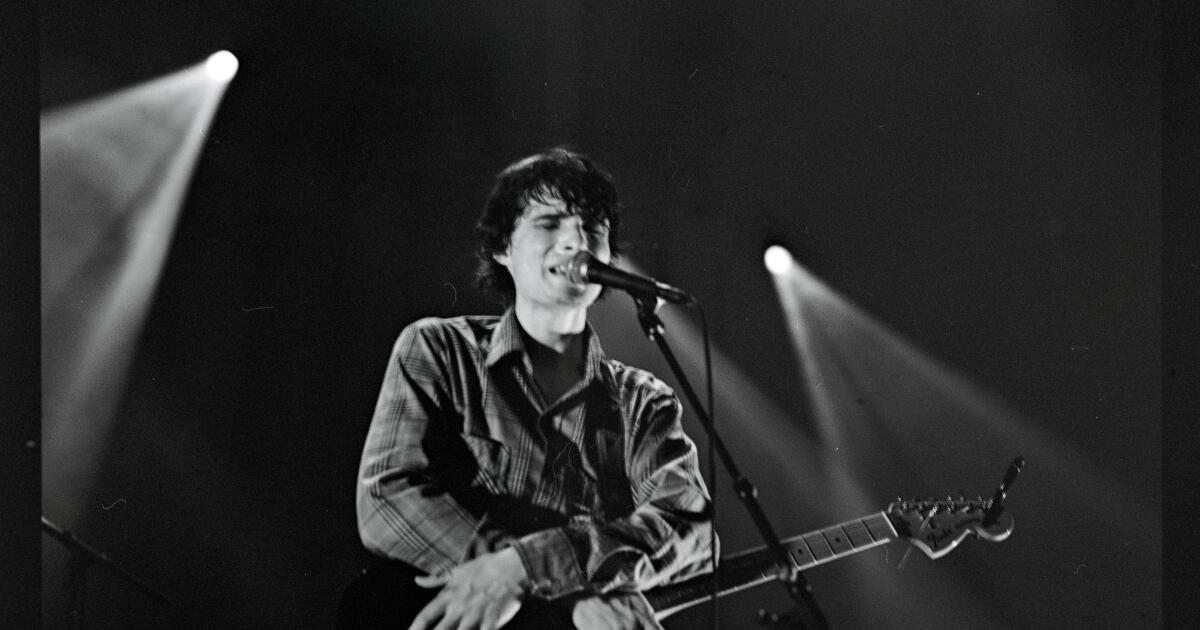
Finn Wolfhard is taking ‘control of the narrative’

