Science
Tuolumne County confirms two measles cases, warns of exposure at high school and emergency room

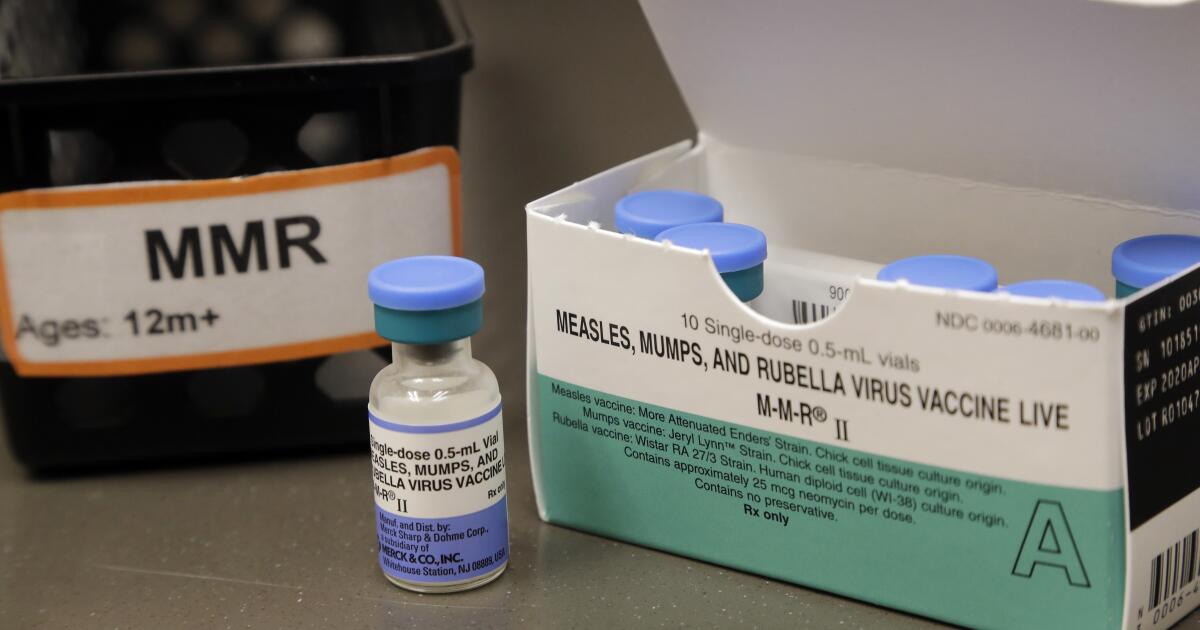
The Tuolumne County Public Health Department on Wednesday confirmed two measles cases a day after it opened an investigation into the possible infections.
The department said the cases involved an adult and a child under 18 who lived in the same household and had traveled internationally. It’s unclear whether they had been vaccinated against measles, a highly contagious and potentially deadly disease most often associated with a high fever and rash.
On Tuesday, the department said it was investigating the cases for measles and warned of potential exposure at Summerville High School in Tuolumne on March 10-11 and at Adventist Health Sonora Emergency Department on the evening of March 15 and morning of March 16.
Public health officials issued another update Thursday night warning those who visited the Sonora Sports and Fitness Center’s back gym, locker rooms, restrooms and back pool area on March 10 between 3 p.m. and 7 p.m. of possible exposure.
“We understand that there may be a lot of questions and concerns. The investigation is still ongoing, and we will provide updates as they are available,” Michelle Jachetta, the county’s public health director, said in a Wednesday statement confirming the cases. “We want to remind the public that measles is a highly contagious disease and to take steps to protect yourself and your family by ensuring current vaccination status for measles, monitoring for symptoms, and staying home when you feel sick.”
Michael Merrill, superintendent of Summerville Union High School District, also issued a statement this week that saying the district “takes the health and safety of its students, staff and our community seriously” and that the school would work with public health officials “through the process of identifying any risk.” More than 430 students attend Summerville High School, according to its website.
Tuolumne County’s cases come amid a deadly measles outbreak that began in the southern Plains and Panhandle region of Texas in January and has since infected 279 people, making up the vast majority of more than 300 confirmed cases across 15 states so far this year. An unvaccinated school-aged child in Texas died from the disease in February.
The California Department of Public Health reported Thursday that there have been at least eight confirmed cases of measles in the state this year. They have not published the locations of the cases.
Tuolumne County reported some of the state’s lower vaccination rates in the 2023-24 school year, according to data published this week by the state public health department.
Only 89.8% of Tuolumne County kindergarten students were up to date on all their immunizations, compared with 93.7% of kindergartners statewide. And only 93.1% of kindergarten students had received both doses of their measles, mumps and rubella shots, substantially lower than the 96.2% statewide average. California typically publishes vaccination rates for kindergarten, first-grade and seventh-grade students.
Public health experts say a 95% vaccination rate, sometimes called “herd immunity,” is considered the gold standard of disease prevention. A slip of even 1 or 2 percentage points can create an opportunity for disease to spread, meaning that even if the overwhelming majority of children are vaccinated, it could still take only a few cases to spark an outbreak in an area where immunization rates have fallen below 95%.
California reported a decline last year in the share of kindergarten students who were immunized against measles, despite strict laws that make it difficult for parents to skip shots for their children. That includes 16 counties where measles immunization had fallen below the herd immunity threshold.
An increase in vaccine hesitancy in recent years, coupled with widespread disinformation online and increasing political division, could make it even harder to encourage immunization, said former state Sen. Richard Pan, a Sacramento Democrat who wrote California’s vaccine laws.
“We seem to be heading the wrong direction,” Pan said. “We’ve been feeling pretty comfortable, like ‘we’re OK.’ But we suddenly now prove to people, it’s not OK.”


One of us got a call last spring from a longtime friend. The story was familiar: two doctors, an MRI, an online AI tool, a stack of articles — and one anxious question. “Everything tells me something different. The AI says I might need surgery. What should I do?”
We believe there’s one key response to anyone in this all-too-common conundrum: “What matters most to you?”
There was a long pause.
That pause is one of the most important moments in modern healthcare — and it is exactly the question artificial intelligence is unable to address.
In our careers as physicians and researchers, we have found, clearly and repeatedly, that for many common conditions the medical evidence does not point to a single “right” answer. The biology is often close. What determines the success of an outcome is whether the choice fits the person making it.
Some patients with back pain want the fastest possible return to physically demanding work, even if it means surgery. Others want to avoid an operation at almost any cost, even if recovery takes longer. The scan may look the same. The lives behind the scan are not.
That insight is becoming critically important as artificial intelligence moves deeper into everyday health decisions.
In our research on AI and clinical decision-making, we’ve studied what happens when systems are trained to optimize medical outcomes but are blind to human values. In plain English, today’s AI is very good at telling you what usually works for people like you with similar demographics and medical histories. It is far less capable of understanding what you are trying to protect, avoid or prioritize.
This matters because some of the most common and most expensive medical decisions are not purely biological. Should someone with low-risk prostate cancer choose surgery, radiation or careful monitoring? Should a person with atrial fibrillation undergo a procedure or manage the condition with medication? Should a patient with chronic knee or back pain operate now or try months of physical therapy to see whether surgery can be avoided?
In these situations, the medical differences between options are often small or uncertain. What makes the biggest difference is whether the treatment aligns with the patient’s goals: tolerance for risk, willingness to undergo recovery, ability to adhere to long-term therapy or simply what kind of life they want to live.
AI systems can calculate probabilities. They cannot determine what those probabilities mean to a particular person.
In some respects, artificial intelligence may know more medicine than any individual physician. It can synthesize millions of scientific papers, clinical studies and patient records in seconds. Yet it knows remarkably little about the person sitting across from it. AI does not know a patient’s goals, fears, obligations, tolerance for risk or personal definition of a good outcome. And because it knows little about either the patient or the physician, it knows even less about the conversation between them — the place where facts, values and trust come together to produce the right decision for a particular person.
A second patient story brought this home. A retired teacher was referred after an AI-based symptom checker flagged a heart rhythm abnormality and “favored” an invasive procedure. The patient arrived frightened, convinced there was one correct path. When we talked, it became clear that what mattered most was avoiding a long recovery and staying healthy enough to travel to see grandchildren.
Medication and monitoring — less dramatic, but well-supported by evidence — fit those goals better. The AI wasn’t wrong. It just didn’t know what mattered.
This blind spot is not trivial. Roughly a quarter of U.S. healthcare spending flows through decisions in which patient preferences meaningfully affect outcomes. When those preferences are ignored — by people or by algorithms — care becomes misaligned. That can mean unnecessary procedures, poor adherence, regret and rising costs without better health.
So what should consumers do when an app, portal or “smart” tool recommends a course of action?
Start with three questions.
First: “Best for whom?” If a tool says one option is best, ask whether it means best on average — or best for someone with your priorities.
Second: “What does this system not know about me?”
AI can see lab values and imaging results. It cannot see your job, your family responsibilities, your fears or what you are trying to get back to.
Third: “What happens if I wait or choose differently?”
Many important medical decisions are not emergencies. When options are close, taking time to reflect is often part of good care.
Artificial intelligence is becoming a powerful partner in medicine. It can help explain options, surface evidence and reduce confusion. But it should inform human decisions, not replace them.
AI may know more medicine than any physician.
It knows far less about any patient.
And it knows least about the conversation between them.
The most important variable in your healthcare is not in any algorithm. It is you.
James N. Weinstein is a surgeon and former chief executive of Dartmouth Health. He is a clinical professor at Northwestern University’s Kellogg School of Management and global head of Health Futures at Microsoft, which develops AI systems. Ogan Gurel is a physician and assistant professor at the University of Texas at Arlington, where he researches AI, causal inference and patient decision-making.

While it may not be remembered as FIFA’s most controversial decision of the 2026 World Cup, the institution of mandatory cooling breaks in all matches has been met with boos and derision, with critics saying the pauses disrupt the game’s flow and offer little benefit in air-conditioned environments.
“They’re in a dome here! Temperature-controlled, climate-controlled — why are we having a break?” fumed one England fan to a radio reporter outside the England-Croatia match in Arlington, Texas, where field temperatures inside AT&T Stadium approached a comfortable 70 degrees Fahrenheit despite an outdoor heat and humidity index near 105 degrees.
But for Dr. Bert Mandelbaum, chief medical officer for U.S. men’s soccer and vice chair of Cedars-Sinai Medical Center’s orthopedic surgery department, the breaks set an important precedent for prioritizing athlete health in extreme heat, even at the highest levels of competition.
“I do think the cooling breaks are an important part of the game. I’m really excited and happy that we are employing those,” he said by phone Tuesday morning, hours after the U.S. team’s 4-1 knockout loss to Belgium.
“Difficult weather environments bring on dehydration and can create severe exhaustion, heat exhaustion, and those [conditions] have tremendous and dire consequences,” Mandelbaum said. “Talk radio could discuss it over and over again, but from our standpoint, the real messaging should be to our communities, our club players, that this is an important part of our game, and the cooling break is how we help manage it.”
Warming climate conditions are forcing changes to human behavior all around the globe, including on the pitch.
Extreme heat kills more people each year than all other forms of extreme weather combined. Elite athletes are not immune to its effects.
As temperatures during a game rise, the circulatory system diverts blood to the skin to lower core body temperatures at the same time that active muscles require oxygen-rich blood. This places extra strain on the heart, which pumps harder to keep up with demand. Sweating players lose electrolytes faster than they can consume them, leading to muscle cramps, fatigue and dizziness.
Virtually all aspects of the game degrade in the heat, Mandelbaum said. Players’ performance, recovery ability and decision making erode. Artificial turf becomes intolerably hot, and the soil in natural grass can harden until it’s like playing on concrete. Air molecules inside the ball expand, making it a harder and faster object. Even fans risk injury: 22 people were treated for heat-related illnesses at a FIFA Fan Festival in Houston last month.
Mandelbaum directs the FIFA Medical Center of Excellence at Cedars-Sinai and was part of the FIFA Medical Committee in 2014, when the first World Cup cooling break was called during a Netherlands-Mexico match in Fortaleza, Brazil.
At the time, the sport’s governing body recommended hydration breaks if temperatures surpassed 102.2 degrees.
This year’s World Cup, hosted across the U.S., Canada and Mexico, is the hottest played since the tournament began in 1930. It has coincided with a withering heat wave in the eastern U.S. With a heat index of nearly 104 degrees at kickoff, the July 4 match in Philadelphia between France and Paraguay is believed to be the second-hottest game in World Cup history, after a 105-degree match in 1994 between Ireland and Mexico in Orlando, according to meteorologist Brad Maushart.
FIFA announced in December that this year’s tournament would be the first in which all matches must pause once in each half for hydration and cooling, regardless of temperature conditions.
FIFA President Gianni Infantino said mandatory breaks equalize playing conditions in all matches. When they haven’t been loudly booing, many fans have noticed that teams often appear to spend as much time strategizing during the pauses as they do hydrating.
Given this, “if we were to use hydration breaks only in those matches where it was too hot and not in the other matches, we would give an advantage or a disadvantage to some of the coaches or some of the teams,” Infantino told Sports News Television.
Harry Brown, a postdoctoral research associate at the University of Sydney’s Heat and Health Research Centre, expressed frustration over the universal breaks in an op-ed in the journal Nature.
“Although it might seem fair to treat all games in the same way, this blanket approach risks undermining trust in heat-safety measures. If breaks are always used, regardless of risk, they stop being meaningful and start looking like routine stoppages,” Brown wrote.
Without active efforts to lower players’ core temperatures, pausing game play may not be enough to effectively stave off heat injury, he wrote. In his own research, Brown’s team compared the effects of passive breaks against breaks with active cooling measures on the health of players participating in 90-minute soccer games in 104-degree heat and 41% humidity.
When players cooled themselves with cold drinks and icy towels during short breaks and took longer halftimes, their core temperatures and cardiovascular strain lowered considerably more than they did after only passive breaks, Brown wrote.
Other physicians argued that even an under-utilized break was better for athletes than nothing at all.
“I would say that it’s better to err on the side of having cooling breaks rather than risk not having them,” said Dr. Miho J. Tanaka, an associate professor of orthopedic surgery at Harvard Medical School who also serves as a team physician for the Boston Red Sox and the New England Revolution.
“Ultimately, an individualized screening or monitoring process may be the safest approach, but we are still far from being able to precisely identify and intervene when an individual player may be at risk,” she said. “Until we are able to do so, having standardized breaks is a step in the right direction, as long as teams and players are informed when to escalate their level of concern and take action when more aggressive measures are truly needed.”
While a cooling break is rarely medically necessary inside a climate-controlled indoor stadium, Mandelbaum said it still sends a valuable message to players around the world: If hydration breaks are a part of the sport’s biggest event, they should be allowed at every other level of play.
“Not only is [the hydration break] a good thing, it’s a necessary thing,” Mandelbaum said. “This is the world’s game … we have to figure out how to help players at all levels and ages to have the ability to thermoregulate, hydrate, how to do it well.”

A trio of satellites set to launch early Tuesday will give wildland firefighters more time to respond and scientists more information about fire-prone regions across the globe.
The launch from Vandenberg Space Force Base is the first phase in a constellation called FireSat that will eventually cover the globe with 50 satellites collecting high-resolution imagery of fires and conditions on the ground every 20 minutes.
Earth Fire Alliance, the nonprofit group behind FireSat, got the project off the ground with $69 million in grants from the Bezos Earth Fund, Google and the Gordon and Betty Moore Foundation.
San José-based Muon Space built the satellites. Muon and the California Department of Forestry and Fire Protection are both FireSat partners.
The satellites use advanced thermal sensors to detect heat and can pick up signals from fires as small as a beach bonfire, as well as cooler fires that have been smoldering for days, according to Michael Falkowski, lead scientist at Earth Fire Alliance. That information will help fire officials, including the Los Angeles and Los Angeles County fire departments, understand whether blazes are growing, where they are headed and how much soot and smoke they are generating.
FireSat’s infrared instruments detected this small roadside fire in Medford, Ore., during a 2025 test flight.
(Muon Space)
“If we can differentiate between a smoldering fire and a flaming combustion fire, it really has a big impact on how we can understand the air quality emissions coming off the fire,” Falkowski said.
Fires that burn at low temperature produce more harmful gases than hot fires. Think about a campfire. When it’s burning hot with bright flames, there is relatively little smoke. When it’s smoldering, it produces lots of thick, white or gray smoke.
Wildfires work the same way.
A hot, fast-burning fire has enough oxygen and heat to burn with more complete combustion, producing less smoke for every pound of wood burned.
Earth Fire Alliance will provide data from these first three satellites in the next few months to Cal Fire and fire agencies in Oregon, Texas, Australia and Portugal. Cal Fire will share it with Southern California fire agencies.
The network will also turn its sensors on in the Amazon Basin for the Brazilian nonprofit Amazon Environmental Research Institute.
Cal Fire should begin receiving data from the scientists later this year, according to Falkowski, who joined Earth Fire Alliance last year from NASA, where he was an earth science program manager running the agency’s fire science program.

Instruments on the satellites will be able to detect fires the size of a shipping container, and distinguish between hot, intense wildfires and cooler, smoldering ones.
(Muon Space)
Falkowski said the new FireSat satellites are a big improvement over existing ones because they will be able to see smaller fires with better resolution and distinguish low-intensity “cool” fires from high-intensity hot ones.
“The satellites are really designed to measure fire across the entire temperature profile, so we can see cool fires all the way up to really hot fires,” he said.
That kind of granular information is important for emergency responders in the field and planners who make decisions about calling for extra help or ordering evacuations.
The National Oceanic and Atmospheric Administration operates three satellites that can detect a fire somewhere inside a square 1,230 feet across.
In contrast, instruments on the FireSat satellites will be able to detect small brush and roadside fires 16 feet across.
Cal Fire officials have long embraced new technology to get ahead of wildfires in recent years, testing autonomous firefighting helicopters and partnering with UC San Diego to use artificial intelligence to filter images from a network of more than 1,200 cameras on lookout towers and mountain tops. The Alert California program is able to spot smoke in a video and sends automated messages to one of 21 agency command centers across California.
In 2025, Alert California sent out automated warnings before authorities even received 911 calls from the public 51% of the time, according to Phillip SeLegue, staff chief of Cal Fire’s intelligence program.

A worker at Mountain View-based Muon Space puts the final touches on a wildfire-detection satellite scheduled to launch Tuesday on a SpaceX rocket. The satellites will be tracking fires across the globe.
(Muon Space)
FireSat will help incident commanders get better information more quickly, and, unlike fire-spotting aircraft, the satellites can linger over a fire for days or weeks and aren’t hampered by high winds or smoke.
Travis Medema, chief deputy for the Oregon State Fire Marshall, said his office will use FireSat to plan escape routes and monitor fires. “If we can fight these when they are small, we feel we will be more efficient and can protect Oregonians,” he said.
One expert noted that turning satellite data into information useful to firefighters and forestry managers will take some time. The FireSat data will “be amazing for fire nerds, but how and whether it helps individual fires remains to be seen,” said Joe H. Scott, founder of Pyrologix, a wildfire analysis firm based in Missoula, Mont. “Right now, we are not basing decisions on where satellites tell us a fire is,” Scott said.
Pyrologix develops wildfire risk management models for federal agencies, local governments and utilities. Scott said FireSat’s high-resolution data will help him build better prediction models that take into account weather, drought, plants and the history of fires in a region.
-

 Health2 minutes ago
One walking habit could signal a healthier brain after 80, scientists say
-

 Sports9 minutes ago
New Jersey pro wrestling promotion bringing the fight to the beach
-

 Technology12 minutes ago
Are airline miles still worth it?
-
 Business17 minutes ago
Walmart’s EV chargers are coming to California with discounts for members
-
 Entertainment24 minutes ago
Still a Nico and Devo fan, Wes Anderson looks back on 30 years of musical moments
-
 Lifestyle27 minutes ago
Is it safe to eat from your garden after the Boyle Heights warehouse fire?
-
 Politics32 minutes ago
Seth Doane and Jim Axelrod among contenders for ’60 Minutes’ roles
-
Science39 minutes ago
Contributor: The crucial medical question that AI can’t ever answer

