Alaska
Alaska commuter plane that disappeared before deadly crash was more than 1,000 pounds overweight: NTSB


The Alaska commuter plane that disappeared last month before its wreck was discovered with all 10 onboard dead was more than 1,000 pounds overweight at the time of takeoff, according to details of a preliminary investigation released Wednesday.
Officials from the National Transportation Safety Board said in a new report that the fatal Bering Air Cessna flight was significantly overloaded for Alaska’s expected icy weather conditions on Feb. 6 which could have contributed to its rapid loss of altitude and ultimate demise that day.
“[T]he airplane’s estimated gross takeoff weight at departure was about 9,865 lbs, which was about 1,058 lbs over the maximum takeoff gross weight for flight into known or forecast icing conditions,” the preliminary report from the NTSB stated.
“It was also about 803 lbs over the maximum gross takeoff weight for any flight operation under the APE III flight manual supplement,” the report said.
The APE III is a payload extender that the doomed Textron Aviation plane was outfitted with, which increased the maximum gross takeoff weight for the aircraft.
Cargo and baggage on the flight weighed about 709 lbs.
NTSB said in its preliminary report that there were no significant meteorological weather advisories or warnings at the time of the crash. The full NTSB investigation will continue to examine all possible weather factors, the report stated.
The plane which was traveling between the communities of Unalakleet and Nome was also flown by an experienced pilot, according to the report.
Pilot Chan Antill, 34, held a commercial pilot certificate with ratings for single-engine and multi-engine land airplanes. He also had instrument privileges in planes, according to the report.
Before his death, he had accumulated about 2,500 hours of flight time.
Antill flew 58.4 hours in the 30 days preceding the accident and 4.4 hours in the week prior, according to the NTSB.
The Cessna Caravan flight was carrying Antill and his nine passengers when authorities lost all contact just an hour after takeoff and the plane seemingly vanished from the map.
The wreckage was found the following day, Feb. 7, on sea ice off Alaska’s coast.
It was the third major plane crash in the US in just over a week.
The official cause of the crash has not yet been determined as the NTSB is continuing its investigation.
A full and final report with the official cause will be released at a later date.



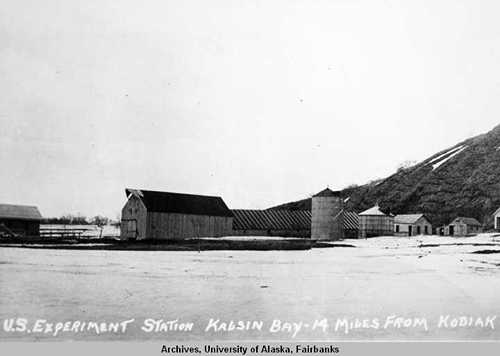 On this day in 1898, the United States Department of Agriculture would open an experimental station on Kodiak Island to experiment with cattle breeding.
The station, authorized by the 1887 Hatch Act, would open in Kalsin Bay, 14 miles to the south of present-day Kodiak
The station’s initial mission was to assess the adaptability of Galloway cattle to the island’s conditions. Different hay grains were also experimented with.
Later, Sitka Black-tailed Deer and Roosevelt Elk would be introduced to the station, deer in 1900 and elk in 1928. While initially the elk were to be released on Kodiak Island, it was determined that the possibility of competition with the cattle for winter food meant that they would instead be introduced to Afognak Island to the north.
The Kalsin Bay Station was one of several that would be established throughout Alaska.

MANLEY HOT SPRINGS — It’s so quiet in these spruce hills and tamarack swamps that 27 hours and 50 miles passed between when Forest Wagner and I said goodbye to one human being at Old Minto and hello to the next near Baker.
Space is in ample supply here on these pressed-in snow trails between towns and villages of Interior Alaska.
Forest and I are out here riding these ephemeral ribbons of blue-white moving westward, with a goal of reaching Nome.
Last Saturday, when it warmed to minus 12 degrees Fahrenheit, I lurched my loaded fat bike out of my home in Fairbanks. Saying goodbye to my wife and dogs, I rumbled eastward on a boot-packed trail that after a mile led to a plowed bike path. I then rolled through the familiar University of Alaska Fairbanks campus and onward 8 miles to Forest’s cabin.
He handed me a mug of coffee and an egg sandwich. Then we started pedaling our fat bikes down Chena Pump Road until we reached the Tanana River.

We found a trail groomed for a multi-sport winter race, turned right, and headed downstream on our home river, there half a mile wide. It was a day when the weather finally nodded toward spring. Fair-a-dise showed up with bluebird skies as the day warmed to 8 degrees Fahrenheit.
After a month of pillowy snows and crazy cold temperatures and re-telling people our new takeoff days to semi-suppressed eye rolls, we were finally unstuck from the glue of town.
If an object wasn’t hanging off our bikes, we didn’t need it. No more fiddling with the load or obsessing on the 7-day weather forecast. Just big ol’ tires humming on dry snow.
Now, five days and 145 miles later, Forest and I are digesting French toast and bacon our friend Steve O’Brien cooked for us as we wait on the dryer in the Manley washeteria. When we get a few dollar bills we will take showers.

It’s a good life here on the trail, just-add-water living at its finest. Eat everything in front of you, apply some sunblock and keep mashing on the pedals.
Steve O’Brien is one of the many people helping us move westward. In one of the most clutch moments, my wife Kristen and our friend Jen Wenrick appeared wearing headlamps on the packed snow ramp off the Tanana River in Nenana. They handed us burgers and fries from the Monderosa.
After a surprise tough day due to soft trail that had us working real hard, those burgers and Cokes were like oxygen.
There have been many other acts of kindness from Jenna and David Jonas, Steve Ketzler, Forest’s dad Joe Wagner and others. Tonic for the body and soul.

We will meet more excellent people, including some old friends, as we ratchet toward Nome.
When my satellite tracker is on, you can see our arrow creeping across the landscape here: https://share.garmin.com/NedRozell.

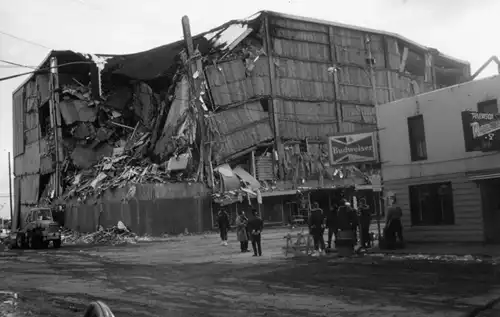
It was on this day in 1964 that a massive 9.2 earthquake in Southcentral Alaska.
The massive quake at 5:36 pm on March 27th caused much devastation throughout the region and generated a huge tsunami that inundated many communities in the region.
The quake was the largest in the history of the United States and initially killed 15 people while the resulting tsunami killed an additional 100 people in the new state and another 13 in California as well as five in Oregon.
The megathrust earthquake endured for four minutes and thirty-eight seconds and ruptured over 600 miles of fault and moved up to 60 feet in places.
The deadly quake occurred 15 and a half miles deep 40 miles west of Valdez and generated a ocean floor shift that created a wave 220 feet high.
As many as 20 other smaller tsunamis were generated by submarine landslides.

Three Detroit Pistons Players That Have Impressed Most Without Cade Cunningham

People We Meet: Ranjit Brar’s ‘horrible’ road led him back to San Francisco

Cowboys Showing Significant Interest in Son of Philadelphia Eagles Legend

Mock Draft Roundup: Miami Defensive End Is Popular Pick For Lions

Red Sox at Reds preview: Sonny Gray makes his first start for Boston – The Boston Globe

Florida High School Football Rankings: Top 25 teams – Oct. 21

How old is Bo Nix? What to know about Oregon quarterback ahead of 2024 NFL Draft

Cleary's 21 help Le Moyne down Central Connecticut State 69-64 in OT

99th annual Pony Swim held in Virginia

Indiana Members Credit Union announced as new anchor tenant at Bottleworks District

Dem senators dodge crucial question on illegal alien accused of killing Chicago college student

EU Parliament unblocks key political hurdle in digital euro talks

Man arrested in plot to firebomb Palestinian activist’s home after undercover op

WATCH: Senate hearing goes silent after Angel Father confronts top Dem over daughter’s death

US diplomat Marco Rubio denounces settler violence, tolls in Hormuz strait
-

 Detroit, MI1 week ago
Drummer Brian Pastoria, longtime Detroit music advocate, dies at 68
-

 Movie Reviews1 week ago
‘Youth’ Twitter review: Ken Karunaas impresses audiences; Suraj Venjaramoodu adds charm; music wins praise | – The Times of India
-

 Sports7 days ago
IOC addresses execution of 19-year-old Iranian wrestler Saleh Mohammadi
-

 New Mexico6 days ago
Clovis shooting leaves one dead, four injured
-
 Business1 week ago
Disney’s new CEO says his focus is on storytelling and creativity
-

 Tennessee5 days ago
Tennessee Police Investigating Alleged Assault Involving ‘Reacher’ Star Alan Ritchson
-

 Technology6 days ago
YouTube job scam text: How to spot it fast
-

 Texas1 week ago
How to buy Houston vs. Texas A&M 2026 March Madness tickets