I’ve played around with a few DJI drones over the years but always found them to be too cumbersome to master and use spontaneously. The $349 HoverAir X1 from Zero Zero Robotics is different. This so-called “selfie drone” is so easy to use that it’s already an indispensable tool for my work and play, right out of the box.
Technology
The HoverAir X1 is the first drone I want to use all the time

/cdn.vox-cdn.com/uploads/chorus_asset/file/25556630/IMG_8670.jpeg?ssl=1 "The HoverAir X1 is the first drone I want to use all the time")
For example, the HoverAir X1 is responsible for this review photo, this 360-degree GIF, and this overhead shot, as well as all of the follow, orbit, and zoom in / out shots used in this e-bikepacking video and this ID Buzz e-camper review. Each shot was made with just a touch of a button on the top of the drone — no controller required.
The best drone is the one you have with you and the ultra-lightweight HoverAir X1 can easily fit inside a pocket to be taken everywhere. It launches so quickly that I can impulsively grab a more interesting drone shot instead of just defaulting to my iPhone. It returns automatically to land in your hand.
The HoverAir X1 is not without limitations, and I did manage to break one review unit after falling on it. But I have to admit I love this little guy precisely because of its shortcomings, not in spite of them.
How we rate and review products
The HoverAir X1’s flying weight is about half that of DJI’s sub-250g Mini drones, so it, too, is exempt from registration and licensing requirements in most countries. It folds up into a 5 x 3.4 x 1.2-inch (127 x 86 x 31mm) package that’s so small and lightweight that I could comfortably carry it in a thigh pocket on long bike rides or trail runs.
The primary user interface for the X1 is two buttons on the drone itself. One turns the unit on, and the other cycles through five presets that lock the camera onto the user as the drone completes a predetermined flight path, shooting video or taking photos along the way:
- Hover — floats in fixed space and tracks your movement
- Follow — flies behind or in front of you at different heights and distances
- Orbit — makes a wide circle overhead around a fixed center spot
- Zoom out — flies away and up and then back in
- Bird’s eye — for top-down shots directly over a fixed spot
There’s also a sixth mode that lets you assign a lightly customized flight pattern. The hover and follow modes can record videos or take photos for several minutes at a time, while the other flight modes begin and end at the point of launch and last for about 30 seconds.
The HoverAir app lets you tweak each of its automatic flight modes, including the altitude, distance, swapping between photo or video captures, portrait or landscape, and image quality. After some early experimentation to see what I liked, I rarely had to adjust these again.
In a metric I like to call “time to drone,” I can pull the X1 out of a pocket, unfold it, turn it on, select a predefined flight path, and set it aloft from an outstretched palm in less than 20 seconds. No DJI drone can come anywhere close.
That’s not to say that the HoverAir can compete with DJI’s consumer drones on features or capabilities. The X1’s diminutive size means compromises were made, starting with a max video resolution of 2.7K/30fps.
Shots also start looking a little shaky in light winds around 10 knots (5.1m/s), and the X1 can’t even fly once winds exceed a moderate 15 knots (7.7m/s). It’s also relatively slow. The X1 can track me fine on a trail run, but it’ll start losing its object lock when I’m road biking at a not-very-fast pace of just 12mph (20km/h). Even when it can keep up, it’ll lose me when the elevation changes rapidly on a steep climb or descent.
Otherwise, the X1’s computer vision tracking is very good — it’s the main reason you’d buy this drone. But when it does lose track of me for whatever reason, it’ll just stop, hover in place, and then eventually land, even over water or a busy street. There is no return-to-home feature to ensure a safe landing and recovery. It can, however, be configured to play a sound to help find it.
The X1 also lacks any obstacle avoidance. Instead, the drone’s four rotors are encased in a flexible plastic cage to protect the device from collisions. In most flight modes, the lack of avoidance tech isn’t really a problem so long as you give the immediate area a quick survey. It becomes an issue when the drone is in follow-me mode through narrow tree-lined trails, for example, or when walking around a sharp corner inside my home. Usually, it’ll just stop and hover in place if it runs into something, meaning I’ll have to double back to re-engage the tracking lock on my person or to collect it. But if it hits something when going faster — like chasing me on a bike — it’ll crash. My review X1 has already survived a few dozen crashes that sent it plummeting to the ground. It’s fine, other than a few scuff marks.
I did destroy another X1 when my full weight landed on it while testing some new clipless bike pedals (don’t judge!). The X1 is not indestructible, but it’s surprisingly robust for such a lightweight drone.
1/10
The HoverAir X1 also lacks any kind of advanced GPS positioning. Instead, it opts for a VIO (Visual Inertial Odometry) system to estimate its position in 3D space, indoors or out, so that its preset flight modes can return the drone to its original starting point. It worked very well in my testing, often living up to the HoverAir’s claim of “centimeter-level precision,” even when flying orbits around me with a 20-foot (six-meter) radius.
The drone also responds to a variety of hand gestures when the user is standing still. For example, you can send the X1 left or right with a wave of an arm or tell it to land with your arms crossed overhead. You can also just grab the drone out of the air and flip it upside down to turn those protected rotors off.
The HoverAir X1 does offer a manual Wi-Fi-connected flight mode whereby your phone becomes the controller. It’s fun, but I found it unresponsive at times, making it difficult to control flight with any real precision. I consider it a bonus feature you might want to use in a pinch.
The X1 is limited to 32GB of built-in storage without any option for microSD expansion. I’m currently using just 8.8GB to store the 113 videos and 60 images I’ve shot at max resolution over the last few months of testing. The footage transfers quickly to a phone over a direct Wi-Fi connection using the HoverAir app or over USB-C to a laptop. That USB-C connection will also charge the X1’s battery in about 55 minutes.
On paper, the X1 is dumb and unremarkable. But the HoverAir is so good at doing what many people actually need from a drone that its shortcomings rarely matter at all.
DJI is still the king of sweeping panoramas, but the HoverAir X1 makes a strong case for being the drone you choose to capture yourself doing things — indoors and out — especially for social media.
I do wish it was more capable so I could trust it to capture action over water when kitesurfing on windy days, keep up with me when road cycling at pace, or maintain its object lock when I’m bombing down a steep hill on a mountain bike. A 4K/60fps shooting mode would also be nice so long as none of these wishes increase the price too much.
The X1 does 90 percent of what I want a drone to do
Still, the X1 does 90 percent of what I want a drone to do without adding GPS, obstacle avoidance sensors, and a physical controller that’ll just make everything more expensive, more complicated, more cumbersome to carry, and slower to launch. Maybe DJI’s rumored Neo will fill in that last 10 percent because it certainly looks like a response to the HoverAir hype.
The HoverAir X1 lists for $429, but it’s nearly always on sale somewhere, often at or below $350. But I’d recommend opting for the $400-ish bundle that adds a dual-battery quick charger and two extra batteries that each only last about 10 to 12 minutes before needing a 35-minute recharge. Like the X1 itself, they’re so small and lightweight that you can easily bring them along to help document your next activity.
All photography by Thomas Ricker / The Verge

Continue Reading

If you’re looking for a relatively affordable way to cut down on cooling costs, Google’s Nest Thermostat can help. It’s packed with smart controls and energy-saving features, and right now it’s on sale in white for $79 ($50 off), which is its best price of the year, at Amazon.
The smart thermostat is quick to install and makes it easy to adjust your home’s temperature whether you’re relaxing in bed or on your way home thanks to the Google Home app. You can also create schedules and control it with your voice using Google Assistant, Alexa, or another Matter-compatible voice assistant.
Once it’s set up, the Nest Thermostat can automatically turn the temperature down when you’re away to help reduce unnecessary energy use, while Google’s Savings Finder feature suggests additional ways to save over time. It also monitors your HVAC system and can alert you if something doesn’t seem right, making it easier to stay on top of maintenance before small issues become bigger, more expensive ones. If you’re eligible, Nest Renew can also automatically shift some of your heating and cooling to times when electricity is cleaner or cheaper.
That said, this is Google’s entry-level model from 2020, so you do miss out on some of the premium features found on the latest Nest Learning Thermostat. Unlike the flagship version, it won’t learn your schedule automatically over time, for example, and lacks support for Nest Temperature Sensors that let you prioritize the temperature in a specific room. Even so, if all you want is an easy way to adjust your home’s temperature remotely and potentially lower your energy bills, the Nest Thermostat is still a solid investment at this price.

NEWYou can now listen to Fox News articles!
The Justice Department recently charged 455 people in its annual National Health Care Fraud Takedown. The cases involve more than $6.5 billion in alleged false claims. More state Medicaid units took part than in any prior year. Ninety of the accused are doctors or other licensed medical professionals. The DOJ says prosecutors still must prove the charges in court.
Many schemes used other people’s medical identities. Prosecutors also added aggravated identity theft charges in cases across dozens of states. In one case, the co-owner of a Virginia mental health company allegedly paid homeless people with hotel stays. Prosecutors say the company used their Medicaid numbers, then billed Medicaid for crisis services the patients never got.
For the people whose numbers got used, the case file may eventually close. Their medical records may not be so easy to fix. Once someone else’s treatment shows up under your name, it can add wrong information to your chart. It can also use up insurance benefits you may need later. That is harder to undo than canceling a credit card.
Sign up for my FREE CyberGuy Report
- Get my best tech tips, urgent security alerts and exclusive deals delivered straight to your inbox.
- For simple, real-world ways to spot scams early and stay protected, visit CyberGuy.com – trusted by millions who watch CyberGuy on TV daily.
- Plus, you’ll get instant access to my Ultimate Scam Survival Guide free when you join.
DR OZ WARNS MEDICARE SCAMMERS ARE STEALING BILLIONS — AND YOUR PERSONAL INFORMATION COULD BE NEXT
Medical identity theft can put someone else’s claims, prescriptions or diagnoses into your health records, creating problems that can follow you into a doctor’s office. (iStock)
The identity thief’s treatment gets written into your file
Medical identity theft happens when someone uses your name, Social Security number (SSN), health insurance account number, or Medicare number to see a doctor, fill a prescription, buy medical equipment, or submit a claim, according to the Federal Trade Commission (FTC).
When care is billed under your name, the thief’s health information can blend into yours. The FTC warns that mixed records can affect the care you’re able to get and the benefits you are able to use. A blood type, a drug allergy, a diagnosis, or a prescription that belongs to a stranger can sit in the file a physician reads before treating you.
Data breaches can feed the market for medical identity theft
Hospitals and insurers hold the exact records that make the fraud work, and those records are stolen often. This does not mean every healthcare breach leads to fraud. However, it explains why your insurance number, Medicare number, SSN and medical records can become valuable long after a breach notice arrives.
This spring, NYC Health + Hospitals reported that an intruder had copied files that may have included health insurance information, medical information, biometric data, billing data and other personal information. The breach was later reported to affect roughly 1.8 million current and former patients and employees.
Once a name, SSN, insurance number, Medicare number or medical record reaches a criminal marketplace, it can be resold to operators who bill under someone else’s identity.
Treat your insurance card like a credit card
Your health insurance and Medicare numbers are what these operations need, so the FTC recommends guarding them the way you would a payment card.
- Keep enrollment forms, benefit statements, and prescription labels somewhere secure, and shred them before throwing them out.
- When a doctor’s office asks for your SSN, ask whether it can use another identifier or the last four digits instead.
- Be wary of anyone who calls, texts, or emails offering free braces, genetic tests, or medical supplies in exchange for your Medicare number; several of the schemes in the June takedown billed Medicare for exactly those items.
- If you are on Medicare, create or log in to your secure Medicare account and review your claims. You can also check your Medicare Summary Notice for services, supplies or equipment you do not recognize. If something looks wrong, call 1-800-MEDICARE.
HOSPICE FRAUD USES STOLEN IDENTITIES FOR FAKE PATIENTS
Experts urge patients to treat insurance cards like credit cards and quickly challenge unfamiliar medical bills, claims or benefits notices. (iStock)
Your credit report may never flag this fraud
Because a fraudulent medical claim runs through insurance and provider systems instead of a credit check, it skips the alerts most people rely on.
Here’s what the FTC says you should look out for:
- A bill or an Explanation of Benefits (EOB) statement for care you never received
- A call from a debt collector about a medical debt you do not owe
- A medical collection you do not recognize on your credit report
- A notice from your insurer that you have reached your benefit limit
- A Medicare Summary Notice that lists services, supplies or equipment you never received
What to do first if a medical claim looks wrong
If a bill, EOB or Medicare notice shows care you never received, move quickly and keep everything in writing.
1) Call your insurer or Medicare directly
Call your insurer or Medicare using the number on your card, not a number from a random text, email or voicemail.
2) Get the claim details
Ask for the provider name, date of service, claim number and service details.
3) Request the records in writing
Contact the provider in writing and request the medical or billing records tied to that claim.
4) Report the error
Report the error to your insurer’s fraud department.
5) File an identity theft report
File a report at IdentityTheft.gov if your medical identity was used. That gives you a recovery plan and documentation you may need if fraudulent bills or collections show up later.
6) Save every document
Keep copies of every bill, EOB, letter, portal message, police report and case number.
Correcting a medical file is slower than disputing a charge
Request your records from every provider, clinic, pharmacy, lab and insurer the thief may have used, then report each error in writing. Under HIPAA, a provider generally has 30 days to give you access to your records after a written request, with a possible 30-day extension.
Fixing the record itself can take longer. HHS says a covered provider or health plan usually has up to 60 days to act on a request to amend a medical record, with a possible 30-day extension in certain cases. If the provider or plan created the wrong information, it must amend inaccurate or incomplete information.
There’s one catch, though: a provider may refuse to release records that now contain a stranger’s information, citing that person’s privacy. If that happens, ask for the provider’s privacy officer or patient advocate. You can also file a complaint with the U.S. Department of Health and Human Services Office for Civil Rights if you do not get your records or an explanation within the required window.
TEXAS DATA BREACH HITS 3M LICENSE CUSTOMERS
Stolen Medicare, Medicaid or insurance numbers can be used to bill for care, medical equipment or prescriptions patients never received. (kali9/Getty Images)
A credit freeze alone won’t stop a claim under your insurance
A freeze blocks new accounts, but it does nothing about a claim filed with your insurance number. Because medical identity theft can move without touching your credit file, monitoring where your personal information appears is the earliest way to act on it.
An identity theft protection service can monitor the dark web, data broker sites and people-search sites for exposed SSNs, driver’s license numbers, medical ID numbers and email addresses. It can also track all three credit bureaus for medical collections that may follow and flag public-record changes tied to your name.
If misuse happens, some services include fraud resolution support to help you request records, dispute fraudulent claims and work with providers, insurers and credit bureaus. Some plans also include identity theft insurance for eligible recovery costs.
No service can prevent every misuse of your medical identity. However, ongoing monitoring may flag exposed information before another person’s treatment reaches your records and your insurance.
See my tips and best picks on Best Identity Theft Protection at CyberGuy.com.
Kurt’s key takeaways
Medical identity theft hits in a place most of us rarely check: our health records. A stolen credit card can usually be canceled quickly. A stolen Medicare or insurance number can create fake claims, wrong diagnoses and benefit headaches that follow you long after the fraud case ends. I would not wait for a credit alert here. Check your EOBs, Medicare Summary Notices and insurer portals for visits, prescriptions or equipment you never received. Also, treat your insurance card like a payment card. Do not give the number to anyone who calls, texts or emails out of nowhere with a free offer. The most important thing is to act fast. Call your insurer or Medicare, ask for the claim details and request your medical records in writing. Then file at IdentityTheft.gov, so you have the paperwork you need if fraudulent bills or collections show up later.
Have you ever spotted a medical bill, insurance claim or EOB for care you never received? Let us know by writing to us at CyberGuy.com.
CLICK HERE TO DOWNLOAD THE FOX NEWS APP
Sign up for my FREE CyberGuy Report
- Get my best tech tips, urgent security alerts and exclusive deals delivered straight to your inbox.
- For simple, real-world ways to spot scams early and stay protected, visit CyberGuy.com – trusted by millions who watch CyberGuy on TV daily.
- Plus, you’ll get instant access to my Ultimate Scam Survival Guide free when you join.
Copyright 2026 CyberGuy.com. All rights reserved.

Meta might be the next company to make an always-on AI wearable. The company is working on prototype “super sensing” always-aware smart glasses that could continuously record audio and snap photos “every few seconds,” according to the Financial Times. The wearer could then ask Meta AI about the captured audio and images.
However, the images and audio might not be directly available to the user. Here’s how the FT describes one way the glasses could use the data:
In one proposed system, raw footage and audio would not be stored by Meta or made available to the user, several people said. Instead, the metadata from that audio and images would be extracted and uploaded to the server for Meta’s AI to query, which proponents argue would have fewer privacy implications.
But currently, Meta is planning for the LED recording indicator to remain off in “super sensing” mode, the FT reports. In a July 2025 whitepaper, the company said that it would reserve the LED indicator for “active capture” scenarios where the user is saving photos or videos, and leave it off during “AI Feature” use — such as scanning a menu — to avoid users becoming too used to the indicator. (If the indicator was on during the “super sensing” mode, it might also be harder to know when the glasses are actually recording video.)
Meta is also discussing if it would use the captured data for training its AI models. It may also bring the “super sensing” features to glasses it has already released, the FT says.
“While we don’t comment on internal prototypes, we’re committed to getting our glasses right because they need to be loved by both people wearing them and those around them,” Meta spokesperson Dave Arnold says in a statement to The Verge. Arnold also notes that “Our approach has been to develop new technologies that will help people throughout their day, with privacy built in from the ground up.”
Meta hasn’t been shy about some type of always-aware glasses being a possibility. CEO Mark Zuckerberg, in the company’s Q1 2026 earnings call, said that he was “really excited to see the glasses evolve from being able to answer questions to being able to be a personal agent that’s with you all day long, helping you remember things and achieve your goals.” In a March blog post about new Ray-Ban Meta glasses, the company wrote that “with ongoing software updates, Meta AI on glasses will transition from something you have to prompt with a question each time, to a more continuous, in-the-moment assistant that can help throughout the day.”
-
 Business6 minutes ago
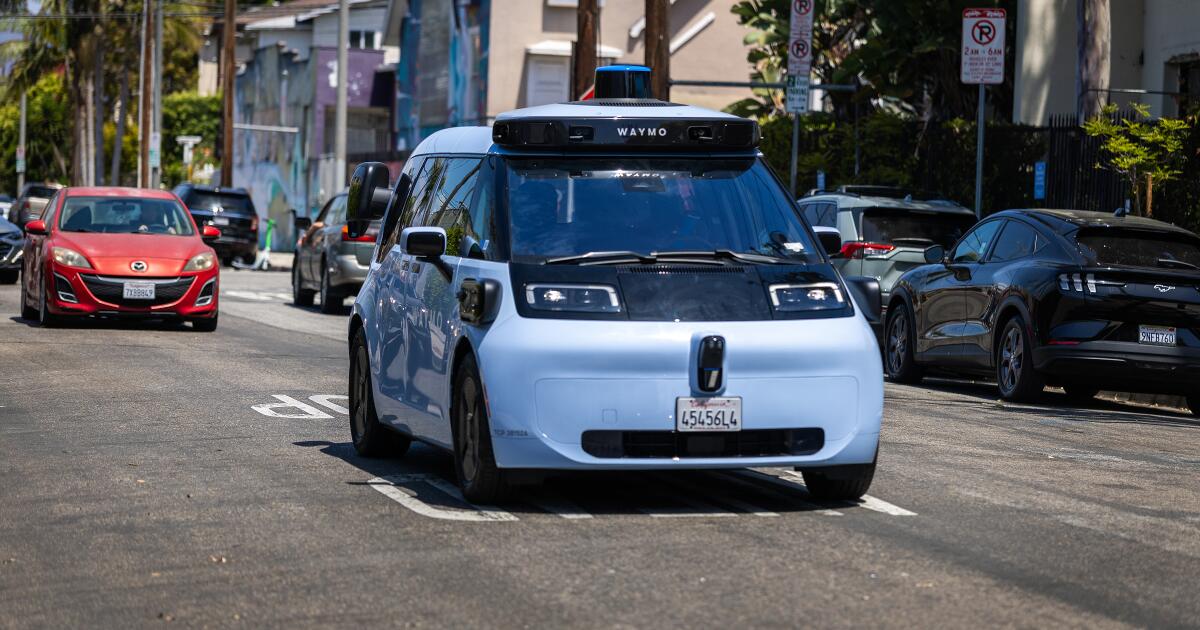
Waymo is starting robotaxi service in San Diego
-
 Entertainment9 minutes ago
‘Children of Blood and Bone’ author won’t see film after feud with star Amandla Stenberg
-
 Lifestyle14 minutes ago
After her son’s death, she found a new purpose. ‘He’s whispering: Mom, this is your path’
-
 Politics21 minutes ago
Iran ceasefire is ‘over,’ Trump says, and orders additional strikes
-
 Science24 minutes ago
Diarrhea-causing cyclosporiasis exceeds 1,000 cases in U.S. What Californians should know
-
 Sports29 minutes ago
Arthur Fery’s fairy-tale Wimbledon run puts British wild card on brink of history
-

 World39 minutes ago
Burnham on course to become next UK PM with backing of 322 Labour MPs
-

 News1 hour ago
Trump fires last members of election commission, inciting fears of midterm ‘chaos’

