CHARLESTON — Other statewide races, such as the race for governor and U.S. Senate, might be getting all of the attention, but Democratic candidates for Board of Public Works seats believe voters need to have choices going into the November election.
Whoever wins the race for governor on Tuesday, Nov. 5, will chair the Board of Public Works, which approves the sale and transfer of state real property, sets the tax assessments for public utility properties that cross multiple counties, approves certain bonds, and establishes levies on property.
The Board of Public Works includes all elected members of the executive branch: the governor, the secretary of state, the state treasurer, the attorney general, and the agriculture commissioner. The Board of Public Works also includes the state superintendent of schools, who is selected by the West Virginia Board of Education.
Advertisement
Until the election of Patrick Morrisey as Attorney General in 2012, the Board of Public Works had been in the hands of elected Democratic officials. With the defeat of former Democratic State Treasurer John Perdue by former Republican lawmaker Riley Moore in 2020, all elected Board of Public Works seats are in GOP hands.
But Democratic Board of Public Works candidates are not dismayed. They see an opportunity going into the November election with three of the current members of the Board of Public Works seeking new offices.
Only Agriculture Commissioner Kent Leonhardt is running for a third term. State Treasurer Moore is running for U.S. House in the 2nd congressional district, but no Democrat filed, leaving the seat wide open for Department of Revenue Secretary Larry Pack. But for the remaining Board of Public Works seats, Democratic candidates want to provide voters an alternative.
FOR THE PEOPLE
Republican J.B. McCuskey, wrapping up his second term as State Auditor, is seeking the attorney’s general’s office. But he has competition in Teresa Toriseva, a Wheeling attorney and the first vice chairwoman of the West Virginia Democratic Party. If elected, Toriseva would be the first woman to be the state’s top attorney.
Advertisement
“I litigate in courtrooms all over the State of West Virginia and I have litigated in courtrooms all over the country, and I can tell you the formidable forces in the courtroom are also women,” Toriseva said. “We’re missing out as a state because we don’t have women at the top of the ticket.”
Toriseva, a native of Cameron and a graduate of Wheeling Jesuit University and the West Virginia University College of Law, has more than 30 years of legal experience and has her own law firm, Toriseva Law.
Most recently, Toriseva took on the case to prevent Wetzel County Schools from shutting down Paden City High School, successfully arguing for a preliminary injunction to keep the small community high school open this school year as the case makes its way to the state Supreme Court of Appeals.
“You will always find me standing with people,” Toriseva said. “I am a courtroom lawyer who fights for people’s jobs and their wages. I fight for students. I fight for people and small businesses because the rich and powerful have enough lawyers. And frankly, I see the attorney general’s office as being the same way. We need a lawyer who fights for people. And that’s my promise.”
Toriseva said she will focus on the consumer protection aspect of the Attorney General’s Office, going after bad actors who harm West Virginia residents. That includes increasing the staff, creating field offices, working with taxpayers and businesses to avoid taking civil action, and providing better consumer protection information to the public.
Advertisement
“I would be an active consumer protection attorney,” Toriseva said. “I would build the unit up. I would focus on it and not just in terms of suing, which certainly is a component of it … but there are investigations. There’s consumer outreach and advice. Sometimes there’s just getting involved and being an advocate for the individual, the West Virginian, the small business, and solving the problem without a lawsuit.”
Government transparency is also an issue Toriseva plans to tackle. While the attorney general works as the legal counsel for state departments and agencies, she said she will enforce laws that require agencies to provide publicly available information through the Freedom of Information Act.
“I do think it’s the role of the attorney general to make sure that our government is transparent, so it’s the role of the attorney general to make sure the law is being followed,” Toriseva said. “With regard to open meetings laws or the Freedom of Information Act, all those are what I call the citizens laws, right? We need to make sure we can keep our government honest.”
While much of the litigation of opioid manufacturers and distributors is either over or pending nationally, the Attorney General’s Office has a role in determining how some of those settlement dollars are distributed. Toriseva criticized current Attorney General Patrick Morrisey for not working harder to advocate for more of a share of opioid settlement monies for West Virginia.
Toriseva said she would like to ensure monies are used for substance use treatment and recovery. She would also like to see monies used for local health care infrastructure, EMS and first responders who have saved the lives of overdose victims and have been at the frontlines of the opioid crisis.
Advertisement
“I think the job is very, very important, and I think the attorney general is one of the leaders in the state that can lead us forward nationally out of this dark gloom that we’re in and being last,” Toriseva said. “We need leaders that have bright ideas that fight hard for us, that are vocal and strong, but also kind. That’s really what I’m trying to bring to the table as attorney general.”
“AUDIT THE STATE”
Mary Ann Claytor is a 22-year veteran of the State Auditor’s Office who worked with long-time Democratic State Auditor Glen Gainer. J.B. McCuskey succeeded Gainer as auditor after Gainer declined to run for reelection. With no incumbent to run against, McCuskey defeated Claytor 58% to 35% in 2016. In 2020, Claytor challenged McCuskey again, losing 67% to 33%.
With McCuskey not seeking reelection to a third term, the seat is wide open with Claytor facing Republican Kanawha County state Senator Mark Hunt.
Claytor acknowledged her two prior losses in attempting to seek the office, but she said her husband encouraged her to try one more time. While she maintains a friendly relationship with McCuskey, Claytor said there are still more things she would like to see improved in the State Auditor’s Office.
Advertisement
“I don’t know if I would have run again, but since it was open seat, I did say ‘come on Mary Ann, you know this stuff needs to be fixed,’” Claytor said. “We need to actually set a precedent and set a standard … We have this opportunity to see what the full potential of the Auditor’s Office could be.”
Since working in the State Auditor’s Office, Claytor started her own governmental accounting firm. She has an accounting degree from West Virginia State University in Institute and most of her responsibilities during her time in the State Auditor’s office were in financial and compliance audits of city and county governments.
The State Auditor’s Office has many responsibilities, but its main role involves performing financial and compliance audits of county and city governments, serving as the chief inspector and supervisor of public offices. Clayton is running under the motto “Audit the State,” with a platform to modernize and streamline the auditing of local governments and provide assistance rather than punishment.
“It’s about accountability,” Claytor said. “It’s about fairness, it’s about making sure that we’re being more proactive and making sure the audits are caught up. It’s about being more technology driven so that we can do things efficiently and effectively.”
Claytor wants to continue to improve on efforts by the State Auditor’s Office to enhance public transparency and accountability by improving the quality of the data coming into WV Checkbook, the state spending transparency portal.
Advertisement
“That information can be manipulated before it gets dumped into the system, so the dump is only as good as the information that’s put in,” Claytor said. “I would prefer to be able to see – as far as the local government and as far as on the state side – the information that comes from the raw data that is from the system that produced it … My dream is that when I would go in there and click, I would be able to see the invoice.”
Claytor would also like to broaden the state’s authority to track grants and other forms of state and local tax dollars made to non-profit entities to be allowed to provide guidance on those expenditures.
“I would like to make sure in the grants that the state passes down to these different entities that there are checks and balances, that they are getting their audits, that we are training and giving them the guidance on how they can spend these grants,” Claytor said. “We want to make sure they are keeping records. That’s the role I would like to expand.”
ROCK THE VOTE
While Mac Warner is serving out the final months of his second term as Secretary of State after failing to secure the GOP nomination for governor in May, his brother – Economic Development Authority Executive Director Kris Warner – won in a four-way GOP primary for the office that serves as the enforcer of election law and the state’s business registrar.
Advertisement
But Kris Warner has a Democratic challenger in South Charleston attorney Thornton Cooper. And while Kris Warner’s last name carried him through a tough primary, Cooper said it was important to him to have a Democratic name on the ballot. Cooper’s focus will be improving elections.
“The most important reason why the Secretary of State’s office should be independent is it’s in charge of elections,” Cooper said. “That’s what I think is the most important. It doesn’t mean all the other stuff isn’t important too.”
Cooper has long been active in state Democratic Party politics. A former state employee with 29 years of experience in the Public Service Commission, the Human Rights Commission, and the Division of Highways, he retired in 2005.
In his private law practice, Cooper has intervened and argued cases before the state Supreme Court on matters involving amending the state Constitution, gubernatorial succession, and other matters. He is most known for his active involvement in the redistricting process that occurs every 10 years and advocating for single-member House of Delegates districts.
Cooper said his independence and his willingness to speak his mind, even to fellow Democrats, sets him apart and makes him a good candidate to represent the public.
Advertisement
“Everybody who knows me, whether Democrats or Republicans, knows I am very independent. Nobody bosses me around,” Cooper said. “I do what I think’s right. And I think it’s important to have somebody who’s vocal. If I see something going wrong as a member of the Board of Public Works, I will bring it to people’s attention.”
If elected secretary of state, Cooper’s focus will be making it easier for residents to vote, including being able to vote by mail without an excuse currently required in order to receive an absentee ballot and allow counties to have multiple locations for early voting similar to Kanawha County, but only if they chose to do so.
“I prefer to vote-by-mail because … if I get that ballot sent to me in a year that we’re in a quadrennial year during a primary … I’m going to talk to some people, call some people up and say, ‘do you know either of these people,’” Cooper said. “If the person said that’s a terrible person, then I’ll vote for the other person. If they said it’s good person, at least that’s better than just going in (the voting booth) blind, which is what we do.”
Cooper also wants to expand upon efforts to allow overseas voters and military personnel to vote in state elections, add protections in State Code to discourage intimidation and harassment of poll workers, and give employees of the Secretary of State’s Office protections similar to federal Civil Service workers. Cooper cited the firing of several office employees in 2017 by Mac Warner, with those cases being settled later.
“That would never happen if you had Civil Service protections,” Cooper said. “I don’t care if everybody in the Secretary of State’s office voted for Kris Warner, I would not fire anybody. The only things I would look at are whether you are competent. Are you honest? Do you show up to work on time? Do you do your job? Are you truthful to me? Those are things I would look at.”
Advertisement
PLANTING THE SEED
Leonhardt is running for his third and final term as the state’s agriculture commissioner in the middle of one of the worst droughts in state history. But Tucker County farmer Deborah Stiles decided to throw her hat into the ring.
“When I saw the team that we were assembling, it made sense to jump in,” Stiles said. “So, I said, ‘well, if you haven’t found anybody else, I’ll run,’ and that was the case. There was this opportunity, so here I am.”
A retired educator and agricultural policy researcher at Dalhousie University in Nova Scotia, Stiles has an undergraduate degree from Marshall University and a master’s and doctorate from the University of Maine. She returned to her West Virginia roots in 2021 to work on her 70-acre Tucker County farm purchased from her father in 2003.
“When I came back after retiring, I discovered that things had changed quite a bit in terms of how things were running,” Stiles said. “There appear to be changes in how things were done since the last time I was actively farming in the State of West Virginia.”
Advertisement
Stiles said one of her top issues is working on easing regulations on small and larger farm operations in the state in order to allow farmers to make more of a profit.
“Looking at the regulatory and policy framework … and in looking at what is currently structured in West Virginia, it appears that we have a lot of tidying up to do,” Stiles said. “What I’m hearing from folks from various farming entities and individual farmers is that things are just a little too clunky. That’s not a very professional way to put it, but it’s just there’s still a lot of red tape.”
Stiles said a thorough review of farming and agriculture regulations and policies is needed to see what is hindering the industry in the state while also ensuring that safety is not sacrificed. A second issue for Stiles is food insecurity and making farming more profitable. While she acknowledged that Leonhardt has made some improvements, Stiles said more needs to be done.
“I will praise our current commissioner for some of the work that he’s done. But I think the approach has been slightly flawed and (the office) also needs to focus on the two pieces of the puzzle, which is food insecurity and local food access; and farmer profitability, which is basically access to markets and developing markets at the local, state, and regional level.”
While Stiles would love for voters to make her the next commissioner of agriculture, she encouraged voters to consider giving all the Democratic Board of Public Works candidates – from Steve Williams down the ballot – an opportunity to serve.
Advertisement
“We are a team,” Stiles said. “We talk about different issues, and I think together … we can sit down and figure out something if we feel that it’s for the good of the people. That’s why I think the current administration has a really good road show with a dog, but it’s not truly governing in my opinion.”
CHARLESTON, W.Va (WCHS) — As the conversation around two large transmission lines being built through parts West Virginia continues, the biggest question remaining is, will ratepayers be impacted?
The Valley North project is on the table and it would span from Putnam County to Frederick County, Maryland, totaling to 260 miles. Two new substations would also be built, one in Hardy County and the other in Frederick County Maryland.
According to the project website, these lines would strengthen the grid to deliver more reliable and affordable electricity to homes, hospitals, schools and businesses.
Energy Efficent West Virginia policy director, Emmett Pepper said, building these lines will not strengthen the power that we get at home.
Advertisement
“We have some of the least reliable electricity in the country here in West Virginia. That’s not because of the large transmission lines that we see their tower above us. It’s because of the local distribution lines, the ones that come close to our homes. While there can be some small amount of benefit potentially from the big transmission lines going in, it is the local lines that are the problem and that is not being addressed by this,” he said.
Lawmakers we spoke with earlier this month said between both transmission line projects, West Virginia could have to front the bill for anywhere between $440 million to $900 million.
“This is going to be more cost for rate payers and will not fix our problems here. There are other places in the region that have issues with transmission, but that’s not our issue,” Pepper said.
He said he’d like to see state leaders take action to ensure these costs don’t fall back on ratepayers.
“I think we need to have a rate payers’ bill of rights that would actually protect people and have a plan for how we’re going to deal with this so that it has less of an impact on rate payers,” he said.
Advertisement
Multiple open houses are scheduled for this project in West Virginia:
-Berkeley County, WV: July 7, 2026 | 4:00 – 7:30 p.m. Holiday Inn Martinsburg Foxcroft Ballroom
– Hampshire County, WV: July 8, 2026 | 4:00 – 7:30 p.m Bottling Works Event Center
– Tucker County, WV:July 8, 2026 | 4:00 – 7:30 p.m.Tucker County High School
– Hardy County, WV: July 9, 2026 | 4:00 – 7:30 p.m. Misty Mountain Event Barn
Advertisement
– Barbour County, WV: July 15, 2026 | 4:00 – 7:30 p.m. Philippi Middle School
– Lewis County, WV: July 16, 2026 | 4:00 – 7:30 p.m. Robert L. Bland Middle School
– Upshur County, WV: July 16, 2026 | 4:00 – 7:30 p.m. The Event Center at Brushy Fork
– Harrison County, WV: July 21, 2026 | 4:00 – 7:30 p.m. South Harrison High School
– Preston County, WV: July 21, 2026 | 4:00 – 7:30 p.m. Craig Civic Center
Advertisement
– Calhoun County, WV: July 22, 2026 | 4:00 – 7:30 p.m. Calhoun County Middle-High School
– Gilmer County, WV: July 22, 2026 | 4:00 – 7:30 p.m. Glenville State University Waco Center
– Braxton County, WV: July 23, 2026 | 4:00 – 7:30 p.m. Days Inn Flatwood Conference Center
– Grant County, WV: July 23, 2026 | 4:00 – 7:30 p.m. Landes Arts Center
– Kanawha County, WV: July 28, 2026 | 4:00 – 7:30 p.m. Sissonville Middle School
Advertisement
– Roane County, WV: July 28, 2026 | 4:00 – 7:30 p.m. Spencer Armory
– Jackson County, WV: July 29, 2026 | 4:00 – 7:30 p.m. Greene Center
– Putnam County, WV: July 29, 2026 | 4:00 – 7:30 p.m. Poca High School
The grim discovery was made on the morning of June 14 on Cabin Creek Road in Kanawha County. PHOTO: WCHS TV
CHARLESTON, W.Va. — A Putnam County man has been identified as the victim in a homicide from two weeks ago.
The Kanawha County Sheriff’s Office announced Tuesday afternoon that the victim was Joseph Lovett, 28, of Hurricane. Human remains were discovered near a burning vehicle in the 300 block of Cabin Creek Road on June 14. Those remains were sent to the Office of the Chief Medical Examiner to be identified.
Advertisement
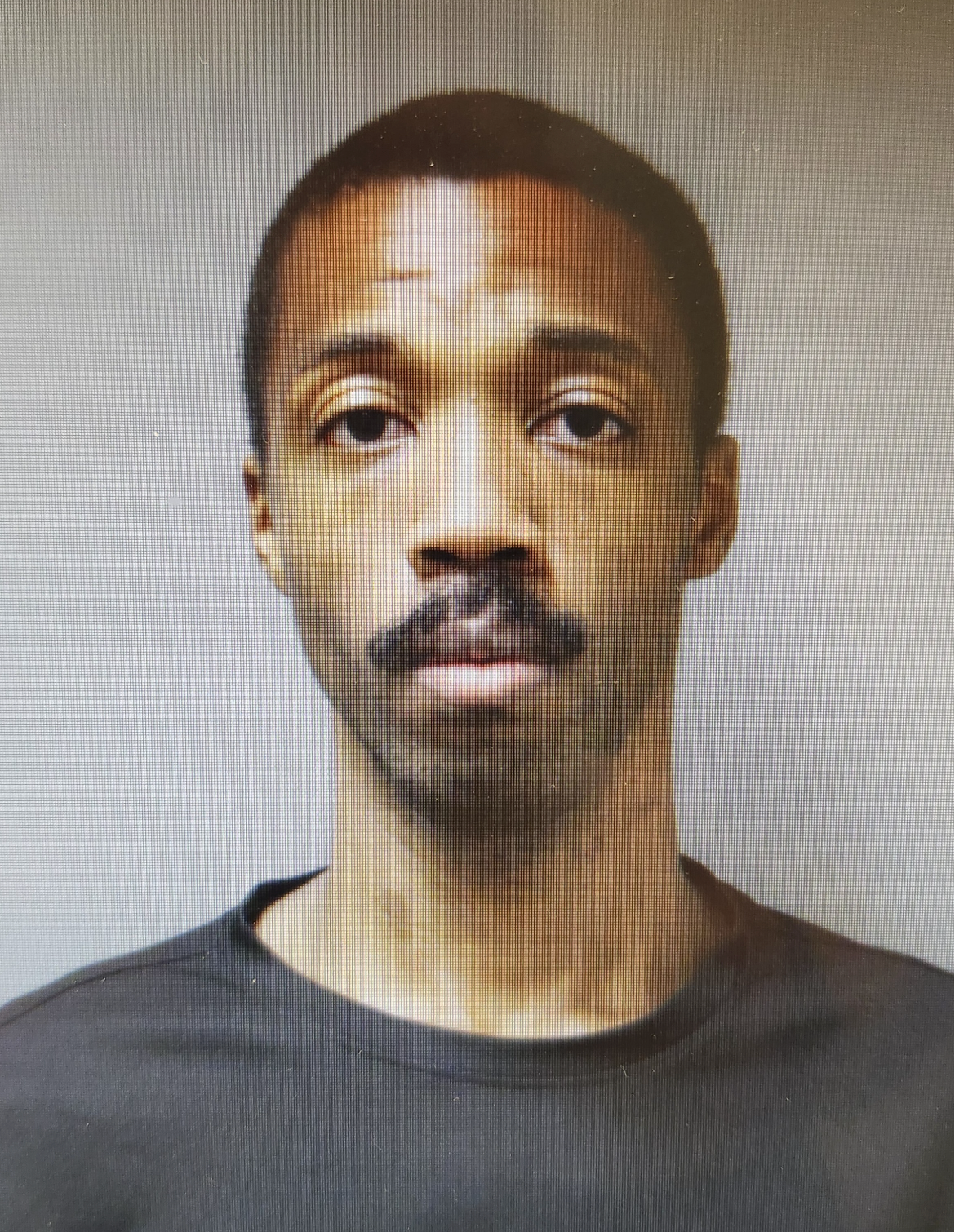
Harold Patterson
A man was already in custody in connection to Lovett’s death. A coordinated law enforcement effort from Kanawha and Putnam counties, in addition to North Carolina authorities, led to the arrest of Harold Patterson, 27, of Laurinburg, North Carolina, on June 16.
Patterson was charged with first-degree murder.
He’s being held in the Scotland County Detention Center in North Carolina, pending extradition back to West Virginia.
The Kanawha County Sheriff’s Office said the investigation is ongoing.
by Jasmine Milbourne, Mountain State Spotlight June 30, 2026
HUNDRED, W.Va, — Every day, Austin Hayes drives with his mom through the mountains of West Virginia’s northern corridor heading east to school. A once proud Hundred High School Hornet, Hayes is now an incoming junior at North Marion High School in Farmington.
After the consolidation of his high school in Wetzel County, Hayes decided to attend school in another county. His commute is about 20 minutes, but that’s only a fifth of the time some of his former classmates travel to their new school, Valley High.
“There’s a lot of kids that have to sit on the bus, that was the main complaint,” he said. “The bus times.”
Advertisement
In November 2024, the Wetzel County Board of Education voted to consolidate four of the county’s high schools into two. Students at Paden City High School would go to Magnolia High School and those at Hundred High School would go to Valley High School. By 2029, all students would go to one school.
Students in Wetzel County are hardly alone. Across West Virginia, public schools are rapidly closing. Political leaders are cutting taxes and funneling hundreds of millions of taxpayer money into a school voucher program, while wringing their hands about local school financial struggles.
Meanwhile students, parents and community members in Wetzel County want change. They’d like elected officials and bureaucrats to listen more to the people, fix the school funding formula and try to protect other communities from losing their schools.
Before the Wetzel County school board voted to consolidate, board members held public meetings at multiple schools in the county to hear the community’s concerns.
Hayes, then a student at Hundred High School, joined the teachers, staff and other community members who came out. He participated in football, basketball and track.
Advertisement
Austin Hayes, began attending school in Marion county after his previous school, Hundred High, in Wetzel County, consolidated with Valley High at the end of the 2024 – 2025 school year. Courtesy Photo
“A lot of Hundred students that go to Valley now, sit on the bus for at least an hour every day, just going one way, and it’s just unfeasible for a lot of Hundred students to have the same opportunities for after-school sports and stuff,” he said.
A mother of three, Abby Tennant’s youngest child attended Paden City High School before it shut down. “I loved Paden City,” Tennant said. “Everybody knew my daughter, they knew what was going on with her. She needed help. It was freely given.”
Tennant went to multiple board meetings, asking questions and raising concerns about what this would mean for the students. After the consolidation decision, she opted to put her daughter in school in another county.
Wetzel County school board member Jimmy Glasscock was the only member to vote against both consolidations. He said he was disappointed that the board didn’t listen to the voters in the county.
“We’ve lost our students, we’ve lost our communities, we’ve lost our teachers, we’ve lost our service personnel, we just continue losing, and we will continue losing,” he said.
Advertisement
Following the county school board’s vote to consolidate, the West Virginia Board of Education met and voted to approve the consolidation.
“I went to the state board meeting and spoke out against it as well, and honestly, that disappointed me just as much,” Hayes said. He said that neither the county nor the state school boards had adequately addressed concerns the community shared.
Since attending North Marion, Hayes doesn’t participate in as many extracurriculars or sports.
In this year’s legislative session, Sen. Jay Taylor, R-Taylor, sponsored a bill that would have required a county vote before closing schools. Although Taylor is a member of the Senate Education Committee, he said he doesn’t know why the bill didn’t come up for a vote.
“I wanted to protect rural schools,” Taylor said. He believes more money should be going to the students and that part of that change is fixing the funding formula.
Advertisement
School funding formula ‘outdated and convoluted’
Schools around West Virginia are hemorrhaging enrollment. State school board President Paul Hardesty warned in January that financial hardship and closures they were seeing in Hancock County were only the beginning. This month, he said up to 20 schools could close in the coming year.
Since 2019, 70 public schools have closed and over 30,000 students have left the West Virginia public school system. In the last year, Wetzel County Public Schools have lost over 150 students, dipping below 2,000 students in the county.
At the beginning of this year’s legislative session, House legislators heard from consultants they had hired to study the state’s public education system. The consultants told them they needed to rework the state’s school funding formula and cap the Hope Scholarship. Lawmakers made no changes to either.
Wetzel County is the biggest producer of oil and gas in the state, but the drilling boom hasn’t brought the prosperity that advocates predicted, as the school funding formula bases pay for teachers on enrollment. And the county’s enrollment doesn’t support the number of teachers on the payroll.
Del. Bill Bell, a fifth-grade teacher in Wetzel County, said, “The formula itself is outdated and convoluted.”
Advertisement
Bell campaigned during the Republican primary on strengthening public schools and ensuring that teachers and service personnel were compensated competitively. He lost.
Sen. Charles Clements, R-Wetzel, served as the vice chair of the Senate Education Committee. He sponsored a bill this year that would have updated the school aid formula mandating funding for 1,200 students per county even if enrollment falls below that. The education committee never put the bill on the agenda.
“We have a constitutional obligation to provide an education to the students in West Virginia,” Clements said. He is not running for reelection.
Clements’ bill was among several proposed changes to the formula. Other proposals included one by Del. Joe Ellington, R-Mercer, that would have created a block grant for all counties and a supplemental account for special needs students. Ellington introduced the legislation in February, and the clock ran out on the session while lawmakers were still talking about it. He did not respond to repeated requests for comment.
Beyond the classroom
Jessup Higgins, a 2026 graduate of Magnolia High School, is hoping to go to community college for electrical work. He was originally a student at Paden City before it closed.
Advertisement
“It was definitely a nerve-wracking transfer to Magnolia, because I didn’t know anybody there, and I had no idea what it was going to be like, because it’s probably three times the [size] school that I went to,” Higgins said.
He attended the Wetzel County Technical Education Center during his high school career. He said that aside from his family, he doesn’t plan to stay in Wetzel to explore other opportunities.
“[I’d] like to leave my hometown and go, you know, see what the world has to offer,” Higgins said. “And also, there isn’t a whole lot of money around here.”
Lisa Stillion, a retired nurse who taught in both Wetzel and Ohio counties believes the state needs to invest in broadband, infrastructure and technical education programs to keep its students.
“Our state just keeps losing people, and there’s nothing you can do to replace them, because the industry is just not here,” she said.
Advertisement
The Paden City High School building now houses a few small businesses.
In November 2025, the Wetzel County school board purchased land in Porters Falls to build a new campus that will include a new career and technical center. Part of pulling their resources together is making sure they have qualified teachers including those for technical education.
“I think these kids need to be better prepared for what’s going to be their career and their way of supporting themselves as they graduate,” Stillion said. “Not every kid’s going to college, and that mindset needs to be looked at.”
Born and raised in Paden City, Rodney McWilliams is a 1984 graduate of Paden City High School. He is a distinguished alumni award winner. McWilliams believes part of keeping people in the communities is making sure their schools stay open and investing in their students.
He said there aren’t many business or work opportunities in Paden City that would make people stay in the community otherwise. McWilliams is the president of the Paden City Foundation, a philanthropic organization that gives scholarships to Paden City High School alumni and supports various civic projects around the city.
He opposed the decision to consolidate the schools because he said the school was the main hub of the town.
“My interest is basically sentimental for myself and for people that hold the school near and dear, historical reasons,” he said. “And, also, to keep the town on the map.”
Advertisement
This <a target=”_blank” href=”https://mountainstatespotlight.org/2026/06/30/school-closures-impact-communities/”>article</a> first appeared on <a target=”_blank” href=”https://mountainstatespotlight.org”>Mountain State Spotlight</a> and is republished here under a <a target=”_blank” href=”https://creativecommons.org/licenses/by-nd/4.0/”>Creative Commons Attribution-NoDerivatives 4.0 International License</a>.<img src=”https://i0.wp.com/mountainstatespotlight.org/wp-content/uploads/2020/09/cropped-MountainStateSpotlight-Icon.png?resize=150%2C150&ssl=1″ style=”width:1em;height:1em;margin-left:10px;”>