Politics
Trump Was Flattering, Xi Was Resolute. The Difference Spoke Volumes.


For President Trump, the first day of his visit to Beijing was all about the personal relationship between him and Xi Jinping, the Chinese leader.
“You’re a great leader,” he told his host, whom he has often said he admires for his “powerful” control over a nation of 1.4 billion people. “I say it to everybody.”
Mr. Xi, unsurprisingly, spent little time on flattery. Once the 21-gun salute and precision-marching by units of the People’s Liberation Army were finished, the disciplined Chinese leader plunged right away into setting boundaries for the two country’s relations. The red line was Taiwan, he said, making it abundantly clear that Mr. Trump’s effort at rapprochement could crash on takeoff if he interferes with China’s long-term effort to take control of the self-governing island.
“The U.S. must handle the Taiwan issue with utmost caution,” he said according to a readout from Xinhua, China’s official news agency. The warning came just minutes into his public remarks in the Great Hall of the People, the center of power for the People’s Republic starting just a decade into Mao’s revolution. For Mr. Xi, it was all about setting boundaries, from the start.
The moment seemed to capture the new equilibrium between the two adversaries. Mr. Xi arrived highly scripted, leaving no doubt that for all of China’s problems — deflation, depopulation, the bursting of the real estate bubble — the moment when China acts as a peer superpower had arrived.
At every turn, at least has he began his two-day trip to China, Mr. Trump sounded conciliatory, the exact opposite of his portrayals of China in public appearances back home, where during his presidential campaigns he has talked about the country as a job-stealer and national security threat. Mr. Xi, while smiling and welcoming to Mr. Trump, was quietly more confrontational — especially on Taiwan, where he delivered an unequivocal warning.
The gap spoke directly to the new level of confidence and authority Mr. Xi has adapted in his public speech, despite his challenges with the domestic economy, as he watches the United States plunge into conflict with Iran, another Middle East confrontation with no easy exit.
The Chinese president designed the day meticulously, down to a visit to the Temple of Heaven, the Ming dynasty complex not far from the Forbidden City. As Mr. Trump sat in the 13th-century wonder, he got a history lesson from the Chinese leader, tailored to echo the modern era.
At his toast at a televised State Banquet on Thursday night, Mr. Trump came with a lesson of his own, describing links between China and the United States that went back to the Empress of China, the ship that took a 14-month journey in 1783 to open trade and bring the first American diplomats to what was then known as Canton, now called Guangzhou.
“We’ve gotten along when there were difficulties, we worked it out,” Mr. Trump said. But even then he cast relations in personal terms, making clear that the huge divisions between the two countries had to be solved by two strong leaders.
“I would call you, and you would call me whenever we had a problem, people don’t know, whenever we had a problem,” he said. “We worked that out very quickly, and we’re going to have a fantastic future together.”
For his part, Mr. Xi returned to his mantra: to keep from turning competition into conflict, the two nations must keep from falling into the “Thucydides Trap.”
(The trap, popularized by the Harvard professor Graham Allison in his book “Destined for War: Can America and China Escape the Thucydides’s Trap,” comes when a rising power challenges a status-quo power, often leading to war. “It was the rise of Athens and the fear that rise engendered in Sparta,” the ancient Greek historian Thucydides wrote, “that made war inevitable”.)
Mr. Xi proposed a familiar solution: ban talk of competition between the No. 1 and No. 2 economic superpowers — a regular staple of the Biden White House — and focus on “stability,’’ a governing characteristic rarely associated with Mr. Trump.
“The common interests between China and the United State outweigh our differences,” Mr. Xi said, according to state media. “Stability in China-U.S. relations is a boon to the world.”
But unlike Mr. Trump, he explored the alternative scenario.
“If handled poorly, the two countries will collide or even clash, putting the entire U.S.-China relationship in an extremely dangerous situation,” he said, a clear reference to Taiwan, according to the readout.
If much of this sounds familiar, it was. Mr. Xi has go-to homilies, part of his philosopher-king approach to ruling over China. And in this summit he invented one new one: He said he agreed with Mr. Trump on “a new vision of building a constructive China-US relationship of strategic stability.”
As Rush Doshi, a China scholar at Georgetown University noted, that sounded like an effort “to lock in a ‘truce’ favorable to them, and they want to do so beyond Trump, with this post-trade war détente setting the base line.”
Future disputes over China’s excess manufacturing capacity or rebuilding American military capability in the Indo-Pacific could be declared “a violation of this frame,” he wrote on X.
The contrast with Mr. Trump’s style — where summits are first and foremost for instant “deals,’’ usually ones he can boast will provide jobs or sales — is often jarring. Mr. Trump, for example, brought a group of business executives, whose presence he said was intended to show “respect” for China while seeking market access.
It had a 1990s ring to it, the days when Bill Clinton and George W. Bush brought business leaders to explore the promise of the Chinese market, often for the first time. But Mr. Trump’s delegation came with decades of experience, much of it bitter. Some of them were survivors of the battles over intellectual property theft and sharp restrictions intended to favor local Chinese industry.
Mr. Xi did not bring an equivalent group. There were no executives from BYD, the huge Chinese carmaker trying to figure out how to do business in the United States, or DeepSeek, the innovative artificial intelligence firm at the heart of the battle with A.I. firms in the United States.
There were other discordant notes, heard just beneath the noise of the clinking glasses and optimistic toasts. In contrast to the Chinese readout, the American account, released by the White House, talked about cracking down on fentanyl precursors, a long-running issue with China, and buying American agricultural goods. It did not mention Taiwan, or China’s restrictions on rare earths, or its rapid nuclear weapons buildup.
The White House also described the United States and China as aligned on the need to reopen the Strait of Hormuz, and keep it free of Iranian tolls. All that was true, but ignored the deeper complication: despite American entreaties, China is unlikely to deploy whatever influence it has with the Iranians for free. What the price might be is unclear.
The real test of how these two men debate their differences might come on Friday morning, when Mr. Trump is scheduled for much smaller meetings with Mr. Xi. It is the kind of session he likes best: leader to leader. And once he leaves Chinese airspace, he seems likely to present his preferred version of those talks.
The Chinese government will likely be more circumspect.



Politics
Biden special counsel’s ‘runaway train’ scooped up sensitive lawmaker info: ‘Abuse of power’

NEWYou can now listen to Fox News articles!
Former special counsel Jack Smith’s investigation into President Donald Trump swept up text messages from nearly 50 members of Congress, bypassing a required review process in what one victim alleged is a direct constitutional violation.
Senate Judiciary Committee Chairman Charles Grassley, R-Iowa, said the situation is more proof Smith’s probe was a “runaway train” of abuses of power, and the elder statesman and Senate Investigations Subcommittee Chairman Ron Johnson, R-Wis., jointly released their filings Tuesday evening.
Grassley and Johnson’s findings were from a full-scale probe of Operation Arctic Frost, the code name for Smith’s endeavor to investigate Trump for alleged corruption and election malfeasance, an operation top Senate Republicans call “worse than Watergate.”
LEGAL WAR ON TRUMP’S AGENDA GAINS FIREPOWER AS FEDERAL LAWYERS DEFECT TO DEMOCRATS
Jack Smith, former U.S. special counsel, arrives for a closed-door deposition before the House Judiciary Committee in Washington, D.C., Dec. 17, 2025. (Getty Images)
Forty-four members of Congress had the contents of their text messages obtained and reviewed by Smith’s team in a way that bypassed protocol. A “filter team” was tasked with reviewing millions of documents in the case and should have had first crack at determining whether such messages were relevant or potentially violated statute or ethics.
Rep. Elise Stefanik, R-N.Y., one of the lawmakers whose texts were swept up in this way, said Tuesday such reviews amounted to clear violations of the Constitution’s speech and debate clause that protects lawmakers from being questioned in “any other place” than the Capitol for legislative acts.
Internal communications have been historically included in that clause in the courts as technology has advanced.
SUPREME COURT JUSTICES HEAD TO CAPITOL HILL FOR FIRST CONGRESSIONAL APPEARANCE SINCE 2019
Stefanik said in a statement that the new records prove Smith’s team “unlawfully and unconstitutionally accessed my private text messages, along with 43 other Members of Congress, in clear violation of the Constitution.”
She said she long suspected there had been “unconstitutional spy[ing] on members of Congress.”
The records were provided by the Trump Justice Department to Grassley and Johnson, which the chairmen said indicated Smith’s team had “circumvented its own filter review process.” The process is additionally meant to protect attorney-client privilege, they said in a statement.
OBAMA-APPOINTED JUDGE TORCHES TRUMP ADMIN IN LATEST COURTROOM SHOWDOWN, REFERS ATTORNEY FOR BAR REVIEW
Former special counsel Jack Smith says the Pledge of Allegiance before he prepares to testify during a hearing before the House Judiciary Committee in the Rayburn House Office Building on Capitol Hill Jan. 22, 2026, in Washington, D.C. (Al Drago/Getty Images)
The news also complicated some of Smith’s prior depositions under oath, including an excerpt in which he answered “no” to a question from a congressional counsel whether records he requested from congresspeople included text messages.
Johnson called the situation a “grotesque example” of Biden-era “weaponization” of the executive branch.
“Jack Smith’s criminal investigation of President Trump was a runaway train that had no brakes,” Grassley added Tuesday.
“Based on the information that’s been produced to me and Senator Johnson, Biden DOJ and FBI investigators apparently ignored their own routine investigative protocols to obtain and review work-related messages from me and dozens of my Republican and Democrat colleagues who were outside the scope of the government’s investigation.”
Grassley added that he hopes Democrats caught up in the otherwise bipartisan text tranche will finally discard their partisanship and recognize the severity of the alleged violations by Smith.
He also indicated he planned to recall Smith before Congress to “hold him accountable.”
Of the 44 members swept up in the text reviews, several were Democrats, including Los Angeles Mayor Karen Bass, Rep. Josh Gottheimer, D-N.J., Sen. Cory Booker, D-N.J., and the top Democrat on the House Armed Services Committee, Rep. Adam Smith of Washington.
Grassley, Johnson and Stefanik were also swept up in the situation, along with top figures like senators Mike Lee, R-Utah; Josh Hawley, R-Mo.; Dan Sullivan, R-Alaska; Rand Paul, R-Ky., former Senate Republican Conference Chairman Lamar Alexander, R-Tenn.; and the late Lindsey Graham, R-S.C.
SIGN UP TO GET THE POLITICS NEWSLETTER
Former House Intelligence Chairman Devin Nunes, R-Calif., was one of the victims, along with current House Judiciary Committee Chairman Jim Jordan, R-Ohio, as well as House Freedom Caucus member Scott Perry of Pennsylvania, EPA Administrator Lee Zeldin of New York, Veterans Affairs Secretary Doug Collins of Georgi, and prominent Trump critic Rep. Thomas Massie of Kentucky.
CLICK HERE TO DOWNLOAD THE FOX NEWS APP
Several lawmakers sounded off on the news soon after Grassley announced his findings, including Hawley, who called for “everyone involved [to] be prosecuted.”
“Joe Biden’s DOJ not only tapped my phone; I just learned they illegally obtained my texts with members of President Trump’s administration,” the Missourian fumed.
Paul called the allegations a “blatant abuse of power and exactly what our Founders warned about,” while citing Smith’s past denial under oath.
Fox News Digital reached out to a representative for Smith for comment.
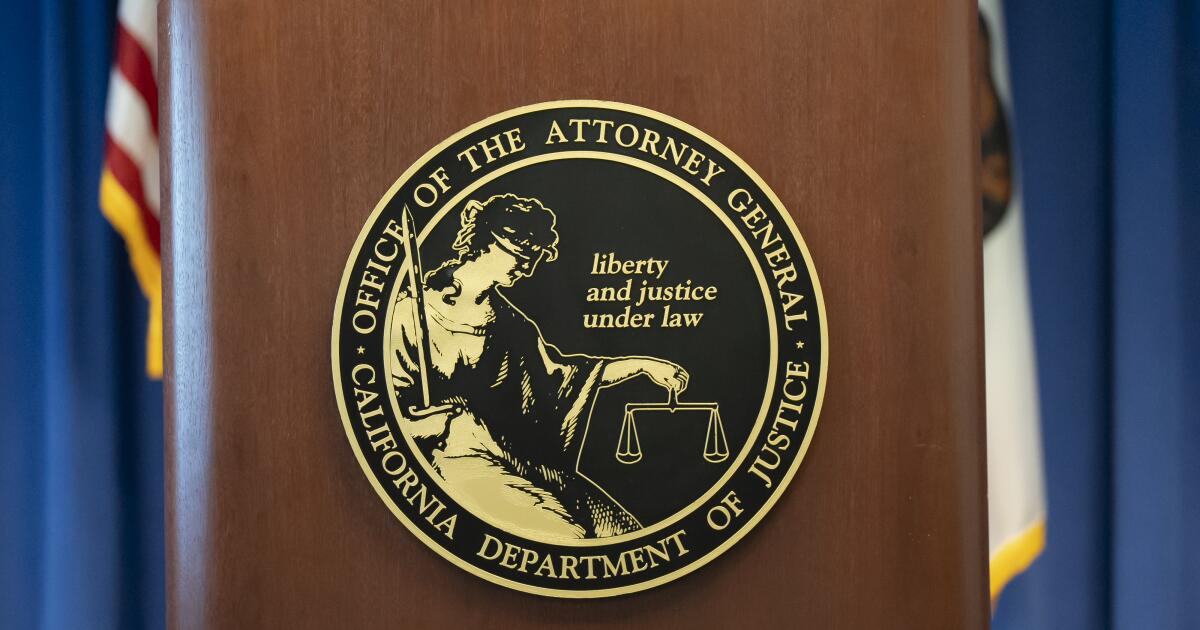
The federal government agreed to temporarily hold off on construction of a planned Immigration and Customs Enforcement facility in Northern California.
The voluntary pause until Sept. 9 comes after the California Atty. Gen. Rob Bonta and Santa Clara County officials sued the Trump administration last month to block the facility from being developed near Gilroy. The lawsuit remains ongoing.
“This pause in the construction, demolition, and development at the site of the challenged ICE facility is a significant step towards protecting our people, our communities, and our environment while the case remains ongoing,” Bonta said in a statement Monday night.
The Department of Homeland Security, which oversees ICE, didn’t immediately reply to a request for comment.
State and local officials believe the facility will be used for short-term detention of up to 150 people at a time, though ICE denied that it would be a detention center.
Community members and advocates for immigrants swiftly opposed the project. ICE has consistently looked to increase its detention capacity in California, where eight detention centers can now hold a combined 9,000 people, though the state has long been a thorn in the agency’s side.
The halt is part of a compromise between both sides involved in the legal action. After the state and county submitted a request for the court to temporarily halt the project, a hearing was set for Oct. 7.
Now, state and federal officials jointly requested that the court move up the hearing by at least a month. The agreement also extends how much time the federal government has to respond.
A federal judge signed off on the agreement Monday night.
The lawsuit, filed in U.S. District Court in San José, alleges that the leased land is zoned exclusively for agricultural use and that the federal government violated laws requiring state and county notification, as well as procedural steps before beginning construction.
Supreme Court justices are asking lawmakers on Capitol Hill to increase their 2027 budget, with most of the additional funding earmarked for security. Ann E. Marimow, a New York Times reporter, explains why the justices say these measures are necessary to protect them from rising threats.
-

 Miami, FL2 minutes ago
Tokyo-style Neapolitan pizza is coming to Miami, led by legendary pizzaiolo chef Bun
-

 Boston, MA8 minutes ago
SEE THE GOOD: Roxbury center reminds young adults ‘You got this’ – Boston News, Weather, Sports | WHDH 7News
-
Denver, CO14 minutes ago
Five Points affordable housing building honors Dr. Justina Ford | Rocky Mountain PBS
-

 Seattle, WA20 minutes ago
Seattle weather: Hot and sunny day Wednesday, highs in the 80s
-

 San Diego, CA26 minutes ago
Gibraltar ushers in a new era as British territory’s border fence with Spain is removed
-

 Milwaukee, WI32 minutes ago
City funding awarded for redevelopment at 2618 N. Milwaukee
-

 Atlanta, GA38 minutes ago
Atlanta hosts its final FIFA World Cup match as tournament’s impact continues to grow
-

 Minneapolis, MN44 minutes ago
Walking All the Streets of Western Northeast Park


