Texas
Where can I watch the College Football Playoff rankings for Texas A&M football?


Mike Elko refutes reports that comments directed at Jimbo Fisher
Texas A&M coach Mike Elko’s postgame comments caught fire on social media. But Elko says they weren’t about Jimbo Fisher or any other coach.
Texas A&M football may have lost on Saturday to South Carolina, but they’re still in the running for one of the 12 spots in the College Football Playoff.
The Aggies are one of five teams in the Southeastern Conference with one conference loss. LSU, Alabama, Georgia and Texas also have one loss, opening the teams to some very complex tiebreaking scenarios.
This Tuesday, the CFP selection committee will release its first edition of the weekly rankings and the first projection of the playoff. Texas A&M is currently ranked 10th in the AP Poll and 11th in the US LBM Coaches Poll, but their recent loss should send them a ways down the standings.
Texas A&M running back Le’Veon Moss suffered an injury to his right leg in the first quarter versus South Carolina, pushing Amari Daniels into the starting role. Texas A&M coach Mike Elko says that Marcel Reed is the “starter now” after the game versus South Carolina, but the redshirt freshman committed multiple turnovers against the Gamecocks.
Texas A&M still has to face New Mexico State, Auburn and Texas. Even with the upcoming projections, there are a lot of different ways this could all play out.
Here’s everything you need to know about the CFP rankings reveal:
How to watch College Football Playoff rankings show
The College Football Playoff rankings show will air on ESPN, with the broadcast starting at 6 p.m. CT on Tuesday, Nov. 5. Fans can also stream the show on Fubo, which is offering a free trial.
College Football Playoff rankings release date
The first rankings will be announced on Nov. 5 A new rankings will be released every Tuesday through Dec. 5.
What time is CFP rankings?
The broadcast will start at 6 p.m. CT on Tuesday.
Texas A&M football CFP rankings projection
Coming into Week 10, ESPN’s CFP Playoff predictor had Texas A&M with a 47% chance to make the playoff, but it hasn’t updated with the recent loss. Those odds fall to less than 40% after the defeat, per pregame projections.
If the Aggies win out and make the SEC title game, ESPN has them as the third-seed with a first-round bye, facing either sixth-seed Georgia or 11th-seed Tennessee.
Losing the title game would give Texas A&M a 67% chance to make the playoff as the 12th-seed. They would face fifth-seed Notre Dame in the first round. If the Aggies lose to the Longhorns in their final game of the season, their odds drop to 13%.
How many teams in College Football Playoff 2024?
There will be 12 participating teams in the College Football Playoff bracket. The teams will consist of the five conference champions ranked highest by the CFP selection committee, and the next seven highest-ranked teams.
How does College Football Playoff format work?
The four highest-ranked conference champions will be seeded one through four and receive a first-round bye. The fifth conference champion will be seeded where it was ranked or at No. 12 if it is outside the top 12 in the CFP rankings. Non-conference champions ranked in the top four will be seeded beginning at No. 5.
Follow the American-Statesman on Facebook and X for more. Your subscription makes work like this possible. Get access to all of our best content with this tremendous offer.



AUSTIN – Texas Attorney General Ken Paxton said Wednesday he has secured a settlement of bankruptcy claims against genetic testing company 23andMe stemming from a 2023 data breach that exposed personal information, including some genetic ancestry data, of 6.9 million customers worldwide.
Paxton’s office said the settlement includes $150 million for a multistate coalition of 42 states. But because of limited funds in 23andMe’s bankruptcy estate and competing claims, the states’ recovery will be $18 million paid immediately, with Texas receiving $1,266,860.
23andMe disclosed in October 2023 that attackers had accessed accounts affecting 6.9 million consumers. Some of the information was later posted for sale on the dark web, according to Paxton’s office, which said the company learned of the breach months after the data became publicly available. The office said 23andMe initially denied a breach and later blamed consumers’ account settings and password practices.
Paxton joined a multistate investigation that concluded 23andMe used unreasonable security practices and failed to implement adequate safeguards against hacking, the office said.
23andMe filed for bankruptcy protection in March 2025. Paxton’s office said the settlement incorporates privacy and cybersecurity requirements, including enhanced security standards, comprehensive risk assessments and creation of an independent advisory board, along with enforcement of state privacy laws and continued consumer data deletion rights.
“Companies that collect and profit from Texans’ most personal information have a legal duty to protect it,” Paxton said in a statement.
The company also agreed to a $46.75 million class-action settlement in the bankruptcy case for affected U.S. consumers who submitted claims by Feb. 17, 2026, Paxton’s office said.
Copyright 2026 by KPRC Click2Houston – All rights reserved.


The Texas Longhorns entered the 2025 season with more expectations than any team has had to deal with in recent memory.
Many among the media were ready to crown the team and quarterback Arch Manning before they even played one game. Of course, those unrealistic expectations were never met, even though the team finished with a 10-3 record and a Citrus Bowl win over the Michigan Wolverines.
2026 is heading in the same direction for the Longhorns. Many believe head coach Steve Sarkisian has the most talented team in the country. But in order to fix the issues from this past season, the Longhorns needed to fix one issue that has cost them in the past.
Changing The Narrative
One of the biggest issues the Longhorns had last season was the play of the offensive line. It was apparent in the first game of the season against the Ohio State Buckeyes that Manning didn’t have the pocket time needed to make big plays.
This offseason, Coach Sarkisian went out and found two massive transfer portal additions that should completely change the narrative on this offensive line.
It starts with potential starting right tackle Melvin Siani. Siani has spent time with the Temple Owls and last season with the Wake Forest Demon Deacons.
The Longhorns are set at left tackle with Trevor Goosby, who could play himself into being a top 10 pick in the 2027 NFL Draft. If the team can get competent play from Siani, the offense will be able to open up the playbook, and the world may finally see Manning at his college peak.
The Longhorns also went out and found a potential fix at left guard for the 2026 season. Western Kentucky Hilltoppers transfer Laurence Seymore could be another strong patch for the holes in the offensive line.
After spending the first two seasons of his college career with the Miami Hurricanes, Seymore made stops with the Akron Zips and the Hilltoppers.
Of course, the one concern with Seymore is wondering if he can compete at the SEC level coming from the C-USA.
This season for the Longhorns starts and stops with the play of Manning. Coach Sarkisian and the rest of this coaching staff understood that protecting their quarterback was the most important goal when building the 2026 roster.
The Longhorns are going to be leaning on veteran talent to protect their quarterback, and it may very well be the best decision they made this offseason.
Sign up to our free newsletter and follow us on Facebook, X and Instagram for the latest news.
Add us as a preferred source on GoogleFollow
-

 Michigan5 minutes ago
University of Michigan’s David C. Miller chosen to succeed Jeff Balser as Vanderbilt Health’s President and CEO and Dean of Vanderbilt University School of Medicine
-

 Massachusetts11 minutes ago
Massachusetts Broadband Institute distributes devices to underserved communities
-

 Minnesota17 minutes ago
Smoke from wildfires in Minnesota and Canada exposes millions to dangerous air quality
-

 Mississippi23 minutes ago
How permanent daylight saving time would impact Mississippi
-
 Missouri29 minutes ago
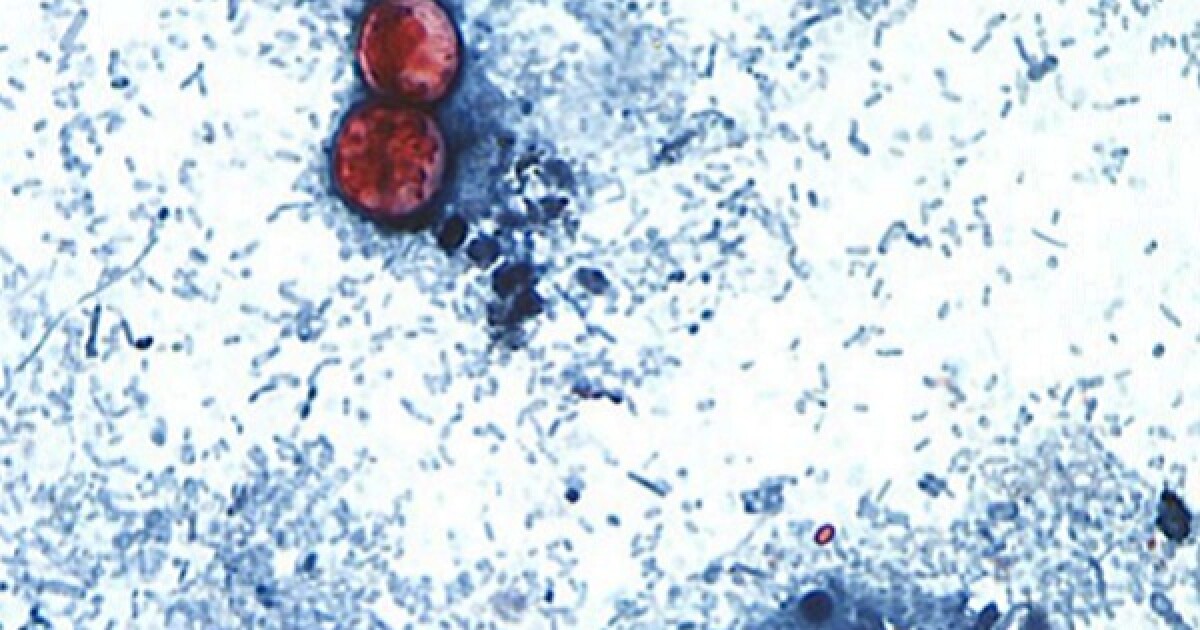
Missouri reports 43 cases of parasitic infection that’s sickened thousands nationwide
-

 Montana35 minutes ago
Governor Gianforte Announces Montana Ranks as Top 10 State for Job Growth
-

 Nebraska41 minutes ago
Roanoke County teen heads to national rodeo finals in Nebraska
-

 Nevada47 minutes ago
Nevada’s modern boomtowns are these fast-growing cities, study said

