Louisiana
As New Orleans cuts costs, Louisiana auditor reviews take-home vehicles: ‘Is it necessary?’


As New Orleans looks to shave costs, the Louisiana Legislative Auditor is probing whether to curb the city’s roughly 2,800-vehicle fleet, including take-home vehicles.
Auditor Mike Waguespack – who is already monitoring the city’s finances, including overtime costs – said Tuesday that he’ll examine whether employees who have take-home cars actually need them and whether the city is selling vehicles it no longer uses.
The city’s fleet was 40% larger at the end of July than it was in 2023, according to data provided to the Times-Picayune last month. At least 935 municipal employees, or roughly 20% of the city’s workforce, drove cars home as of December, costing the city at least $41 million. Most are police officers.
“Is it necessary? Is it a fringe benefit or is it really justified?” Waguespack said on Tuesday.
Waguespack’s moves come after Mayor-elect Helena Moreno in December questioned Mayor LaToya Cantrell’s use of take-home cars and the size of the city’s overall fleet, and as Moreno’s administration is implementing a host of furloughs and layoffs to avoid a $222 million deficit that would have otherwise plagued the new year.
A spokesperson for Moreno said Monday that “it is clear there are efficiencies to be gained and some unnecessary allocation of resources” in the city’s vehicle fleet.
“Reducing unnecessary expenditures is at the top of the Moreno administration’s priorities,” Todd Ragusa said.
A Cantrell spokesperson did not return a request for an interview.
The auditor’s report will be released as one part of a comprehensive review of the city’s fiscal practices requested by State Bond Commission after it agreed to allow the city to sell $125 million in short-term revenue bonds in November. Waguespack will review New Orleans’ finances for fiscal years 2022 through 2025 and make recommendations.
His office will begin issuing reports on various budgetary issues in the next few months, and will issue the full slew of reports by mid-year, he said.
A deep review
New Orleans has had to contend with state intervention ever since the city discovered a $160 million deficit last year, caused by a failure to account for police overtime, ignored warnings about overspending, and too-rosy revenue projections.
Waguespack weekly approves the city’s drawdowns from the $125 million pool the State Bond Commission authorized last year, so that the city could make payroll for 5,000 employees.
He is also looking into the city’s policies and practices governing overtime spending, another area Moreno has said her administration will take measures to control after she takes office on Jan. 12.
Now, his audit of city vehicles — his first deep-dive into that issue — will examine the condition of municipal vehicles, their maintenance and insurance records. It will also examine the city’s vehicle policies, including who gets to take home a car, Waguespack said.
Waguespack on Tuesday questioned the size of the city’s overall fleet, which includes “pool” vehicles that are not assigned to a particular driver. The city’s total fleet consisted of 2,800 vehicles as of July 30, according to city records provided to the Times-Picayune.
“At first glance it appears that there is an excessive amount of pool cars— some of which are dated in age,” said Waguespack. “It could be an issue of not selling the surplus property.”
Of the fleet, 350 vehicles are pre-2010 models, according to the records. Waguespack said he worries that unnecessary vehicle expenditures — including costs to maintain and insure vehicles past their prime — could be straining the city’s finances.
Increase in fleet
The city did not provide take-home vehicle data for 2020-2024 or total fleet data for 2020-2022 in response to a public records request.
But data it did provide show the overall fleet has increased dramatically in recent years. By the end of 2023, there were 1,970 overall cars, compared to roughly 2,800 in July.
Also in 2023, the New Orleans Police Department rolled out more than 700 new police vehicles as part of a push by then-Interim New Orleans Police Superintendent Michelle Woodfork to give every officer a take-home car to boost recruitment numbers. Of the 935 employees who had take-home cars in December, 832 were NOPD employees.
The city dedicated $26 million of its $388 million in federal pandemic aid to public safety vehicles, according to the city’s American Rescue Plan spending dashboard.
The $41 million the city paid for the take home vehicles in use as of December, per the records, includes only the purchase price of the cars, and not the insurance, maintenance or gas it must also pay.
The size and oversight of the city’s fleet has long been a point of contention.
In 2008, then- Inspector General Robert Cerasoli found that the city was paying $1 million a year for 273 vehicles for public workers, not including purchase costs, and that there had been frequent abuse.
In response, Mayor Mitch Landrieu slashed the number of administrative take-home vehicles to 59, and separately cut the number of cars assigned to public safety employees from 758 in June 2010 to 414.
In 2016, a report by then-Inspector General Ed Quatrevaux found that between 2009 and 2024, the city had no formal fleet management system in place to track how many vehicles the city owned, or how often they were used or repaired.
Mayor’s personal fleet
Moreno highlighted concerns about the city’s take-home car policies in an interview with the Times-Picayune last year.
“We have way too many people with take-home cars that are non-public safety employees,” Moreno said.
Of the 935 employees who have take-home cars in December, 95% had public safety responsibilities.
She also took shots at the mayor’s personal fleet of take-home cars, and said she’d get rid of them. “I don’t know why she needs four.”
Cantrell confirmed at the time that she has three city vehicles – “two large vehicles and one sedan” — which she said were necessary for “safety and protection.” She also fired back that Moreno “doesn’t know what she doesn’t know.”
A list of take-home vehicles provided to the Times-Picayune only lists one vehicle assigned to Cantrell, a 2021 Chevrolet Suburban. It’s unclear why the other two vehicles are not listed.



NEWTON COUNTY, Texas. (KPLC) – A DeRidder man reported missing was found dead in the Sabine River Sunday morning, according to the Newton County Sheriff’s Office.
Newton County Sheriff Colton Havard said Jordan Jamal Allen was located around 7:50 a.m. on July 12 with help from Texas Parks and Wildlife game wardens, the Beauregard Parish Sheriff’s Office, and 409 Search and Rescue.
Authorities say the body was recovered not far from where Allen went under Friday night near the U.S. 190 bridge east of Bon Wier at the Texas-Louisiana state line.
The sheriff said that Allen and a woman were said to be wading across the river Friday when the current began pulling the woman.
The sheriff said Allen tried to help her, but went under around 8:45 p.m. and wasn’t seen again. He said the woman made it back to land safely.
We will have more in this story as it develops.
Copyright 2026 KPLC. All rights reserved.

MONDAY
RED STICK FLY FISHERS PROGRAM: 7 p.m., Bluebonnet Regional Library, 9200 Bluebonnet Blvd., Baton Rouge. Open to the public. Email Brian Roberts: roberts.brian84@gmail.com. Website: rsff.org
WEDNESDAY
FLIES & FLIGHTS: 7-9 p.m, Rally Cap Brewing, 11212 Pennywood Ave., Baton Rouge. Casual fly tying. Open to public. Email Chris Williams: thefatfingeredflytyer@gmail.com
THURSDAY
ACADIANA FLY RODDERS PROGRAM: 6 p.m., Pack and Paddle, 601 E. Pinhook, Lafayette. Open to public. Email Darin Lee: at cbrsandcdc@gmail.com. Website: acadianaflyrodders.org
FRIENDS OF NRA/SOUTHWEST LA BANQUET: 6 p.m., Riverside Bar & Grill, 3748 Louisiana 3059, Lake Charles. Call Brack Cole 337-912-1620. Email: jbcoleair@yahoo.com
ONGOING
STATEWIDE TOURNAMENT & ANGLERS RODEO/S.T.A.R.: Through Sept. 7, Coastal Conservation Association’s summer-long fishing event. Tagged redfish, coastal/offshore species categories & youth division. CCA membership required. Website: ccalouisiana.com/star
LOTTERY HUNTS
DOVE/TEAL: July 27 application deadline for dove hunt on Elbow Slough Wildlife Management Area and teal hunt on White Lake Wetlands Conservation Area. Website applications only on Wildlife & Fisheries/Louisiana Outdoors License, Permits and Tags webpage. Fee $8.50. Details: dove hunt, David Hayden at dhayden@wlf.la.gov; teal hunt, Lance Ardoin at lardoin@wlf.la.gov
AROUND THE CORNER
JULY 21 — LAFAYETTE KAYAK FISHING CLUB MEETING: 6 p.m., Pack and Paddle, 601 E. Pinhook, Lafayette. Call 337-232-5854. Website: lafayettekayakfishing.com
JULY 21-22 — GULF COUNCIL SHRIMP COMMITTEE MEETING: Gulf Council office, 4107 W. Spruce St., Tampa, Florida. In conjunction with Scientific and Statistical committees. Website: gulfcouncil.org
JULY 23 — ACADIANA BUGS & BREWS: 6 p.m., Pack and Paddle, 601 E. Pinhook, Lafayette. Casual fly tying and local beers provided. Open to the public. Email Darin Lee: cbrsandcdc@gmail.com. Website: packpaddle.com
JULY 23-25 — International Grand Isle Tarpon Rodeo, Grand Isle Marina & Otto Candies Pavilion, Grand Isle. Website: tarponrodeo.org
JULY 24-25—BASSMASTER JUNIOR CHAMPIONSHIP: Kentucky Lake, Paris, Tennessee. Website: bassmaster.com
JULY 26 — SOUTH LOUISIANA HIGHPOWER CLUB MATCH: 8:30 a.m., Ascension Parish Sheriff’s Range, St. Landry Road, Gonzales. NRA XTC & F-Class match rifle or service rifle, 200-yard/50-rounds match course. Fee $15 members, $20 nonmembers, $5 juniors. $25 annual club (first match free) and Civilian Marksmanship Program membership (allows purchases from CMP). Call Mike Burke, 337-380-8120. Email: SouthLAHighPower@hotmail.com
FISHING/SHRIMPING
SHRIMP: Spring inshore season closed except for Breton/Chandeleur sounds; all outside waters open.
OPEN RECREATIONAL SEASONS: Private recreational red snapper; gray triggerfish; flounder; lane, blackfin, queen and silk snappers and wenchmen among other snapper species; all groupers except closed for goliath and Nassau groupers in state/federal waters.
CLOSED SEASONS: Greater amberjack; bluefin tuna; gag, goliath and Nassau groupers in state/federal waters. Commercial greater amberjack season closed.
LDWF UPDATES
Closed: Roads on Pomme de Terre, Richard Yancey & Bogue Chitto WMAs (flooding)
Drawdowns: Saline Lake (Natchitoches/Winn parishes through Oct. 5); Iatt Lake (Grant Parish through Oct. 5).
-
 Detroit, MI20 minutes ago
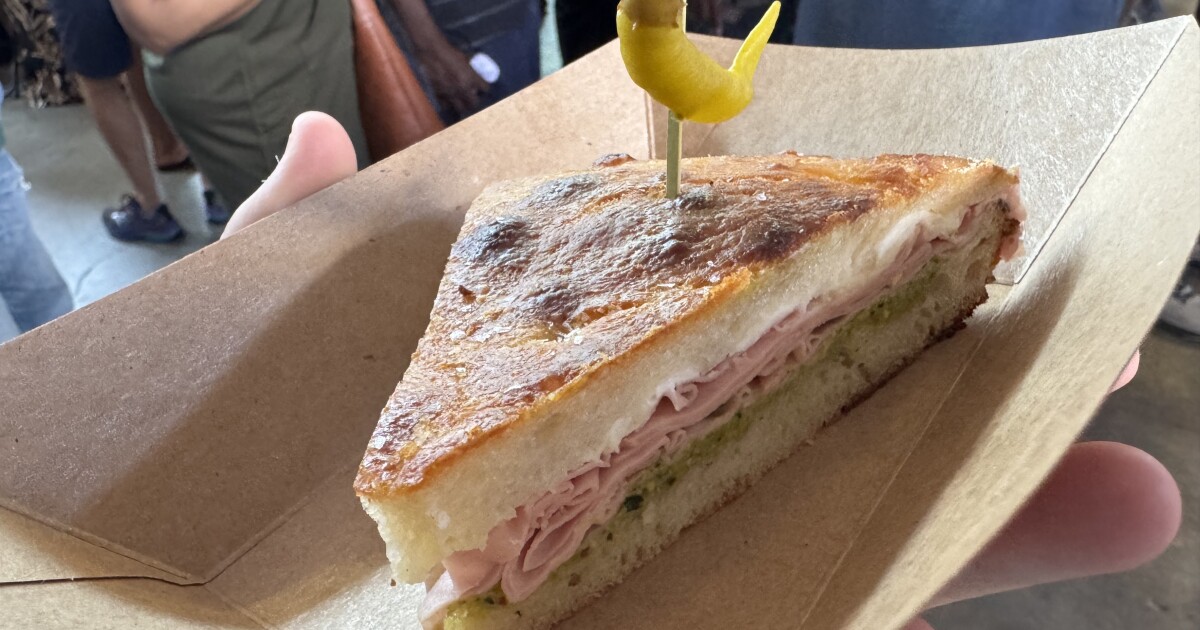
Detroit Sandwich Party returns to Eastern Market on Sept. 6
-

 San Francisco, CA32 minutes ago
A Leak of San Francisco Police Drone Footage Exposes the New Reality of Urban Surveillance
-

 Dallas, TX38 minutes ago
Viral East Dallas coffee shop fears major sales drop amid six-week road closure
-

 Miami, FL44 minutes ago
3 hurt in fire on Lincoln Road that started underground
-

 Boston, MA50 minutes ago
Rideshare driver charged in Logan airport passenger assault to appear in court
-

 Denver, CO56 minutes ago
Denver area events for July 13
-

 Seattle, WA1 hour ago
What could the Seattle Seahawks look like under new owners?
-

 San Diego, CA1 hour ago
Sports Night: Padres End 1st Half on Good Note, Midseason Grades, Manny Heats Up

