Delaware
Delaware education outlines boosts, program cuts – in a $2.5B budget


Delaware educator creates an escape for fellow public school teachers
A Colonial educator was inspired by the loss of a fellow teacher to create the “Zen Den,” a place for all Gunning Bedford educators to decompress.
Delaware’s Department of Education unveiled its first “strategic plan” in a decade on March 3, as lawmakers sifted through its roughly $2.5 billion proposed budget.
That’s about one-third of the state’s draft spending plan, up nearly 4% from last year.
Lawmakers discussed those infusions – from reading support to early education and more – alongside some $22 million in various proposed program cuts, which could include lessened support for the Wilmington Learning Collaborative.
“It’s the first plan the Delaware Department of Education has had in at least a decade,” Secretary Cindy Marten said ahead of her remarks before the Joint Finance Committee. “There’s an opportunity here. This is not another initiative that we’re just going to layer on top of one more thing and one more thing. … We’re building on the capacity that’s already here.”
The department sculpted budget requests around five “building blocks” in this plan:
- Bright beginnings: Expanding early education, with aims to raise early care enrollment from 25% to 40% by September 2028.
- Safe supportive schools: Boosting teacher retention rates, with a goal to raise the three-year retention rate for all early career educators from 72% to 75% by June 2028, alongside reducing chronic absenteeism and more.
- Great teaching and learning: That’s boosting early literacy, improving student achievement, growing graduation rates and college/career readiness. A key benchmark here is boosting third-grade reading proficiency from 38% to 53% by 2028.
- Fair opportunities for every learner: DDOE leaders seek to implement a new public education funding model by August 2027, in step with the Public Education Funding Commission.
- Families and communities as partners: The department intends to launch a family and community portal that enhances transparency and connection to learning tools, support and updates.
For Delaware state test scores, average English proficiency rates across all tested third to eighth graders came in at 41% in 2025, while math reaching 34%. Pre-pandemic 2019 scores remain around 10 points higher in each bucket.
On the Nation’s Report Card, scores released in 2025 revealed eighth grade reading scores had hit a 27-year low.
“It’s been decades where we have let that fall,” said committee Vice Chair Rep. Kim Williams, as statistics joined the budget hearing backdrop. “It took us decades to get where we’re at today. It’s going to take us some time to pull ourselves out.”
Literacy and Delaware’s youngest learners
The plan should sound pretty familiar.
Delaware’s “literacy emergency” has been an ongoing call from the Meyer administration. For Marten, a fixture benchmark is that third grade reading proficiency growing from 38% to 53% by 2028.
Alongside some $97.4 million proposed for state personnel cost, the department may also see one-time infusions of $8 million to maintain support for the “Literacy Emergency Fund” and $3 million in direct-to-teacher grants to fuel literacy gains.
Meanwhile, the plan calls for all K-3 teachers to complete professional learning in the science of reading, as mandated by Senate Bill 4 back in 2022.
The secretary also called early childhood education a “first priority” after a year of plan crafting.
Roughly $8 million in one-time spending could fuel the “Delaware Early Childhood Care & Education Alliance” next fiscal year. That’s a pilot “hub” to support child care providers across the state, while also fueling an estimated 480 additional seats in the state’s Early Childhood Assistance Program, per DDOE, or state-sponsored pre-K.
By fall 2028, the department aims to grow birth-to-five enrollment overall from 25% to 40%. She hopes a hub like this can simplify and consolidate the process for providers and families alike.
DDOE’s Office of Child Care Licensing has also been working to digitize electronic record systems to elevate the office’s public database, while tracking compliance and investigating complaints across Delaware’s licensed providers. A combined $2.4 million has been pledged to make it happen, in the last two years, and the department is aiming for launch this summer.
More investment lined budget spreadsheets, and lawmaker questions, as Marten and her team echoed back to their strategic plan. The department pledged to have regular, public reporting on the goals outlined.
After all, there’s much more to come.
Foundational funding change still in the works
To get anywhere, Marten said Delaware needs funding reform.
A one-time infusion of about $2.8 million is proposed to help launch a new funding formula, including support for public communication. So far, that pales in comparison to investment eyed by the Public Education Funding Commission’s hybrid model.
That model will tweak the state’s current unit-count system, while also adding a “weighted” approach based on student needs, as should be proposed to the General Assembly later this spring.
One commission work group projected a baseline infusion of roughly $70 million just to “hold harmless.” That’s allowing Delaware to launch a new formula, without taking existing funds away from school districts.
“That doesn’t bring us near adequacy,” said Commission Chair Sen. Laura Sturgeon, back in January. One independent research report recommended an infusion from $600 million to $1 billion in total.
While that infusion remains “the gold standard,” Sturgeon said, members think they can meaningfully implement the formula with less. She said a figure closer to $200 million has been in discussion, though nothing is final.
This reform will also likely be implemented in phases, if it clears the chambers above this JFC hearing room.
The next commission meeting is at 4 p.m. on March 16, online.
What didn’t make the cut?
The Wilmington Learning Collaborative was only listed on Meyer’s proposed DDOE spending plan as an $8 million cut.
The collaborative launched in 2022 under then-Gov. John Carney with aims to correct fractured education inside the state’s largest city, combating issues like low achievement, absenteeism and teacher retention. It fused across three school districts touching Wilmington – Red Clay, Brandywine and Christina – and pushed in programming and staff positions in about nine of their city schools.
DDOE initially described the reduction as “carryover” funds, aligned with recommendations from the governor. However, collaborative leadership said it likely wouldn’t shake out that way.
“We’re projecting a little less than $2 million carryover,” Laura Burgos said, moments after her presentation to the committee. That meets an allocation of $2 million eyed for next fiscal year, according to her presentation, compared to $10 million allocations in previous funding cycles.
“That’s still a significant reduction in total,” she continued. “But we’ll have a better idea as we reconcile the budget and see how far we go with our advancement of the STEM learning labs and better understand the number of students being served over the summer months.”
Burgos highlighted these projects and more in her presentation, while she expects more specifics on the funding cut impact to come in its council meeting, March 4.
In his questioning, Sen. Darius Brown pressed that the cut could end up being more than $6 million. In response, chair Sen. Trey Paradee said his committee could have more “conversations as a group” on those cuts, before final markup.
In Red Clay Consolidated School District alone, the collaborative fuels about a dozen teachers and five paraprofessionals, as the school board discussed in its February meeting. Burgos roughly estimated that investment at about $1 million in Red Clay.
Total impact is unclear, as local districts must consider covering positions in local budgets. The same is echoed in cuts to certain block grants.
The administration proposed cuts to a $2 million grant for substitute teachers and another $2.3 million for athletic trainers. Some districts will be able to pick up the cost locally, lawmakers noted, though the department was unable to speak to overall estimates Tuesday.
Sturgeon hopes coming reform will allow districts more flexibility for such coverage.
“What we’re moving toward is a system where all those positions will be able to be grouped together and then funded based on the priorities of the individual district,” she said.
Major redistricting effort signals further delay
The Redding Consortium – a coalition charged with improving education in and around Wilmington, as well as redistricting schools in the same boundaries – caught renewed attention in late 2025, as it voted to center planning on a consolidated district in northern New Castle County.
That’s a pending plan to convert Brandywine, Christina, Colonial and Red Clay into one school district, which would serve students from Newark to Wilmington and the suburbs north and west.
But that wasn’t the sole focus on March 3.
“Redistricting planning” has reflected about 1% of the group’s allocations in the past five years. Supports in student health centers, at $27.6 million, have made up 54% of that budgeting, while full-day pre-K support has seen about $14.8 million in the Wilmington area.
The consortium’s request this year remained consistent, as Majority Whip Sen. Elizabeth “Tizzy” Lockman said, at about $10.2 million.
But her colleagues should not expect a redistricting plan this session.
“Having reviewed the project scope, AIR’s best estimate for us is that putting together a thoughtful plan, with robust public input, will take the remainder of the calendar year,” the consortium co-chair said. “Again, we’re committed to delivering a robust proposal – but are very aware that students are in schools of concern every day and eager to see them better served.”
Olivia Montes covers state government and community impact for Delaware Online/The News Journal. If you have a tip or a story idea, reach out to her at omontes@delawareonline.com.



ASPIRA Delaware CEO Margie Lopez Waite no longer at helm
Margie Lopez Waite, who helped open Delaware’s first dual-language charter school, Las Américas ASPIRA Academy, will no longer lead the organization.
The ASPIRA school community was told on March 23 its chief executive officer would be “leaving the organization effective today.”
That’s Margie López Waite, an education leader who helped open Delaware’s first dual-language charter school, Las Américas ASPIRA Academy, in 2011. That one-page letter to staff didn’t give a reason for the departure, but school leadership later issued a statement to Delaware Online/The News Journal around 7 p.m., March 24.
“ASPIRA Delaware’s Chief Executive Officer, Margie Lopez Waite, has chosen to retire and pass the leadership to the next generation that will guide us into the future,” Board President Guillermina Gonzalez said. “Yesterday’s letter was intended to be an internal communication to begin that transition and not to be our external statement as the public announcement of her retirement.”
ASPIRA’s board of directors further confirmed a “national search” will begin for the next CEO, while school operations will “continue as normal” under existing leadership. An upcoming board meeting set for 6 p.m. on March 25 also includes mention of a coming “CEO Report” by K-8 Head of School José Avilés Rivera.
The charter school titan – as recognized in on Philadelphia’s “Titan 100” list of CEOs in 2025 – had seen her Newark-area outfit grow from some 300 K-5 students, to more than 1,400 across both the academy and ASPIRA High School. ASPIRA of Delaware, following more than 50 years of vision from its national affiliate, sought to see its schools boost support of Latino youth in the area.
López Waite had taught in the public school, worked as its first principal and later as the chief executive.
“We are grateful to Margie for her contributions to ASPIRA and her commitment to our students, staff and community during her tenure,” the board wrote. “Our priority at this time is to ensure continuity, stability and ongoing support for our students, teachers and families.”
López Waite did not respond to requests for comment by time of publication, nor was she quoted in the board’s letter.
When reached for comment March 24, a spokesperson from the Delaware Department of Education simply said officials “haven’t been briefed.” Kendall Masset, executive director of Delaware Charter Schools Network, indicated the evening’s statement from the school should speak for itself.
ASPIRA’s board said it understands some in its community are left with more questions.
“ASPIRA remains confident in the strength of its leadership team and is fully committed to providing a high-quality educational experience for every student,” Gonzalez said. “We look forward to keeping the community involved as we grow and move forward.”
ASPIRA expansion, challenges
The former CEO also has been a prominent Latino community advocate, lending her service on the boards and groups like the Redding Consortium, Rodel Foundation, Delaware Charter School Network and Hispanic Commission in Delaware. In 2024, she fell among Delaware Online/The News Journal’s Most Influential Delawareans in Education, as the state continued a shift to see bilingualism as an educational asset.
However, these schools have not avoided issues.
Last spring, eight school buses of students from ASPIRA High were transported to Ogletown Baptist Church after a staff member accidentally fired their gun at the school, as previously reported in April 2025. Delaware State Police described no harm to students, but a bus driver and member of school staff had unintentionally shot himself in the leg.
Also, near the start of last school year, López Waite and her leadership team had faced multiple teachers resigning at once.
Four teachers had resigned around the same time, the then-CEO explained over the phone in October 2024, which can be “very shocking” in a small school community. At the time, she credited that to dissatisfaction with the selection process of the high school’s next head of school, as replacement searches began.
Overall, López Waite had seen boons in her school community.
She saw the first high school class – having grown with the charter, literally – graduate in May 2024. They saw the school grow from a partial warehouse, to two schools with a cafeteria and gym. And to further expand that ASPIRA footprint, a new Las Americas ASPIRA Academy dual-language school is still envisioned down in Georgetown, though it will likely open in 2027, a year later than planned.
“We wish her well in her future endeavors, though we know she will always be an Aspirante!” President Gonzalez said Tuesday night.
This story has been updated with more information from school leaders.
Got another education tip? Contact Kelly Powers at kepowers@usatodayco.com.

An historic Delaware Avenue building traded hands yesterday. 525 Delaware Avenue LLC purchased the namesake property for $1.25 million. The circa 1896 E.B. Green office building was listed last year with a price tag of $1.45 million. The Edward C. Cosgrove Estate was the seller.
This three story, 6,100 sq.ft. building features a grand Victorian staircase, refurbished oak floors, and pocket doors, among other historic details. The building also has five fireplaces, a marbled bathroom, and alabaster Italian sconces.
The buyer is unknown. The LLC is registered to ZenBusiness in Albany, a registered agent office.
Delaware
Delaware Found A Genius Way To Stop Trucks From Hitting Low Bridges By Dangling Boat Fenders From Poles – The Autopian

One of the most hilarious auto-related Internet sensations is watching a big truck attempting to fit under a low bridge. It always ends poorly for the truck, usually with a large chunk munched off the top by the bridge. While it’s fun to watch, trucks crashing into low rail bridges is a serious problem, as not only do the trucks get damaged, but traffic has to halt on the road and on the rails as the accident is cleared up and the bridge is inspected. Ideally, these crashes just wouldn’t happen at all, but too many drivers keep messing up. For the past few years, the state of Delaware might have found the best solution yet by placing giant plastic balls before a bridge. Here’s how so-called “Clanker Balls” have saved both trucks and bridges from hits.
America’s roads are full of bridges that offer varying levels of clearance underneath. If you’re driving down the Interstate Highway System, you can usually expect 16 feet of clearance between the pavement and a bridge. This number reduces to about 14 feet in some urban areas. These clearances generally work because the typical tractor-trailer sits at 13 feet, six inches high.
However, the bridges found on local roads may vary. Many of the old rail bridges peppering America’s secondary roads offer far less than 14 feet of clearance because they were built before modern standards. The most infamous bridge is the Norfolk Southern–Gregson Street Overpass in Durham, North Carolina, which is also known as the “11-foot-8+8 Bridge” or the “Can Opener Bridge.” This bridge, which isn’t even the lowest that you’d find in America, attained its infamy because an office worker near the bridge pointed some cameras at the bridge for all to watch. Take a look!
When Old Infrastructure Meets Modern Traffic
These many low bridges across America cause headaches for trucks on the road because their drivers have to route around them, hopefully not causing any other problems in the process. If the drivers ignore warnings or don’t realize how tall their trucks are, they may end up clogging both road traffic and rail traffic after slamming into a bridge. These bridges sometimes need to be repaired after a hit from a truck. One crash can cause a ripple effect on a particularly busy rail line as trains have to stop.
In a perfect world, these accidents wouldn’t happen. The approaches for these bridges have yellow signs that clearly call out their low height. A trucker should also always know how tall their vehicle is. However, signs are only effective if drivers look at them. Likewise, the signs aren’t any help if the driver doesn’t realize how tall their vehicle is, as might be the case for someone driving a rental truck or someone towing a fifth-wheel camper.

Sadly, the solution isn’t as simple as you’d think. These bridges often cannot be raised easily, and roadbeds sometimes cannot be lowered easily. Raising a rail bridge would require a reconfiguration of the rail grade approaching and departing the bridge. The bridge would then be rebuilt, causing delays or full stops on the rail line for potentially months. Of course, this would cost the bridge’s owner, usually the railroad, millions of dollars.
Lowering the roadbed might be difficult due to any infrastructure that may be under the road. Of course, this would also take time and cost a town a ton of cash. Even when the infamous Can Opener Bridge was raised, it was increased only eight inches to 12 feet, four inches, so it still messes up trucks.
Convincing Big Trucks To Stop

The alternative is to develop a solution to stop trucks from slamming into the bridge in the first place. At the Can Opener Bridge, for example, a sensor placed a half-block from the bridge detects when a truck is too tall, and then triggers an LED board to flash in an attempt to warn the driver. The traffic light in the intersection before the bridge also automatically turns to red. In theory, a driver approaching the bridge has 50 seconds to react before hitting the bridge, and there are warnings all over during the approach.
Yet, drivers still ignore all of the warnings, run the red light, and let the Can Opener Bridge slice their trucks open. Since drivers still can’t get the message, the North Carolina Railroad Company has a heavy steel crash beam that munches up the trucks so the bridge doesn’t get damaged.
The state of Delaware has taken a different approach. There is an infamous train trestle in Newark, Delaware, along Casho Mill Road.

This bridge, which has been around since the late 19th century, originally offered 11 feet, one inch of clearance. In the modern era, the bridge offers only eight feet, seven inches of clearance. This bridge makes the Can Opener Bridge seem roomy in comparison. The Casho Mill Road bridge is so short that it can easily trim off the tops of camper vans and lifted SUVs, forget about any sort of commercial vehicle.
As such, this bridge, which is just one of many short bridges in Delaware, has been beaten up by tall trucks throughout its long life. Mark Luszcz, the Delaware Department of Transportation’s Deputy Director for Operations & Support, published a presentation where he even found a news report from the 1970s about the bridge eating a truck.

Between 2005 and 2022, the Delaware Department of Transportation says, 78 vehicles crashed into the bridge. Eight of those crashes happened in 2021 alone, with another six crashes occurring in 2022.
The state has been trying to curb the crashes, with most methods being unsuccessful. In 2003, the state installed a set of lights that flash and are accompanied by a sign that says “Vehicle Exceeds Tunnel Height When Flashing”. Drivers ignored both. In 2017, the sign next to the lights was updated to say “TRUCKS – Too High When Flashing – Use Turnout”. Another sign was added to the bridge height marker that said: “Your Truck WILL NOT FIT”. Again, drivers ignored the lights and signs, just like they do with the bridge in North Carolina.
Delaware’s Big Orange Balls

In 2018, CSX Transportation had become tired of trucks running into its bridge. So, it petitioned the Delaware Department of Transportation to close the under-grade crossing and then to fill the hole in so that no vehicle may ever crash into the rail bridge again. This lit a fire under Newark and Delaware state officials to try to fix the issue.
In 2019, the Delaware General Assembly proposed a solution. What if Delaware started using an over-height vehicle warning system? Such systems were already in place at the NYC Port Authority and parts of Pennsylvania and New Jersey. These systems were simple, too, utilizing a set of metal cans dangling from an overhead beam. If an over-height truck approached a low bridge, it would slam into the metal cans long before hitting the bridge, and its drivers would be alerted, alarmed, and come to a stop.

In 2021, the State of Delaware, DelDOT, and the City of Newark penned an agreement to install so-called “clankers” at the Casho Mill Road bridge.
Delaware’s interpretation was a bit different than what engineers found at the NYC Port Authority and elsewhere. Engineers had found that the metal cans of those over height vehicle vehicle warning systems weren’t very loud. They also didn’t look particularly appealing. The solution? They grabbed a bunch of Taylor Made Tuff End vinyl boat fenders.

Apparently, the sound created from hitting a bunch of boat fenders sounds more like a loud boom than a clank, but the nickname “clankers” stuck, anyway. The existing signage and lights were retained as well.
Whitman, Requardt & Associates, LLP, the engineers behind the project, added an additional sign that’s not only so huge that you basically can’t miss it, but also says in bold letters that if you don’t stop, your truck will go “kaboom”.

Add it all up, and there’s a lot of drama when a truck hits the clankers. The boat fenders make a loud boom and bounce all over the place while connected to their chains. Usually, the driver of the truck is snapped out of whatever daze or distraction they’re in and slams on the brakes. Then they see the sign warning of impending doom and decide not to press forward.
DelDOT admits that the signage and hanging boat fenders are not Manual on Uniform Traffic Control Devices-compliant. However, the state, the city, and residents do not care because the clankers have been super effective. In 2023, there were zero reported crashes at the bridge; the first time such has been recorded since 2005.

The state, city, and locals have also had some great fun with the clankers. People have decorated their homes with clanker replicas during the holidays, fire departments have hung clankers from their trucks during parades, and there’s even a satirical Facebook page that publishes funny posts around the clankers. Weirdly, these boat fenders hanging from a metal bar have become a bit of an in-joke in Delaware.
As NBC10 Philadelphia reports, other clankers have been installed in Milford, Newport, near Delaware Park, and on Chapel Street. DelDOT says that while the clankers have been amazingly effective, they haven’t been perfect. In more recent times, DelDOT has discovered that some trucks hit the clankers, come to a stop, but then continue forward, hitting the bridge. The state believes that the majority of these few remaining incidents may be college students driving rental moving trucks and not understanding what the clankers mean.

Still, the clankers have been so good at their jobs that officials in California, Ohio, and other states have been reaching out to DelDOT to see if they can rig up their own version of the system.
So, if you happen to drive through one of these states and see what looks like a bunch of plastic balls hanging down from a traffic light, now you know why. Those are just simple boat fenders, and they’re there to stop truckers from blowing up their load onto a train bridge. If you’re driving a truck of some kind and you hear a loud boom just before going under a bridge, it’ll probably be wise to turn around. If you don’t, you might just turn your rig into a convertible.
Topshot graphic image: WRA, LLP

Protect Colorado agriculture — do the homework on Nebraska canal plan (Letters)

Vandalism damages HVAC at high school in North Las Vegas

A new statewide initiative aims to improve communication during labor

Monmouth County town named one of New Jersey’s best places to live

Meta loses $375 million lawsuit to New Mexico AG

Florida High School Football Rankings: Top 25 teams – Oct. 21

How old is Bo Nix? What to know about Oregon quarterback ahead of 2024 NFL Draft

Cleary's 21 help Le Moyne down Central Connecticut State 69-64 in OT

99th annual Pony Swim held in Virginia

Indiana Members Credit Union announced as new anchor tenant at Bottleworks District

LaGuardia Crash Timeline: Moments Before Air Canada Plane Collided With Fire Truck

Chicago alderwoman apologizes for ‘wrong place at the wrong time’ comment on slain student

Fake Euronews website targets Hungary election with false claims
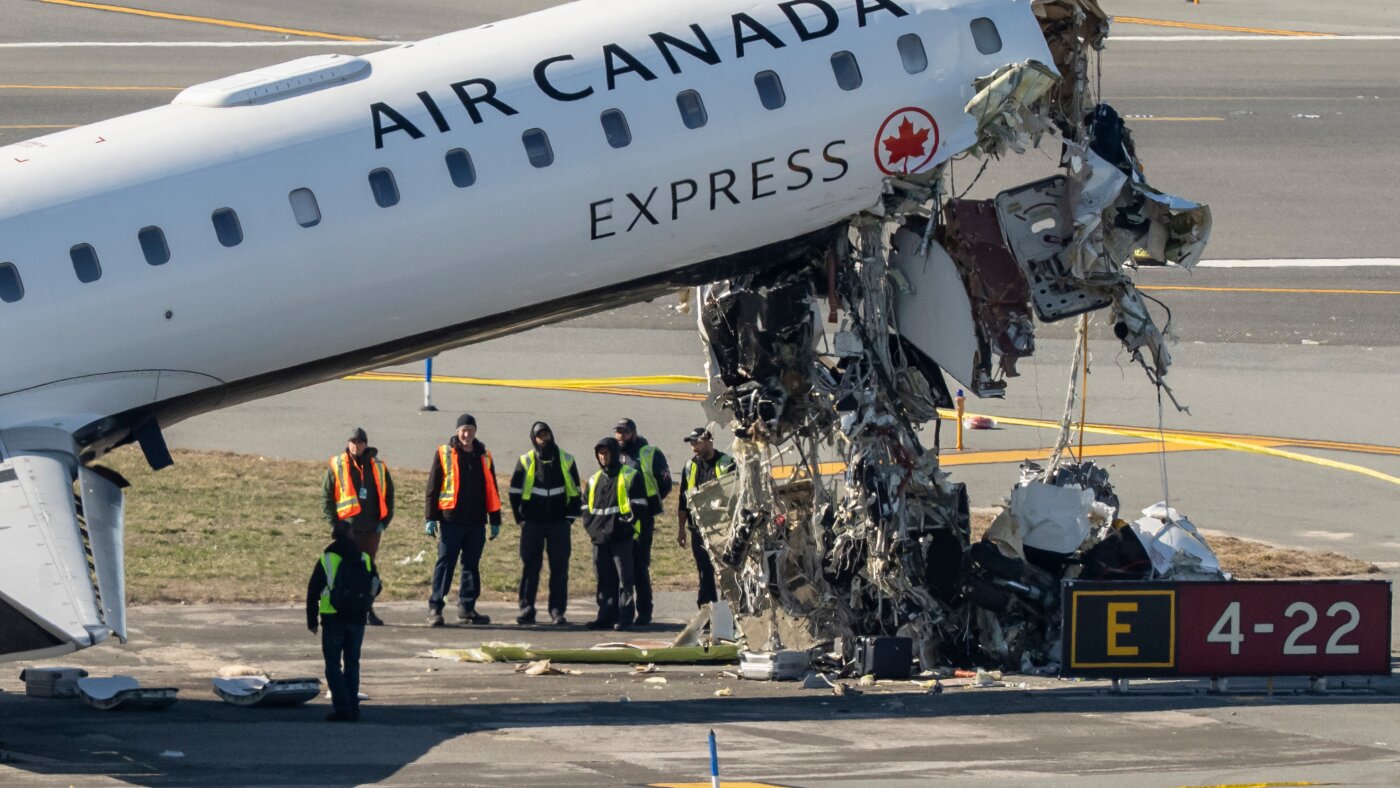
An air traffic controller was juggling extra roles during the LaGuardia plane crash

Iran War: Pentagon set to send thousands of elite 82nd Airborne troops to region | BBC News
-

 Detroit, MI6 days ago
Drummer Brian Pastoria, longtime Detroit music advocate, dies at 68
-

 Georgia1 week ago
How ICE plans for a detention warehouse pushed a Georgia town to fight back | CNN Politics
-

 Movie Reviews6 days ago
‘Youth’ Twitter review: Ken Karunaas impresses audiences; Suraj Venjaramoodu adds charm; music wins praise | – The Times of India
-

 Alaska1 week ago
Police looking for man considered ‘armed and dangerous’
-

 Education1 week ago
Video: Turning Point USA Clubs Expand to High Schools Across America
-

 Sports4 days ago
IOC addresses execution of 19-year-old Iranian wrestler Saleh Mohammadi
-
 Science1 week ago
Industrial chemicals have reached the middle of the oceans, new study shows
-

 Science1 week ago
How a Melting Glacier in Antarctica Could Affect Tens of Millions Around the Globe