Business
Which Countries Depend the Most on Persian Gulf Oil and Gas


The war in the Middle East has halted most of the oil and gas trade from the region, forcing countries thousands of miles to contend with their energy supplies suddenly vanishing.
The Persian Gulf accounts for roughly a fifth of the world’s energy needs. As Iran effectively blocks shipments, international prices for oil and gas have shot up. That in turn has meant gasoline, jet fuel and other products have become costlier — hurting drivers, business owners and others from Los Angeles to Lahore, Pakistan. As the world becomes gripped by the energy crisis, some nations are feeling the loss more acutely.
Asian countries are the biggest buyers of Persian Gulf energy
Pakistan
Total energy imports in 2024
$17 bil. Japan
Total energy imports in 2024
$139 bil. Thailand
Total energy imports in 2024 $43 bil. South Korea
Total energy imports in 2024
$144 bil. India
Total energy imports in 2024
$180 bil. Maldives
Total energy imports in 2024
$774.1 mil. Taiwan
Total energy imports in 2024
$47 bil. China
Total energy imports in 2024 $413 bil. Sri Lanka
Total energy imports in 2024
$4 bil. Malaysia
Total energy imports in 2024
$44 bil. Singapore
Total energy imports in 2024
$86 bil. Philippines
Total energy imports in 2024
$16 bil. Israel
Total energy imports in 2024 $3 bil. Brunei
Total energy imports in 2024
$5 bil. Myanmar
Total energy imports in 2024
$5 bil. Indonesia
Total energy imports in 2024
$35 bil. Armenia
Total energy imports in 2024
$535.9 mil. Turkey
Total energy imports in 2024 $26 bil. Hong Kong
Total energy imports in 2024
$12 bil. Uzbekistan
Total energy imports in 2024
$2 bil. Kazakhstan
Total energy imports in 2024
$628 mil. Yemen
Total energy imports in 2024
$23.5 mil. Azerbaijan
Total energy imports in 2024 $2 bil. Kyrgyzstan
Total energy imports in 2024
$1 bil. Jordan
Total energy imports in 2024
$641 mil. Cambodia
Total energy imports in 2024
$3 bil. Syria
Total energy imports in 2024
$131.2 mil. Bangladesh
Total energy imports in 2024 $7 bil.
In 2024, nearly 21 million barrels of oil a day crossed through the Strait of Hormuz, the narrow passageway connecting the Persian Gulf to the world. Four-fifths of that supply went to Asia.
China has long been the biggest purchaser of oil and gas from Persian Gulf nations. And with more than a third of its total supply coming from the region, the disruption is significant for Beijing. But other countries are almost entirely reliant on the region for their energy needs.
Pakistan has considered imposing a four-day workweek, and remote school and work, in order to preserve energy stockpiles. A state-led fund in Thailand, to subsidize the cost of fuel when prices surge, plunged into a deficit this month.
In India, where the economy depends on the Middle East for roughly 40 percent of the country’s oil imports and 80 percent of its gas, a shortage of cooking gas is squeezing households. And across Asia, fliers are being stranded because airlines running low on jet fuel have canceled thousands of flights.
Europe has been more insulated, sort of
Greece
Total energy imports in 2024
$19 bil. Lithuania
Total energy imports in 2024
$7 bil. Poland
Total energy imports in 2024
$28 bil. Serbia
Total energy imports in 2024 $2 bil. Bulgaria
Total energy imports in 2024
$5 bil. Slovenia
Total energy imports in 2024
$4 bil. Italy
Total energy imports in 2024
$50 bil. Albania
Total energy imports in 2024
$931.9 mil. France
Total energy imports in 2024 $73 bil. Ireland
Total energy imports in 2024
$6 bil. Iceland
Total energy imports in 2024
$1 bil. U.K.
Total energy imports in 2024
$62 bil. Netherlands
Total energy imports in 2024
$105 bil. Spain
Total energy imports in 2024 $53 bil. Romania
Total energy imports in 2024
$8 bil. Denmark
Total energy imports in 2024
$6 bil. Ukraine
Total energy imports in 2024
$8 bil. Austria
Total energy imports in 2024
$10 bil. Germany
Total energy imports in 2024 $66 bil. Norway
Total energy imports in 2024
$5 bil. Portugal
Total energy imports in 2024
$10 bil. Moldova
Total energy imports in 2024
$1 bil. Cyprus
Total energy imports in 2024
$3 bil. Belgium
Total energy imports in 2024 $47 bil. Latvia
Total energy imports in 2024
$2 bil. Sweden
Total energy imports in 2024
$18 bil. Finland
Total energy imports in 2024
$10 bil. Estonia
Total energy imports in 2024
$1 bil. North Macedonia
Total energy imports in 2024 $902.7 mil. Croatia
Total energy imports in 2024
$6 bil. Switzerland
Total energy imports in 2024
$8 bil. Bosnia and Herzegovina
Total energy imports in 2024
$1 bil. Slovakia
Total energy imports in 2024
$4 bil.
Europe has traditionally been less reliant on the Gulf than Asia has been. It used to get most of its natural gas from Russia, but in recent years it has relied more on the United States and Norway. But the continent has had to endure one energy crisis after another in recent years, including from Russia’s war with Ukraine and the Western sanctions that followed.
Russia is the world’s third-largest producer of oil and second-largest producer of gas, and the sales of its energy products have been significantly restricted while Moscow continues its invasion of Ukraine.
This current crisis comes as European countries, confronting lackluster economic output, try to rebuild their industrial bases and fend off competition from cheaper Chinese exports.
Confronted with soaring prices since its attack with Israel on Iran, the United States temporarily lifted sanctions on Russian oil that is currently at sea, hoping to ease the global supply and markets in the process. The European Union has not made similar moves.
Parts of Africa will be hit hard
Seychelles
Total energy imports in 2024
$308.6 mil. Mauritania
Total energy imports in 2024
$973.5 mil. Uganda
Total energy imports in 2024
$2 bil. Mauritius
Total energy imports in 2024
$1 bil. Kenya
Total energy imports in 2024 $5 bil. Egypt
Total energy imports in 2024
$16 bil. Zambia
Total energy imports in 2024
$2 bil. Namibia
Total energy imports in 2024
$1 bil. Malawi
Total energy imports in 2024
$476.1 mil. South Africa
Total energy imports in 2024 $18 bil. Tanzania
Total energy imports in 2024
$5 bil. Morocco
Total energy imports in 2024
$8 bil. Mozambique
Total energy imports in 2024
$2 bil. Madagascar
Total energy imports in 2024
$841.3 mil. Zimbabwe
Total energy imports in 2024 $2 bil. Senegal
Total energy imports in 2024
$4 bil. Nigeria
Total energy imports in 2024
$13 bil. Benin
Total energy imports in 2024
$398.4 mil. Angola
Total energy imports in 2024
$2 bil. Burkina Faso
Total energy imports in 2024 $2 bil. Tunisia
Total energy imports in 2024
$3 bil. Cote d’Ivoire
Total energy imports in 2024
$4 bil. Central African Republic
Total energy imports in 2024
$196.7 mil. Gambia
Total energy imports in 2024
$206.6 mil. Niger
Total energy imports in 2024 $113.6 mil. Lesotho
Total energy imports in 2024
$214.4 mil. Cameroon
Total energy imports in 2024
$424.4 mil. Libya
Total energy imports in 2024
$4 bil.
African nations, like many other countries in the global south, could feel the disruption unevenly. Seychelles, the island nation off the east coast of Africa, imported almost all of its energy from Gulf states in 2024. Mauritius has had a similar reliance, while Nigeria, an oil-rich state and a member of the OPEC Plus oil cartel, has traditionally imported relatively few fossil fuels from the Middle East.
But as the war continues, the impact is being felt beyond the imports of oil and gas. The Persian Gulf is a dominant source of fertilizer, partly because the region’s abundance of energy has spurred the development of factories that make the raw materials for many types of agricultural chemicals.
A sustained rise in the cost of fertilizer could force governments in South Asia and sub-Saharan Africa to subsidize the cost of growing crops or otherwise watch food prices climb. That could add to debt burdens afflicting many lower-income countries.
The Americas and elsewhere are feeling broader economic shocks
Argentina
Total energy imports in 2024
$3 bil. Brazil
Total energy imports in 2024
$28 bil. United States
Total energy imports in 2024
$233 bil. Paraguay
Total energy imports in 2024
$2 bil. Canada
Total energy imports in 2024 $31 bil. Uruguay
Total energy imports in 2024
$1 bil. Australia
Total energy imports in 2024
$37 bil. Dominican Republic
Total energy imports in 2024
$5 bil. Guatemala
Total energy imports in 2024
$4 bil. Chile
Total energy imports in 2024 $13 bil. Fiji
Total energy imports in 2024
$888.1 mil. Peru
Total energy imports in 2024
$9 bil. Honduras
Total energy imports in 2024
$2 bil. Ecuador
Total energy imports in 2024
$5 bil. Colombia
Total energy imports in 2024 $6 bil. El Salvador
Total energy imports in 2024
$2 bil. Costa Rica
Total energy imports in 2024
$2 bil. New Zealand
Total energy imports in 2024
$6 bil. Mexico
Total energy imports in 2024
$34 bil. Belize
Total energy imports in 2024 $235.5 mil. Bolivia
Total energy imports in 2024
$2 bil. Nicaragua
Total energy imports in 2024
$1 bil. Barbados
Total energy imports in 2024
$552.3 mil.
The United States is the world’s largest producer of oil and gas. That means the impact of halting the energy trade from the Middle East is much less severe.
But the United States and other countries in the region that do not import great quantities from the Gulf are still feeling economic strain. The jump in oil prices – to over $100 a barrel in recent weeks – has already weighed on other major economic factors.
The cost of gasoline has jumped by about a dollar a gallon nationally since the war began. American airlines have begun to cut flights because of fuel costs. Concerns about inflation have pushed mortgage rates to their highest level in three months, just weeks after they fell below 6 percent for the first time since 2022.
If the war drags on, or if oil and gas prices continue to rise, the damage will most likely grow, economists say. It is perhaps one reason why the White House has forcefully insisted that it does not need Middle Eastern oil — and is increasingly trying to use military force to stop Iran’s blockade of it.
Methodology
To calculate total energy imports for each country, The New York Times used 2024 international trade data from the Observatory for Economic Complexity and tallied the value of imports for a subset of energy-related goods. A share of imports from Gulf countries was then calculated from that subset.
The Gulf countries included are: Kuwait, Iraq, Bahrain, Qatar, the United Arab Emirates, Saudi Arabia and Iran.
The categories used were: crude petroleum oils (HS 270900), bituminous petroleum distillates (HS 271000), liquefied natural gas (HS 271111), liquefied propane (HS 271112), liquefied butanes (HS 271113) and liquefied petroleum gases (HS 271119).



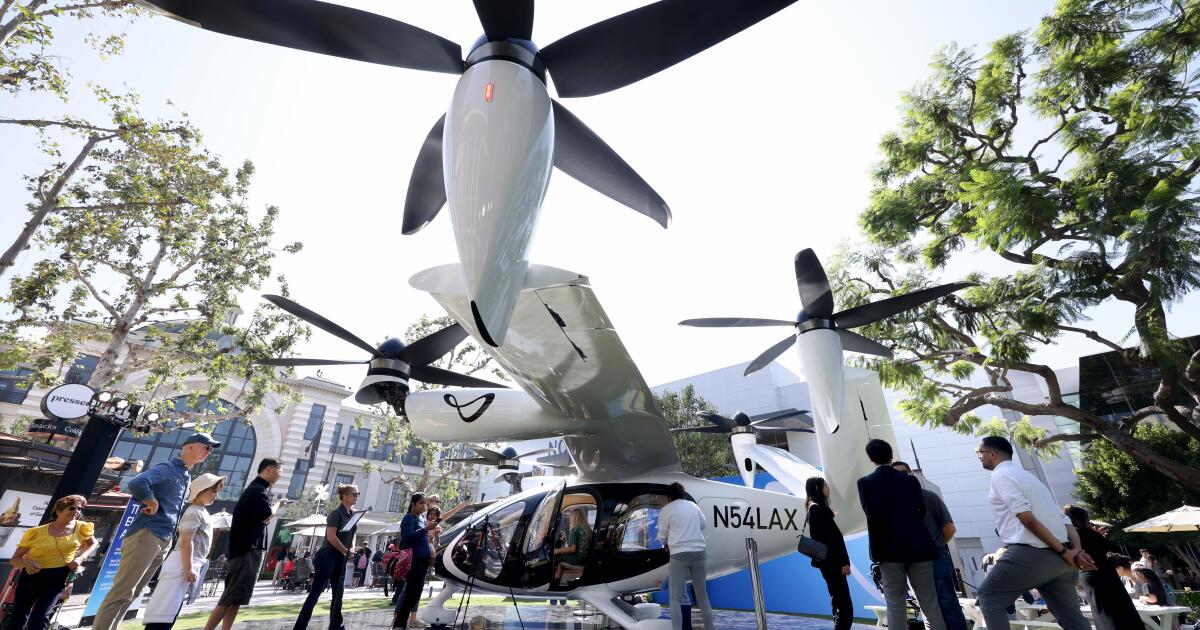
The race to bring air travel to the sky is heating up as Santa Cruz-based Joby Aviation and Toyota launch a joint venture to commercially produce air taxis.
The companies said in a news release Tuesday that they will work together on productivity, quality and costs and move toward mass production of Joby’s electric vertical takeoff aircraft. Joby and Toyota were first linked when Toyota made a nearly $400-million investment in the company in 2020. It has since increased its backing of the company to $900 million.
“It’s really meaningful for us to take on this challenge together with Joby, a partner that shares the same vision,” Toyota Chair Akio Toyoda said. “We believe this strengthened relationship is an important step forward in realizing the future mobility society.”
Joby‘s all-electric vertical takeoff vehicles are designed to hold four passengers and a pilot and can travel at up to 200 mph. The vehicle uses six tilting propellers to achieve vertical takeoff before switching to forward flight.
In February, Joby announced a partnership with Uber to start service in the United Arab Emirates this year, bringing on-demand air taxi rides to the country. It plans to expand to the U.S. after the completion of its final stage of Federal Aviation Administration testing.
Prior to its full FAA certification, Joby is hoping to launch early flight operations later this year as part of a White House program that will bring flights to several states, including New York, Texas and Arizona. Flights in California will not begin until after obtaining FAA certification.
Joby has been in a fierce battle to be the first with taxis in the sky with its Northern California competitor Archer Aviation. The two companies are involved in overlapping lawsuits, with Joby alleging corporate espionage against Archer, and Archer filing a suit alleging dubious ties to China that sparked an investigation into Joby by the U.S. International Trade Commission.
“Toyota has been by Joby’s side for nearly a decade, providing invaluable guidance and support as we built the foundation for manufacturing our aircraft,” JoeBen Bevirt, Joby’s chief executive and founder, said in the news release. “Together, we share a vision of making aerial mobility an everyday reality, and we look forward to delivering on that promise together.”
Joby Aviation’s shares, which have fallen more than 30% this year, climbed 3% on Tuesday to $8.92.

Disneyland Resort in Anaheim will offer $59 tickets for select evening admission to either theme park as part of a new promotion.
The one-day, one-park evening ticket offer will allow attendees to enter Disney California Adventure at 5 p.m. or Disneyland at 7 p.m. Park reservations are still required, as has been the case since the COVID-19 pandemic.
The offer only applies for admission from July 12 through Aug. 5 on Sundays to Wednesdays.
Disneyland Resort is commemorating its 70th anniversary through Aug. 9, and has introduced new shows and additions to rides as part of the occasion.
Walt Disney Co.’s theme parks and experiences business are a crucial boost to its finances, making up about 56% of the company’s operating income last fiscal year.
During the Burbank-based company’s most recent earnings call in May, Disney executives said attendance at its U.S.-based parks was down 1% compared with the prior year, a shift they attributed to “continued softness” in international visitations. However, the company said at the time that it was starting to move past those issues.
Disney’s experiences division reported $9.5 billion in revenue in that fiscal second quarter, up 7% compared with the same period a year ago, something executives said was due to higher guest spending domestically and more capacity on its cruise line.

An aging downtown office complex will be converted into apartments as part of an ambitious plan by local real estate companies to create 4,000 affordable housing units in Los Angeles.
The first project will be a $200-million makeover of the L.A. World Trade Center, a sprawling white elephant of an office complex on Figueroa Street built in the 1970s that will be turned into 512 apartments in one of the largest affordable housing conversions to date downtown.
Future projects being planned in the central city for delivery over the next five years will include other office-to-apartment conversions and new housing built from the ground up.
The 10-story World Trade Center, right, at Figueroa and Fourth streets in downtown Los Angeles, was built in the mid-1970s.
(Myung J. Chun / Los Angeles Times)
Behind the building campaign unveiled Monday are two of the region’s largest real estate companies, Jamison and Kennedy Wilson. Jamison is the city’s most prolific converter of offices to market-rate apartments and currently has a major makeover of a downtown office skyscraper underway for tenants who can pay top rents.
Kennedy Wilson, a real estate investment company based in Beverly Hills, owns Vintage Housing, which builds and operates affordable housing using tax credits and other state and federal financing to help fund it.
Vintage Housing and Jamison’s new affordable housing division, Arden Residential, will take on the campaign to build the housing where qualified tenants will pay rents below market rates.
Rents in the World Trade Center — which will be renamed Sky Castle when it opens in early 2028 — are expected to start at $937 for a one-bedroom unit. Some two- and three-bedroom units would rent for $1,100 and $1,300 per month, respectively, developers said.
Sky Castle will have shared amenities found in more expensive modern apartments, the developers said, such as a fitness center, resident lounge and co-working space. It already has six tennis courts on the roof, which may be converted to pickleball courts, Jamison Chief Executive Garrett Lee said.
The goal is to build higher quality affordable housing by using efficient construction methods Jamison has learned through building more than 8,000 market-rate apartments in the past, Lee said. The makeover of the World Trade Center will mark Jamison’s 15th conversion of an office building to housing.
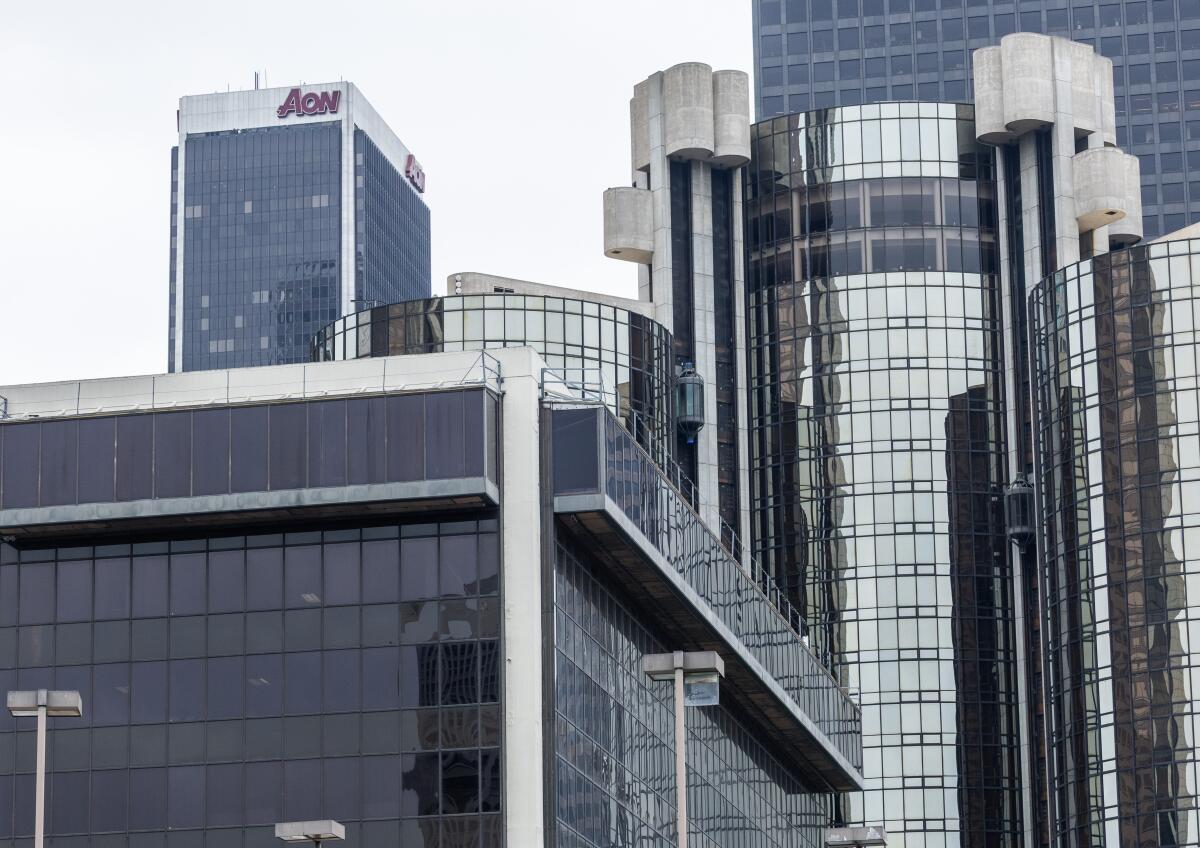
The plan to redevelop the L.A. World Trade Center, bottom left, is one of the largest affordable housing conversions to date downtown.
(Myung J. Chun / Los Angeles Times)
The 10-story World Trade Center was built in the mid-1970s to fanfare saying it would be home to international companies. In 1976, The Times described the center as a place to prepare for an overseas trip where visitors could get passports and visas, as well as exchange dollars for francs, marks, rubles and other currency. There was a language school and branches of U.S., Swiss and Japanese banks.
By the mid-1980s, the 400,000-square-foot office complex covering a city block at Figueroa and Fourth streets had lost its international flavor and was falling out of favor with corporate tenants who were moving into glossy new skyscrapers on Bunker Hill and in other locations.
The building has been cleared of remaining office tenants to allow work to begin in August, Lee said.
Kennedy Wilson is a nationwide operator of market-rate apartments that has also moved into building affordable housing in the last decade, said Nicholas Bridges, global head of capital markets at the company.
Building affordable, workforce housing “in almost all cases requires public subsidies,” Bridges said, and Kennedy Wilson has developed expertise in assembling “a cocktail of public financing sources” that includes low-income housing tax credits and tax-exempt bonds.
In the past, many housing developers have shied away from building affordable housing because assembling the subsidies needed to make construction profitable is challenging.

An artist’s rendering shows what the L.A. World Trade Center could look like after being redeveloped into affordable housing. The new complex is to be called Sky Castle.
(Ian Camarillo)
“It’s complicated,” Bridges said, “and not for the faint of heart.”
Eligible tenants must earn between 30% and 80% of the median income in the area where the housing is built.
Jamison and Kennedy Wilson will develop about 15 affordable housing projects between downtown and the 405 Freeway, Bridges said, many of them in aging office buildings such as the World Trade Center that are already owned by Jamison and are close to public transit.
Substantial potential for affordable housing lies in L.A.’s underused office buildings, he said.
“In this post-COVID world, the way people are utilizing office buildings, particularly older office buildings, has just fundamentally changed,” he said.
It makes sense for developers of conventional multifamily housing to move to building affordable housing, Lee said, because the government supports it through subsidies, zoning reform and the fast-tracking of construction permits. The city of Los Angeles also recently streamlined its adaptive reuse rules to make it easier to convert office buildings to housing.
“There are a lot of incentives pushing us in this direction,” Lee said.
-

 Georgia5 minutes ago
LIVE BLOG: Severe storms threaten North Georgia
-

 Hawaii12 minutes ago
Suspect arrested in attempted armed robbery on North Shore
-

 Idaho15 minutes ago
U.S. Marshals track Meridian man in Idaho Falls after suspected robbery
-

 Illinois20 minutes ago
Illinois Product Farmers Market Highlights Local Flavors and Family Traditions
-

 Indiana27 minutes ago
2 Indiana men plead guilty in Montana oxycodone conspiracy case
-

 Iowa30 minutes ago
Iowa’s governor and her family on weeklong tour of Iowa tourist sites – Radio Iowa
-

 Kansas35 minutes ago
New mural to be unveiled Thursday afternoon in North Topeka
-

 Kentucky42 minutes ago
Former Northern Kentucky school bus driver sentenced in child pornography case

