Politics
Hasty plans for forum to replace scrapped USC governor’s debate fall apart

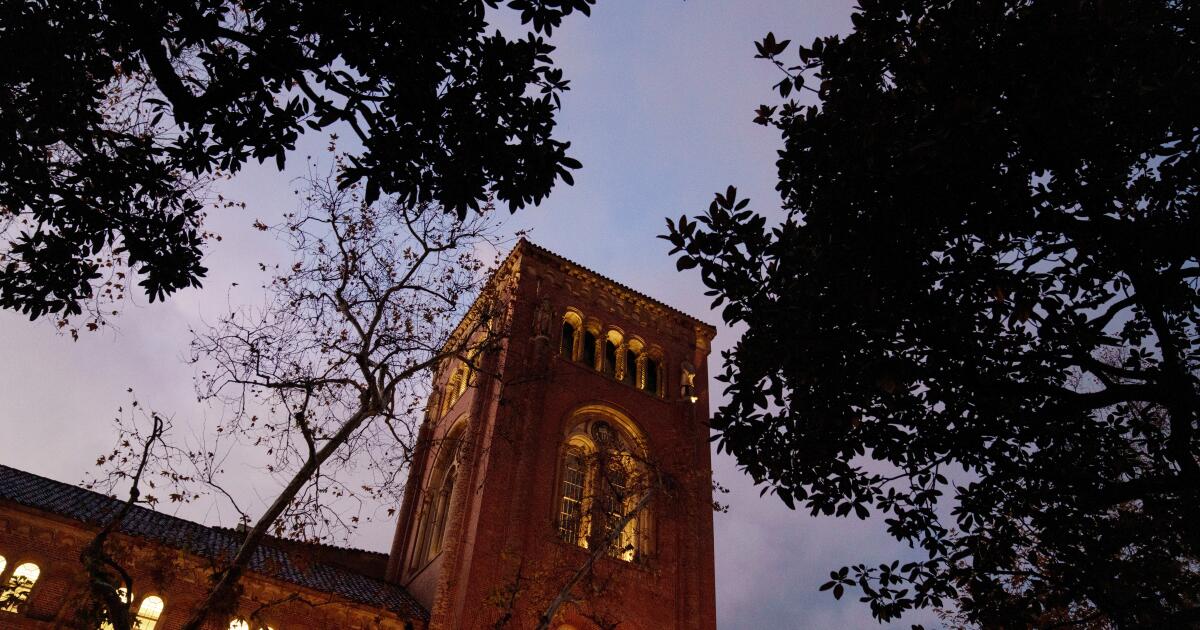
A proposed gubernatorial forum hastily cobbled together in the hours after USC canceled its Tuesday debate fell apart because the candidates of color who were excluded from the previously planned event were unable to show up in person at KNBC-TV’s studio in Universal City, according to multiple sources.
Facing mounting pressure that its debate selection criteria excluded every candidate of color, the university canceled its debate late Monday. On Tuesday morning, billionaire Tom Steyer — a Democrat — proposed holding an alternative face-off, with KNBC moderating. But the candidates who had not been invited to the USC debate had already made other commitments.
“A lot of this came out of nowhere — there’s a debate and you’re not invited, followed by there’s no debate, and then maybe we should all hang out and have a conversation,” said Kyle Layman, a strategist advising former U.S. Health and Human Services Secretary Xavier Becerra.
USC officials declined to comment on Tuesday’s developments — as did KABC-TV, one of the broadcast partners of the canceled debate. KNBC did not respond to a request for comment, but someone involved with planning a potential debate there said pulling together such an event in just a few hours was impossible, and also unfair to the candidates who had made other plans after initially being excluded from the USC debate.
“We looked into the possibility of doing something. It just wasn’t possible because of the last-minute logistics. It was not feasible,” said the person, who asked for anonymity to speak candidly. “We couldn’t get everybody here.”
The fact that the candidates excluded from the USC debate couldn’t find a way to participate in Tuesday evening’s alternative forum irritated some people involved in the planning, however. Becerra, state Supt. of Public Instruction Tony Thurmond, former Los Angeles Mayor Antonio Villaraigosa and former state Controller Betty Yee had loudly protested not being invited to the USC event.
“This is like probably one of the last opportunities they have to be with other leading contenders of the race, so why not take this opportunity?” said someone who took part in conversations about the proposed last-minute debate, who asked for anonymity to speak openly. “If the whole thing is about bringing your message to the voters, making sure voters have as much information as possible, talking about the issues that matter, wouldn’t you want to take every opportunity to do that?
“If you’re going to talk a big game about taking your message to voters, the importance of debates, why not do it?” this person said.
Becerra, Thurmond, Villaraigosa and Yee have reportedly formed an informal pact not to participate in any debate that does not include all of them, which Yee referenced in a Tuesday afternoon news conference.
“The idea that none of the candidates of color are going to be joining a debate is just inappropriate for a state like California,” Yee said. “We also need to have a commitment from all of the debate sponsors that they will include all of us going forward.”
Yee and Thurmond were not invited to the next major televised debate, which will take place April 1 at Fresno State University. Becerra and Villaraigosa had previously confirmed their attendance, according to a news release from the Western Growers Assn., one of the event’s sponsors.
And all four candidates of color, along with San José Mayor Matt Mahan, were not invited to a debate on April 22 in San Francisco that will be hosted by KRON-TV and broadcast on Nexstar Media Group stations throughout California.
“We don’t need gatekeepers,” Mahan said in a statement Tuesday evening. “I’m calling on my fellow candidates to work together to organize our own debates — so we can take our ideas for a better California to every corner of California. Let’s let the voters truly decide.”
The scrapped USC debate was going to be hosted by the institution’s Dornsife Center for the Political Future and co-sponsored by KABC and Univision. Six candidates had been invited to participate: Democrats Rep. Eric Swalwell (D-Dublin), former Orange County Rep. Katie Porter, Mahan and Steyer; along with the leading Republicans, conservative commentator Steve Hilton and Riverside County Sheriff Chad Bianco.
Candidates and elected officials called the criteria used to determine participation in the debate biased because it included Mahan, a white candidate who is polling near the bottom of the pack but is supported by notable names in the USC community. Hours after the debate was canceled, Steyer’s campaign sought to create an alternate event that would include all of the candidates.
“We were trying to do the right thing upon learning that the debate was canceled at USC,” said a member of Steyer’s campaign who asked for anonymity to speak candidly. “Tom immediately was like, ‘We can do something alternative.’ People want to hear from the gubernatorial candidates. It was on the table. It was offered.
“NBC couldn’t get all the candidates here, but we tried,” this person said. “Given the short amount of time we were trying to put this together, it ultimately could not happen because not all the candidates could get to the studio.”
Thurmond, who was in Sacramento and Richmond on Tuesday, joined a political influencer on YouTube Tuesday evening, while Yee attended previously scheduled events with the East Area Progressive Democrats and a women’s group in the L.A. area. Villaraigosa had lined up other interviews at his Wilshire campaign office, Becerra was traveling, and Porter was scheduled to host a livestream on her Instagram account Tuesday evening.


NEWYou can now listen to Fox News articles!
President Donald Trump is set to deliver what the White House is calling a “historic” speech Saturday night before a massive fireworks display celebrating America’s 250th anniversary.
Trump is still expected to take the stage at 10 p.m. at the conclusion of the Salute to America celebration on the National Mall, though timing of events may fluctuate due to adverse weather, per a senior White House official.
The president’s address is expected to look back on America’s history since its founding 250 years ago, a senior White House official told Fox News.
THE LESSON WE CAN LEARN FROM BICENTENNIAL HISTORY IS TO PARTY LIKE IT’S 1976
President Donald Trump speaks during a rally at Mount Rushmore National Memorial on July 3, 2026 in Keystone, South Dakota. (Chip Somodevilla/Getty Images)
Trump will deliver a “unique” speech featuring the stories of American heroes.
“It will be a unique speech unlike any other he’s given before,” the official added.
Earlier Saturday, Trump celebrated what he described as a “stronger than ever” America in a Truth Social post, praising the “incredible” crowds gathered in Washington despite the heat and storms.
FOURTH OF JULY APP GUIDES SPECTATORS THROUGH NINE-HOUR AIR SHOW FROM NASA JETS TO B-1 BOMBERS
The grand finale lasted over two minutes to cap a 23-minute light and fireworks display over Mount Rushmore after President Donald Trump’s 28-minute speech, brief by his lengthy standards. (Matt Gade)
The president also highlighted the air shows over the nation’s capital, saying the pilots and aircraft were “at a level never seen before.”
Trump also addressed recent vandalism at the Reflecting Pool, calling those responsible “Vandal Thugs” and promising the pool would be drained and repaired after the holiday weekend.
The president’s remarks come one day after he delivered a patriotic speech at Mount Rushmore, where he called the United States the “most exceptional nation ever to exist” and warned that communism posed the nation’s greatest threat.
TRUMP HAILS AMERICA AS ‘MOST EXCEPTIONAL NATION EVER TO EXIST’ IN MOUNT RUSHMORE SPEECH
The U.S. Air Force Thunderbirds perform a flyover during “Salute to America 250” Fourth of July celebrations on the National Mall on July 4, 2026, in Washington, DC. (Finn Gomez/Getty Images)
“Communism is the exact opposite of life, liberty and the pursuit of happiness — it is death, tyranny and the pursuit of evil.
A severe thunderstorm swept through Washington on Saturday evening, prompting emergency officials to urge people on the National Mall to seek shelter.
CLICK HERE TO DOWNLOAD THE FOX NEWS APP
Freedom 250, the event organizer, said it would provide updates on the evening’s schedule as weather conditions developed.
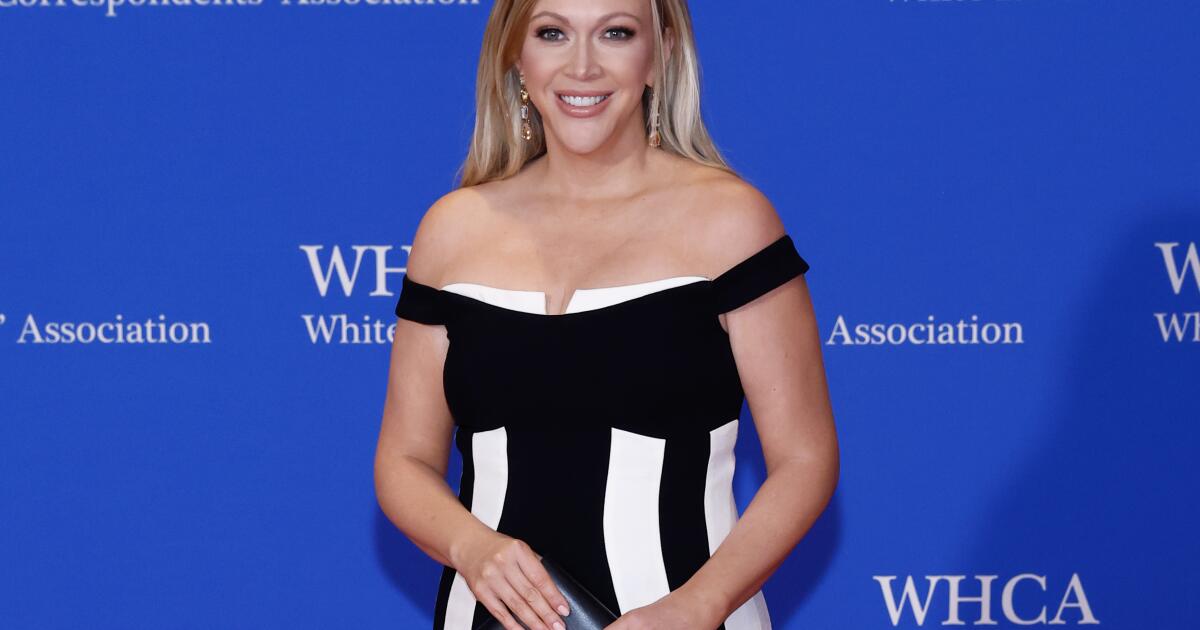
As CNN prepares for change under a new owner, the network’s chief legal affairs correspondent, Paula Reid, is heading for the exit and expected to jump to MS NOW.
The Washington-based Reid’s contract with CNN is up in several months and she has told the network she does not plan to renew. She is expected to sign on with CNN competitor MS NOW, according to people familiar with her plans who were not authorized to comment publicly.
A representative for MS NOW said the network does not comment on personnel matters but added, “as everyone in Washington knows, Paula Reid is an exceptional reporter, and any news organization would be fortunate to showcase her journalism.”
Reid‘s planned departure comes ahead of the impending merger of CNN parent Warner Bros. Discovery and Paramount. The combination has led to speculation over who will run CNN, and the uncertainty is said to have played a factor in Reid’s decision.
Reid joined CNN from CBS News in 2021.
CNN and Paramount’s CBS News will be combined after the merger, but the management structure is still under discussion. Paramount put Bari Weiss, founder of the heterodox digital news site the Free Press, in charge of CBS News in October, with a mandate to move the network’s coverage more to the political center. Based on the chaos that has ensued at CBS News under her watch, many CNN insiders are concerned over her possible stewardship of an even larger and more complex organization.
CBS News executives and on-air talent have pushed back at Weiss’ efforts to make changes at the division, which many insiders have viewed as an attempt to placate the Trump White House while Paramount seeks regulatory approvals needed ahead of closing the $111-billion Warner Bros. Discovery deal.
Internal resistance to Weiss has been strongest at the venerable news magazine “60 Minutes.” The program’s star correspondent Scott Pelley was fired last month after he confronted management over the dismissals of executive producer Tanya Simon and his on-air colleagues Sharyn Alfonsi and Cecilia Vega.
Weiss’ overhaul of the “CBS Evening News” with her handpicked anchor Tony Dokoupil has failed to improve the third-place program’s competitive position in the ratings. The program has also been criticized for some of its editorial decisions and logistical snafus.
CNN anchor Anderson Cooper has reportedly told colleagues he does not want to work for Weiss if the cable network is put under her purview. He already rejected an offer from Weiss to anchor the “CBS Evening News” and declined to renew his deal as a “60 Minutes” contributor after nearly two decades with the program.
The chaos at CBS has given pause to people at CNN. Larry Ellison, the tech billionaire and father of Paramount Chief Executive David Ellison, has reportedly promised Trump there will be sweeping changes to CNN after the merger.
Reid, 43, is among the many TV news correspondents and anchors that Trump has disparaged over the years, claiming they are unfair in their coverage. As White House correspondent for CBS News, Reid was known for asking tough questions of Trump during his White House briefings on the coronavirus.
Reid was a lawyer before becoming a journalist at CBS News in 2010. In addition to serving as White House correspondent for the network, she covered the Justice Department and the Supreme Court.
Reid would be another significant hire for MS NOW, the progressive-leaning channel that is rebuilding its roster after separating from NBC News and its parent, Comcast. The network formerly known as MSNBC is now part of Versant, a company with a stable of cable networks spun off by Comcast.
Peter Alexander, former chief White House correspondent for NBC News, is joining MS NOW as a morning anchor later this year. The network also hired former “CBS Mornings” executive producer Shauna Thomas as political director.

Doug Burgum highlights American innovation at Great American State Fair
Interior Secretary Doug Burgum joins ‘Fox & Friends’ live from the Great American State Fair in Washington. He emphasizes America’s legacy of innovation and entrepreneurship, discussing the impact of AI and free markets. Burgum also addresses recent vandalism at the Lincoln Memorial Reflecting Pool on June 22 and the upcoming July 4th opening of the Teddy Roosevelt Presidential Library.
NEWYou can now listen to Fox News articles!
Interior Secretary Doug Burgum is defending President Donald Trump’s many initiatives to address infrastructure in Washington, D.C., calling it a visible reminder that the country needs to actively press back against decline.
“Nations don’t crumble by fate — they decline by choice,” Burgum told Fox News Digital.
“From rehabilitating and installing historic memorials, statues, and fountains to removing hundreds of instances of graffiti and cleaning up crime on our streets, this administration is proving that American greatness is built through action,” he continued.
Burgum’s reasoning, which came ahead of the United States’ 250th Independence Day anniversary, addresses criticisms of the administration that have surfaced in recent weeks, casting doubt on whether Trump’s many renovation and construction initiatives in Washington, D.C. have been worth their price tag.
WHITE HOUSE SEIZES ON DELAYED OBAMA PRESIDENTIAL CENTER OPENING TO CROWN TRUMP ‘BUILDER-IN-CHIEF’
Split of sample tests in the Lincoln Memorial Reflecting Pool. (@realDonaldTrump via Truth Social)
As part of the 250th celebration, Trump has spent $14.7 million to restore the Lincoln Memorial’s reflecting pool, allocated $250 million to restore the Kennedy Center and is on track to spend over $400 million on the construction of a ballroom at the White House.
Trump, in a Truth Social update about the reflecting pool, framed the efforts as part of a larger effort.
“We’ve cleaned, renovated and beautified over 45 monuments and memorials, 28 statues and 22 fountains in Washington, D.C. Things are really looking good in our nation’s capital. Add to that the fact that when I became president, crime was rampant. And now Washington, D.C. is one of the safest cities anywhere in the United States,” Trump wrote.
REPUBLICANS QUESTION TRUMP’S ‘PRIVATELY FUNDED’ BALLROOM AFTER REPORT POINTS TO TAXPAYER BURDEN
Interior Secretary Doug Burgum reacted during a meeting with Venezuela’s interim President Delcy Rodríguez at the Miraflores Presidential Palace on March 4, 2026, in Caracas, Venezuela. (Federico Parra/AFP via Getty Images)
The Department of the Interior, which has overseen many of the improvements, further updated its accomplishments ahead of July 4.
The city has removed 510 instances of graffiti, removed 154 homeless encampments, applied 212 tons of repair materials to roads and parkways, restored 280,000 square feet of roadway paving, rehabilitated 1,301 benches and fixed 1,913 lights.
Burgum said the repairs were emblematic of the administration’s aggressive posture towards addressing problems that had gone ignored in the past. In addition to these major improvements, DOI has restored and cleaned dozens of monuments and statues around DC.
DOI also recently helped transform Meridian Hill Park, which got high praise on social media by DC residents, into a desirable place to visit with a restored fountain that had been under construction for years with very little movement. They also cleaned and restored some of the statues in the park, including the Joan of Arc statue and the James Buchanan Memorial.
FIRST ON FOX: TRUMP ADMIN TRANSFORMS DC HOTSPOT ONCE ROCKED BY GEORGE FLOYD PROTESTS IN SYMBOLIC REVERSAL
Washington DC city workers dismantle tents and remove personal belongings during a sweep of a homeless encampment in the Foggy Bottom neighborhood in Washington, DC, on August 14, 2025. (JIM WATSON/AFP via Getty Images)
CLICK HERE TO DOWNLOAD THE FOX NEWS APP
“While others accept decline, President Trump and the Department of the Interior are restoring the heart of our nation’s capital,” Burgum said. “The Golden Age of America isn’t just a slogan, it’s being rebuilt, one landmark, one street and one victory at a time.”
-

 Cleveland, OH7 minutes ago
Cleveland marks America’s 250th birthday with lakefront fireworks show
-

 Austin, TX10 minutes ago
Iranian-Americans rally at Texas Capitol for “Free Iran” on Fourth of July
-

 Alabama15 minutes ago
Funeral set for Alabama firefighter killed in Colorado wildfire (my favorite)
-

 Alaska22 minutes ago
Gargantuan Rockfish Pulled From The Depths Of Alaska Ocean By Florida Man Is Older Than Your Grandmother
-

 Arizona25 minutes ago
‘Multiple victims’ in shooting at Westgate Entertainment District, police say
-

 Arkansas30 minutes ago
The new Arkansas | Northwest Arkansas Democrat-Gazette
-
 Colorado40 minutes ago
Bishop Castle is still standing as Aspen Acres wildfire continues to burn nearby
-
Connecticut45 minutes ago
Mary Ball Tomolonius Obituary


