Science
Rising Home Insurance Premiums Are Eating Into Home Values in Disaster-Prone Areas


This Louisiana resident expects to pay 45 percent more for home insurance this year.
Similar increases are hitting homeowners across the state, where insurance costs have exploded over the past four years.
It’s part of a rapid shift that’s sending tremors through real estate markets across the country.
Even after she escaped rising floodwaters by wading away from her home in chest-deep water during Hurricane Rita in 2005, Sandra Rojas, now 69, stayed put. A fifth-generation resident of Lafitte, La., a small coastal community, she raised her home with stilts.
But this year, her annual home insurance premium increased to $8,312, more than doubling over the past four years.
She considered selling, but found herself in a dilemma. As insurance costs have risen, area home values have fallen, dropping by 38 percent since 2020. The roadsides around her house are dotted with for-sale signs.
“They won’t insure you,” Ms. Rojas said. “No one will buy from you. You’re kind of stuck where you are.”
New research shared with The New York Times estimates the extent to which rising home insurance premiums, driven higher by climate change, are cascading into the broader real estate market and eating into home values in the most disaster-prone areas.
The study, which analyzed tens of millions of housing payments through 2024 to understand where insurance costs have risen most, offers first-of-its-kind insight into the way rising insurance rates are affecting home values.
Since 2018, a financial shock in the home insurance market has meant that homes in the ZIP codes most exposed to hurricanes and wildfires would sell for an average of $43,900 less than they would otherwise, the research found. They include coastal towns in Louisiana and low-lying areas in Florida.
Changes in an under-the-radar part of the insurance market, known as reinsurance, have helped to drive this trend. Insurance companies purchase reinsurance to help limit their exposure when a catastrophe hits. Over the past several years, global reinsurance companies have had what the researchers call a “climate epiphany” and have roughly doubled the rates they charge home insurance providers.
Benjamin Keys at the Wharton School of the University of Pennsylvania and Philip Mulder of the University of Wisconsin-Madison, the authors of the study, which was published this week, have called these swift changes “a reinsurance shock.” For some Americans, these changes have made it unaffordable to remain in homes they have lived in for decades.
“Homeowners don’t appreciate or don’t understand that we are living in a much riskier world than we were 25 years ago,” Dr. Keys said. “And that risk? They have to pay for it.”
After analyzing 74 million home payments — which included mortgage, taxes and insurance and were made between 2014 and 2024 — the researchers found that a rapid repricing of disaster risk had been responsible for about a fifth of overall home insurance increases since 2017. Another third could be explained by rising construction costs.
The researchers estimated the effects of the reinsurance shock on home prices in the ZIP codes most vulnerable to catastrophes. They found that rising insurance premiums weighed down home values by about $20,500 in the top 25 percent of homes most exposed to catastrophic hurricanes and wildfires, and by $43,900 in the top 10 percent.
Buying a home has long been seen as a way to lock in predictable housing costs. But the fast-increasing burden of insurance is catching some homeowners by surprise.
Last year, Ms. Rojas’s brother-in-law, who lived down the road in Lafitte, decided to sell his home to escape the area’s rising premiums. It sold for $150,000, which is what it cost him to build it in 1984. He estimated he lost about $75,000 on the sale, after accounting for the cost of renovations.
In parts of the hail-prone Midwestern states, insurance now eats up more than a fifth of the average homeowner’s total housing payments, which include mortgage costs and property taxes. In Orleans Parish, La., that number is nearly 30 percent.
A hundred miles north of Lafitte, the small city of Bogalusa, La., lies further inland. Nevertheless, Cristal Holmes saw her insurance premium more than quadruple in 2022, to $500 per month, on top of her $700 monthly mortgage.
Ms. Holmes, a single mother who was working 56 hours a week at a warehouse, struggled to keep up with the higher bills. She fell behind on mortgage payments after her work hours were reduced to 35 per week. She worried she couldn’t stay in her home.
Similar stories are playing out all over town. Ms. Holmes’s real estate agent, Charlotte Johnson, said her office was getting phone calls every day from people who said they could no longer afford their rising insurance premiums. For many, dropping insurance is not an option, because banks refuse to offer or maintain mortgages for people without coverage.
That means owners are being forced to choose between accepting home insurance policies they can’t afford or risking foreclosure.
Buyers face their own obstacles. High insurance prices and interest rates are making it harder than ever for first-time buyers to purchase homes, said Nancy Galofaro-Cruse, a senior loan officer with CMG Home Loans who works with many of Ms. Johnson’s clients. She estimated that more than a third of would-be buyers in the area backed out of the market this year after insurance and interest rates pushed their total monthly housing costs out of reach.
It’s not just the hurricane-prone coasts that have been affected by the reinsurance shock. In Colorado, where wildfires and hail pose the biggest threats to homes, the average homeowner’s premium has more than doubled in the last decade and median premiums have increased 74 percent since 2020.
Steve Hakes, an insurance broker with Rocky Mountain Insurance Center in Lafayette, Colo., has seen clients consider homes in wildfire-prone areas, only to back out when they can’t find affordable insurance. High prices and limited availability have pushed him to advise buyers to look for insurance early in the homebuying process.
And in California, 13 percent of real estate agents surveyed by an industry trade association said they’d had deals fall through in 2024 after buyers couldn’t find affordable insurance coverage.
Colorado regulators are aware of the threats these dynamics pose to the real estate market and are exploring a wide range of fixes, said Michael Conway, the Colorado insurance commissioner.
“We don’t want a situation where the insurance market is effectively decimating the real estate market,” he said.
As insurance becomes more expensive, home values will need to adjust for potential buyers to afford their monthly costs, industry analysts say. And if home values fall, lower property tax revenue could mean less money for local governments to pay for essential services or affect the ability of those governments to borrow money.
Clarence Guidry reached a breaking point this year when he got a quote to insure his home in Lafitte, La. He’d pay a $20,000 annual premium but if a hurricane struck, he’d be on the hook for the first $50,000 in damage before the insurance company would pay out.
His lender wouldn’t let Mr. Guidry, who goes by Rosco, keep his mortgage without home insurance. But keeping his home insured against damage from hurricanes would mean stomaching monthly payments that are at least 40 percent higher than the rest of his monthly mortgage and property taxes combined.
Over the last decade, as the number of wildfires and storms has mounted, losses have exceeded the revenue insurance companies receive from home insurance policies across the United States. In Louisiana, 12 companies, including Mr. Guidry’s insurer, became insolvent after a wave of hurricanes between 2021 and 2023. (Most private insurers do not cover flood damage, which is handled separately under a federal program.)
Insurance companies’ own costs have climbed in recent years for a variety of reasons, including higher construction costs, higher interest rates and President Trump’s tariff policies.
But the changes in the insurance market have begun to put a higher price on risk. Reinsurers have been driving these effects, Dr. Mulder said.
“These reinsurers are looking at a lot of the same data as insurers, but at a much bigger scale and with more sophistication,” he said.
Politicians, homeowners, economists, state insurance commissioners and real estate agents have long worried that insurance costs will rise so much that they will begin to pull down home values.
According to the study by Dr. Keys and Dr. Mulder, which was published as a working paper in the National Bureau of Economic Research, this is already happening in some areas.
Jesse Keenan, an associate professor of sustainable real estate and urban planning at Tulane University, said the direct evidence of this phenomenon remained limited and there were factors beyond insurance that affected local home prices.
But there are increasingly troubling signs in some markets, he said.
“The New Orleans housing market is exhibiting signs of failure that are imposing stress on the financial system around it,” he said.
Overall, U.S. home prices have risen about 55 percent since 2018, but New Orleans prices have increased by only 14 percent, less than the rate of inflation over the same time period.
Even in states where heavy regulations have kept costs down, there are signs that home insurers will continue to raise premiums to align more closely with disaster risk. New rules in California allow insurance companies to pass rising reinsurance costs on to consumers. One consumer advocacy group, citing the effects of similar changes in other states, has estimated this provision could raise net premiums significantly for homeowners.
Back in Lafitte, Mr. Guidry was running the numbers for his own budget. Against the advice of his financial adviser, he took money out of his retirement account to pay off his home loan. The plan now is to self-insure for wind and hail damage. That means he and his wife will have to pay out of pocket to repair their home if another severe storm hits.
In forgoing coverage, the Guidrys join some 13 percent of U.S. homeowners who are uninsured, according to Census Bureau data. Insurers continue to drop people in many areas.
“Now, we’ve got to take the gamble,” Mr. Guidry said.
Methodology
Benjamin Keys and Philip Mulder calculated annual homeowners’ insurance costs by separating mortgage and tax payments from loan-level escrow data obtained from CoreLogic, a property and risk analytics firm. Households whose payments were captured by CoreLogic were not necessarily present in all years of data from 2014 to 2024.
The home insurance share of total home payments are based on mean values. Total home payments include insurance, property tax and mortgage principal and interest costs. Escrow payments typically do not include utilities, homeowners’ association fees.



Video released by Chinese state media shows a state-owned aerospace company launching a rocket and recovering part of it on Friday. The successful launch of a reusable rocket was a major step for China toward challenging SpaceX’s satellite internet dominance.
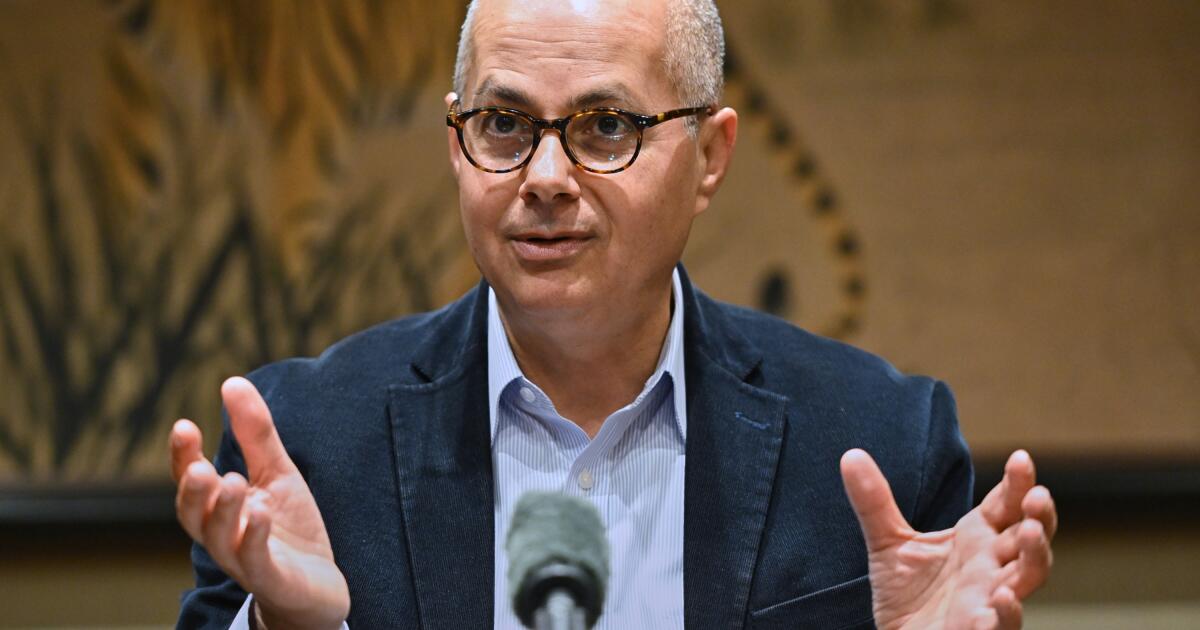
Nobel Prize recipient Omar Yaghi is leaving his role at UC Berkeley to lead the development of a new artificial intelligence institute at Tsinghua University in Beijing, the Chinese university announced.
Yaghi will head the AI Chemistry and Materials Research Institute at Tsinghua, where he was appointed an honorary professor in 2022. Known as AIMATRY (AI × Materials × Chemistry), the new center will focus on material design and synthesis through artificial intelligence, according to a statement from the university.
In 2025, Yaghi shared the Nobel Prize in chemistry with Susumu Kitagawa of Kyoto University and Richard Robson of the University of Melbourne for their development of metal-organic frameworks, a type of super-porous material in which metal ions and carbon-based molecules combine to form crystals with exceptionally large surface areas.
The material has the potential to combat climate change by capturing and storing carbon or other pollutants, and by extracting water from the atmosphere in water-scarce areas. Upon awarding the prize, a member of the Nobel committee likened the technology’s ability to store enormous amounts of stuff in seemingly compact spaces to Hermione Granger’s enchanted handbag in the Harry Potter series.
Yaghi’s Irvine-based company, Atoco, has said it will start taking orders later this year for its technology that harvests water from the air.
A representative for Yaghi said he was not yet available to respond to questions.
China is one of several countries that has been actively recruiting scientists from the U.S., where the Trump administration has slashed science funding, suspended research grants, fired science advisors and tightened immigration restrictions.
“For many, many years, our funding was very competitive; if you worked hard and you were doing good research, you would get funding,” Yaghi said of the U.S. in an interview with Scientific American earlier this year. “The current state is not so encouraging because of the cutting back on grants and support of science by the very agencies that many university researchers rely on.”
Yaghi was born in Jordan to Palestinian refugees, and immigrated to the U.S. when he was 15 to study.
“We’ve learned over and over in human civilization that scholars can move across borders,” Yaghi told the New York Times last year. “This is how knowledge spread and how vast regions of the world lifted themselves out of poverty.”
Science
Trump administration seeks to limit federal funding that doesn’t ‘advance’ presidential policies

A new rule proposed by the White House Office of Management and Budget would fundamentally overhaul the way federal grants are awarded and overseen — a sweeping change that one scientific society said “would all but end the use of scientific merit in the selection of grants and programs across the government.”
Proposed in late May, the rule would give political appointees unprecedented control over federal grants for research, education and infrastructure, and specifies that government funds can only be spent on projects “aligned with administration policies and priorities,” according to a copy of the proposed rule.
The rule would also restrict research topics, limit U.S. scientists’ ability to collaborate with colleagues in other countries and make it easier for the government to suspend or cancel grants at any time.
The changes are intended to improve “transparency, accountability, and oversight for Federal awards” while “ensuring that American tax dollars are not wasted or misused,” according to the White House office.
But critics say that if the rule is implemented, the final sign-off for grants will no longer be in the hands of subject-matter experts within individual agencies, but in those of political appointees.
“This touches all parts of American life,” said Dr. Eric Rafla-Yuan, a psychiatrist who practices at the Veterans Administration and San Diego County’s psychiatric hospital.
“Control of how all of the federal grants and programs are funded will fall under a small group of highly partisan individuals who would have very few limits on how they spend these billions of taxpayer dollars,” said Rafla-Yuan, who also chairs the Committee to Protect Public Mental Health advocacy group. “This touches everyone’s life, even if they don’t realize it.”
OMB published the proposed rule May 29, opening a 45-day comment period that closes July 13.
Opposition to the proposed rule has mobilized multiple sectors of society. Professional groups representing cancer researchers, civil engineers, county governments, medical schools, housing agencies, city and municipal governments, nonprofits and others have publicly expressed concerns about potential consequences.
By midday Thursday, the Federal Register logged nearly 100,000 comments about the proposal, many of them expressing concern.
“I understand the need for oversight, fiscal responsibility, and accountability. That is not the issue,” wrote Jack Feldman, a neuroscientist who holds the David Geffen School of Medicine Chair in Neuroscience at UCLA. “The issue is whether scientific research is to be judged by scientific merit, or whether it can be approved, denied, or terminated according to broad political criteria that may change from one administration to the next.”
Crucially, the rule converts policies governing federal grants from “guidance” into binding regulations that all agencies would be required to follow. It would give political appointees power to override federal agencies’ merit-based reviews and mandate that a political appointee review decisions to ensure that all awards “demonstrably advance the President’s policy priorities.”
The elevation of political appointees in what were previously merit-based decisions has alarmed many scientists.
“The proposed rule changes would all but end the use of scientific merit in the selection of grants and programs across the government,” read a statement from the Planetary Society, a nonprofit dedicated to space research.
Researchers and science groups have also expressed concern about a section of the rule prohibiting the promotion of “theories of disparate-impact liability” — a legal concept that refers to policies that appear neutral but cause disproportionate harm to certain groups.
The section’s vague language and many loopholes could have a chilling effect on any research that studies the effects of a disease, policy or public health intervention on any specific group of people, Rafla-Yuan said.
As an example, he said, “if there’s a specific age range that is at higher risk for suicide, and we want to figure out, well, what’s going on with people that are aged 14 to 19 … we can’t do that under the wording in this rule.”
New restrictions on collaborations with scientists in other countries would hinder opportunities for U.S. researchers and limit innovation, said Joanne Padrón Carney, chief government relations officer for the American Assn. for the Advancement of Science.
“Science is a global enterprise. Especially in biomedical and public health fields, diseases don’t care about borders or government policies,” she said.
California’s congressional delegation sent a letter Wednesday asking OMB to rescind the proposal, outlining concerns about its impact on scientific innovation, U.S. competitiveness and the fiscal stability of local governments, many of which rely on federal grants for local services.
The proposed rule grants the federal government broad powers to suspend or cancel grants for any reason, introducing “unprecedented unpredictability into local governance,” the lawmakers wrote, “leaving vital infrastructure projects unfinished and abandoning vulnerable populations who rely on these services.”
Republican Sen. Susan Collins has also asked the White House to withdraw certain parts of the letter and extend the public comment period, saying the proposed rule as written would “harm small and rural communities, undermine scientific and biomedical research, and conflict with Congress’ control over the federal funding process.”
-

 Austin, TX3 minutes ago
Man shot and killed by police after pointing gun at people in Austin, Texas
-

 Alabama10 minutes ago
Alabama has Talent returns with local connection
-

 Alaska13 minutes ago
Alaska Sports Scoreboard: July 11, 2026
-

 Arizona18 minutes ago
Cardinals Mailbag: Latest on Jacoby Brissett, Carson Beck, and Arizona’s QB Future
-

 Arkansas25 minutes ago
Arkansas tips its hat to blues pioneer Larry “Totsie” Davis in England dedication
-

 California28 minutes ago
‘Explosive diarrhea’ parasite surfaces in California as health officials fear statewide surge
-

 Colorado33 minutes ago
This Quiet Colorado Town Is An Underrated Gem For Nature Lovers
-

 Connecticut40 minutes ago
Car catches fire in Trumbull

