Science
Pregnant? Researchers want you to know something about fluoride

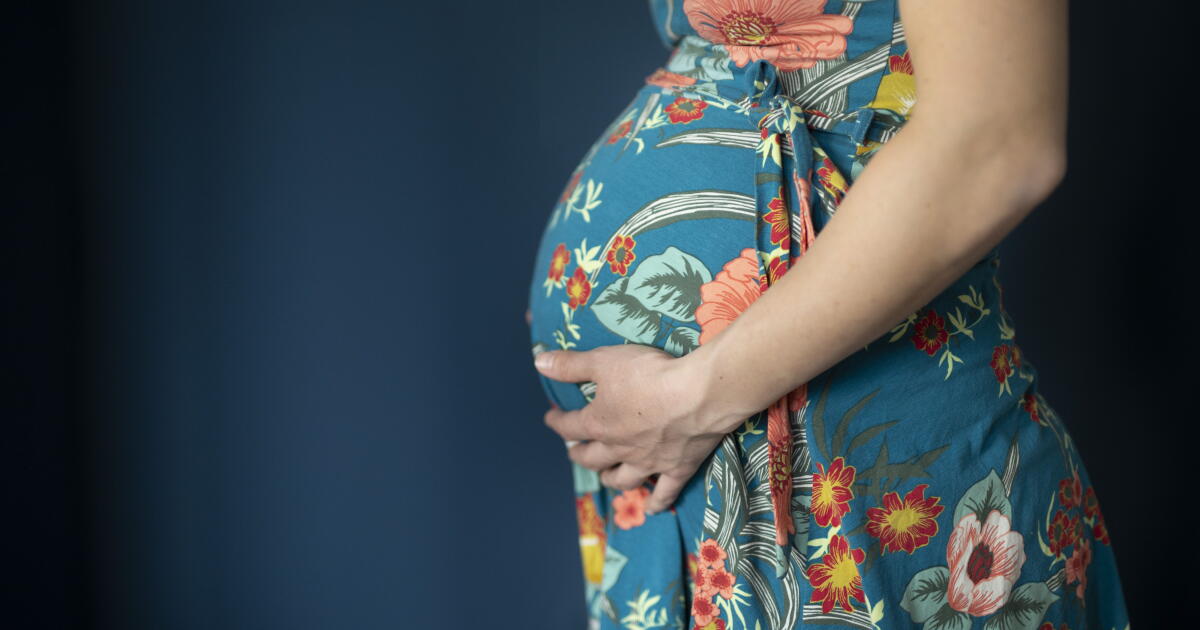
Adding fluoride to drinking water is widely considered a triumph of public health. The Centers for Disease Control and Prevention says the cavity-prevention strategy ranks alongside the development of vaccines and the recognition of tobacco’s dangers as signal achievements of the 20th century.
But new evidence from Los Angeles mothers and their preschool-age children suggests community water fluoridation may have a downside.
A study published Monday in JAMA Network Open links prenatal exposure to the mineral with an increased risk of neurobehavioral problems at age 3, including symptoms that characterize autism spectrum disorder. The association was seen among women who consumed fluoride in amounts that are considered typical in Los Angeles and across the country.
The findings do not show that drinking fluoridated water causes autism or any other behavioral conditions. Nor is it clear whether the relationship between fluoride exposure and the problems seen in the L.A.-area children — a cohort that is predominantly low-income and 80% Latino — would extend to other demographic groups.
However, the results are concerning enough that USC epidemiologist Tracy Bastain said she would advise pregnant people to avoid fluoridated water straight from the tap and drink filtered water instead.
“This exposure can impact the developing fetus,” said Bastain, the study’s senior author. “Eliminating that from drinking water is probably a good practice.”
About 63% of Americans receive fluoridated water through their taps, including 73% of those served by community water systems, according to the CDC. In Los Angeles County, 62% of residents get fluoridated water, the Department of Public Health says.
The data analyzed by Bastain and her colleagues came from participants in an ongoing USC research project called Maternal and Developmental Risks from Environmental and Social Stressors, or MADRES. Women receiving prenatal care from clinics in Central and South Los Angeles that cater to low-income patients with Medi-Cal insurance were invited to join.
Between 2017 and 2020, 229 mothers took a test to measure the concentration of fluoride in their urine during their third trimester of pregnancy. Then, between 2020 and 2023, they completed a 99-question survey to assess their child’s behavior when their sons and daughters were 3 years old.
Among other things, the survey asked mothers whether their children were restless, hyperactive, impatient, clingy or accident-prone. It also asked about specific behaviors, such as resisting bedtime or sleeping alone, chewing on things that aren’t edible, holding their breath, and being overly concerned with neatness or cleanliness.
Some of the questions the mothers answered addressed health problems with no obvious medical cause, including headaches, cramps, nausea and skin rashes.
Among the 229 children — 116 girls and 113 boys — 35 were found to have a collection of symptoms that put them in the clinical or borderline clinical range for inward-focused problems such as sadness, depression and anxiety. In addition, 23 were in the clinical or borderline clinical range for behaviors directed at others, such as shouting in a classroom or attacking other kids, and 32 were deemed at least borderline clinical for a combination of inward and outward problems.
What interested the researchers was whether there was any correlation between a child’s risk of having clinical or borderline clinical behavioral problems and the amount of fluoride in his or her mother’s urine during pregnancy.
They found that compared to women whose fluoride levels placed them at the 25th percentile — meaning 24% of women in the study had levels lower than theirs — women at the 75th percentile were 83% more likely to have their child score in the “clinical” or “borderline clinical” range for inward and outward problems combined. When the researchers narrowed their focus to children in the clinical range only, that risk increased to 84%, according to the study.
The researchers also found that the same increase in fluoride levels was associated with an 18.5% increase in a child’s symptoms related to autism spectrum disorder, as well as an 11.3% increase in symptoms of anxiety.
The amount of fluoride needed for mothers to go from the 25th to the 75th percentile was 0.68 milligrams per liter. As it happens, that’s nearly identical to the 0.7 mg per liter standard that federal regulators say is optimal for preventing tooth decay.
Bastain said that allowed the researchers to compare what might happen to children in two parallel universes: a typical one where their mothers consumed fluoridated water during pregnancy, and an alternate one where they didn’t.
“You can use it as a proxy for if they lived in a fluoridated community or not,” she said.
What that thought experiment shows is that children in the fluoridated community face a higher level of risk. That said, it’s not clear when that risk becomes high enough to be worrisome.
“We don’t know what the safe threshold is,” Bastain said. “It’s not like you can say that as long as you’re under the 75th percentile, there are no effects.”
The study authors’ concerns about the effects of fluoride on developing brains didn’t come out of nowhere.
The National Toxicology Program — a joint effort of the CDC, the National Institutes of Health, and the Food and Drug Administration — has been investigating the issue since 2016. In a report last year that reviewed an array of evidence from humans and laboratory animals, a working group concluded “with moderate confidence” that overall fluoride exposure at levels at or above 1.5 mg per liter “is consistently associated with lower IQ in children.”
The working group added that “more studies are needed to fully understand the potential for lower fluoride exposure to affect children’s IQ.”
A 2019 study of hundreds of mothers in Canada — where 39% of residents have fluoridated water — found that a 1-mg increase in daily fluoride intake during pregnancy was associated with a 3.7-point reduction in IQ scores in their 3- and 4-year-old children.
And among hundreds of pregnant women in Mexico, a 0.5-mg-per-liter increase in urinary fluoride went along with a 2.5-point drop in IQ scores for their 6- to 12-year-old children, researchers reported in 2017.
Bastain and her colleagues write their study is the first they are aware of that examines the link between prenatal fluoride exposure and neurobehavioral outcomes in children in the United States. The results are sure to be controversial, Bastain said, but there’s a straightforward way for pregnant people to reduce the possible risk.
“It’s a pretty easy intervention to get one of those tabletop plastic pitchers” that filter out metals, she said. “Most of them do a pretty good job of filtering out fluoride.”


Federal employees who were axed during waves of cuts by the Trump administration have fought back against the dismantling of a key climate science website, Climate.gov, and put up a new site, Climate.us, that can now do everything the original did.
The site, with millions of users each year, was known for colorful charts that anyone could freely download and that simplified giant sets of data, such as temperature readings. Now it refers to another page and is no longer being updated.
Daniel Swain, a UC Agriculture & Natural Resources climate scientist, called the resources available at Climate.gov “the most efficacious dollars spent by NOAA on public-facing science, possibly ever.” He has used graphics from the former website on his popular weather blog.
“I am a terrible artist or illustrator. It would be very bad if I had to create those on my own.” Swain said. The website didn’t just make graphics that were beautiful, he said, they were accurate and reliable because of the network of researchers who fact-checked them.
Rebecca Lindsey was the editorial lead and program manager for Climate.gov until February 2025, when her position at the National Oceanic and Atmospheric Administration was eliminated by the Elon Musk-led Department of Government Efficiency, or DOGE. She explained that the online resource was “a bridge between scientists, data and the public.”
Lindsey and her team have now rebuilt the bridge piece by piece, if just a bit further downstream.
The team is made of the same editorial and technical staff that ran Climate.gov. It’s paid for through a crowdfunding campaign and one large, anonymous donation.
The group has raised some $380,000, about $100,000 of which came in the last week. They also have recruited 80 scientists who are willing to volunteer as subject matter experts and fact checkers. It’s enough to keep the work going through February while they seek more long-term funding.
The first iteration of Climate.us went online in 2025 to keep the last 15 years of work from the government website available. The newest version restores the full function of the previous website.
For Californians, the timing could be important.
“We’re headed for a very strong El Niño event that will have significant implications for Southern California,” Swain said. “Climate.gov and the scientists behind it did a great job walking people through the last one, and I would expect that’s the case this time as well.”
Climate.gov excelled at tapping into a pool of academic experts to explain what was happening in nearly real time. This allowed the public to see how events such as wildfire, drought or large weather patterns such as El Niño were shaping their lives when they needed the information most. Research from academic institutions, by contrast, can take years to publish results from major natural disasters.
Swain emphasized that cuts to resources that give context to hard-to-interpret data is not just a loss for the research community.
“It’s getting more and more difficult for the American public to access the science and the scientists that their tax dollars have supported for over half a century,” he said.
With the revival of Climate.us, Swain said he plans to directly use the site and its graphics to keep Californians connected to the world of climate science.

Scientists have long dreamed of discovering the alchemy by which chemicals can be turned into life. On Wednesday, a team at the University of Minnesota announced that it had taken a major step toward that vision.
Blending together dozens of ingredients, the researchers have synthesized simple cells that feed, grow, reproduce and compete with one another for food. If these cells are not yet fully alive, they have most of the hallmarks of life.
“Life is not binary,” said Kate Adamala, a synthetic biologist who led the research. “That’s why I’m hesitant to call this ‘alive.’ There’s no clear line, as much as we would love it to be.”
Until now, scientists had never mastered the recipe for a cell that can perform so many functions, said John Glass, a synthetic biologist at the J. Craig Venter Institute in La Jolla, Calif., who was not involved in the study.
“It is dazzling that she has put these things all together,” he said.
Drew Endy, a synthetic biologist at Stanford University, said, “It’s a cell that was built, not born. It’s constructed, but it does what cells do.”
Dr. Adamala named her creation SpudCell, after its potato-like appearance. Rather than patent it, she and Dr. Endy are organizing a community of scientists to focus on making SpudCells more fully alive and adapting them to new kinds of experiments.
They and their colleagues have founded a nonprofit research organization that Dr. Endy estimates will spend hundreds of millions of dollars on the effort in the next decade. Hundreds of scientists are expected to join.
“We’re going to remember this moment,” said Roseanna Zia, a computational biologist at the University of Missouri who was not involved in the project.
Dr. Adamala and her colleagues posted a 190-page account of their work online. The research is under review for publication in a scientific journal.
Scientists hope synthetic cells can tell them things about life that natural cells cannot, including such basic questions as how many genes are necessary for a minimal form of life.
But synthetic cells also might someday be engineered to do things that natural cells can’t, like making new kinds of medicine or drawing large amounts of carbon dioxide from the atmosphere. In theory, engineered SpudCells might produce a vast range of proteins that natural cells cannot be coaxed to make, or even toxic chemicals like rocket fuel.
Now, “we can think about doing chemistry that we’re barely getting our heads around,” Dr. Glass said.
The trouble with life as we know it: mysterious, messy complexity. Our own DNA contains tens of thousands of genes, as well as millions of molecular switches turning those genes on and off. Scientists barely have a clue as to what many of those pieces of DNA are doing. Often a gene that they think they understand turns out to be performing other jobs than scientists expected.
One way to sidestep this intricacy is to simplify.
In the 1990s, a team led by the late biologist Craig Venter began studying a microbe that had fewer than 1,000 genes. The team, now led by Dr. Glass, went on to strip the microbe’s genome down to 525 essential genes.
In a 2016 paper, the team reported it didn’t know what a third of those genes were doing. Dr. Glass and his colleagues have spent the last decade trying to solve the puzzle, and they still can’t say what 56 of them do.
“There are still significant tasks that every cell has to do that we don’t know,” Dr. Glass said.
Other researchers tackled the problem from the opposite direction. Instead of working from the top down, they moved from the bottom up, seeking to combine lifeless molecules to produce a living cell.
Since the 1990s, several labs have bitten off small pieces of this problem. Some of them have perfected recipes to make hollow bubbles from oily molecules. Others have found ways to encapsulate simple genetic molecules inside those bubbles.
But scientists struggled to put these pieces together into more complex systems, let alone something that could be called a cell.
In recent years, Dr. Adamala took on one of the fundamental challenges: cell division. A natural cell divides with the help of proteins that lock together into a ring anchored to its inner wall. The ring winds itself tighter, pinching the cell in two.
Other proteins act like winches, moving DNA and other molecules into the forming cells, so that they have the ingredients necessary to keep living.
At first, Dr. Adamala tried building a simpler version of the natural system. But then she decided not to mimic real cells at all.
Biophysicists had found that if they stuck proteins on a membrane, they created pressure that made the membrane bend. Dr. Adamala and her team created bubbles that could snag proteins floating around them. When a bubble collected enough proteins, its surface began bending inward until it popped in two.
While the idea was simple, getting it to work in the lab required a year of experiments. “But once it works, it works,” Dr. Adamala said.
That success prompted the team to try to build a synthetic cell in its entirety.
The first step was to create a broth of the molecules necessary for a cell to operate. The recipe ultimately included about a hundred kinds of proteins and simple molecules required for crucial chemical reactions, such as making new proteins from genes.
The researchers also provided their synthetic cell with genes borrowed from a virus and the ubiquitous microbe Escherichia coli. They picked 36 genes for basic jobs like copying DNA.
After mixing these ingredients together into a soup, the scientists added the building blocks of membranes. They spontaneously joined together into bubbles, each engulfing some of the soup.
Many of these bubbles ended up encasing the right mix of genes, proteins and other molecules, and they started carrying out the chemical reactions seen in real cells.
As the new cells floated in flasks, Dr. Adamala and her colleagues added food. The cells slurped up small molecules through channels on their surfaces.
The scientists also put in small bubbles loaded with proteins and other molecules that were too big to fit through the channels. By bumping and fusing into one of these bubbles, the cell could feed on the treats inside.
As the cells fed, they grew. And in just a few hours, they were big enough to divide.
The scientists added a special protein to the flasks, which latched onto the surface of the cells and forced them to bend inward. Once the cells split in two, the pair of new cells kept growing.
Now the SpudCells grew, fed and reproduced. As it turned out, the cells even had a rudimentary ability to evolve.
Dr. Adamala and her colleagues created a mutant version that bound more tightly to the snack-filled bubbles floating around it. To test it, they created a 50-50 mixture of original and mutant SpudCells.
The cells competed for five generations for food. Eventually the mutants outnumbered the originals, suggesting that they were outcompeting the originals for food.
“That’s the shake-the-ground accomplishment here,” said Dr. Zia. Scientists will be able to put various synthetic cells in competition with one another and rapidly develop more sophisticated ones.
For all this evidence of life, SpudCell still has some major shortcomings. For starters, it can’t make the molecular factory that produces new proteins, called a ribosome. The cells can carry all the genes they need to build ribosomes, but for some reason the parts don’t come together.
For now, Dr. Adamala and her colleagues have to feed ready-made ribosomes to SpudCells. This solution has an expiration date, though: SpudCells can keep making proteins through five to 10 generations before they fail as their ribosomes become defective.
“I don’t want to say it dies, but it stops working,” Dr. Adamala said.
When Dr. Adamala showed SpudCell to Dr. Endy last year, he was so awestruck that he decided to help her found Biotic, the nonprofit organization intended to create a community of SpudCell researchers.
“I’m pouring my life’s work into this,” Dr. Endy said. One of the first tasks for Biotic will be to make it easier for other scientists to create SpudCells.
Dr. Adamala can create a fresh batch of them in her own lab in about a day. But that’s only because she has freezers full of purified proteins and an intimate understanding of each step of her recipe. Biotic expects to offer scientists easier recipes and provide the required ingredients.
Dr. Endy hopes that the open-source tools will encourage scientists to collaborate on building new kinds of SpudCells with more of the defining features of life, such as the ability to make their own ribosomes and to divide indefinitely.
“It’s completely doable,” said Dr. Glass.
Biotic researchers are already planning their first meeting, in September in Philadelphia. High on their list of priorities will be formalizing plans to safeguard this area of research.
For now, the synthetic cell can only survive a few generations on a special lab diet. But future versions may be more robust, raising the possibility that someone might someday use SpudCells unethically, perhaps even to make a weapon.
Dr. Endy argues that an open-source research community will be better prepared to prevent that from happening. “We can have these conversations now, as opposed to waiting for somebody else to do it, and then we’re just all reacting,” he said.
Dr. Endy likens SpudCells to a biological version of the Wright flyer, the crude plane that the Wright Brothers used to make the first sustained controlled flight in 1903, ushering in the age of airplanes.
“The Wright flyer flying for 12 seconds doesn’t get you a 737,” Dr. Endy said. “This is just the beginning.”

For the next five years, the Environmental Protection Agency has indicated it will not require public water utilities to test for microplastics or pharmaceuticals in drinking water, according to a proposed rule published in the Federal Register.
On Friday, the EPA submitted a list of chemicals it plans to test for under the Unregulated Contaminant Monitoring Rule, a mandatory testing program used to collect information about concerning chemicals in drinking water that could be harming human health. It did not include microplastics or pharmaceuticals.
The omissions come after announcements by EPA Administrator Lee Zeldin earlier this year that his agency was designating microplastics and pharmaceuticals priority contaminants for testing.
“This is a direct response to the concern of millions of Americans who have long demanded answers about what they and their families are drinking every day,” he said at an April news conference with Health and Human Secretary Robert F. Kennedy Jr. at EPA headquarters.
Zeldin’s announcement was seen at the time as a move to placate the increasingly disgruntled Make America Healthy Again contingent of Trump supporters.
Now the agency says it has no validated or standardized method to test for the plastic particles in drinking water, and wouldn’t be able to develop one before December, when testing is required to begin.
Among the 33 chemicals the EPA will require water utilities to test for are seven PFAS, or forever chemicals, and three pesticide residues.
It will be five years before the EPA proposes another list.
The EPA did not respond to a request for comment.
The agency noted in its proposed rule that it will collaborate with other federal agencies to “evaluate risks and exposures” of microplastics for future monitoring.
Environmentalists reacted with frustration and resignation. They pointed out that the European Union has developed methods to test for the tiny plastic particles, which have been found in people’s blood, brains and lung tissue. California has one in the works.
“The California water board has spent a lot of time and money on how to measure in drinking water,” said Judith Enck, a former EPA regional administrator and president of the anti-plastic environmental group Beyond Plastics. “EPA should give them a call.”
California was required by a 2018 state law to establish a protocol for local water utilities to test for the particles in drinking water. The state has not yet begun reporting its results, but protocols were established in 2021. Blair Robertson, a spokesman for the State Water Resources Control Board, said it’s not “a fully validated, end-to-end regulatory method” yet.
At the April meeting, Zeldin announced that he would place microplastics on what is known as the Contaminant Candidate List, which acts as a preliminary “watch list” of unregulated, priority contaminants in drinking water. Like the mandatory monitoring list, it is updated only every five years. The most recent list was published on April 2 — the day he made his announcement.
“Americans have been ignored as they sound the alarm about plastics in their drinking water,” Zeldin said during the announcement. “That ends today by placing microplastics on the contaminant candidate list for the first time ever. EPA will follow the science, will pursue answers and will hold ourselves to the highest standards to protect the health of Americans.”
There appears to be no clear association between these two lists, although the contaminant list is supposed to inform the monitoring list. Seventy-five chemicals and four chemical groups (microplastics, pharmaceuticals, PFAS chemicals, and disinfection byproducts) were listed on the 2026 contaminant list. Only seven of those chemicals were also on the proposed monitoring list (as well as seven PFAS chemicals).
When Zeldin announced microplastics as “‘a priority contaminant for regulation,’ and called it ‘a historic action on microplastics,’ he made it seem like the administration was going to take microplastics seriously,” said Mary Grant, water policy director for the environmental group Food & Water Watch.
“By not including them, they made it clear they don’t actually have plans to immediately address this crisis by getting the real-world monitoring data that we need right now to really start correcting ourselves,” she said.
Craig Davis, senior director of plastics chemistry at the American Chemistry Council — the nation’s largest trade group for chemical companies — said that while his organization supports microplastic research, it also agrees with the EPA’s decision not to include them in the monitoring list.
“National drinking water monitoring should be based on validated, standardized methods that can produce reliable and comparable data,” said Davis in a statement. He said “limited” national monitoring resources should be focused where data can produce “actionable public health information.”
The public has 60 days to comment once the plan is published in the Federal Register.
-
 Idaho4 minutes ago
Idaho State Board appoints David W. Hahn as eighth president of Boise State University
-
 Illinois11 minutes ago
Illinois 250 invites every resident to help tell the state’s story | Ep. 1 of 6
-

 Indiana14 minutes ago
Submit your nature art for DNR hard card licenses
-

 Iowa19 minutes ago
Cubs Minor League Wrap: Aaron Bummer, Liam Hendriks pitch for Iowa
-

 Kansas26 minutes ago
Man pleads guilty to murder, kidnapping in estranged wife’s death in northeast Wichita
-

 Kentucky29 minutes ago
Kentucky Adds Three More International Swimmers to Women’s 2026 Recruiting Class
-

 Louisiana41 minutes ago
Louisiana State Police introduce two new K-9 officers
-

 Maine44 minutes ago
Lil Wayne Apologizes After Failing to Appear at His Own Concert: ‘I’m So Sorry’

