Science
NASA Astronauts Undock and Start Return to Earth on SpaceX Capsule: Live Updates


Suni Williams and Butch Wilmore are headed home. The splashdown of their space capsule will end an unexpected nine months in space.
Neither astronaut complained much about what has amounted to a very, very extended business trip. Instead, both have said that they tried to make the most of every moment they were in space.
Here’s a look at their time orbiting planet Earth, by the numbers:
3: The number of times Ms. Williams and Mr. Wilmore have each been to space.
8: The number of days that the two initially planned to spend at the International Space Station during this mission.
285: The number of days that Ms. Williams and Mr. Wilmore will have spent at the space station (the total rises to 286 days if you include the trip up in June and the trip down on Tuesday).
5: The number of thrusters on Starliner, the Boeing spacecraft that malfunctioned as it approached the space station in June.
2,746: The number of times that Ms. Williams and Mr. Wilmore could have watched the movie “The Martian,” about a fictional NASA astronaut who was definitely stranded on Mars.
121,347,491: The number of miles Ms. Williams and Mr. Wilmore will have traveled by the end of their journey.
0: The number of frequent flier miles the astronauts can claim from major airlines.
4,576: The number of times the astronauts will have orbited Earth.
8: The number of visiting spacecraft the two astronauts saw come and go during their time on the space station.
2: The number of total ballots cast by Ms. Williams and Mr. Wilmore from space in the 2024 presidential election.
608: The number of days Ms. Williams will have spent in space during her lifetime. The only American astronaut who has spent more time in space is Peggy Whitson, who spent 675 days in space.
464: The total number of days Mr. Wilmore will have spent in space.
1: The number of reindeers they made out of spare stowage bags and brown industrial clips during the holiday season.
2: The number of spacewalks Ms. Williams conducted during her nine-month stint in space. She has completed nine total spacewalks during her career.
62 hours 6 minutes: The total amount of time Ms. Williams has spent spacewalking. She now holds the record for total spacewalking time by a female astronaut.
1: The number of spacewalks by Mr. Wilmore on this mission. He has completed five spacewalks during his career.
31 hours 2 minutes: The total amount of time Mr. Wilmore has spent on spacewalks.
7: The number of days that newly arriving astronauts typically overlap with those who are departing from the International Space Station.
2: The expected number of days for the handover this time. It has been accelerated to save on food and other supplies, and because the weather is expected to worsen at the possible splashdown sites.
2: The number of family dogs eager to greet Ms. Williams.



Between all the monitors, wires and keyboards are the normal trappings of a workplace: lunchboxes, water bottles, backpacks and smartphones.
A vase of roses brightens up the center of the room. Since the Challenger disaster in 1986, a couple in Houston has sent more than a hundred bouquets to mission control to commemorate NASA’s space launches and honor the lives of fallen astronauts.
Mission control is in a new room, and looks a little different than in the Apollo era. Wood desks have replaced green metal mainframes, and the ashtrays and rotary phones are gone.
But the bones of the operation have not changed, said Judd Frieling, one of the Artemis II flight directors, who spoke from mission control to reporters on Saturday. Every spacecraft needs similar systems — propulsion, navigation and the like — to succeed.
“We’re building upon the giants that started it back in the Apollo era,” Mr. Frieling said. “We continued our evolution during the space shuttle program, during the International Space Station program and now on to the Artemis program.”
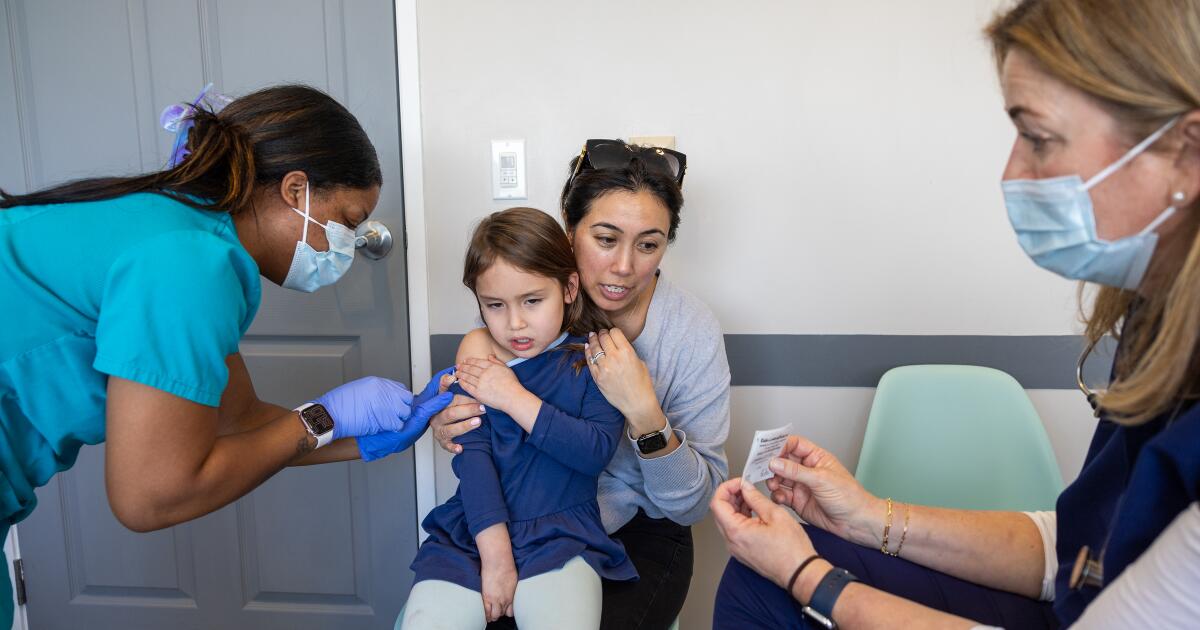
Measles is back in the United States. More than 1,500 cases have already been reported in the first months of 2026, putting the country on pace to surpass last year’s total of more than 2,200, the highest number in decades. Public health officials warn that the nation’s status as “measles free” is now at risk as childhood vaccination rates decline.
Measles may not be the only disease poised for a comeback. Another virus that once infected thousands of American children each year could be heading in the same direction.
A recent study my colleagues and I conducted using national electronic health record data found that hepatitis B vaccination rates among newborns declined by more than 10% between 2023 and August 2025.
At first glance, hepatitis B may seem like an unlikely threat to infants. The virus spreads through infected blood or bodily fluids, exposures many parents assume newborns would rarely encounter. But before routine vaccination began, hepatitis B infected roughly 18,000 children under the age of 10 in the United States every year.
About half of those infections were passed from mother to child during birth. The rest occurred through everyday household exposure, often through contact with a caregiver or family member who did not know they were infected.
The consequences can be lifelong. While acute infection is often mild or asymptomatic, as many as 90% of babies infected in their first year of life develop chronic hepatitis B. Over time, chronic infection can lead to cirrhosis, liver cancer and liver failure.
The first major step toward prevention was screening. In 1988, universal hepatitis B testing during pregnancy was recommended so that infants born to infected mothers could receive protection immediately after birth. The strategy helped identify many high-risk cases, but it did not prevent all infections. Each year between 50 and 100 infants still developed hepatitis B.
To close those remaining gaps, universal newborn vaccination was recommended in 1991. Over the following decades, hepatitis B infections in children fell to fewer than 20 annually.
That is why many physicians were surprised when, in December, the federal government’s Advisory Committee on Immunization Practices revised its recommendation for newborn hepatitis B vaccination. Under the new guidance, babies born to mothers who test negative for hepatitis B may receive the vaccine based on individual clinical decision making rather than a universal recommendation.
The idea behind this approach is straightforward. If a mother tests negative for the virus, the immediate risk to the newborn is extremely low.
But the history of hepatitis B prevention shows why universal protection became necessary in the first place.
Today, an estimated 660,000 Americans still live with chronic hepatitis B, and roughly half are unaware of their infection. Exposure risks have not disappeared. They have been controlled through vaccination and screening.
At the same time, the nation’s vaccine guidance is becoming increasingly confusing. Earlier this year, the Centers for Disease Control and Prevention revised its childhood immunization schedule, moving several vaccines from being universally recommended to being suggested as topics of discussion for parents and providers.
The changes were not supported by new evidence. In response, the American Academy of Pediatrics created its own immunization schedule that largely maintains the previous recommendations.
As a result of a lawsuit against the CDC and the Department of Health and Human Services, a federal judge has temporarily blocked the changes to the federal recommendations and invalidated actions taken by the advisory committee.
The result is growing confusion.
In my clinic, parents have begun asking questions I never heard before. Which vaccine schedule should we follow? Is this the schedule with all the vaccines or only some of them? Vaccination decisions are influenced by science but also by trust and consistency. When parents receive mixed messages, some begin to question whether vaccines are necessary at all. We have already seen the consequences of declining vaccination with measles.
For decades, hepatitis B vaccination protected American children from a virus that once infected thousands every year. Because the disease became rare, many parents and younger physicians have never seen its consequences firsthand.
If measles is a warning, hepatitis B could be next.
The lesson from the past is simple. When we stop using vaccines that work, the diseases they prevent come back.
Joshua Rothman is a pediatrician at UC San Diego Health and a clinical assistant professor of pediatrics at the UC San Diego School of Medicine.
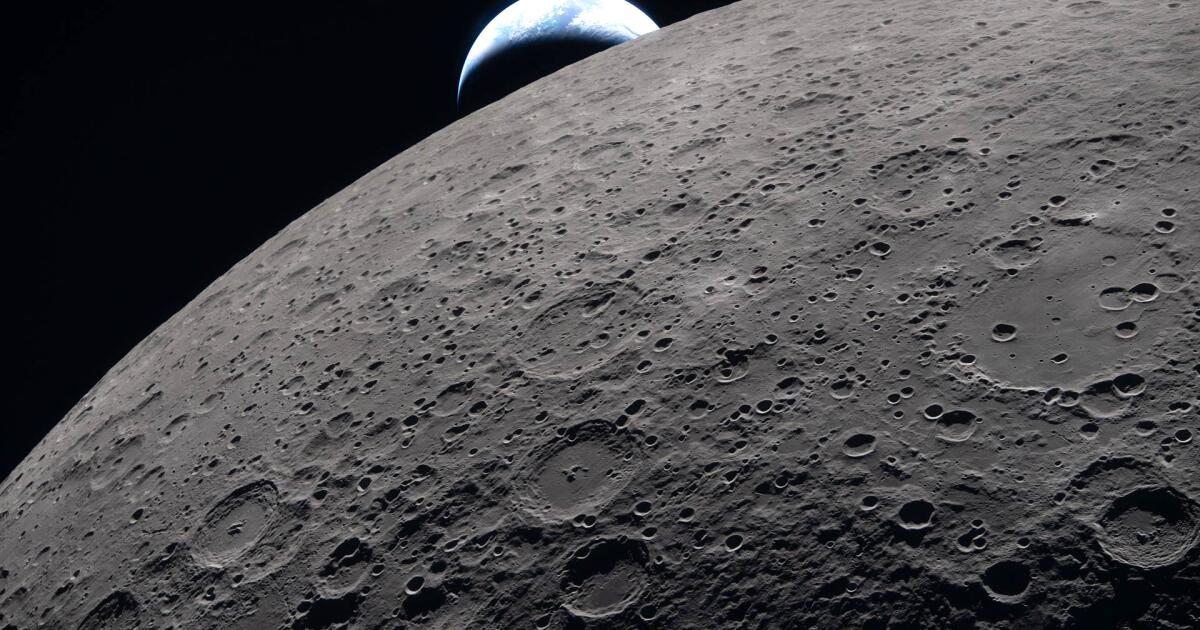
The crescent Earth — our oasis holding everything we cherish, now just a speck in the infinite blackness — seemed to kiss the jagged lunar surface. The moon’s thousands of scars projected themselves across the Earth as it slowly slipped out of sight.
“I’m actually getting chills right now just thinking about it,” said Artemis II Cmdr. Reid Wiseman, talking to The Times while still in space Wednesday evening (Earth time). “It was just an unbelievable sight, and then it was gone.”
The crew of four — in the dim green glow of their spacecraft, with no more elbow room than a Sprinter van — entered a profound solitude few have ever experienced. Farther from Earth than any humans in history, the crew could no longer reach Mission Control, their families or any other living member of our home planet.
For 40 minutes Monday, it was just them, their high-tech lifeboat and the moon.
Artemis II Cmdr. Reid Wiseman peers out the window of the Orion spacecraft as his first lunar observation period on Monday begins.
(NASA)
The crew members paused their rigorous scientific observations for just three or four minutes to let the surreal feeling settle. They shared some maple cookies brought by Canadian Space Agency and Artemis II mission specialist astronaut Jeremy Hansen.
We humans eat seven fishes on Christmas Eve, samosas on Eid al-Fitr and maple cookies behind the moon.
But the astronauts still had work to do. NASA wanted to observe the far side of the moon, eternally locked facing away from Earth, with a highly sophisticated instrument the agency has seldom had the opportunity to measure this landscape with: the human eye.
The moon, appearing about the size of a bowling ball at arm’s length to the crew, hung in the nothingness. In complete silence, it beckoned.

-
Share via
Artemis II pilot Victor Glover heard the call of the terminator: the border between the moon’s daytime and nighttime — the lunar dawn. Here, the sun cast stark, dramatic shadows across the moon’s steep cliffs, rugged ripples and seemingly bottomless craters.
Artemis II mission specialist Christina Koch described the scattering of tiny craters across the daytime side proudly reflecting sunlight, like pinpricks in a lampshade. Hansen was drawn to the beautiful shades of blues, greens and browns that the surface reveals if you’re patient enough.
Even though Earth was hidden behind the moon a quarter million miles away, the crew couldn’t help but think of our home.
For Koch, the desolation was only a reminder of how much Earth provides us: water, air, warmth, food. Glover could feel the love emanating from our pale blue dot, defying distance. Hansen thought of the Earth’s gravity, still working to pull the crew home.
And yet, the crew was in the moon’s gravitational arena, where its gravity dominates Earth’s. It was the lunar monolith in front of them that gently redirected their small vessel of life around the natural satellite and toward home.
Eventually, home peaked back out from behind the dark orb.

The moon fully eclipsing the sun, as seen by the Artemis II crew. From the crew’s perspective, the moon appears large enough to completely block the sun, creating nearly 54 minutes of totality.
(NASA)
As a final show, or perhaps a goodbye, the moon temporarily blocked out the sun: a lunar eclipse.
“We saw great simulations made by our lunar science team, but when that actually happened, it just blew us all away,” Glover said. “It was one of the greatest gifts.”

Trump proposes painting executive office building white

Video: Mayor Mamdani Answers Questions From New Yorkers

How to buy Detroit Pistons 2026 NBA playoff tickets

Home of Sam Altman, CEO of OpenAI, hit with Molotov cocktail

Review: Sicily Comes to Dallas at Caffe Lucca, With Some Kinks to Work Out

Florida High School Football Rankings: Top 25 teams – Oct. 21

How old is Bo Nix? What to know about Oregon quarterback ahead of 2024 NFL Draft

Cleary's 21 help Le Moyne down Central Connecticut State 69-64 in OT

99th annual Pony Swim held in Virginia

Indiana Members Credit Union announced as new anchor tenant at Bottleworks District
Trump proposes painting executive office building white

Rep Randy Fine joins House Freedom Caucus: ‘Strongest group of conservative patriots in Congress’

Trump issues NATO ultimatum to reopen Strait of Hormuz ‘within days’

Women are getting most of the new jobs. What’s going on with men?

Video: How Trump’s Advisers Felt About Going to War With Iran
-

 Atlanta, GA6 days ago
1 teenage girl killed, another injured in shooting at Piedmont Park, police say
-

 Movie Reviews1 week ago
Vaazha 2 first half review: Hashir anchors a lively, chaos-filled teen tale
-

 Education1 week ago
Video: YouTube’s C.E.O. on the Rise of Video and the Decline of Reading
-

 Georgia3 days ago
Georgia House Special Runoff Election 2026 Live Results
-

 Education1 week ago
Video: Toy Testing with a Discerning Bodega Cat
-

 Pennsylvania4 days ago
Parents charged after toddler injured by wolf at Pennsylvania zoo
-
 Milwaukee, WI4 days ago
Potawatomi Casino Hotel evacuated after fire breaks out in rooftop HVAC system
-
 Entertainment1 week ago
Inside Ye’s first comeback show at SoFi Stadium