Northeast
Who is Stephanie Turner? Women's fencer who knelt to protest trans opponent and ignited global awareness

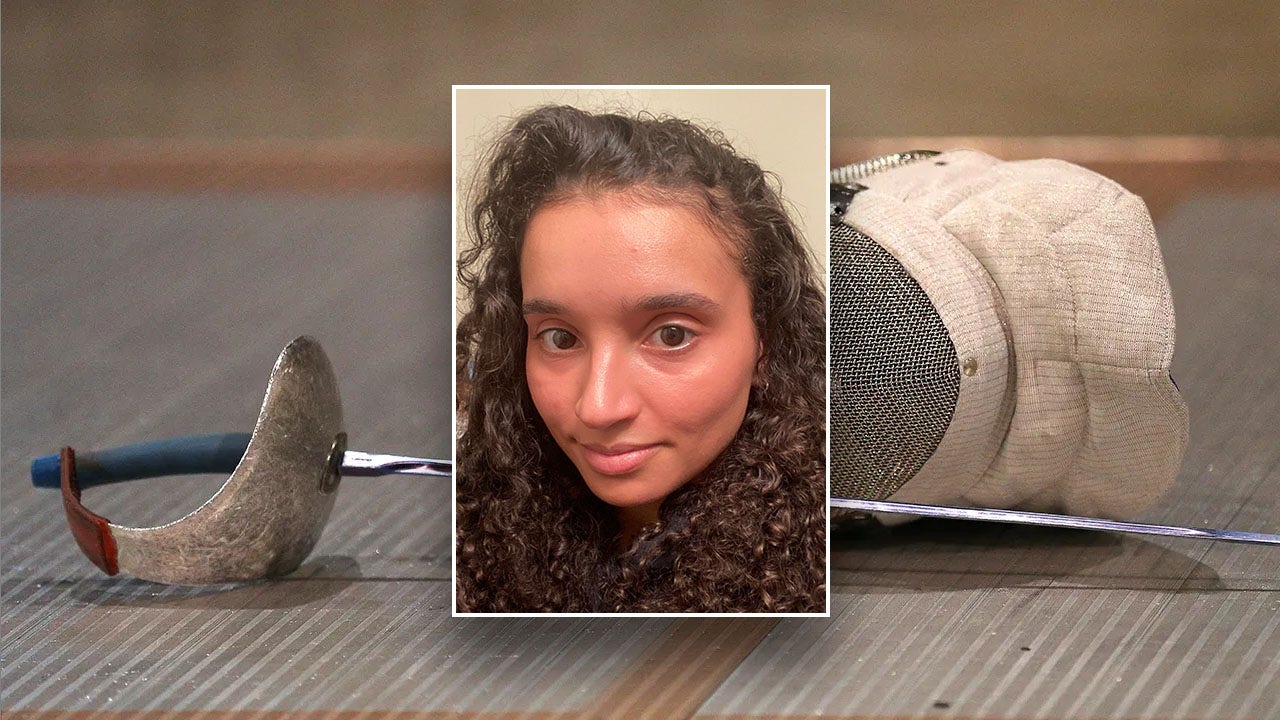
Women’s fencer Stephanie Turner became a household name overnight among activists for women’s rights in sports.
A viral video of Turner kneeling to protest a transgender opponent ignited more debate about transgender inclusion in women’s sports, especially fencing.
“It will probably, at least for the moment, destroy my life,” Turner told Fox News Digital. “It’s very hard for me to do this.”
Her decision was driven by her opposition to competing against biological males.
“This is a serious issue that is happening within all sports, and it needs to be addressed. There is a difference between men and women,” Turner said. “It is a civil rights movement for women and girls, and I prioritize the safety and rights and protection of women and girls over trans-identified males.”
Her belief even overpowered her lifelong political allegiance.
Turner, a long-time registered Democrat who broke from the party for the most recent election, says she is now a “new Republican conservative.”
She switched parties over the issue of transgender athletes in women’s and girls sports.
“A small group of people is holding a much larger athlete base hostage to extremist liberal views,” Turner said.
How did it get to this point?
She comes from a liberal background
Fencer Stephanie Turner kneels in front of a USA Fencing official. (Courtesy of Icons)
Turner was born and raised in Washington D.C., and now lives in deep blue Montgomery County, Maryland.
Over the years, she’s been involved in a close friend group, which includes other fencers. It also includes multiple members of the LGBT community.
WHO IS BLAIRE FLEMING? SJSU VOLLEYBALL PLAYER DOMINATING FEMALE RIVALS AND ENRAGING WOMEN’S RIGHTS GROUPS
“They did not know I had this opinion about transgender women in women’s sports. And one of them was one of my really good friends at the [fencing] club. He’s in the LGBT community, and a lot of my friends are also in the LGBT community. And I don’t want them to be mad at me for this. I love them on a personal level.
“I don’t want them to think that I somehow hate them. And I don’t want to lose them as friends.”
But Turner also feels she can’t have legitimate discussions with some people about the issue.
“They lie and say that estrogen can make a man a woman also to the point where you can not tell the difference, and it just becomes an insane argument.”
She started fencing in college and gradually avoided trans competitors
Turner, 31, ventured into competitive fencing 12 years ago at age 19. She joined the club at the University of Maryland and has stuck with it ever since. She later qualified to compete in USA Fencing.
“I commit a lot of time and money for this,” Turner said, citing travel, equipment and registration expenses.
Turner’s official Fencing Tracker page shows 21 podium finishes, including a gold medal in women’s foil at an event called the Trick or Retreat ROC Aug. 18 in Edison, New Jersey.
Stephanie Turner (Courtesy of Sophie Turner; Patrick Smith/Getty Images)
But she got to a point in her career when she had to be aware of the USA Fencing official gender eligibility policy.
The official policy allows for transgenders to compete in the women’s category in both the junior and senior level after completing one calendar year of testosterone suppression treatment. Proof of compliant hormone therapy must be provided prior to competition.
TRANSGENDER FEMALE FENCER SCORES WORLD TITLE OVER 14-TIME CHAMPION
USA Fencing has a policy announced in November 2022 to give preference when selecting host cities for national tournaments to states without laws that “harm members of LGBTQ communities” and states that do not “have laws undermining the reproductive health of women.”
“In fencing, personally, I see it quite often,” Turner said. “I have witnessed transgender fencers in women’s tournaments and girls tournaments in different age categories, specifically Y-14 (the youngest age group).”
Turner had a previous experience avoiding a trans opponent in the summer of 2023. She saw reports of a trans athlete who she had previously known as a biological male fencer, by another name. When Turner saw the athlete was listed as a competitor in that year’s Summer Nationals, she decided not to go.
“I never registered because I knew that he was going to be in there,” Turner said. “In previous years, when I had known about transgender fencers being present, I just didn’t register.”
She ended up facing a trans athlete last weekend and decided to do something different
Turner always made sure to avoid registering for events after vetting them for trans athletes.
But what she couldn’t foresee was one of them registering after she did.
That happened for the first time last weekend for a Division I-A event called the Cherry Blossom Open at her alma mater, the University of Maryland. Redmond Sullivan, who previously competed in the men’s division, according to Fencing Tracker, was registered and placed in the same bracket as Turner.
She only learned this at 10:30 p.m. the night before her matchup with Sullivan.
By that point, she was considering a different approach to handling the situation considering how frequent trans inclusion was becoming.
“I had contemplated in the future that I wanted to avoid not registering for events, just because a transgender person was there, because it could just be every single one of my events has a transgender person,” Turner said.
“So, I was like, ‘You know what, I’m just going to give it to God. If this person shows up into my event, and they’re on my strip, then I will take a knee, and that would be God’s will.”
But Turner wanted to take things a step further, a step she knew could “destroy her life,” but she did it anyway.
Just minutes before she took the strip to kneel against Sullivan, she went to one of her closest friends on the club for a favor.
“I said, ‘I’m about to do something, and I want you to film it. I’m really nervous about it, and this is your last chance to leave if you want to,’ because I didn’t know what the reaction was going to be,” Turner said.
Her friend agreed to film the kneel, recording a scene that would be witnessed across the fencing world.
Turner was then dealt a black card, disqualified from the event and escorted out so quickly she didn’t get to say another word to her teammates, trainers or anyone else.
Turner’s kneel has ignited global conversations and even a commercial
Turner didn’t want this role. She admits to being a private person without any social media channels who “enjoys anonymity.”
“I was hoping someone else would come forward or the board of directors would have a change of heart,” Turner said.
A nonprofit fencing organization penned an open letter to USA Fencing Board Members in December, urging the national governing body for the sport to reevaluate its stance on several issues, including transgender inclusion.
“Politics aside, it is a reasonable request to form a task force to do a deeper dive on this issue in fencing and create a safe space where the voices of all women are heard without ridicule and abuse,” the letter said.
But nothing was done.
Turner is the latest combatant in the ongoing culture war over the issue of trans athletes in women’s sports. She has done a televised interview on Fox News Channel, her story has been covered by multiple media outlets and she is even featured in a commercial.
The sports activist brand XX-XY Athletics released its new commercial featuring the clip of Turner’s kneel Thursday.
For her, it’s all worth it if it means holding institutions like USA Fencing and politicians who have continued to enable trans inclusion accountable.
“It’s a litmus test for common sense in whether a politician is able to lie to your face to abide to common culture,” Turner said.
“Something needs to be done.”
USA Fencing provided a statement to Fox News Digital addressing the incident.
“USA Fencing enacted our current transgender and nonbinary athlete policy in 2023. The policy was designed to expand access to the sport of fencing and create inclusive, safe spaces. The policy is based on the principle that everyone should have the ability to participate in sports and was based upon the research available of the day,” the statement said.
“We respect the viewpoints on all sides and encourage our members to continue sharing them with us as the matter evolves. It’s important for the fencing community to engage in this dialogue, but we expect this conversation to be conducted respectfully, whether at our tournaments or in online spaces. The way to progress is by respectful discussion based in evidence.”
A USA Fencing spokesperson also told Fox News Digital Turner was not penalized for her stance against trans inclusion, but simply for refusing to fence.
“In the case of Stephanie Turner, her disqualification was not related to any personal statement but was merely the direct result of her decision to decline to fence an eligible opponent, which the FIE rules clearly prohibit,” the spokesperson said.
“According to the FIE (International Fencing Federation) Technical Rules, specifically Article t.113, a fencer is not permitted to refuse to fence another properly entered fencer for any reason. Under these rules, such a refusal results in disqualification and the corresponding sanctions. This policy exists to maintain fair competition standards and preserve the sport’s integrity.”
Follow Fox News Digital’s sports coverage on X, and subscribe to the Fox News Sports Huddle newsletter.
Read the full article from Here


Welcome to Day 2 of the Metropolitan Diary challenge, part of our celebration of the column’s 50th anniversary. On Day 1, we gave you tips for identifying your New York City story. Today, we’ll help you write it. (Missed Day 1? It’s not too late to start.)
What makes for a good Diary? It’s simply a good story that happens to be set in, and capture, the essential New York-ness of the city. While this isn’t a full writing course, we do have guidance on the kinds of elements that the submissions we publish include. They typically have: a beginning, middle and end; sharp details; catchy dialogue; a bit of surprise; some humor, warmth or emotion. But there is no formula, so flouting these loose rules can be worthwhile.
Don’t worry if you don’t think of yourself as a “writer.” Focus on being a “storyteller.” Pretend you are telling your story to the person who’d most appreciate it, using whatever conversational language or pacing that would hold their attention. Do it out loud if you want, maybe give that person a call and tell them your story (or tell it to them again). Then write it down.
That’s the big picture. For more tips, read on.
Here is an example of a published Diary that we (and readers) really liked, and a few thoughts on why that may help crystallize yours.
Unacceptable
Dear Diary:
I went to a new bagel store in Brooklyn Heights1 with my son.
When it was my turn to order, I asked for a cinnamon raisin bagel with whitefish salad and a slice of red onion.2
The man behind the counter looked up at me.
“I’m sorry,” he said. “I can’t do that.”3
— Richie Powers
One of this item’s best qualities is that it is short and snappy. Only 53 words! Although we will use stories of up to 300 words, many don’t need to be that long and the column doesn’t work if we don’t have a mix of long, medium and short, so we are always looking for stuff like this. Here’s another one!

At Attention
Dear Diary:
It was December 1967. I had just finished basic training at Fort Dix in New Jersey and was traveling to Boston in uniform. For reasons I no longer recall, I stopped in New York City on the way.1
Walking on the Upper East Side2 in a snowstorm, I spied another man in a uniform. He was older, and his cap bore the familiar gold band that identified him as an officer.
I rendered a snappy salute. It was not returned. 3The uniform was unfamiliar, so I guessed he was a foreign officer. Military courtesy still required me to salute.
A little farther down the street, I encountered another officer and offered another salute that went unacknowledged.4 His uniform was strange to me as well.
The third time it happened, the man I saluted ignored me while holding the door for a couple 5on their way into a large apartment building.
I realized I had been saluting doormen.6
— Stephen Salisbury
To get your storytelling muscles going, think through or jot down the answers to some of these questions.
Let’s start with setting the scene.
- When and where in the city did this happen? Is this place well-known?
- Was there anything particular about that point in your life that’s relevant?
- What did you see, hear, smell? Was there something notable about the weather?
Now, let’s move to the middle, the meat of the story.
- Did you have an exchange with someone?
- What details are important to how events unfolded, especially in setting up the ending?
And now, the end.
- What’s the resolution? Is there a punchline?
- Does the story end with a sense of shared humanity or some other warm feeling that lingers? You don’t need to name it. A good description will often allow readers to feel it too.
- Why has this experience stayed with you?
- Lines like “and that’s why I love New York” are almost always unnecessary.
That’s it. Keep your story simple and use the kind of plain language you use in conversation. You are sketching a moment in time. The details are important. Let them move the story along. Have fun and good luck.
Once you’re done, read through what you’ve got. What details are less important and can be left out? (Remember, there is a strict 300-word limit.)
Write your Metropolitan Diary however you like, on paper, on your phone or wherever! When you’re happy with what you’ve written, put your diary entry into the box below, fill out your information and submit it. You might just hear from me about including it in a future column.
This is the official submission form, so make sure to double-check your work before hitting submit.
That’s it! Submit your Metropolitan Diary.
By transmitting your submission, you grant The New York Times Company a perpetual, royalty-free license to use the submission in any medium. They may be edited, and may be republished and adapted in all media. You may reprint your story elsewhere after it appears in The Times.

Watch CBS News
Pittsburg, PA
Trash pickup schedules adjusted in Pittsburgh-area communities due to impending heat wave

Several communities in the Pittsburgh area have adjusted their trash pickup times as the region is bracing for a heat wave with temperatures and heat indexes expected to be near 100 degrees this week.
The hottest temperatures of 2026 are expected this week and by Tuesday afternoon, temperatures are anticipated to reach into the 90s. This, coupled with extremely high humidity levels, means the heat index — also known as the “feels like” temperature — will flirt with triple digits.
In Mt. Lebanon, trash and recycling pickup routes will begin earlier than normal to help keep workers safe amid the extreme heat.
“All trash and recycling should be placed at the curb the night before your scheduled collection day, as collection times may occur earlier than usual,” a notice posted on municipality’s Facebook page said.
Shaler Township said that it received an update from County Hauling that collection crews will begin their routes earlier than normal this week as well.
“Please place all trash and recycling at the curb the night before your scheduled collection day,” the township said.
In Robinson Township, trash collection will begin at 5 a.m. on Tuesday, one hour earlier than normal.
People are being asked to have their trash and recycling at the curb at least one hour prior to their normal pickup time.
Pleasant Hills Borough said it had adjusted its trash pickup schedule for earlier in the day on Friday to “help reduce employee exposure to hazardous temperatures.”
“This temporary adjustment is being made in the interest of employee health and safety,” the borough said. “We kindly ask that you help notify your residents that all trash and/or recycling should be placed at the curb the night before their scheduled collection day, as collection times may occur earlier than usual.”
In Brentwood Borough, Noble Environmental will begin earlier collection on pickup routes as well.
People are being asked to place their trash and recycling at the curb the night before their scheduled collection day.
The borough added that collection days are not changing, only the start time of the pickup routes.
“Thank you for your cooperation as crews work safely during this week’s heat wave,” the borough said.
The Library Volunteer Fire Company said that trash pickup in South Park Township is being moved earlier on Thursday.
“We kindly ask Township residents to place trash and recycling at the curb the night before Thursday, July 2nd pickup, as collection times may occur earlier than usual,” the notice said.
-

 New York10 minutes ago
Metropolitan Diary Challenge Day 2: How to Write Your N.Y. Story
-

 Los Angeles, Ca15 minutes ago
Company has weeks to complete cleanup of Boyle Heights warehouse fire, officials announce
-

 Detroit, MI37 minutes ago
18 New Kid-Friendly Places That Opened in Metro Detroit in 2026 (So Far!)
-

 San Francisco, CA52 minutes ago
Anza expedition celebrates 250th anniversary in San Francisco
-

 Dallas, TX55 minutes ago
Preston Hollow residents oppose proposed $800 million mixed-use development in Dallas, survey reveals
-

 Miami, FL60 minutes ago
Bradley Beal to Miami Heat rumors draw skepticism
-

 Boston, MA1 hour ago
Boston Pops surprise travelers at Logan Airport with July 4th preview performance
-

 Denver, CO1 hour ago
Denver Broncos Crack Top 10 in NFL Uniform Rankings

