Northeast
Roundup weed killer cancer lawsuits keep mounting as Pennsylvania man is awarded $78 million

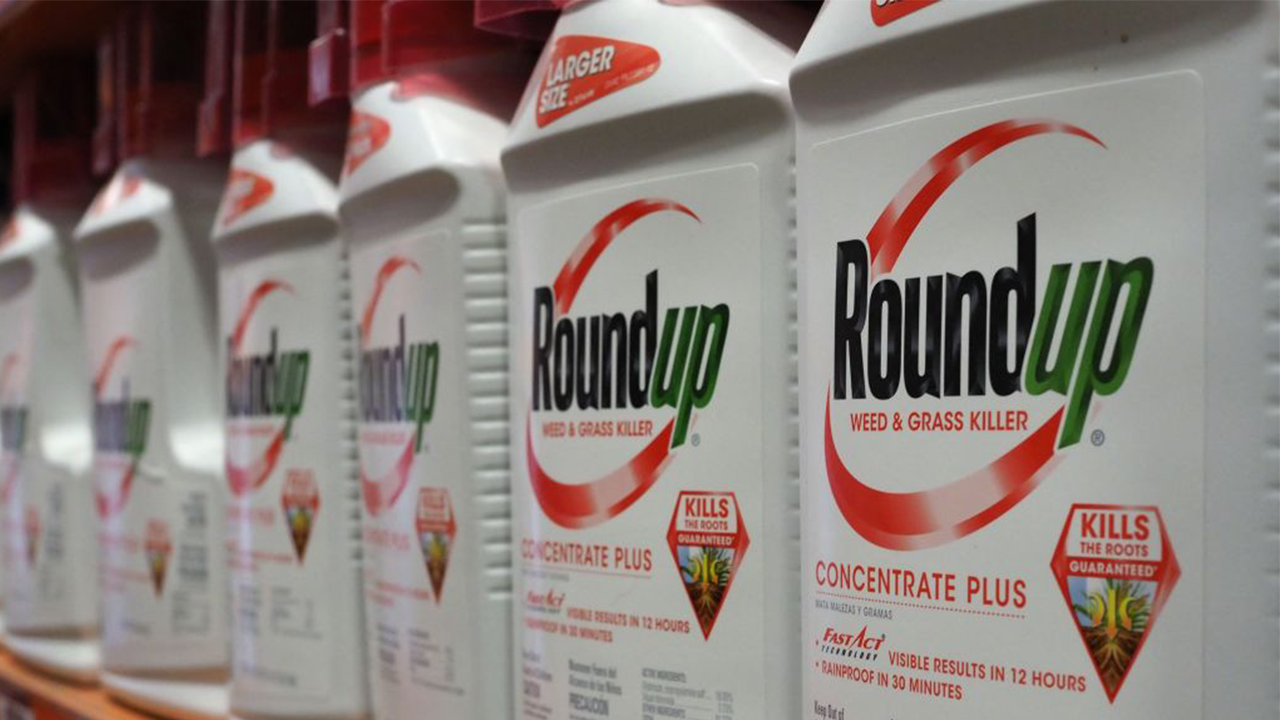
A Pennsylvania man was awarded $78 million after filing a lawsuit saying he developed cancer from using the weed killer Roundup.
William Melissen, 51, said he was diagnosed in 2020 with a blood cancer called Non-Hodgkin’s Lymphoma and a type of leukemia, which he argued was because of his exposure to chemicals in the weed killer, according to the Philadelphia Inquirer.
It’s the latest in a string of lawsuits against the company that’s already reached nearly $11 billion in settlements so far, and thousands of more lawsuits are pending.
Melissen claims he used the product frequently for nearly 30 years between 1992 and 2020. He sued agricultural giant Monsanto, which makes Roundup, and its German parent company, Bayer, in 2021.
PENNSYLVANIA HIGH SCHOOL FOOTBALL PLAYER COLLAPSES DURING GAME FOLLOWING HARD HIT TO HELMET
William Melissen, 51, was awarded $78 million after filing a lawsuit saying he developed cancer from using the weed killer Roundup. (Getty Images)
A Philadelphia jury ruled on Thursday that the man’s cancer was caused by Glyphosate, which is the key ingredient in Roundup. The jury awarded him $3 million dollars in compensatory damages and $75 million in punitive damages.
Monsanto said in a statement that it disagrees with the jury’s verdict and that evidence does not support the claim that Roundup causes cancer. The company also said that trial errors provided the company with strong grounds for appeal.
The alleged errors include that the case was not dismissed after three judges on the U.S. Court of Appeals for the Third Circuit ruled in August that Pennsylvania state law cannot require a more expansive pesticide warning label than the one approved by the Environmental Protection Agency.
William Melissen said he was diagnosed in 2020 with a blood cancer called Non-Hodgkin’s Lymphoma. (Getty Images)
During the trial, Monsanto’s attorney, Bart Williams, presented to the jury transcripts from testimony by Melissen and his treating physician showing that his cancer is in remission, and that he was treated with a five-day round of chemotherapy.
Melissen’s lawsuit is one of thousands of cases nationally in which people who developed cancer accuse Monsanto of failing to include adequate warnings about its weed killer product.
VILLANOVA UNIVERSITY STUDENT RAPED BY UBER DRIVER IN DORM ROOM, POLICE SAY
A Philadelphia jury ruled that the man’s cancer was caused by Glyphosate, which is the key ingredient in Roundup. (Paul Hennessy/NurPhoto via Getty Images)
Monsanto has reached settlements in nearly 100,000 Roundup lawsuits in which it paid roughly $11 billion. Monsanto estimates that 54,000 active Roundup lawsuits still remain.
“This is one more jury that recognized the outrageous conduct of Monsanto for 50 years,” Melissen’s attorney Tom Kline told the Philadelphia Inquirer after Thursday’s verdict.
Read the full article from Here


new video loaded: The Democracy of The Dive Bar
By Anna Kodé, Gabriel Blanco, Haimy Assefa and Laura Salaberry
June 19, 2026

Boston is allowing outdoor drinking in two neighborhoods this summer while the city welcomes a wave of international visitors during the World Cup, Mayor Michelle Wu announced.
The social districts opened Friday and will run through July 31.
Boston public drinking zones
Patrons will be allowed to consume alcoholic beverages outdoors within designated areas at Union and Marshall streets in Downtown Boston’s Block Historic District, as well as on Temple Place in Downtown Crossing.
According to the city, the initiative along with the decision to extend last call until 3 a.m. for the World Cup “is creating vibrancy for patrons and expanding opportunities for Boston businesses during one of the region’s busiest summers in recent years.”
“As Boston welcomes people from around the world to gather and enjoy our city this summer, these new social districts will create even more opportunities to build community and have fun responsibly,” Wu said in a statement. “These districts help us open our streets in a safe environment for residents and visitors to enjoy themselves, ‘sip and stroll,’ and make lasting memories in our beautiful city.”
Last week, Gov. Maura Healey signed a new law that allowed for cities and towns to create designated areas for public drinking.
How drinking zones work
In order to participate, businesses within the designated zones must file a one-day amendment application with the Boston Licensing Board that states they wish to be included in the districts.
Businesses cannot sell alcohol for public consumption until they receive approval from the Licensing Board.
Hours for the Union-Marshall Street Social District will be 9 a.m. to midnight Monday through Saturday and 10 a.m. to 9 p.m. on Sunday. The Temple Place Social District will be open from 9 a.m. to 11 p.m. Monday through Saturday and 10 a.m. to 9 p.m. on Sunday.
Drinks sold for public consumption will be in clear plastic containers with a sticker or other label that shows where they were sold. Businesses cannot sell more than one 16-ounce alcoholic beverage for public consumption per customer in a single transaction.
Outside alcohol cannot be brought into businesses.
“We are grateful for this opportunity to activate our downtown, support businesses, and create a welcoming, relaxed atmosphere in two of Boston’s entertainment districts,” Corean Reynolds, director of nightlife economy, said in a statement. “Both residents and tourists can benefit from these Social Districts. After the summer, we look forward to continuing our work creating a nightlife infrastructure that works for everyone.”

The decision to trade catcher Joey Bart to the Braves gives the Pirates a solution to a problem that soon needed to be made.
Bart had been on a rehab assignment with Triple-A Indianapolis, working his way back from a left foot infection that kept him out of action for over a month.
With Bart nearing a return, the Pirates were going to have to figure out what to do at catcher with Henry Davis and Endy Rodríguez splitting time behind the plate in his absence.
Given how Rodríguez has been swinging the bat since he was recalled from Indianapolis to replace Bart on the active roster, there was no way the Pirates could’ve sent him down. In 23 games, the 26-year-old has a .267/.413/.467 batting line with three doubles, three home runs, eight RBI, two steals and a robust 19.7% walk rate.
Davis, meanwhile, has struggled to an anemic .138/.242/.285 batting line with four doubles, five home runs and 17 RBI in 47 games. While he hasn’t offered much with the bat, he’s been responsible for two defensive runs saved and leads MLB with a 55% caught stealing rate.
Now that Bart has been traded, Rodríguez and Davis will remain the catching tandem at the big-league level with Rafael Flores Jr. as the top backup option with Indianapolis. Flores is considered Pittsburgh’s eighth-best prospect on MLB Pipeline.
For the first time in the big leagues, Rodríguez is realizing the potential that once made him one of the top 100 prospects in baseball. Because of that, he should get the majority of the playing time with Davis continuing to catch Paul Skenes’ starts and filling in when needed.
As for the return, the Pirates known what to expect from Hunter Stratton, who spent nine seasons in the organization and made 47 appearances with the team from 2023-25.
The bullpen has been an obvious weak spot for the team this season, and while it was somewhat surprising to see the Pirates assign Stratton to Indianapolis, he improves the pitching depth and will almost surely be called upon at some point this year.
In 60 career big-league appearances between the Pirates and Braves, Stratton is 3-2 with a 3.75 ERA and two saves. The right-hander spent most of the 2026 season with Triple-A Gwinnett and went 2-4 with a 4.38 ERA and 24 strikeouts in 24.2 innings across 21 appearances.
One more important note about the trade is that the Pirates saved some money in the deal, which could be used later in additional trades to add to an already record-setting payroll. Stratton is a pre-arbitration player, while Bart is making $2.53 million this season.
More about:Pirates
-
 Entertainment2 minutes ago
Bob Dylan is absolutely cooking on the road right now
-
 Lifestyle7 minutes ago
L.A. Affairs: Would taking a trip with this new guy finally push us out of the ‘polite’ phase?
-
 Politics14 minutes ago
Drug users don’t lose their gun rights, Supreme Court rules
-
 Science17 minutes ago
This plant extract can make a lethal drug cocktail. Can it also treat opioid addiction?
-
 Sports22 minutes ago
Commentary: Why MLB’s Pride Night cap condemnation isn’t the anti-Christian crackdown conservatives claim
-

 World32 minutes ago
‘Not our Europe’: Macron and Sánchez slam return hubs for migrants
-
 News59 minutes ago
Algae clouded Trump’s vision for the Reflecting Pool. But scientists aren’t surprised
-

 New York2 hours ago
Video: The Democracy of The Dive Bar

