Rhode Island
Assessors find ‘nonconformities’ with national standards at RI Crime Lab. What to know.


Retired RI state trooper Robert Kenahan remembers fallen comrades
Kenahan, who entered the academy in 1956 and is now the second-oldest living retired trooper, was a witness to adventure and tragedy.
The Rhode Island State Crime Laboratory isn’t through the entire re-accreditation process yet, but assessors have found that the lab can competently follow policies, processes and procedures and meet “all applicable accreditation requirements.”
At the same time, a team of assessors also found that the lab was not conforming to 15 national standards – or 8.7% – out of 172 applicable standards during their March review of the lab, according to the assessors’ report.
Some of those “nonconformities” involved the part of the lab that examines and analyzes firearms, which drew heavy scrutiny last year after employees linked spent bullet shells from the scene of a 2021 Pawtucket homicide to the wrong gun.
The lab has until May 30 to complete its “action guidelines.”
The lab’s longtime director, Dennis Hilliard, told the Rhode Island State Crime Laboratory Commission during a May 22 meeting that the nonconformities were being “addressed.”
“All the nonconformities are being addressed and are under review by the audit team leader,” Hilliard said.
After discussion about the report, the commission voted to go into executive session “discuss and potentially vote on matters pertaining to the job performance and/or character of a person or persons,” according to the meeting agenda. When the commission returned to open session, members did not disclose what was discussed.
What were the ‘nonconformities’ found?
Assessors from the ANSI National Accreditation Board found that the wording of some procedures within the lab were insufficient to “ensure the consistent application of testing as well as consistency in the reporting of results between examiners,” specifically with firearms and “fire debris.”
They found that the lab had not sufficiently recorded its original observations regarding firearms to enable the same analysis to be repeated again.
In another part of the lab that examines “fire debris,” the assessors found that a manual does not include guidelines for interpreting the examiners’ analysis and its method does not provide any option for reporting results that aren’t conclusive, according to their report.
The lab operates under 172 applicable standards, according to Hilliard and was not conformed with almost 9% of those standards.
What comes next?
The report is not final and the assessors have not yet approved the lab for re-accreditation.
Those who rely on the lab, referenced in the report as “customers,” have not been told about the preservation of certain items created during the testing of fire debris, the report says.
“Some of the things they brought up we’ve been doing for years, but now they’re an issue,” Hilliard told the commission.
“So in this case,” Hilliard said, “I think, due to our situation, they were being just diligent in providing a full assessment and that they were looking at pretty much everything that could go wrong.”
He likened the way that lab personnel “interpret” standards to baseball officiating.
“One umpire might call a strike,” he said, “the other umpire might not call a strike.”
RI Crime Lab has been under scrutiny
After the discovery of problems with firearms analysis last year, the lab suspended that type of toolmark work by in-house staff, relying on mutual aid from other New England states.
Later, it turned to private contractors for work that involves identifying connections between bullets and the guns that fire them.
At the present time, the lab is operating with 10 in-house staff and two private contractors, who are handling all firearms analysis, according to Hilliard.



“Nationally there are 59 million Americans who are providing care for a loved one and that is 49.5 billion hours of care annually. It’s valued at a trillion dollars,” said Catherine Taylor, the director of AARP Rhode Island; AARP, the nation’s largest non- profit, dedicated to empowering people 50 and older.
In Rhode Island, the report shows 155,000 people serve as caregivers, providing 111 million hours of care.
Barbara Morse reports on unpaid caregivers. (WJAR)
“The total impact is $2.8 billion a year,” said Taylor.
It’s not just babysitting a loved one.
Catherine Taylor, the director of AARP Rhode Island, spoke with NBC 10’s Barbara Morse about the value of caregiving. (WJAR)
“People are doing a lot more nursing tasks, you know–wound care, injections and things like that and they’re doing a lot more intensive daily care, like bathing, and dressing and feeding than we used to,” she said.
Its latest report–“Valuing the Invaluable.”
“The whole point of this report is to draw attention to how many family care givers there are and what the magnitude of what the need is for their support,” said Taylor.
That includes financial support and respite care.
AARP wants you to know this:
An older man using equipment in a gym. (FILE)
In Rhode Island, temporary caregiver insurance or TCI is available to folks who qualify, for up to eight weeks.
There are federal tax credits you may qualify for. There is help.
BE THE FIRST TO COMMENT
“All you have to do is call 211 and say you’re a family caregiver and they will connect you to all of AARP’S trusted information, including a Rhode Island specific guide on resources for caregivers,” she said.
Rhode Island
A new safety role at Rhode Island College comes into sharper focus after Brown shooting – The Boston Globe

Lawrence was recently named RIC’s first emergency management director, a role college leaders had been planning before the December mass shooting across town at Brown University, but which took on new urgency after the tragedy.
Few resumes are better suited to the job.
A 20-year career in the New York Police Department. Commanding officer of the NYPD’s Employee Assistance Unit. A master’s degree from Harvard.
Lawrence got to Rhode Island the way a lot of people do: through someone who grew up here and never really left, at least not in spirit. Her husband, Brooke Lawrence, grew up in West Greenwich, and is director of the town’s emergency management agency.
“I couldn’t imagine retiring in my 40s,” Lawrence told me. “And I couldn’t imagine not giving back to my community.”
Public service has been part of Lawrence’s life for as long as she can remember. A New Jersey native, she dreamed of following in the footsteps of her mentor, a longtime FBI agent. She graduated from Monmouth University and earned a master’s degree in forensic psychology from John Jay College in 2001, shortly before the Sept. 11 attacks.
There was high demand for police in New York at the time, so Lawrence raised her hand to serve. She worked her way up the ranks from patrol to lieutenant, eventually taking charge of the department’s Employee Assistance Unit, a peer support program that helps rank-and-file officers navigate the most traumatic parts of the job. She later earned a second master’s degree from Harvard’s Kennedy School.
“It’s making sure our officers are getting through their career in the same mental capacity as they came on the job,” Lawrence said.
There’s a version of Lawrence’s new job that feels routine, especially at a quiet commuter campus like Rhode Island College. And when Lawrence was initially hired part-time last fall, it probably was.
Then the shooting at Brown University changed the stakes almost overnight.
On Dec. 13, Claudio Manuel Neves Valente, a Portuguese national and one-time student at Brown, opened fire inside the Barus and Holley building, killing two students and injuring nine others. Neves Valente also killed an MIT professor before he was found dead in a New Hampshire storage unit of a self-inflicted gunshot wound.
In eerie videos recorded in the storage unit, Neves Valente admitted that he stalked the Brown campus for weeks prior to his attack. He largely went unnoticed by campus security, which led the university’s police chief to be placed on leave and essentially replaced by former Providence Police Chief Colonel Hugh Clements.
Lawrence assisted with the response at Brown. She leads the trauma response team for the Rhode Island Behavioral Health Medical Reserve Corps, which staffed the family reunification center in the hours after the shooting.
RIC’s campus is more enclosed than Brown’s — there are only two major entryways to the college — but there are unique challenges.
For one, it’s technically located in both Providence and North Providence, which requires coordination between multiple public safety departments in both communities.
More specifically, Lawrence noted that every building on campus has the same address, which can present a challenge in an emergency. Lawrence has worked with RIC leadership and local public safety to assign an address to each building.
Lawrence stressed that she doesn’t want RIC to overreact to the tragedy at Brown, and she said campus leaders are committed to keeping the tight-knit community intact.
But she admits that the shooting remains top of mind.
“Every campus community sees what happened at Brown and says ‘please don’t let that happen to us,’” Lawrence said.
Lawrence said everyone at RIC feels a deep sense of responsibility to keep students safe during their time on campus.
And she already feels right at home.
“I want to come home from work every day and feel like I made a difference,” she said.
Dan McGowan can be reached at dan.mcgowan@globe.com. Follow him @danmcgowan.

If you thought the smart money was on pop icon Taylor Swift and gridiron star Travis Kelce tying the knot in Rhode Island, an online crypto casino and sportsbook is here to tell you you’re wrong.
The Ocean State was the second favorite at +155 and 39.22%, and Pennsylvania and Ohio were together at a distant third at +1,600 and 5.88%.
Tennessee was the fifth choice at +2,000 and 4.76%.
“New York is the favourite because it’s the city most closely tied to Taylor Swift’s public life, with multiple residences, strong emotional branding, and world‑class venues that offer privacy and security for a high‑profile event,” an unidentified spokesperson said in a media release.
Human Remains Found Near Taylor Swift’s Mansion Identified: Report
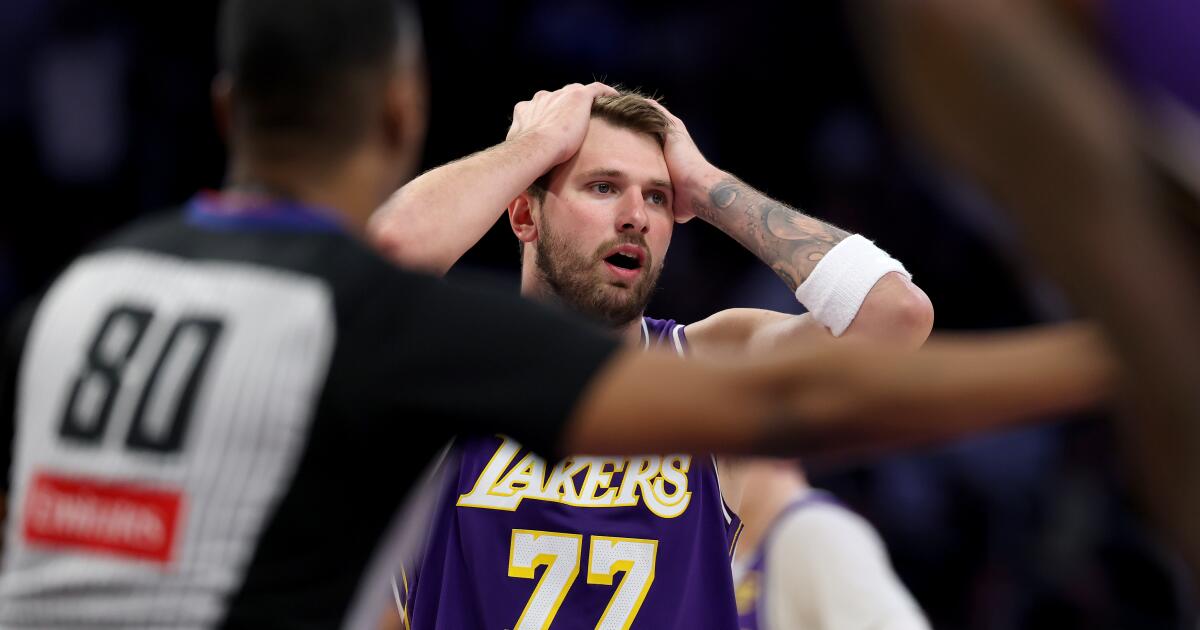
Lakers beat Nets, but Luka Doncic is facing suspension again after 16th technical

EU Parliament unblocks key political hurdle in digital euro talks

Man arrested in plot to firebomb Palestinian activist’s home after undercover op

Video: We Analyzed the Deadly Crash at LaGuardia

PWHL players bond with women’s hockey pioneers at Detroit clinic | NHL.com

Florida High School Football Rankings: Top 25 teams – Oct. 21

How old is Bo Nix? What to know about Oregon quarterback ahead of 2024 NFL Draft

Cleary's 21 help Le Moyne down Central Connecticut State 69-64 in OT

99th annual Pony Swim held in Virginia

Indiana Members Credit Union announced as new anchor tenant at Bottleworks District
EU Parliament unblocks key political hurdle in digital euro talks
Man arrested in plot to firebomb Palestinian activist’s home after undercover op

WATCH: Senate hearing goes silent after Angel Father confronts top Dem over daughter’s death

US diplomat Marco Rubio denounces settler violence, tolls in Hormuz strait

Iran-linked hackers have breached FBI Director Kash Patel’s personal emails | CNN Politics
-

 Detroit, MI1 week ago
Drummer Brian Pastoria, longtime Detroit music advocate, dies at 68
-

 Movie Reviews1 week ago
‘Youth’ Twitter review: Ken Karunaas impresses audiences; Suraj Venjaramoodu adds charm; music wins praise | – The Times of India
-

 Sports7 days ago
IOC addresses execution of 19-year-old Iranian wrestler Saleh Mohammadi
-

 New Mexico5 days ago
Clovis shooting leaves one dead, four injured
-
 Business1 week ago
Disney’s new CEO says his focus is on storytelling and creativity
-

 Technology6 days ago
YouTube job scam text: How to spot it fast
-

 Tennessee4 days ago
Tennessee Police Investigating Alleged Assault Involving ‘Reacher’ Star Alan Ritchson
-

 Texas1 week ago
How to buy Houston vs. Texas A&M 2026 March Madness tickets