
Sign up for The Dish
Stay up to date on the latest food and drink news from Boston.com.

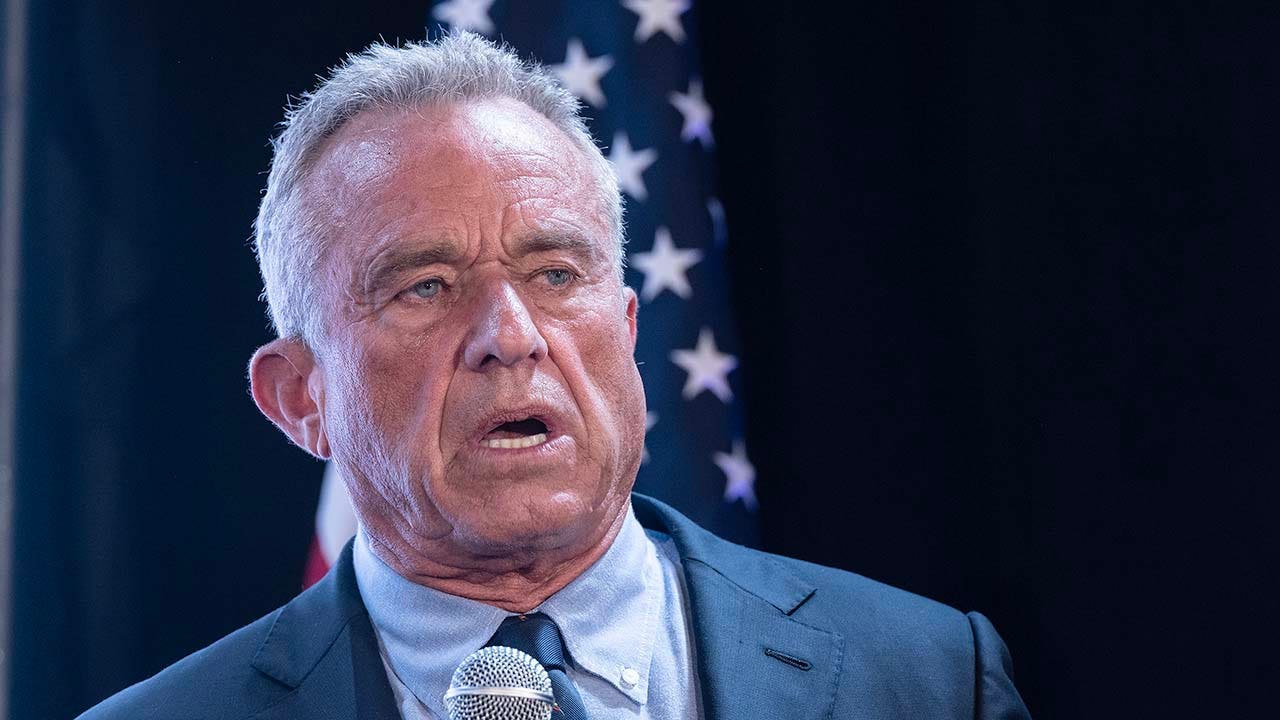
Independent candidate Robert F. Kennedy Jr.’s longshot bid for president has become even more unlikely after a judge ruled on Monday that his name should not appear on New York’s ballot after he falsely claimed a residence in the state on nominating petitions, despite living in California.
New York Justice Christina L. Ryba concluded in a 34-page decision that the rented bedroom Kennedy, 70, claimed as his residence in the state wasn’t a “bona fide and legitimate residence, but merely a ‘sham’ address that he assumed for the purpose of maintaining his voter registration” and furthering his political candidacy.
Ryba wrote in the decision that Kennedy’s designation of 84 Croton Lake Road in Westchester County as his place of residence “was a false statement requiring invalidation of the petition.”
JOE ROGAN DENIES ENDORSING RFK JR. FOR PRESIDENT, SAYS HE ONLY MEANT TO SAY HE LIKES HIM ‘AS A PERSON’
Robert F. Kennedy Jr.’s longshot bid for president has become even more unlikely after a judge ruled that his name should not appear on New York’s ballot, declaring he is not a resident there. (Lev Radin/Pacific Press/LightRocket via Getty Images)
“Using a friend’s address for political and voting purposes, while barely stepping foot on the premises, does not equate to residency under the Election Law,” the judge wrote. “To hold otherwise would establish a dangerous precedent and open the door to the fraud and political mischief that the Election Law residency rules were designed to prevent.”
If the judge’s decision is upheld, it would keep Kennedy off the ballot in New York but could also lead to challenges in other states where he used an address in New York City’s suburbs to gather signatures. On Friday, Kennedy told Fox News’ Neil Cavuto that he had enough signatures to appear on the ballot in all 50 states.
The scion of the famed Democratic political dynasty vowed to appeal, dismissing the ruling as partisan. The lawsuit was backed by Clear Choice Action, a Democrat-aligned political action committee on behalf of several voters in the state.
“The Democrats are showing contempt for democracy,” Kennedy said in a statement, noting the ruling judge is a Democrat. “They aren’t confident they can win at the ballot box, so they are trying to stop voters from having a choice. We will appeal and we will win.”
“This case is an assault on New York voters who signed in record numbers to place me on their ballot,” Kennedy wrote on X.” The DNC has become a party that uses lawfare in place of the democratic election process.”
Barbara Moss, who rents the room to Kennedy, testified that he pays her $500 a month but she acknowledged there is no written lease and that Kennedy’s first payment wasn’t made until after the New York Post published a story casting doubt on Kennedy’s claim that he lived at that address.
JFK’S ASSASSINATION CUT SHORT MY UNCLE’S VISION BUT WE MUST REVIVE IT, NOT FORGET IT
Democratic presidential candidate Robert F. Kennedy Jr. speaking at the libertarian FreedomFest conference in Memphis, Tennessee on July 15, 2023. (Joseph A. Wulfsohn/Fox News Digital)
The judge wrote it was “highly improbable, if not preposterous” that Kennedy may return to that bedroom to reside with his wife, family members, multiple pets, and all of his personal belongings to be,” the judge wrote.
Ryba said evidence submitted in trial showed Kennedy had a “long-standing pattern” of borrowing addresses from friends and relatives so he could maintain his voter registration in New York state while actually residing in California, where he has a home with his wife, actor Cheryl Hines.
A survey conducted by Ipsos this week found Kennedy is polling around 5% among voters in seven swing states: Michigan, Pennsylvania, Wisconsin, Georgia, North Carolina, Arizona and Nevada.
Clear Choice Action said the ruling shows Kennedy intentionally misled election officials and betrayed voters’ trust.
CLICK TO GET THE FOX NEWS APP
The last substantive independent bid for president was launched in 1992 by populist Texas industrialist Ross Perot. (Robert Daemmrich Photography Inc/Sygma via Getty Images))
“The Kennedy team will undoubtedly file desperate lawsuit after desperate lawsuit in the coming days and weeks; they will fail, and it will not change the simple truth: he lied, and he’s being held accountable,” the organization said.
The last substantive independent bid for president was launched in 1992 by populist Texas industrialist Ross Perot, whose strong showing led critics to claim his closer proximity ideologically to losing incumbent President George H.W. Bush led to former Arkansas Democratic Gov. Bill Clinton’s upset win.
Segregationist former Alabama Democratic Gov. George Wallace, running as an American Independent in 1968, and Republican-turned-Progressive ex-President Theodore Roosevelt in 1912 round out the last trio of substantive third-party candidates in the modern era.
Fox News’ Charles Creitz and the Associated Press contributed to this report.
Read the full article from Here


The provocative painting seemed like an authentic work by Andy Warhol, depicting a nude man and woman gazing at each other with colorful shading around their bodies.
But the piece was a well-disguised counterfeit, among more than 200 fakes of works by artists like Banksy, Picasso and the Native American painter Fritz Scholder, which sold for a total of more than $2 million. Many of the works were made by an artist in Poland, and commissioned by a father and daughter living in New Jersey.
On Tuesday, the father and daughter, Erwin Bankowski and Karolina Bankowska, pleaded guilty in Federal District Court in Brooklyn to running a scheme to sell the counterfeit works.
The duo “painted themselves as purveyors of fine art while selling lies on canvas to unsuspecting collectors,” Joseph Nocella Jr., the U.S. attorney in Brooklyn, said in a statement.
Federal guidelines call for a prison sentence of 33 to 41 months for each defendant. Both Mr. Bankowski and Mr. Bankowska are citizens of Poland and face deportation after serving their sentences. They are set to be sentenced on Aug. 5.
Todd Spodek, a lawyer for Ms. Bankowska, 26, said his client had accepted responsibility for her crimes. Jeffrey Chabrowe, a lawyer for Mr. Bankowski, 50, said his client also accepted responsibility and had “made a terrible decision to support his family.”
Counterfeit art schemes date back thousands of years. Many forgers in recent decades have pulled off their operations by faking a work’s provenance, or documented ownership history, which elite art collectors check to determine authenticity.
Famous art forgers include Wolfgang Beltracchi, a German man who says he painted in the style of more than 100 artists, and Mark Landis, who has donated numerous fakes to dozens of museums. Two art forgery rings in Thunder Bay, Ontario, manufactured thousands of fake paintings presented as works by Norval Morrisseau, one of Canada’s most celebrated Indigenous artists.
Mr. Bankowski and Ms. Bankowska went to great lengths to conceal their efforts. In addition to creating the fake provenances, sometimes by using forged stamps from art galleries, they told buyers that the pieces were from art galleries that had since closed, prosecutors said. That made it harder for buyers to verify that the pieces were real.
The pair’s collection included splotchy pieces, often with strong political overtones, that were sold to reputable galleries and auction houses around the United States. One fake of a work by Banksy, the anonymous British street artist, that protested the Iraq War sold for $2,000. A knockoff of a painting by Raimonds Staprans, a Latvian American visual artist who died in January, sold for $60,000.
Mr. Bankowski and Ms. Bankowska also sold works that they claimed were made by Native American artists, earning a rarely used federal charge: the misrepresentation of Indian goods and services. One of the counterfeits was a fake of a landscape by Richard Mayhew, a painter of Black and Native American heritage; it sold for $160,000, prosecutors said.
Mr. Spodek, who has represented many people accused of elaborate scams, said his clients had taken great care to ensure the knockoffs looked authentic. He said the replicas that the father and daughter commissioned were “identical” to the originals.
“It’s not just selling on eBay,” Mr. Spodek said.

Food News
A beloved New England chain restaurant’s last Boston location may close as developers eye the lot around it for future apartments at Charlestown’s Bunker Hill Mall.
Universal Hub first reported the news that the 99 Restaurant on Austin Street could shutter as part of a proposal to replace much of the site with a six-story, 240-unit apartment complex.
A spokesperson for the restaurant said the 99 has been at its 31 Austin St. location for 33 years.
“We are aware that the owners of Bunker Hill Mall property are considering a redevelopment of the entire site, and as such, we are exploring our options to remain in this community far into the future,” a spokesperson said. “We will continue to serve our loyal guests in our current location as long as our lease remains in place.”
The property owner, New England Development, originally proposed a plan in 2021 that would build apartments around the 99 in a U-shape design, according to previous documents and members of the Charlestown Neighborhood Council who spoke to Boston.com. But the neighborhood council development chair Nancy Johnson said the community had a hard time envisioning that design.
Since then, a key zoning change has reshaped the project. In late 2023, the Boston Planning Department changed the Bunker Hill Mall site’s zoning from neighborhood shopping to mixed-use, clearing the way for residential builds. New England Development now proposes replacing the 99 entirely, with construction to be finished by 2028.
In a statement, New England Development said the restaurant “will remain in operation through at least the end of 2026.”
“The residential development, which adheres to zoning, will provide needed housing, and also complement and support the existing grocery and commercial uses with no reduction in parking for those businesses,” the statement read.

In a March meeting, some public comments opposed the project because of the likely shuttering of the 99.
“The 99 is one of the few family-friendly restaurants in Charlestown,” said one commenter. “We have celebrated numerous end-of-season sports events there. We need these kind of community spaces in Charlestown.”
Residents also raised broader concerns about the development, including parking and the potential loss of retail in addition to the 99. It isn’t immediately clear which stores will stay. A draft project impact report filed this year indicates redevelopment would only be considered after the “expiration of long-term retail leases.”
But along with zoning changes, Boston’s planning department approved a modification to the urban renewal plan to allow for the residential build. Johnson said the community is worried it could mean less retail stores at the site, which is the opposite of what the community wants.
The Bunker Hill Mall currently includes a Whole Foods, CVS, an Ace Hardware, and other stores. The 99 and a Dunkin’ are the last remaining restaurant spaces on site — the 99 being the last full-service option. The mall previously housed a Papa Gino’s and a Friendly’s.
The Charlestown Neighborhood Council expressed frustration mostly with the Boston Planning & Development Agency over the lack of a community process during the 2023 zoning change and a subsequent update to the site’s urban renewal plan.
“We want our neighbors and other residents to have good, affordable housing that’s safe and well-made,” Johnson said. “But you have to plan for the future, and a neighborhood is going to need retail spaces.”
The 99’s long history in Charlestown includes a 1995 shooting that killed four people. More recently, the chain has maintained a loyal following: It topped a Boston.com reader poll in 2020 and drew a wave of praise from readers in 2024 reacting to a Reddit post declaring the chain was underrated.
If the Charlestown location ultimately closes at the Bunker Hill Mall site, the closest 99 locations to Boston proper would be in Revere and Quincy.

Stay up to date on the latest food and drink news from Boston.com.

A judge Tuesday sentenced the last of three defendants in the fatal 2024 stabbing of a mentally ill man at an abandoned Pittsburgh house.
Carlena Wells, 20, was sentenced to 2½ to 5 years in prison on a conspiracy to commit aggravated assault charge in the March 2024 death of Marc Kovach, 37.
Police said Kovach, who was schizophrenic, was beaten and stabbed, then his corpse was hidden under the porch of an empty West End house.
Attorney Thomas N. Farrell, who represented Wells, said his client is autistic. He asked Allegheny County Common Pleas Judge Simquita R. Bridges to help rehabilitate Wells by sending her to a group home with around-the-clock care.
Prosecutors pushed back.
“Her role was admittedly less than anybody else’s but that doesn’t change the fact that a family is left without a son,” Allegheny County Assistant District Attorney John Fitzgerald said.
While Bridges opted for incarceration, the victim’s older sister said the three people involved in the killing did not face adequate justice.
“Even if she did not kill my brother, she stood there and watched and did nothing,” Misty Kovach, 46, of Port Vue, said while speaking during the sentencing. She criticized the defendants’ sentences.
Dominic Johnson, now 21, Wells’ boyfriend at the time of the attack, negotiated a guilty plea in April 2025 to third-degree murder and conspiracy, according to police and court records. Bridges sentenced him to 13 to 26 years in prison.
Just three months later, Logan Smetanka, also now 21, negotiated a guilty plea on conspiracy to commit third-degree murder, court records show. Bridges sentenced him to 4 to 8 years in prison.
Attorneys for both men declined comment Tuesday.
Police initially said the crime unfolded on March 16, 2024, when Johnson was hanging out with Kovach in a home on Steuben Street. Johnson attacked Kovach for touching Wells, according to a criminal complaint.
At least two witnesses whom police did not identify in court records told authorities they were present during the attack.
One witness told police that Johnson and Wells were “stomping” on Kovach at the house, the complaint said. Investigators said they were told by a witness that Johnson and Smetanka knocked Kovach unconscious. Johnson then dragged an unconscious Kovach toward the porch of the house, according to the complaint.
Pittsburgh police were dispatched to Steuben Street five days after the crime when someone called 911 to report a body. Responding officers found Kovach dead in a dried pool of blood under the front porch of the home, the complaint said.
He had been stabbed multiple times in the abdomen. Kovach was lying face-up on the ground, with a black jacket covering his chest.
Misty Kovach told TribLive Tuesday that her younger brother was diagnosed with schizophrenia after he started growing increasingly paranoid while studying at Indiana University of Pennsylvania.
Smoking marijuana appeared to exacerbate his mental health issues, she said. Marc Kovach, one of three children, was involuntarily committed to a hospital for mental health treatment at least once, his sister said.
Misty Kovach said she helped her brother get an apartment in Glassport. The family, however, did not know where he was living at the time of his death.
Farrell, Wells’ attorney, told the judge his client “had a rough life, a very difficult life.”
Wells herself briefly apologized to Kovach’s family.
“I just want to say I do feel remorseful for what I’ve done,” Wells said. “I’m just sorry.”
“My brother was mentally ill and we really didn’t figure that out until a couple years ago,” Misty Kovach said on the witness stand. “He also had a rough life. But he did not hurt people. That’s not an excuse.”


Father and Daughter Who Sold Fake Warhols Plead Guilty in Forgery Scheme


Jackson Jobe throws first bullpen in return from Tommy John surgery


Oakland, California, airport can use ‘San Francisco’ in name after settlement


Cowboys LB coach ‘feels really good’ after NFL draft, new additions


2 more Miami Beach Commissioners endorse Vicki Lopez for Miami-Dade Commission


99 Restaurant in Charlestown may close for apartments


Re/Max to be sold, headquarters to leave Denver


Seattle’s drug diversion plan falters as open-air use persists in neighborhood hotspots