Pennsylvania
Pennsylvania ends attempt at CO2 regulation, leaving questions on how to address climate change

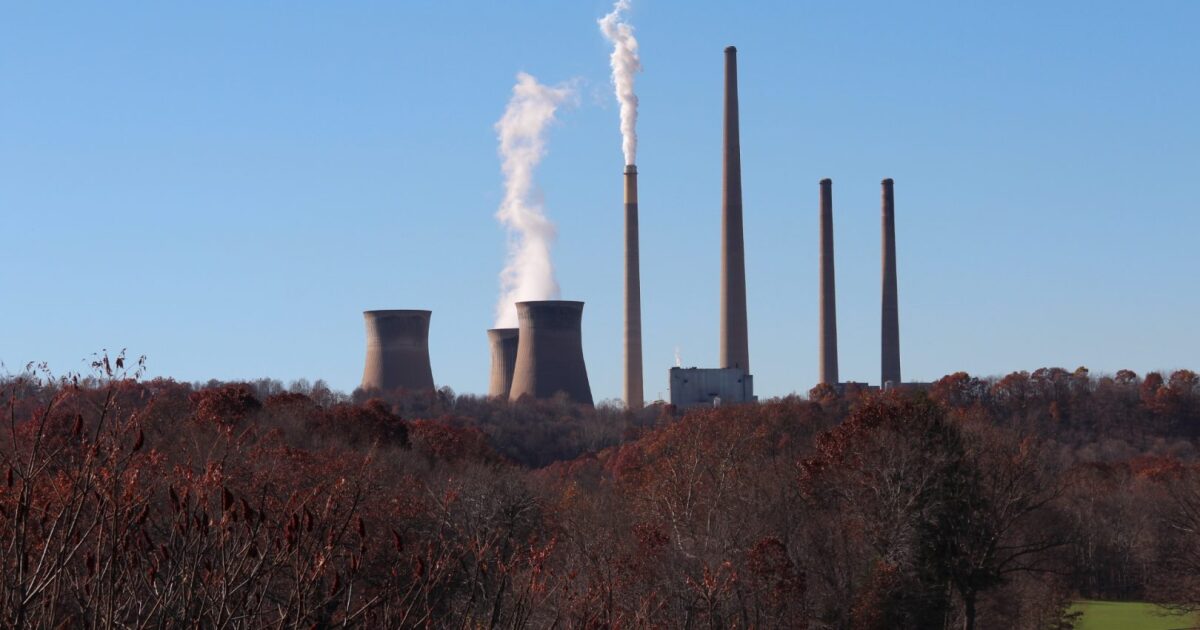
The six-year battle over Pennsylvania’s attempt to curb climate pollution has ended with a few lines of legislation in the latest state budget.
Gov. Josh Shapiro and Democrats agreed to repeal the regulation that allows Pennsylvania to participate in the Regional Greenhouse Gas Initiative in order to pass the overdue state budget.
Republican lawmakers have long been opposed to RGGI. They repeatedly voted on bills to overturn the program and took the issue to court.
Nothing will practically change in Pennsylvania as a result of the repeal, but RGGI supporters and observers said the state is giving up the potential for significant climate action.
“The state has just lost the most immediate lever it could pull, and which would’ve done so in a significant, unprecedented way in Pennsylvania history to cut climate pollution, create jobs, and lower people’s electricity bills,” said Robert Routh, Pennsylvania policy lead for the Natural Resources Defense Council.
The budget deal also leaves several questions about how and whether the state will address climate change and the legal avenues that are available.
Lost opportunity
RGGI is a collaborative effort between ten Northeastern and Mid-Atlantic states to reduce carbon dioxide emissions from the electricity sector. It requires power plants to pay for each ton of carbon dioxide they emit.
With an added cost to pollute under RGGI, burning fossil fuels becomes more expensive and sources with no emissions, such as wind and solar, are more competitive.
Pennsylvania is a major energy state. It’s the second-largest gas-producing state, the top electricity exporter, and emits the fourth-largest amount of carbon dioxide in the country. Pennsylvania’s RGGI rule marked the first time a large fossil fuel producer put a price on carbon.
Carbon dioxide traps heat in the atmosphere. Climate scientists agree emissions must be cut dramatically and quickly to avoid the worst effects of climate change, which include heat waves, increased precipitation, and flooding.
Many opponents to joining RGGI argued that the program would prematurely kill coal-fired power plants, cost the state jobs, stifle its energy economy, and raise electricity bills.
But plant closures and higher bills have come without RGGI participation, and the state hasn’t raised any additional money that could be used to ease those problems.
“ Pennsylvania coal plants are going to shut down regardless of whether we enter RGGI or not,” said Akshaya Jha, an assistant professor of economics and public policy at Carnegie Mellon University.
Now, as projected power demands are growing because of a rise in data centers and other uses, Jha said the economics suggest more gas plants and renewable energy projects will be built.
Penn State professor Seth Blumsack, who has studied the impact of RGGI in Pennsylvania, said joining the program mattered a lot to people who care about climate emissions and local air quality.
“If you’re not going to join RGGI, what are you going to do?” he said.
Blumsack co-authored a paper that found RGGI would benefit Pennsylvania’s energy economy overall and lead to improved health outcomes. The report also found electricity prices would rise, but the amount of money raised through the auctions would be more than enough to offset those costs.
Now that RGGI is off the table, Blumsack said the state still needs to answer questions of how to deal with pollution from the electricity sector, as well as growing power demands and electricity bills.
Jha said regional efforts, such as RGGI, can have more of an impact on emissions than local efforts, which is important for tackling the global problem of climate change.
“We’ve got a loss of opportunity for regional collaboration on an important issue and it’s not clear that this would’ve had substantial costs on Pennsylvania, on Pennsylvanian residents, or even Pennsylvania industry,” Jha said.
Path forward
Environmentalists said there’s no one piece of legislation that can replace what RGGI could have done for the state.
During the budget bill signing, Gov. Shapiro said Senate Republicans have been using RGGI “as an excuse to stall substantive conversations about energy.”
“It’s time to look forward, and I’m going to be aggressive about pushing for policies that create more jobs in the energy sector, bring more clean energy onto the grid, and reduce the cost of energy for Pennsylvanians,” Shapiro said.
It remains to be seen if Republicans will engage with Shapiro on his energy plans.
Shapiro distanced himself from RGGI during his campaign for governor. He proposed his own version of a cap and trade program for the power sector called the Pennsylvania Climate Emissions Reduction Program (PACER), that would be specific to Pennsylvania.
Bills to create PACER were introduced in the state House and Senate earlier this year, but have not been called up for a vote.
Routh, with NRDC, said the text of the PACER proposal relies heavily on the language of the RGGI regulation, which Republicans have spent years criticizing.
“It is unclear whether the bill as written now could possibly function even if we are in the political fantasy scenario where that could get action in either the House or the Senate,” Routh said.
There are several other proposals in the legislature that could benefit the environment that should now get priority, said Tom Gilbert, president of the Pennsylvania Environmental Council. Those bills include supporting new energy storage and energy efficiency projects, electric transmission upgrades, and building cleaner manufacturing.
“Many of these would have been directly supported by RGGI with guidance from all stakeholders, but our challenge now is to craft an interwoven set of policies that move our state forward,” Gilbert said.
As important as RGGI was to some, the program was always framed by advocates as a big first step. More will need to be done, they said, to lower emissions and encourage cleaner sources of energy.
What is RGGI, anyway?
Gov. Tom Wolf directed the state Department of Environmental Protection in 2019 to write a regulation that would allow Pennsylvania to join RGGI.
The cap and trade program sets a limit on the total amount of emissions allowed within the region and power plants must buy “allowances” or credits through an auction to cover their emissions. The cap decreases over time. Money raised from the sale of allowances can be used to boost clean energy efforts and with bill assistance for residents.
Fossil fuel industry groups and Republican lawmakers claimed that the money raised through RGGI would amount to an illegal tax. In Pennsylvania, only the legislative branch can enact taxes.
Wolf and the DEP said the allowance cost is a fee for doing business. DEP said it has the authority to collect the fee under Pennsylvania’s Air Pollution Control Act.
The regulation was finished in 2022, but Pennsylvania has never participated in the RGGI auctions. The rule was quickly put on hold by a Commonwealth Court judge until legal challenges could be heard.
In 2023, Commonwealth Court ruled the regulation was unconstitutional. The case was appealed to the state Supreme Court, which heard arguments in May.
On Thursday, the DEP filed an application to discontinue its appeal.
If the case is declared moot, environmental advocates said the legal questions around the program will remain unresolved.
“Regardless of which way the Supreme Court would have decided the case, it is highly valuable to have to have gotten clarity on the legal claims at issue here…to articulate further what the Supreme Court justices, how they view the Environmental Rights Amendment in the context of this regulation,” Routh said.



A small airplane made an emergency landing on Interstate 78 in Allentown, Pennsylvania on Saturday morning, according to the Federal Aviation Administration.
The Rockwell Commander landed at around 9:20 a.m. after reporting engine issues, the FAA said.
The two people onboard were not injured, according to Pennsylvania State Police.
Dashcam video of the incident circulating on social media shows the plane flying low overhead before landing on the interstate and slowing down.
Emily Rivera, who posted the video, was traveling from Harrisburg to Lehigh Valley when she saw the plane make the landing.
“Honestly I was in disbelief because I never expected a plane to land in front of me!” Rivera said, adding that she was impressed with how the pilot landed.
Police said to expect delays in the area and that all traffic eastbound is being detoured onto exit 40. More information will be released later, police said.
The FAA is investigating the incident.

The Pennsylvania Department of Environmental Protection has announced a public hearing on a proposed natural gas pipeline project connected with the Homer City Redevelopment site.
The hearing will focus on the proposed National Pollutant Discharge Elimination System permit that is part of the Homer City Pipeline project. The plan is to install close to six miles of 30-inch diameter natural gas pipeline from an interconnect facility in Burrell Township to the proposed Homer City Redevelopment site in Center township. The line will run through parts of Burrell, Blacklick and Center Townships.
The hearing will be held May 12th at 5:00 PM at the Indiana Theater.
.
Pennsylvania
Brooklyn baby shooting: Second suspect in killing of 7-month-old girl caught after fleeing to Pennsylvania, sources say | amNewYork

Police apprehended on Friday a second suspect tied to the horrific, deadly shooting of 7-month-old Kaori Patterson-Moore on Wednesday afternoon, amNewYork has learned.
NYPD
Police apprehended on Friday a second suspect tied to the horrific, deadly shooting of 7-month-old Kaori Patterson-Moore in Brooklyn on Wednesday afternoon, amNewYork has learned.
According to sources familiar with the investigation, the perpetrator was cuffed on Friday afternoon after fleeing to Pennsylvania. Sources identified him as 18-year-old Matthew Rodriguez; he is currently being held in the Keystone State, pending extradition back to New York for prosecution on charges yet to be announced.
The arrest came 48 hours after Patterson-Moore was shot while being wheeled in her stroller by her mother near the corner of Humboldt and Moore Streets in East Williamsburg at about 1:20 p.m. on April 1.

Law enforcement sources said two suspects on a moped rode up to the location and fired the fatal shot before fleeing the scene. Sources said Rodriguez is believed to be the moped’s operator; the alleged shooter, 21-year-old Amuri Greene, was officially charged on Friday with multiple counts of murder.
Patterson-Moore sustained a fatal gunshot wound to her head. Frantic efforts by her parents and bystanders were to no avail; the infant died later on Wednesday afternoon at Woodhull Hospital.
The shooting horrified local residents and the city. Linda Oyinkonyan, the grandmother on Kaori’s mother’s side, said she has been left devastated.
“Heartbroken, horrified. It’s bad, it’s sad, it’s sorrowful, it’s hurtful, it’s nothing you can imagine, nothing, the hurt, the deep hurt,” she said.

Police said Greene and Rodriguez allegedly crashed their ride two blocks away from the shooting scene. Though Rodriguez was able to avoid capture, Greene was hospitalized with injuries after being thrown from the vehicle. He was subsequently charged at his bedside.
Police Commissioner Jessica Tisch announced on Wednesday evening an extensive manhunt for the second suspect in the killing. That search ultimately led cops to Pennsylvania, and to Rodriguez on Friday.

Yaxel Lendeborg injury update: Michigan star hurt in Final Four

Old mills are hard to turn into apartments. But could they help solve the state’s housing crisis? – The Boston Globe

Morning Skate Wrap Up: Wild at Senators | Minnesota Wild

Measuring Mississippi State baseball’s concern level after sweep by Georgia at home

Columbia police find evidence of shots fired on Ash Street Saturday morning, no injuries

Florida High School Football Rankings: Top 25 teams – Oct. 21

How old is Bo Nix? What to know about Oregon quarterback ahead of 2024 NFL Draft

Cleary's 21 help Le Moyne down Central Connecticut State 69-64 in OT

99th annual Pony Swim held in Virginia

Indiana Members Credit Union announced as new anchor tenant at Bottleworks District

FBI’s Patel delivers blunt warning to law enforcement attackers: ‘We’re going to put you down’

Indonesia receives bodies of peacekeepers killed in southern Lebanon

Judge halts Trump effort requiring colleges to show they don’t consider race in admissions

Trump says ‘America needs God’ in Good Friday message touting ‘resurgence of religion’
Fact check: How can a country actually withdraw from NATO?
-

 South-Carolina7 days ago
South Carolina vs TCU predictions for Elite Eight game in March Madness
-

 Miami, FL1 week ago
Jannik Sinner’s Girlfriend Laila Hasanovic Stuns in Ab-Revealing Post Amid Miami Open
-

 Education1 week ago
Video: Transgender Athletes Barred From Women’s Olympic Events
-

 Minneapolis, MN1 week ago
Boy who shielded classmate during school shooting receives Medal of Honor
-

 Vermont7 days ago
Skier dies after fall at Sugarbush Resort
-

 Politics7 days ago
Trump’s Ballroom Design Has Barely Been Scrutinized
-

 Atlanta, GA6 days ago
Fetishist ‘No Kings’ protester in mask drags ‘Trump’ and ‘JD Vance’ behind her wheelchair
-
 Entertainment3 days ago
Inside Ye’s first comeback show at SoFi Stadium