Northeast
Maryland county sheriff renews efforts to solve serial rape cold case

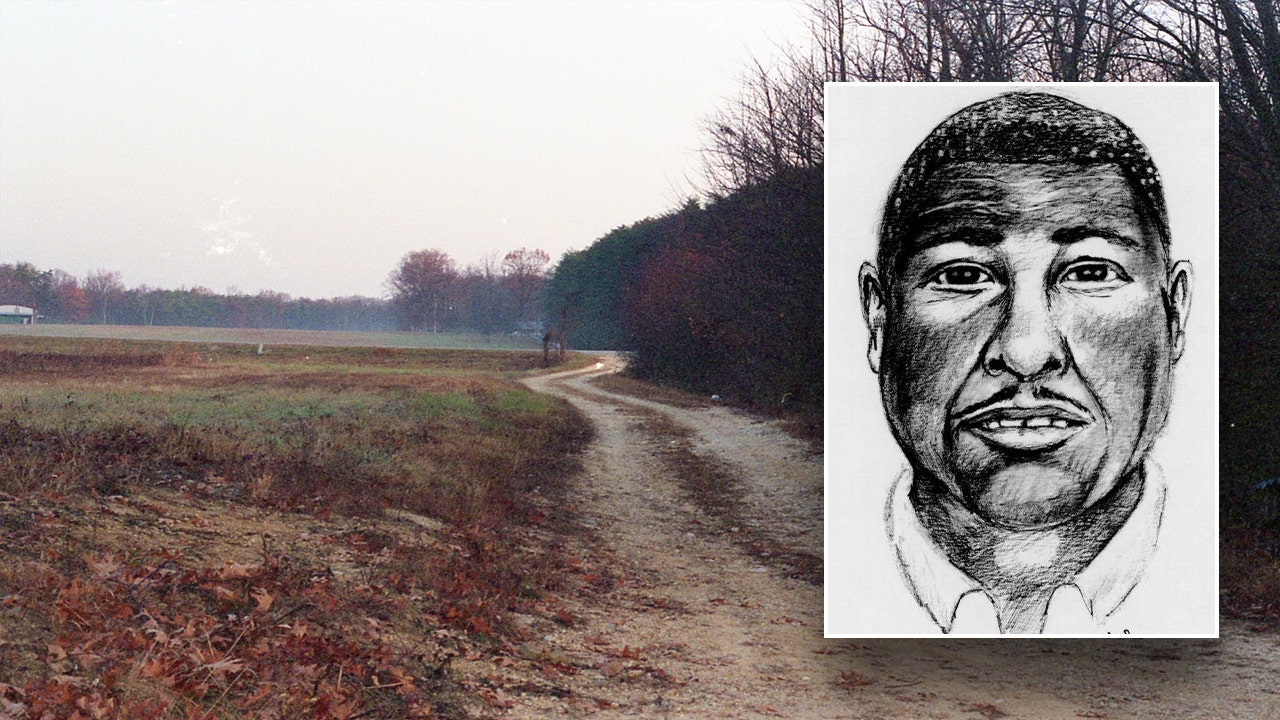
Maryland detectives are back on the hunt to identify a man who they believe targeted women over 25 years ago by offering them a ride under false pretenses, and allegedly attempting or successfully raping them, according to law enforcement officials.
The Charles County Sheriff’s Office reopened a cold case into an alleged serial rapist who, between November 1996 and August 2003, picked women up in Washington, D.C., and Prince George’s County, Maryland, before driving them to Charles County. Once there, the unknown man allegedly physically attacked and sexually assaulted his victims.
Investigators describe the suspect as a Black man who at the time of the crimes was believed to be in his late 30s to early 50s, though is now likely in his 50s to 70s.
The suspect reportedly used the names Jerry, Jimmy, George and James, had a stocky build, prominent overbite and a short-cropped haircut.
ATTEMPTED MURDER FUGITIVE BUSTED AS 40-YEAR SCHEME POSING AS DEAD COLLEGE MATE UNRAVELS
The Charles County Sheriff’s Office is asking the public for help identifying a man suspected of sexual assaults between 1996 and 2003. (Charles County Sheriff’s Office)
Investigators say the suspect had access to multiple vehicles, including a 1996 green-lime Ford pickup truck, red station wagon, red small passenger car like a Ford Pinto, Escort or Toyota with partial Maryland tags FG-549, 594 or 546, and a teal passenger vehicle.
In an article from the Maryland Independent on April 25, 2003, the Charles County Sheriff’s Office said a 39-year-old woman accepted a ride after midnight on April 14, from a man driving a teal late-model Buick Skylark.
After the man picked the woman up, he drove her to Bryans Road in Charles County, where he allegedly raped her in the vehicle and later dropped her off in a parking lot at a nearby townhouse development.
Law enforcement officials said there were similarities between the crime on April 14 and 10 others that occurred since September 1996.
ICE REMOVES ‘FOREIGN FUGITIVE’ WANTED IN MEXICO ON RAPE CHARGE
The Charles County Sheriff’s Office is asking the public for help identifying a man suspected of sexual assaults between 1996 and 2003. (Charles County Sheriff’s Office)
“We feel very confident these cases are the same person,” then-Capt. Joseph Montminy of the Charles County Sheriff’s office said at the time. “We think there’s likely other cases that have not been reported.”
The investigation found that in each case, the victims were African-American women between the ages of 18 and 45, who were alone.
Victims told investigators the suspect either ordered the women into his car at gunpoint, or he lured them into the vehicle by offering them rides.
FUGITIVE ON FBI’S 10 MOST WANTED LIST FOR KILLING HIS BRIDE IN ILLINOIS CAPTURED IN MEXICO
The Charles County Sheriff’s Office is asking the public for help identifying a man suspected of sexual assaults between 1996 and 2003. (Charles County Sheriff’s Office)
The publication reported that sometimes, the suspect allegedly locked the women inside his vehicle before driving them to Charles County. Two of the women reportedly accepted rides and fell asleep, only to wake up in Charles County.
Another victim reportedly told investigators she was kept in a headlock until she grabbed the steering wheel and drove the vehicle into a ditch.
Physical evidence had been collected at the time of the article in 2003, which investigators hoped to be able to use to link the suspect to the attacks.
Using forensic evidence and investigative work, investigators have linked multiple cases to the suspect and have identified him as a violent serial sex offender.
Detectives are asking the public to contact them if they have information that could help solve the case.
Anonymous tips can be left by calling 1-866-411-TIPS, or by visiting www.charlescountycrimesolvers.com.
Read the full article from Here


When Americans think of the beverage that fueled the American Revolution, they usually picture black tea — but it turns out that green tea was just as popular.
The Founding Fathers and their contemporaries drank both types of tea, Bruce Richardson, the Kentucky-based founder of Elmwood Inn Fine Teas, told Fox News Digital.
British subjects “were as likely to be drinking green tea as black tea, whether you were in Jane Austen [era] England … or you were in colonial Boston,” he added.
“There were five teas, all from China, because that was the only country that was exporting tea,” Richardson said. “And of those five different teas, two of them were green and three of them were black.”
Richardson, a tea historian who works as the tea master at the Boston Tea Party Ships & Museum, said the five types of tea dumped into Boston Harbor in protest of the Tea Act of 1773 included three black varieties — Bohea, Souchong and Congou — as well as the green teas Hyson and Singlo.
Bohea, the most common and least expensive black tea of the era, was often made from older tea leaves harvested after the highest-quality leaves of the season had already been picked.
Most of the tea dumped into Boston Harbor was Bohea, Richardson said — and it was so ubiquitous that he compared it to the way Kleenex has become synonymous with tissues today.
“It was so common that often teapots at the time, or some that I’ve seen, would say Bohea on the side of the teapot,” he said. “If they wanted tea, they’d say, ‘I’ll have a cup of Bohea.’ It was that common.”
Not only did colonial Americans distinguish between green and black tea, they even stored them differently.
“They still wanted their tea time, but they didn’t want to support the British government.”
“The well-to-do people would have a tea caddy – a wooden, beautifully made tea caddy to store their tea in,” he said.
“It was kept under lock and key. And in that tea caddy, [there] would be two compartments, one for green tea and one for black tea.”

Merchants often favored black tea because it held up better during the long voyage from China to Europe and onward to the American colonies, Richardson said.
“The green tea was what China had always drunk,” he said.
“And so they were exporting that as well, but they found that the black tea actually made the voyage better than the green teas.”
Even after many colonists swore off British tea, they kept the ritual of drinking it — or at least a close substitute.
Many patriots brewed so-called “Liberty Teas” made from ingredients such as dried apples, blueberries, chamomile and herbs grown in their gardens.
“They still wanted their tea time, but they didn’t want to support the British government,” Richardson said.


-
 News28 minutes ago
Rep. Tom Kean returns to Congress, says depression is why he went missing for months
-

 Los Angeles, Ca2 hours ago
LeBron James informs Lakers he will play elsewhere next year
-

 Detroit, MI2 hours ago
5 realistic cornerback trade targets for the Detroit Lions after Terrion Arnold’s release
-

 San Francisco, CA2 hours ago
Headlines, June 30 – Streetsblog San Francisco
-

 Dallas, TX2 hours ago
LIVE | Ivory Coast, Norway meet for World Cup knockout match at Dallas Stadium
-

 Miami, FL2 hours ago
Every Dolphins head coach’s start in Miami from worst to best
-

 Boston, MA2 hours ago
Historian clears up one of the biggest myths about the Boston Tea Party
-
Denver, CO3 hours ago
Nemanja Jokic, the older brother of\u00a0Denver …

