
Connect with us

Northeast

Freshman Focus: Republican Rob Bresnahan, who ousted six-term House Democrat, reveals how he did it

Published

on

Freshman Focus: Republican Rob Bresnahan, who ousted six-term House Democrat, reveals how he did it

Voters in Pennsylvania’s 8th Congressional District gave six-term incumbent Rep. Matt Cartwright, D-Pa., the boot last month in favor of a young, energetic and successful businessman who says he’s ready to defend their interests in the nation’s capital.

Republican Rep.-elect Rob Bresnahan, 34, tells Fox News Digital in an interview that “kitchen table issues” helped him connect with northeastern Pennsylvanians and oust Cartwright, a progressive who had served in Congress for more than a decade. 

“When we were knocking on doors and talking to people every single day over a period of 13 months, the first thing anyone had to say was, ‘I can’t afford my bills. I can’t afford rent. I can’t afford my mortgage. I can’t afford school property taxes. I can’t afford groceries,’” Bresnahan said. 

Rising prices for food and gas have made living costs unaffordable for Pennsylvanians, he explained. And as voters have watched illegal immigrants overrun the southern border and be provided free food, housing and benefits, while billions in foreign aid flows out from the U.S. to other countries, they felt that foreigners were being treated better than Americans by their government, said Bresnahan. 

PENNSYLVANIA DEMOCRAT REP. MATT CARTWRIGHT CONCEDES RACE TO GOP CHALLENGER

Advertisement

Democratic Pennsylvania Rep. Matt Cartwright and Republican Pennsylvania House candidate Rob Bresnahan.  (Getty Images/Rob for PA)

“We’re looking around at our neighbors saying, ‘hey, what about us here?’ And they couldn’t help but feel that they have been put second for a long time.” 

Bresnahan was a success story before he won election to the House of Representatives. A fifth-generation native of Luzerne County, at just 19 years old he was entrusted to be CFO of his grandfather’s construction company, which builds electrical infrastructure for municipalities and highways throughout Pennsylvania. 

He spent his college years at the University of Scranton dashing back and forth between the office and class as he worked to help the business recover from the global financial crisis. His hard work paid off, the business grew and Bresnahan became CEO after graduating in 2013.

“I was still living at home with my parents and I was in and out of a dorm room and running a company with 58 employees even though I couldn’t legally drink a Coors Light yet,” he told the Citizen’s Voice in 2021. “The combination was a heavy workload but it was a sacrifice that I would make again in a second.” 

Advertisement

But as the years passed, Bresnahan, like many Americans, felt the country was headed on the wrong track. The decisions coming from Washington, D.C., were bad for his business, his employees and the people they serve. And so, he decided to enter politics to make a difference.

“I felt that the country was not heading in the right trajectory with what is happening on our southern border. We had life essentially unaffordable for the average person. And I’ve always been a person to roll up my sleeves and throw myself into fire,” Bresnahan said.

PA DEM IN DISTRICT THAT VOTED FOR TRUMP SAYS HE’S A MODERATE, BUT VOTING RECORD TELLS ANOTHER STORY

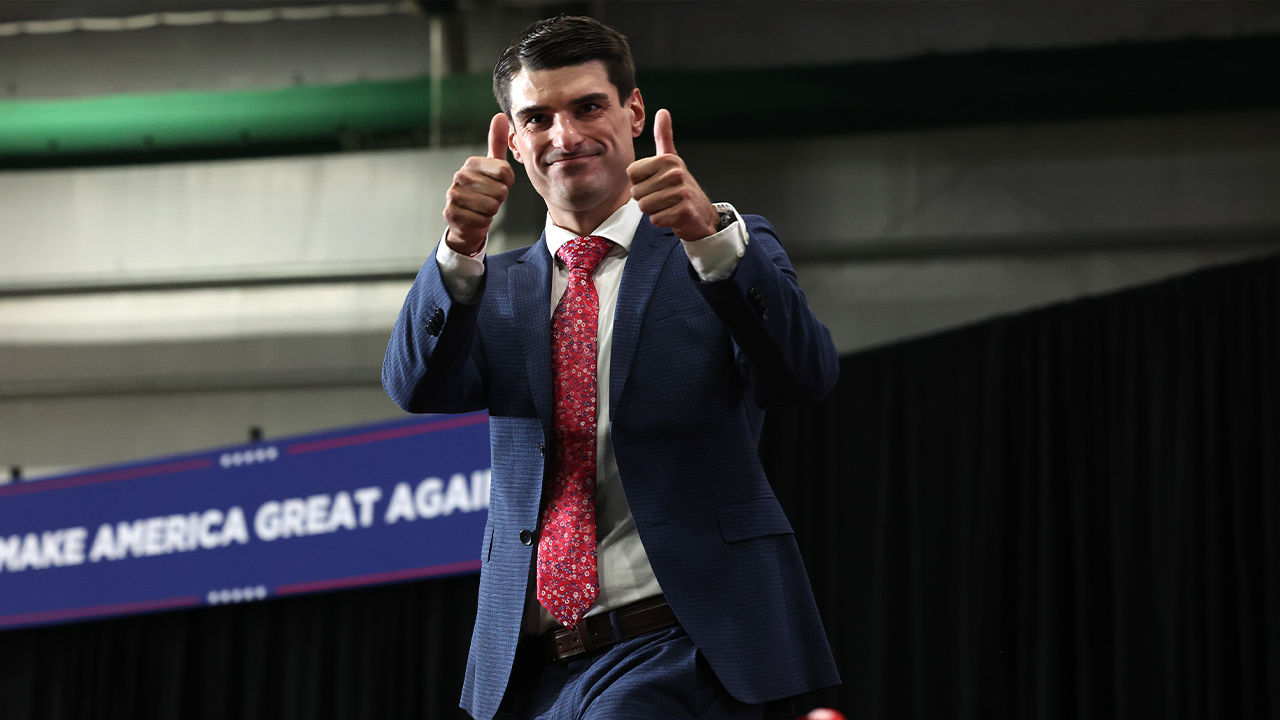
Rob Bresnahan, Republican nominee for Pennsylvania’s 8th Congressional District, takes the stage during a Trump campaign rally at Riverfront Sports on Oct. 9, 2024 in Scranton, Pennsylvania. (Getty Images)

His winning congressional campaign focused on securing the border, cutting taxes and trimming government spending, creating “family-sustaining jobs” in the Keystone State and supporting law enforcement. In April, Bresnahan received an endorsement from President-elect Donald Trump.

Advertisement

“A successful Businessman, Rob has worked hard to Create Jobs and Grow the Economy, unlike his opponent, Matt Cartwright, who is completely beholden to Nancy Pelosi and the Radical Left,” Trump posted on Truth Social.

With the campaign behind him, Bresnahan says he and the other members of the incoming Republican majority in Congress are ready to hit the ground running with a pro-growth agenda in January. 

“Securing the border. That needs to be done day one, Jan. 3 at 12:01 p.m., the day after we are all sworn in,” he told Fox News Digital. “I think there’s going to be a big playbook, but that is a tangible win right off the bat.”

SINGLE HOUSE RACE STANDS BETWEEN REPUBLICANS AND 1-SEAT MAJORITY

A view of the U.S. Capitol in Washington, D.C., on Nov. 4, 2024, ahead of the 2024 presidential election.  (Nicolas Economou/NurPhoto via Getty Images)

Advertisement

On inflation, Bresnahan says Congress and the Trump administration can tackle unaffordable prices by lowering energy costs. “Talking about just Pennsylvania alone, 52% of homes are heated from natural gas. $45 billion a year are generated from the natural gas industry, and $76 billion in GDP comes out of the fracking and natural gas industry,” he said, insisting that policymakers must stop “vilifying natural resources.” 

The rising national debt, at $36 trillion, is another burden on the economy Bresnahan says Congress must address. “We’re spending more on debt servicing – just our national debt and the interest – than we are on our national defense budget.”

The young lawmaker said there will be “tough votes” on discretionary spending when Congress convenes in January. But two of the largest contributors to the federal debt and deficit will remain untouched.

“Obviously, we can’t cut Medicare. We can’t cut Social Security. We have to preserve that for our current generation, and we have to find ways to preserve it for our generation and the next generation. But I don’t believe that there’s a one-size-fits-all policy on any circumstance, let alone the national debt and the expenditures of the federal government,” Bresnahan said.

However, he added that illegal immigrants should not benefit from programs that Americans have paid in to, including Social Security and Medicare.

Advertisement

REPUBLICANS PROJECTED TO KEEP CONTROL OF HOUSE AS TRUMP PREPARES TO IMPLEMENT AGENDA

Speaker of the House Mike Johnson, R-La., is expected to keep his job after Republicans held on to their House majority.  (Tom Williams/CQ-Roll Call, Inc via Getty Images)

Republicans are expected to extend the 2017 tax cuts that became law during Trump’s first term in office. Bresnahan says he supports those tax cuts and insists that economic growth spurred by deregulation and investments in infrastructure and American jobs can make up for any potential revenue losses.

“We have to get people back to work,” he said. “We have to create economic climates that are conducive to the American people to incentivize them to go to work.” 

Part of that is to support jobs that don’t require a college degree, such as carpenters, plumbers or electricians. “These are great, family-sustaining careers with annuities starting on day one, with health insurance for your family, and you’re earning while you learn.” 

Advertisement

Turning to foreign policy, Bresnahan said the United States must remain a global superpower and pursue “peace through strength.” 

“But we have to be strong as the United States,” he added. Asked about growing GOP opposition to foreign aid, including to Ukraine, Bresnahan emphasized that he supports efforts to push back against Russian aggression – but he wants to do so responsibly.

YOUNGEST HOUSE REPUBLICAN-ELECT REVEALS HOW GOP WON BACK AMERICA’S YOUTH

“Putin is a war criminal and needs to be stopped,” he said. “I am all supportive of providing weapons, missiles, rockets – actually, there’s a big manufacturing facility inside of my district. But where I do want accountability is the raw, hard dollars that have been sent. I want audits done on those to ensure they’re going to the right causes.” 

Echoing Trump’s beliefs about putting America first, Bresnahan said there is a point where “enough is enough” and that Europe has to match U.S. contributions to foreign aid. 

Advertisement

“Again, I’m looking at, you know, 25% of my bridges are structurally deficient. We have aging infrastructure levees that protect over $1 trillion of property here in the United States. You’re talking about power distribution grids that haven’t been re-invested in since the 1950s with 50 years of usable life. And, you know, we were without power for multiple days now, going on which could possibly be a week (Editor’s note: A blizzard in Breshanan’s district had postponed this interview). Europe didn’t come and send over trucks to help us rebuild our grids.”

“Ukraine obviously has a lot going on, but we need to take care of our own people. We have to take care of our own Americans. And I believe Donald Trump had that narrative and that’s why he just won an election in a landslide, because it’s about us,” he added. 

Bresnahan hopes to bring “common sense” solutions to the complex problems facing Americans. He has pledged to work with whomever has a good idea, Republican or Democrat, and has earned endorsements from both No Labels and the moderate Problem Solvers Caucus. Though he calls himself a “fiscal conservative,” he rejects political labels because “I don’t think confirmation bias is the right way to solve any issue.”

“I believe most challenges can be overcome through healthy and solid debate,” he added.

Advertisement

And what about those issues that inflame passions on both sides? Before this interview, Rep. Nancy Mace, R-S.C., made national headlines after she put forward a resolution that would bar Rep. Sarah McBride, D-Del., a transgender lawmaker who is biologically male, from using the women’s bathrooms in the capitol. 

Bresnahan said that while he believes biological men should not play in women’s sports or use their facilities, the flare up between Mace and McBride distracts from other important issues facing Americans – like crumbling infrastructure and expensive living costs. 

“I don’t want the 119th Congress to be hijacked by what bathrooms we should be using when we have been elected to provide real solutions for the real American people. And that’s what I’m going down to Washington, D.C. to do.” 

Fox News Digital’s Emma Colton contributed to this report.

Get the latest updates from the 2024 campaign, exclusive interviews and more at our Fox News Digital election hub. 

Advertisement

Read the full article from Here

Continue Reading
Click to comment

Leave a Reply

Your email address will not be published. Required fields are marked *

This site uses Akismet to reduce spam. Learn how your comment data is processed.

Boston, MA

‘Distressing’ Number of Boston’s Gen Z Residents Eye the Exit as Housing Costs Soar

Published

on

‘Distressing’ Number of Boston’s Gen Z Residents Eye the Exit as Housing Costs Soar


Boston is staring down a mass exodus of young residents who are being squeezed out by surging housing costs driving them toward more affordable markets, according to a new survey. 

The 2026 Young Residents Survey, commissioned by The Greater Boston Chamber of Commerce Foundation, found that more than a quarter of Bostonians (26%) between the ages of 20 and 30 years old say they plan on leaving the metro in the next five years—a share the organization calls “distressing.”

The survey also determined that newer residents, LGBTQ residents, unemployed residents, students and unmarried people were more likely to report plans to leave Boston.

Advertisement

The share of survey participants heading for the exit is similar to the results of the 2023 survey, which found 25% of respondents eyeing a move three years ago.

The latest study was conducted in February and March and included 600 young people living in the Greater Boston area, which includes Suffolk, Norfolk, Middlesex, Plymouth, and Essex counties.

The findings reveal that when deciding to stay or leave, 78% of respondents said the cost of rent is important, and 72% cited the ability to buy a home. 

The cost of staying

As the region grapples with a housing crisis, half of survey respondents said that affordable housing should be a top priority for local leaders.  

“It’s no surprise that housing affordability is a top issue in Boston, especially for the youngest residents who are more likely to be renters,” says Realtor.com® senior economist Jake Krimmel.

Advertisement

Median asking rents in Boston stood at $2,918 in March, the second-highest among the nation’s top 50 metros, surpassing New York City, San Francisco, and Los Angeles, and trailing only ultra-expensive San Jose, CA.

On the homebuying side, Boston’s real estate market is one of the nation’s least affordable, with median listing prices climbing to $832,500 in April—the fifth-highest among major U.S. metros and nearly double the national median, according to the latest Realtor.com monthly housing market trends report.

Concerns over housing affordability, along with job availability, and safety, have soured the outlook for young Bostonians, with the report showing that life satisfaction has plummeted from 89% to 79% in just three years. 

Boston’s waterfront is seen above. More than a quarter of young Boston residents are considering leaving over housing costs.Getty Images

Why the Sun Belt is winning over Bostonians

Among the responders planning to leave Boston, approximately half are looking to move within Massachusetts and the rest are considering venturing out of the state. 

Advertisement

A deeper dive into the 30-page report shows that 46% of Bostonians planning to exit the Northeast are headed South. Specifically, 23% are looking to settle in Southeastern states, such as Florida, Kentucky, or Tennessee, while another 23% are mulling a move to the Southwest, which includes Arizona and New Mexico. 

Compared with Massachusetts, these states offer more inventory and lower housing costs, making them magnets for debt-burdened college graduates and early-career professionals.

“The region’s affordability continues to be a concern as young residents struggle to seize opportunities that outweigh challenges, like housing and career growth,” the Chamber of Commerce Foundation said. “Competitor states that are more affordable may be appealing to young residents who are eager to find housing to rent or purchase that is more affordable and accessible.”

Jack Gaughan, a Nashville Re/Max broker and president of Greater Nashville Realtors®, has helped a transplant from Boston in his mid-30 put down roots in Nashville.

“He originally moved right around COVID but rented until he decided Nashville was the place he wanted to call home,” Gaughan tells Realtor.com.

Advertisement

The broker says his client, a western Massachusetts native who spent nearly a decade living in Boston, wanted to invest in a property that was “modern but functional.” In the end, he closed on a four-bedroom home in a trendy part of Nashville.

For perspective, Nashville’s median listing price was just under $539,000 in April, nearly $300,000 below Boston’s.

The hidden cost of losing Gen Z

Krimmel says that while an outflow of young people from Boston might put some downward pressure on rent price growth in the short term, the long-term trade-off would be a major blow to the metro’s economy.

“Boston’s young people are overwhelmingly high-skilled college graduates who play an important role in the job market, entrepreneurship and innovation scene, and the local service economy, too,” he says.

Krimmel also points out that in a metro with so many universities, including Harvard and MIT, even if tens of thousands of young people moved out overnight, there would be tens of thousands of other recent graduates or current students to take their place.

Advertisement

“That’s the root of Boston’s rental market crisis: a seemingly never-ending supply of young, educated renters but never enough supply of rental housing for them,” says the economist.

Massachusetts Gov. Maura Healey’s plan indicates the state needs to add more than 220,000 housing units by 2035.The Boston Globe via Getty Images

To reverse this trend, Krimmel says the answer is simple in theory but seemingly impossible in practice: increase housing supply of all types at all price points, both in the urban core and lower-density suburbs.

In 2025, Gov. Maura Healey’s administration unveiled a housing plan indicating that Massachusetts needs to add 222,000 new homes by 2035 to keep up with growing demand while keeping costs in check. 

A year earlier, Healey, a Democrat, signed The Affordable Homes Act, which authorized a record $5 billion for housing and created nearly 50 initiatives aimed at speeding up housing production.

Yet, progress has been elusive. Last fall, Massachusetts received an F on the Realtor.com State-by-State Housing Report Card after falling behind most other states on affordability and new home construction.

Advertisement

During her monthly “Ask the Governor” segment on Boston Public Radio that aired in late March, Healey addressed her administration’s efforts to keep Massachusetts’ young people from moving somewhere cheaper, stressing that it is a trend currently haunting other high-cost areas like California and New York. 

“Over the last three-and-a-half years, we’ve got 100,000 homes in the pipeline. Is it enough? No,” admitted the governor. “I need every community in the state to understand that housing is fundamental to the vibrancy of our neighborhoods.”

Get real estate news in your inbox


Source link

Advertisement
Continue Reading

Pittsburg, PA

The Pirates are trying to win back Pittsburgh. For the first time in a long time, they might have a chance | CNN

Published

on

The Pirates are trying to win back Pittsburgh. For the first time in a long time, they might have a chance | CNN


Pittsburgh — 

Pittsburgh baseball first broke Don Kelly’s heart in the early ‘90s. And those were in the good years.

Born months after the team’s last World Series win in 1979, Kelly was 10, 11, and 12 years old when the Pirates won three consecutive division titles, only to fall short in the postseason each time.

What followed was 20 years of futility. Two decades of finishing below .500, heading home long before the serious contenders began their October hunt for a ring. Somewhere along the way, billionaire Bob Nutting became the team’s principal owner.

Advertisement

By 2013, Kelly, the kid from a small city about 35 miles north of Pittsburgh, was a major leaguer playing for the Detroit Tigers. Even then, he was still rooting for the Pirates “156 out of 162 [games], except for the six games that we played against them,” he told CNN Sports.

That October, while he was playing for a different team, was Kelly’s favorite moment as a Pirates fan. True yinzers already know where this is going: The 2013 National League Wild Card Game, where 40,000 Bucco faithful rattled the opposing pitcher Johnny Cueto so thoroughly with their roars that he dropped the ball, and gave up a game-changing home run on the next pitch.

“You could feel the energy through the TV,” Kelly said.

When Kelly says the Pittsburgh fanbase is a “sleeping giant” ready to wake, he speaks from experience. The 2026 club just might be the team that rouses them.

At the very least, they have a better chance than any other recent iterations of the franchise. All it took was the reigning Cy Young Award winner, the largest free-agent contract ever given to a position player in Pittsburgh and a top prospect locked up with a nine-figure extension.

Advertisement

PNC Park could be full again. Fans might arrive with traffic cones on their heads this time (yes, really, we’ll get to that). It isn’t quite happening yet, but it could be.

“For me personally, that’s what drives me,” said Kelly, now in his first full season as the skipper of his hometown Pirates. “I love the game, I love the guys in the clubhouse, and I love the city of Pittsburgh.”

The question now is: Can the city of Pittsburgh remember how to love the Pirates?

The wind chill temperature on a misty morning before a mid-week day game near the Allegheny River was 37 degrees. Still, nearly two hours before first pitch, a gaggle of kids and their parents pressed against the netting near the Pirates dugout, clamoring for Konnor Griffin.

Griffin, 20, is closer in age to these kids than some of his own teammates. He initially ducked into a nearby stairwell, stone-faced. The fake-out is only a fraction of a second before he’s back, signing baseballs, hats, one cast, and a jersey with his name and number on the back.

Advertisement

“It’s really hit me lately: A lot of No. 6s running around in the stands, and it’s pretty cool,” Griffin told CNN Sports. “I want a lot of people to wear my jersey, so I want to continue to play well.”

He had played just 25 big-league games when he said that. To be honest, it isn’t so much his performance that inspired strangers to wear his number and shout his name; it’s his promise – both the potential he possesses and the commitment he made to stay in the city.

Griffin entered the season as a consensus No. 1 prospect in the sport. Drafted in 2024, he rocketed through three minor league levels last season and inspired speculation he could break camp with the big-league club as a teenager this spring. Instead, he spent five games in Triple-A before making his major league debut in front of a sold-out crowd for the Pirates’ home opener on April 3.

His promotion was met with rumors of an impending extension, and it didn’t take long for one to materialize: nine years, $140 million (with escalators that could bring it to $150 million). It is the largest contract in Pirates history by every metric – total value, average annual value, and years. Griffin – 6-foot-3-inches tall and all muscle, a five-tool shortstop – is now tied to Pittsburgh through at least 2034.

Fans buying his jersey are buying into an idea: that the next decade of Pittsburgh baseball will be better than the last. Fandom is more fun if you believe, and so, they are starting to believe.

Advertisement

“We haven’t been to the playoffs in a lot of years, so that’s the goal, to get back there,” Griffin said.

He’s a good ambassador for saying “we” about losing that happened when he was in middle school in Mississippi.

“I haven’t been a part of those teams, but you can still feel it, there’s a little pressure. Like, hey the city wants to see us win. Like, we gotta win. It starts this year.”

A complicated dynamic between team, city and owner

As one of baseball’s oldest franchises – and a participant in the first-ever World Series well over a century ago – the Pirates have become mired in something worse than mediocrity: hopelessness. It has been a decade since their last playoff appearance and more than 30 years since they played for a pennant.

Fans are not just sad, they are angry. They frequently implore Nutting – via ballpark chants and billboards and banners flown behind planes – to “sell the team.”

Advertisement

Their frustration is justifiable. Over the past decade, the Pirates have consistently had a bottom-five payroll. Fans were mad because the team wasn’t winning and the owner wouldn’t spend to make them better.

That trend – the losing and the low payroll – persisted through the first two seasons of the already remarkable career of Paul Skenes. Skenes arrived in the majors already famous – for his pitching and his personal life – and then he won Rookie of the Year in his first season followed by the Cy Young Award in his second.

Skenes’ success was met with industry-wide assumption that Pittsburgh would eventually be just a mere footnote in his Hall-of-Fame plaque. Good players leave when they can or get traded even sooner. Pittsburgh, for a long time, was not a place where players came to win. Or it wasn’t, for a while.

The change began over the winter when the Pirates were reportedly in on enough big free agents and spending enough (relative to their own recent history) that it was even a little suspicious. That spending spree pulled their 2026 payroll all the way up to 22nd in baseball.

They traded for Brandon Lowe, who made the postseason five consecutive years with the Tampa Bay Rays. They signed Ryan O’Hearn on the largest free-agent contract the team has ever given a hitter – all of $29 million over two years, an amount that could be found in the couch cushions at Dodger Stadium or Citi Field – and Marcell Ozuna. They bolstered the bullpen with proven relievers.

Advertisement

And, of course, Griffin, who became “The One That Stayed,” before he had even a month of major league service.

“I saw potential for a team that was ready to break out,” O’Hearn says of why he picked Pittsburgh. “I thought that I could add to the offense and potentially do something special here.”

It has worked early on. Lowe has already matched last season’s home run total out of the second base position for the Pirates in just 27 games. O’Hearn has been 50% better than the league average on offense. Griffin had an RBI double in his first big-league at-bat and a home run on his 20th birthday.

And all around the ballpark, fans show their emotional investment with orange traffic cones – printed on shirts, turned into hats, tiny ones hung on earrings, and full-sized ones heaved unwieldily around the stands.

Why traffic cones? It’s not fully clear. It’s because of a misprinted T-shirt or an analogy about capitalizing when there’s traffic on the bases or else a fortuitous confluence of the two, but somehow traffic cones became a rallying cry in Pittsburgh. It’s an organic, goofy, good-vibe celebration that binds the players and the fanbase.

Advertisement

This is what a team with enough talent on it to conceivably win does for a city, it lets them believe that the intangibles are what make the difference.

“I’ve heard a lot of people who have been around in this organization for years saying, like, ‘It’s different this year. It’s different this year.’ And that’s cool to hear. For me, it’s pretty simple: We have a good team, and fans want to come out and see a good product on the field,” O’Hearn says.

“You invest in the team and make good things happen, right?”

Hope is a hard thing to catch and harder to keep

In the days after Pittsburgh hosted the NFL Draft, baseball was just part of the Steel City’s sporting milieu.

Local businesses still had football-inspired specials advertised in the windows downtown. The Pittsburgh Penguins, who had fallen down three games to none in the opening round of the Stanley Cup playoffs against their cross-state rival Philadelphia Flyers, had surged back to make a series of it with consecutive wins.

Advertisement

And the Pirates had better than a coin-flip chance to make the playoffs, according to FanGraphs. They started the season at 45.3%, the highest preseason chances since the site began tracking in 2016. Through the first month, those odds only climbed.

All of that came together to give Pittsburgh sports fans that most wonderful of things: hope. The Pirates – residents of one of the most picturesque ballparks in the country – specifically seemed primed to step into the spotlight. Even the hard feelings around Nutting seemed to be easing after the promise of bigger spending, better players and – presumably – a bunch more wins.

But then the Philadelphia Eagles swooped in and stole a draft pick while he was literally on the phone with the Steelers. And the Penguins fell to the Flyers in overtime and were eliminated. That loss came less than an hour after a would-be walk-off home run landed safely in an outfielder’s glove for the final, sealing the Pirates’ then-fourth consecutive loss.

If the first month of the season is a small sample, a single series is essentially meaningless. Still, watching the Pirates get mopped – losing every game of a four-game series – by their division rival St. Louis Cardinals (playoff odds to start the season: 8.5%) felt like Pittsburgh had replaced the pain of not having hope with the pain of having it unmet.

“Playoff odds don’t mean anything if we don’t play well,” Skenes told CNN Sports after a rare clunker from the ace led to their fifth-straight loss.

Advertisement

Lowe said that even when things were going well, he and the other new additions have used their experience winning elsewhere to talk to their new teammates about losing. To prepare them for a season spent under the auspices of a real shot at something good, they have to know how to weather the losses.

“‘Hey guys, we’re gonna lose,’” Lowe says he’s told his teammates. “And crappy as it is, and everybody hates to lose, nobody likes it, it’s part of the game. We’re gonna fail. We’re gonna have days, man, we suck that day. … There are going to be bad days, but you can’t focus on it. You have to come back, wash it, be ready to go the next day.’”

MLB’s ‘robot umpires’ have officially arrived. Here’s how they work

Advertisement

1:47

Advertisement

That mentality is a baseball cliché, but for a team trying to change its fortunes, it’s critical. How do you distinguish between a team that is losing, and a team that is losers?

“We know we’re a good team,” Skenes says. “We’re not going to let five games affect us or change the way we see ourselves.”

And they didn’t – outscoring another division rival, the Cincinnati Reds, 27-8 in a three-game sweep starting the very next day. This is a funny thing about baseball, day-to-day, it can be hard to see who a team really is. Any true fan will tell you it takes a long time for a team to earn their trust. As with anything, it’s easier to lose faith than to find it again.

Advertisement

But the formula is simple, if not easy to execute: sign good players, and then win more baseball games.

For the first time in a while, the Pirates seem committed to the former. It’s enough to convince fans to take a closer look, but it wil take results to truly change their minds.


Source link

Advertisement
Continue Reading

Connecticut

Hundreds of layoffs to begin at Stanley Black & Decker’s New Britain plant

Published

on

Hundreds of layoffs to begin at Stanley Black & Decker’s New Britain plant


NEW BRITAIN, Conn. (WTNH) — Hundreds of employees will be laid off from Stanley Black & Decker’s New Britain manufacturing plant on Monday.

The world’s largest tool company confirmed the closure of the New Britain plant in February with a wave of layoffs.

About 300 employees are expected to be laid off in five different waves. According to a company notice, the brunt of the layoffs is expected to occur between Monday and May 18. Approximately 287 employees are expected to have their positions terminated.

The plant on Stanley Drive produced “single-sided tape measures,” and Stanley Black & Decker said those aren’t in demand like they used to be.

Advertisement

Company officials said they’re supporting impacted employees by offering employment at other facilities, severance, and job placement support services.

The closure of the facility has sparked disappointment among state lawmakers, including State Rep. Dave DeFronzo (D-Conn.), New Britain Mayor Bobby Sanchez (D-Conn.) and former mayor Erin Stewart (R-Conn.).


Source link

Continue Reading
Advertisement

Trending