Boston, MA
Boston College Men’s Basketball is Collapsing at the End of the Season


This has been an up-and-down season for the Boston College men’s basketball team overall, but it’s been all downhill for the past few weeks. The Eagles have lost four straight games since mid-February, tumbling to a 6-12 record in the ACC and showing that their “gritty not pretty” style of defense is losing its luster. Even Quinten Post’s 30-point game against Pitt couldn’t prevent the Eagles from getting blown out by 25 points.
Giving up 80+ points to FSU, NC State, and Pitt all within two weeks has been their downfall, consistently getting out-rebounded, or failing to generate turnovers, or giving up too many threes. BC gets bullied a lot in the paint and Quinten Post isn’t as good of a defender as he is a scorer, while Devin McGlockton is still inconsistent as the other primary big man. BC’s transition defense is also a disaster at times, leading to open threes or easy drives into the paint at inopportune times. There is a limit to what this team can do based on the talent level on the roster, but they are definitely a step behind in their defensive execution, too, which falls on the coaching.
The offense this year has been better than it usually has been in Earl Grant’s short tenure, but it still has a long way to go. The Eagles can’t execute a designed play out of a timeout to save their lives, while the offense can oftentimes go stagnant if Quinten Post or Claudell Harris are having a bad game. Plain and simple, the talent on the offensive side of the ball is not distributed evenly, and the coaching has not helped to develop the supporting cast. With Quinten Post on his way out after this season, things could get worse again before they get better.
So where does that leave us? The only two teams remaining on BC’s schedule are Miami and Louisville, two of the worst teams in the ACC this season. Beyond that, we’re probably looking at another first or second round exit in the ACC tournament. Even if BC wins its last two regular season games and a couple of games in the postseason, this is a step backwards from 2023, or at least a lateral step. They were supposed to take a step forward this year. These developments are concerning, to say the least.



News
So long, cocktails; hello, electrolyte drinks. Are group health events becoming the city’s preferred way to gather after dark?
Illustration by Jeannie Phan
For years, wellness was a solitary pursuit—early-morning workouts, solo spa appointments, quiet meditation apps. Now, a more collective approach is taking hold, reframing self-care as something to be shared. From candlelit sound baths to evening spa takeovers to communal ice baths, group wellness experiences are emerging as a new way to socialize—one rooted in restoration rather than reservations.
At the forefront locally is Spa After Dark, a new monthly series at the Spa at Mandarin Oriental, Boston. Held on the third Wednesday of each month, the hotel opens the spa after hours for a guided contrast-therapy experience designed to be both social and deeply restorative. Guests rotate between the sauna, vitality pool, and cold-water immersion under the direction of a trained professional, who enhances the sauna ritual with essential oils poured over hot stones, creating waves of aromatic heat.
Spa director Heather Hannig says the concept grew from her own love of thermaculture—the ancient practice of alternating heat and cold for physical renewal. When she started working at the property last year, she realized that the spa’s private suite, sauna, and soaking pools made it possible to translate that ritual into a shared, guided activity. The goal was to create something experiential rather than transactional: guests in swimsuits moving through multiple rounds of heat and cold, then lingering in lounge spaces to rehydrate and connect.
The shift to a more social experience—complete with nonalcoholic beverages, electrolyte-rich drinks, and food designed to support the body—was intentional. “As opposed to a dinner out or a bar experience, we were seeing that there’s an appetite for more group experiences that are wellness-focused, where people can socialize in this setting,” says Danielle McNally, director of marketing and communications for Mandarin Oriental, Boston.

Courtesy Remedy Place Boston
This desire for collective wellness extends beyond hotel spas. At Remedy Place Boston, guests gather for communal ice baths, sauna sessions, and breathwork in a sleek, club-like environment that prioritizes recovery and connection. Release Well-Being Center in Westborough similarly taps into the power of group energy through workshops featuring sound baths, singing bowls, and guided practices aimed at nervous-system regulation. After all, these days, social currency isn’t about cocktails—it’s about how good you feel the next morning.
This article was first published in the print edition of the March 2026 issue with the headline: “The New Happy Hour.”
Is Wellness Culture Ruining Social Fun?

For 30 years I have lived in Boston, and for 30 years I have remained baffled by one thing.
Not the rotaries (those make sense). Not the lack of happy hour. Not the unwritten rules of snowstorm space-saving.
The coffee.
Specifically: Dunkin’.
Why does Boston run on coffee that doesn’t taste like coffee? Dunkin’s tastes like burned sweet potatoes. And yet the franchise is so much a part of our local fabric that when Cardi B played TD Garden last week, she addressed the crowd: “Boston! You Dunkin’ Donuts eating [word that definitely can’t be used here], how we doing toniiiiight?” I’m sure Ben Affleck was dancing somewhere in the crowd, wearing a Red Sox jersey.
I grew up in New York, believing that if the Yankees suck, it is only in occasional relation to the Mets, and totally unaware of Dunkin’s regional chokehold just a few hours north. Dunkin’ has a strong presence in my home state, but in Massachusetts it has main character energy. When I moved here, I discovered that this chain appeared to be a religion. A cult? Would that be overstating things? All around me people were chugging iced coffee in the dead of winter (often while wearing shorts), and “regular” coffee came with cream and sugar by default. I had chosen a new home where light and sweet were the palate’s preference, and I had to put my dark and caustic expectations on a shelf.
I understand Dunkin’ was founded here, in Quincy in 1950. That’s history and local pride. But Starbucks got its start in Seattle in 1971. You don’t see Bill Gates appearing in its ads. The general populace doesn’t call it “Starbs.” Last year, in fact, The Seattle Times ran a story with the headline “Starbucks’ popularity has waned the most in hometown Seattle.”
After I had lived in Boston for about a decade, I had a eureka moment: Bostonians don’t like coffee. Bostonians like caffeine, a bargain, and a beverage that tastes like dessert.
With this thought came acceptance, and after that I mostly ignored Dunkin’ discourse — until last month. Then Health Secretary Robert F. Kennedy Jr. called out Dunkin’ for being unhealthy. “We’re going to ask Dunkin’ Donuts and Starbucks, ‘Show us the safety data that show that it’s OK for a teenage girl to drink an iced coffee with 115 grams of sugar in it,’” he said. “I don’t think they’re gonna be able to do it.”

Never mind that the average consumer of such a beverage in Boston is a burly middle-age construction worker. Never mind that I’ve yet to see compelling safety data showing it’s OK for a teenage girl to contract measles after forgoing vaccination. There are only a few drinks on Dunkin’s lengthy menu with at least 115 grams of sugar, according to its easily accessed Nutrition Guide — mostly large frozen coffees that max out at 172 grams, a gobsmacking amount of sugar that would turn me into a gerbil on a wheel if I consumed it one sitting, though I’d probably pass out from brain freeze first.
Each time RFK Jr. brings up the unhealthiness of the American diet, a “see, you can’t dismiss the guy, he’s right about some things!” think piece gets its wings. And each time I read one of these, I lose my schnitzel (fried in tallow, of course). We already know nutrition policy needs reform, and I can’t think of another figure who has gotten so many plaudits for stating the obvious about public health, while taking so many measures that could endanger it.
So I felt a bit salty about this attack on sugar. And Boston felt very salty about this attack on Dunkin’. When Bostonians act extra Boston-y, I often admire the spirit without fully sharing the viewpoint. Not this time. This time I was in perfect agreement.
And then I saw it: On Instagram, Massachusetts Governor Maura Healey had posted an image inspired by a flag from the early days of the Texas Revolution. In place of a cannon, Healey’s post featured a Dunkin’ cup, but the words remained the same: “Come and take it.”
No confiscation without representation. You can pry our iced coffee out of our cold dead hands. I felt a surge of pride. Boston pride. I want to live in a city and state where politicians stand up for what is ours — be it a drink so sugary no mere mortal can withstand it, or legal rights that pertain regardless of immigration status, or trans kids’ ability to determine who they are and live accordingly.
And I felt the perverse urge to transgress.
I walked to the closest Dunkin’, all of three minutes away. I needed all the steps I could get if I was going to drink a vanilla bean Coolata, the sugariest drink on the roster that I could contemplate actually consuming. A large clocks in at 167 grams of total sugar, 150 of them added, which in a more rational moment I believe is an anti-consumer hate crime. That suddenly seemed beside the point.
I placed my order. The Coolata was just the start. I also experienced, for the first time, the thrill of ordering an iced coffee “extra extra.” (For a small, this turns out to include four sugars and four creams.) And, in a nod to moderation, I added a small regular.
I took a sip of the Coolata, a slush as white as the driven snow. (I had ignorantly assumed there would be coffee in there somewhere, but no.) I took another sip, and another. An icy dagger pierced my head. My heart rate skyrocketed. But worst of all, I had to taste the stuff. Nothing should ever, ever be this sweet.
The iced coffee, by comparison, was drinkable. Until my straw touched down in the drift of crunchy sugar strewn over the cup floor. Extra extra is too extra for me.
Then I sipped my small regular. It was still way too sweet. It was also way too creamy. And it still tasted like burned sweet potatoes. It was perfect. I loved it. It tasted like home.
Devra First can be reached at devra.first@globe.com. Follow her on Instagram @devrafirst.

Crypto ATM Giant Discloses $3.7 Million Bitcoin Theft Following Cyberattack

Rebuilding permits in Altadena have picked up, but construction lags and financial woes loom

3 Morning Exercises Build Core Strength Faster Than Planks After 50

Film Review: Faces of Death – Santa Monica News, Events & Local Politics | Santa Monica Mirror

Status of Strait of Hormuz unclear after conflicting Iranian reports | The Jerusalem Post

Florida High School Football Rankings: Top 25 teams – Oct. 21

How old is Bo Nix? What to know about Oregon quarterback ahead of 2024 NFL Draft

Cleary's 21 help Le Moyne down Central Connecticut State 69-64 in OT

99th annual Pony Swim held in Virginia

Indiana Members Credit Union announced as new anchor tenant at Bottleworks District

Video: The Fragile Cease-Fire in Iran

Spanberger ripped after taking credit for billions in investments secured under GOP predecessor: ‘Pathetic’

Newsletter: NATO holds amid fragile Iran ceasefire
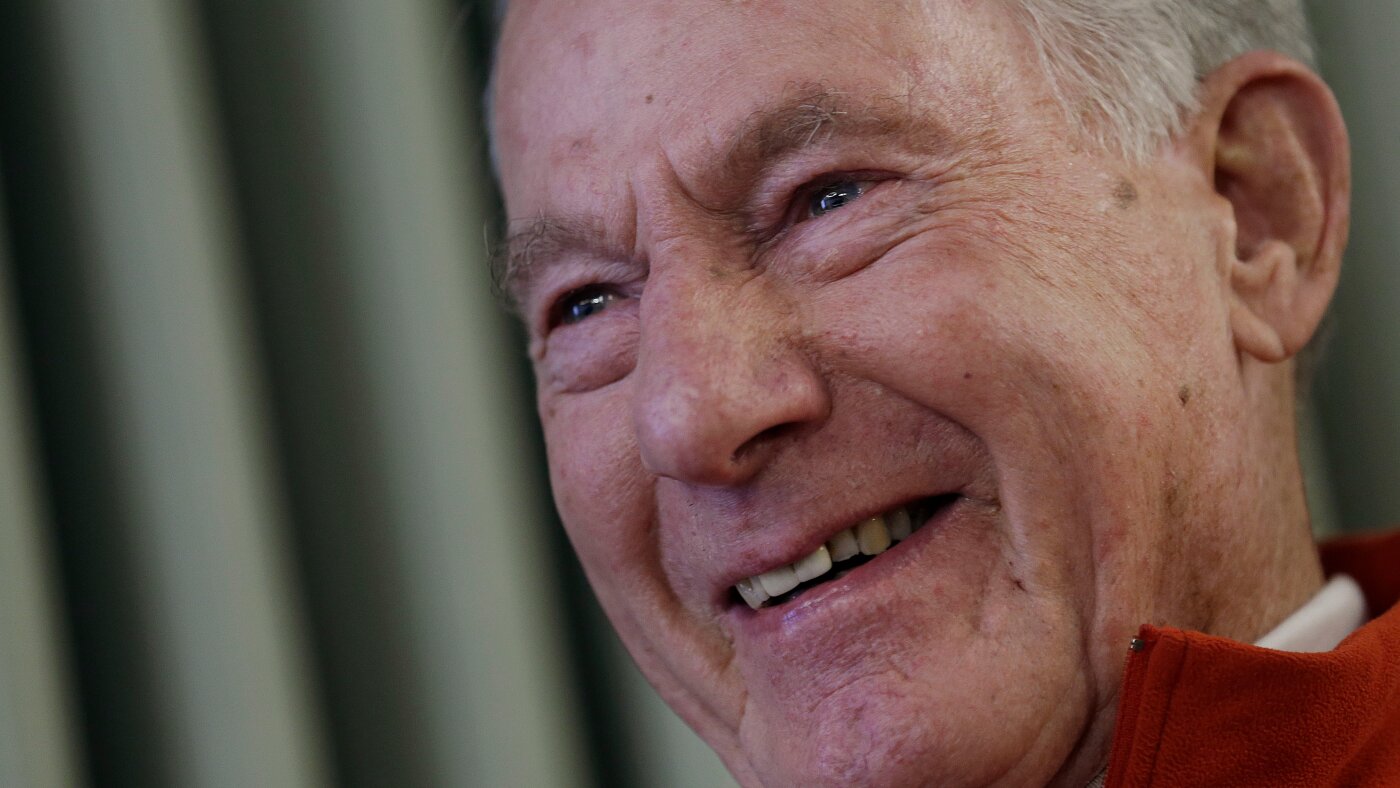
Jim Whittaker, the first American to summit Mount Everest, dies at 97

Video: Military Families Bear the Burden of War, Again
-

 Atlanta, GA4 days ago
1 teenage girl killed, another injured in shooting at Piedmont Park, police say
-

 Culture1 week ago
Do You Know Where These Famous Authors Are Buried?
-

 Movie Reviews1 week ago
Vaazha 2 first half review: Hashir anchors a lively, chaos-filled teen tale
-

 Georgia2 days ago
Georgia House Special Runoff Election 2026 Live Results
-

 Education1 week ago
Video: We Put Dyson’s $600 Vacuum to the Test
-

 Pennsylvania2 days ago
Parents charged after toddler injured by wolf at Pennsylvania zoo
-
 Milwaukee, WI3 days ago
Potawatomi Casino Hotel evacuated after fire breaks out in rooftop HVAC system
-
 Entertainment1 week ago
Inside Ye’s first comeback show at SoFi Stadium