Connect with us

News

‘Not for the faint of heart’: Private equity’s last retail barbarian

Published

on

‘Not for the faint of heart’: Private equity’s last retail barbarian

Ailing retailers like Walgreens Boots Alliance have scared off even the most daring Wall Street financiers. But that fear has repeatedly proven an opportunity for Sycamore Partners’ Stefan Kaluzny.

The intensely secretive co-founder of the private equity firm has been able to make big bets that Americans are not done with malls and in-person shopping, with few rivals daring to circle.

This week Sycamore, which has sucked up waning brands such as Staples, Talbots and Ann Taylor despite managing only about $10bn, announced its biggest deal yet: a $23.7bn transaction to take Walgreens private.

The buyout firm now has to revive a business ravaged by declining prescription drug reimbursements and ecommerce, with 12,500 outlets spanning the US, Europe and Latin America, under brands including Walgreens, Boots, Duane Reade and Benavides. Many peers see the stores as unsalvageable.

“It’s not for the faint of heart,” one lawyer who has worked with Sycamore said of leveraged buyouts in the retail sector. “Oftentimes these deals have less competition because [they’re] going where other people won’t touch with a 10-foot pole.”

Advertisement
Sycamore co-founder Stefan Kaluzny has refined his technique over 14 years of buyouts © Slaven Vlasic/Getty Images/AAFA American Image Awards

Kaluzny’s well-worn playbook starts with the intricate dossiers Sycamore maintains on hundreds of US retail chains, one Wall Street veteran recalled.

The next step is achieving a modest purchase price. Sycamore has developed a reputation for bargaining hard right up until signing. In some cases — the $6.9bn deal for office supplies chain Staples, for example — Sycamore has even pulled off price chips after reaching a handshake on the terms, according to securities filings and deal insiders.

After landing a deal, Sycamore makes aggressive plans to get its equity investment back quickly by breaking up a target or selling off real estate to generate immediate cash proceeds.

With Staples, Kaluzny rapidly separated the consumer chain that had been battered by Amazon from the business-to-business segment, and sold the company’s headquarters to itself so that it could then collect lease payments. The result: a $1bn dividend within a few years.

“Sycamore is willing . . . to get their hands dirty,” one person involved in the Walgreens buyout said.

Advertisement

The firm’s success had less to do with “brilliant operational moves” than the fact they were “not sentimental” and were willing to shut down or liquidate business lines quickly, the person said. “They’re willing to play hardball.”

Sycamore and Kaluzny declined to comment.

Such high-stakes gambits are typical of an investor seen by peers as a brutally tough negotiator with a stomach for some of the most complex turnarounds on Wall Street.

Kaluzny honed his craft at buyout group Golden Gate Capital, before setting up Sycamore in 2011. It was a rich time to buy brick-and-mortar retailers: shopping centres were still full of foot traffic and the 2008 financial crisis had knocked many of their businesses off track, creating cheap opportunities for pugnacious investors such as Apollo Global Management and KKR.

Yet since then, the approach has sometimes struggled.

Advertisement

Investing in retail companies with hulking real estate footprints and thousands of employees can be treacherous, and when retailers fail, they do not collapse quietly.

Previous Sycamore deals involved the owner of shoe Stuart Weitzman and Kurt Geiger © Chris Ratcliffe/Bloomberg
The buyout firm’s latest acquisition is for a different type of troubled retailer, Walgreens Boots Alliance © Bridget Bennett/Bloomberg

“Private equity firms have lost so much money in retail,” said one banker that has worked with Sycamore. “Retail and leverage don’t usually work well. If you get the timing wrong, if you get the fashion wrong, you get your head handed to you.”

One of Sycamore’s thornier situations was its 2014 investment in retail conglomerate Jones Group, where the buyout firm sold two of the company’s most valuable brands — Stuart Weitzman and Kurt Geiger — to another entity it controlled.

It renamed the rump of the business Nine West, which filed for bankruptcy in 2018, and sparked a legal brawl.

Creditors accused the private equity group of stripping Nine West of valuable assets, leaving it unable to pay off its debt and ultimately insolvent. Sycamore settled the dispute in court by paying junior bondholders; in exchange, the group received releases from future liabilities related to the buyout.

Three years after Nine West’s bankruptcy filing, another Sycamore portfolio company, private department store chain Belk, filed for bankruptcy under the weight of more than $1bn in debt after six years under the firm’s ownership. Sycamore ultimately ceded control of the company to lenders in a restructuring last year.

Advertisement

Sycamore’s first fund had returned 24 per cent as of the third quarter of last year, while its third fund from 2018 had brought in 18 per cent, according to a person familiar with the returns and public filings. However, its second one from 2014 has only returned 5 per cent.

The private equity group launched a fourth fundraise during the second half of last year which has yet to close, according to a person familiar with the matter.

While private equity titans like Blackstone and KKR have generally walked away from retail buyouts, Sycamore — and Kaluzny — has stuck around.

Kaluzny has run the firm on his own since 2022, when his co-founder Peter Morrow departed. “Stefan’s smart about it,” said the lawyer. “They really scrutinise the assets and figure out ways they can capture value, in a way other people couldn’t.”

With Walgreens Boots, the 90 per cent drop in the company’s market capitalisation in the past decade spells opportunity.

Advertisement

US pharmacy chains have suffered from a punishing combination of flagging sales and steeper costs, and Walgreens has been no exception.

The buyout group will attempt to turn the business around by using the same game plan it has applied to other targets in its 14 years of buying brands, according to people familiar with the group’s business strategy.

Sycamore ultimately plans to split the pharmacy chain into at least three businesses, the Financial Times previously reported. The company’s US pharmacy retailer Walgreens, its British retail arm Boots, and the speciality pharma unit Shields Health Solutions are among the units that could ultimately become independent companies.

Pulling that off means putting in place precise financing arrangements for the deal to reflect the differing prospects of the businesses, one of the reasons the buyout took months to negotiate.

Lenders to the US retail business, for example, required Sycamore to secure the debt with inventory, including prescription drugs, according to a person involved in the deal.

Advertisement

Such a structure gives lenders — which include private credit firm Ares — a claim on the assets if the unit defaults on its debt or ultimately files for bankruptcy.

Cleaving a company into parts can help buyout firms unlock conglomerate discounts and secure a higher overall payout, and Sycamore is well practised in the art. But there is still considerable work to be done whipping parts of Walgreens’ core business into shape for potential future buyers.

“Presumably Sycamore’s going to be focused on cost-cutting and cost-reduction to improve cash flow,” said James Goldstein, the head of US retail at CreditSights.

“I’m sure they’ll push hard, but do they have better ideas of how to fix the pharmacy business than the existing management team or anyone else? I don’t know.”

Additional reporting by Sujeet Indap, Antoine Gara and Eric Platt in New York

Advertisement

News

Wheelchair curler Steve Emt’s path from drunk driver to three-time Paralympian

Published

on

Wheelchair curler Steve Emt’s path from drunk driver to three-time Paralympian

American Steve Emt competes in Sunday’s mixed doubles match against Italy, which the U.S. won.

Maja Hitij/Getty Images


hide caption

toggle caption

Advertisement

Maja Hitij/Getty Images

Anyone watching the Winter Paralympics has probably taken note of Steve Emt, who — along with Laura Dwyer — is representing Team USA in the Games’ first-ever mixed doubles event.

Their performance is one thing: The pair notched three dramatic, back-to-back wins in the round-robin tournament to reach the semifinals, marking the first time the U.S. has qualified for a medal round in wheelchair curling since the 2010 Paralympics.

After losing to Korea in the semifinals, Emt and Dwyer will face Latvia in the bronze medal match on Tuesday, in the hopes of winning the U.S. its first Paralympic medal in wheelchair curling.

Advertisement

But it’s their teamwork and attitude on ice that really set them apart. Emt, in particular, has charmed the internet, with his booming baritone delivering a steady stream of encouragement to his doubles partner and demands to the granite stones they’re sliding (“curl!” “sit!”).

“I have three older siblings. I was always on the basketball court getting beat up by them, so I had to assert myself on the court, around the kitchen table, everything,” he said when asked about his deep voice this week.

Steve Emt and Laura Dwyer celebrate during a match this week.

Steve Emt and Laura Dwyer have made sure to celebrate their wins, of which there have been many throughout this wheelchair curling mixed doubles round-robin tournament.

Maja Hitij/Getty Images


hide caption

Advertisement

toggle caption

Maja Hitij/Getty Images

While Emt, 56, is competing in a new event, he’s no stranger to the sport: The 10-time national champion and three-time Paralympian is the most decorated Paralympic curler in U.S. history.

But he didn’t know what curling was until he got recruited off the street just over a decade ago.

Advertisement

Emt, who is 6 feet, 5 inches tall, was enjoying a day in Cape Cod, Mass., in 2013 when a stranger with slicked-back hair approached and asked if he was local. Emt replied that he lived in Connecticut and suspiciously asked why.

“He said, ‘Well, I train with the Paralympic rowing team here in the Cape. I saw you pushing up the hill back there. With your build, I could make you an Olympian in a year,’” Emt recalled, referring to his wheelchair. “And I heard ‘Olympics,’ I’m like: Let’s go. What the hell is curling?”

After their conversation, Emt drove home and did some research, confirming that curling was not related to weightlifting, as he originally suspected.

“I went back two weeks later and I threw my first stone, and it just bit me,” he said.

Before long, Emt was making the two-and-a-half-hour drive to Massachusetts to spend the weekend training with that stranger-turned-coach, Tony Colacchio. He made the U.S. wheelchair curling team in 2014 and competed at his first world championship in 2015. Emt made his Paralympic debut in Pyeongchang in 2018, five years after that fateful encounter.

Advertisement

Emt, speaking to reporters in October, said the sport of curling has changed him as a person, mellowing him out. But the existence of the sport as a competitive outlet for athletes with disabilities changed his life.

Emt had been an all-star high school athlete, an Army West Point cadet and a UConn basketball walk-on before a drunk driving incident paralyzed him from the waist down at 25 years old.

“I’m a jock … I need to compete, and I didn’t have anything going on in my life,” Emt said. “Seventeen years after my crash, I had a hole, and then [Colacchio] came along and stalked me into the sport.”

By that point, Emt had spent years working as a middle school math teacher, a high school basketball coach and a motivational speaker. The latter has been his full-time job for almost a decade, taking him to over 100 schools across the country each year. He tells those teenagers about the chance Colacchio took on him, encouraging them to “be a Tony.”

“Go sit with that kid at lunch that’s sitting alone … smile [at] somebody in a hallway, get your heads out of your phones, get your heads out of the sand,” he continued. “We’re all going through something … and a simple ‘hello’ or ‘good morning,’ it could change their day. It could change somebody’s life.”

Advertisement

Why Emt now shares his story 

This is the third Paralympics for Emt, who is already eyeing Salt Lake City 20

This is the third Paralympics for Emt, who is already eyeing Salt Lake City 2034.

Mattia Ozbot/Getty Images


hide caption

toggle caption

Mattia Ozbot/Getty Images

Advertisement

Emt wasn’t always so willing to open up. For the first half a year after his 1995 crash, he told everyone a deer had run in front of his car rather than admit he had gotten behind the wheel drunk.

“I was lying to myself, I was lying to everybody around me,” he said. “I didn’t want kids to look at me in my hometown, in the state, and everyone around the country, as a drunk driver. I wanted them to look at me as a stud athlete and a great person.”

Emt had been a “stud athlete”: His talents in high school basketball, soccer and baseball made him a star in his hometown of Hebron, Conn., and earned him a spot on the basketball team at West Point.

But he dropped out two years later, after his father’s sudden death from a heart attack. He went home to Connecticut and eventually enrolled at UConn, where he walked on to its storied basketball team, joining future NBA greats like Donyell Marshall. Emt says, with a chuckle, that he had 38.7 seconds of playing time in his two years.

Advertisement

Emt was wearing his Big East championship jacket the night of his 1995 accident, which he says left him for dead on the side of the highway. When he woke up from a coma a few days later, he learned he would never walk again.

And he didn’t want to tell people why, until a newspaper reporter approached him six months later wanting to tell his story — and encouraged him to be honest. He said the opportunity to “come clean” helped him accept what he’d done and forgive himself.

“That’s my label: Yeah I’m a curler, yeah I’m a speaker, yeah I’m a drunk driver,” he said. “I’m in a wheelchair because of a drunk driving crash, and I want you to know it and I want you to learn from me.”

Emt first got into motivational speaking about eight months after his accident, and has been doing it ever since. He calls it his therapy.

He says that and curling — which is about shaking hands with competitors instead of smack-talking them — has helped him slow down and appreciate the little things. Relocating to Wisconsin and the chiller pace of Midwest life has also helped. And he says he cherishes the platform that curling has given him.

Advertisement

“I want people to know: ‘Hey, when you’re ready to talk, I’m here for you.’ This is what I do, from my speaking to my curling, whatever it is, there are so many opportunities to be successful again,” he said. “When you wake up and you’re told you’re never going to walk again, it’s like, what do I do now? … And I just want people to know that there are so many avenues out there, so many things to do.”

Emt, the oldest Paralympian on Team USA, originally aimed to make it to three Games. But he’s now eyeing even more, as he’d like to compete on home turf in Salt Lake City in 2034 (two Games away).

“I’m going to be like 90 years old competing at the Paralympics,” he laughed.

Continue Reading

News

Map: 2.3-Magnitude Earthquake Reported North of New York City

Published

on

Map: 2.3-Magnitude Earthquake Reported North of New York City

Note: Map shows the area with a shake intensity of 3 or greater, which U.S.G.S. defines as “weak,” though the earthquake may be felt outside the areas shown.  All times on the map are Eastern. The New York Times

A minor, 2.3-magnitude earthquake struck about 12 miles north of New York City on Tuesday, according to the United States Geological Survey.

The temblor happened at 10:17 a.m. Eastern in Sleepy Hollow, N.Y., data from the agency shows.

The Westchester County emergency services department said in a statement that it had not received any reports of damage.

As seismologists review available data, they may revise the earthquake’s reported magnitude. Additional information collected about the earthquake may also prompt U.S.G.S. scientists to update the shake-severity map.

Advertisement

Source: United States Geological Survey | Notes: Shaking categories are based on the Modified Mercalli Intensity scale. When aftershock data is available, the corresponding maps and charts include earthquakes within 100 miles and seven days of the initial quake. All times above are Eastern. Shake data is as of Tuesday, March 10 at 10:30 a.m. Eastern. Aftershocks data is as of Tuesday, March 10 at 2:18 p.m. Eastern.

Continue Reading

News

Ed Martin, outspoken Justice Department lawyer, is formally accused of ethical violations | CNN Politics

Published

on

Ed Martin, outspoken Justice Department lawyer, is formally accused of ethical violations | CNN Politics

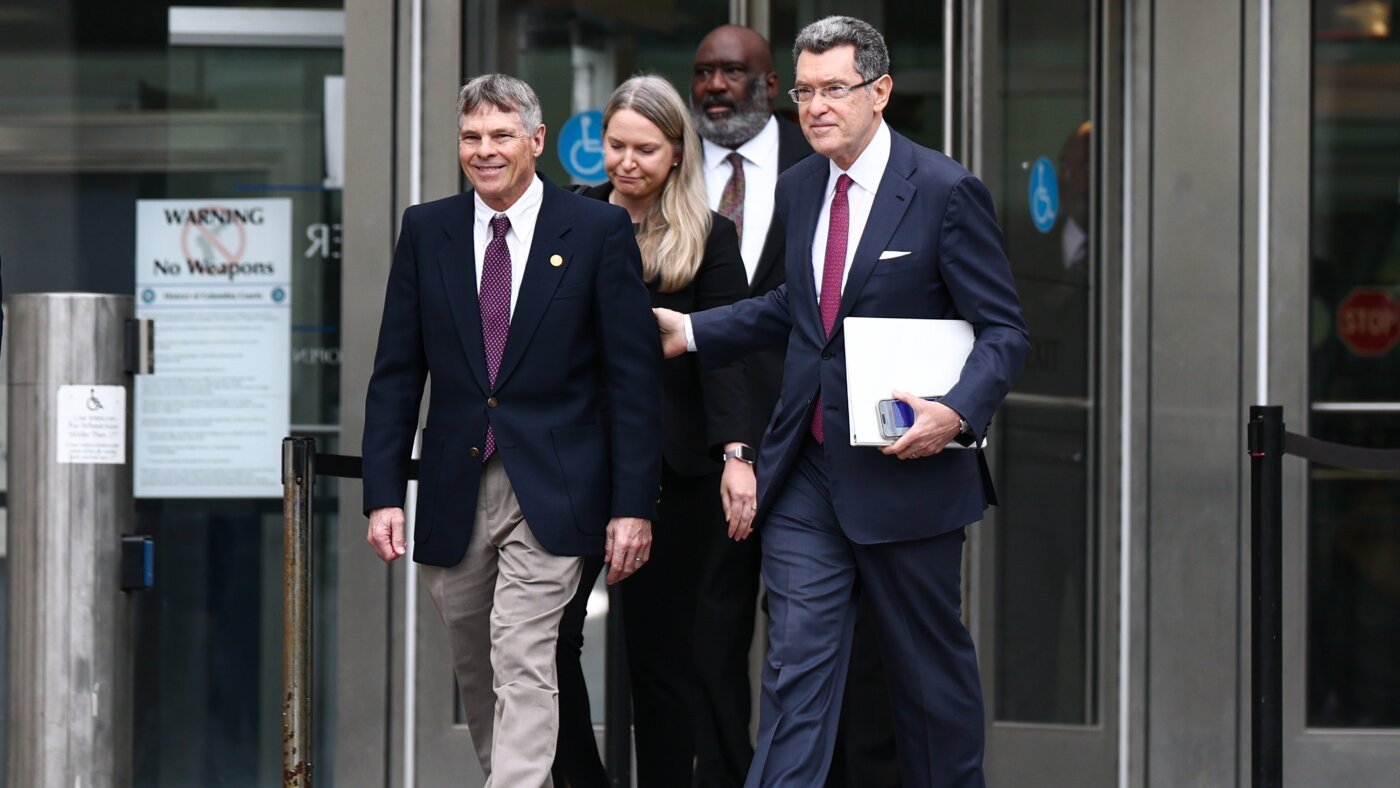
Ed Martin, an outspoken Trump administration official, is facing attorney discipline proceedings in Washington, DC, for a letter he sent to Georgetown Law about its diversity programs, the district’s professional conduct investigator announced on Tuesday.

Martin is formally accused of violating his ethical codes as an attorney for telling Georgetown Law’s dean last year that his Justice Department office wouldn’t hire students because of the school’s diversity, inclusion and equity initiatives programs, according to the filing from Hamilton Fox, the disciplinary counsel for DC who acts as a quasi-prosecutor on attorney discipline matters.

Unlike unsolicited complaints, Fox’s formal disciplinary complaint kicks off professional conduct proceedings for Martin in which he will need to respond and could be sanctioned or ultimately lose his law license.

Fox’s announcement on Tuesday marks the first major bar discipline proceeding against a high-profile administration official or attorney supporting President Donald Trump during Trump’s second term. Several Trump lawyers faced disciplinary proceedings after the efforts to overturn Joe Biden’s victory in the 2020 presidential election, including Rudy Giuliani, who lost his law license.

“Acting in his official capacity and speaking on behalf of the government, he used coercion to punish or suppress a disfavored viewpoint, the teaching and promotion of ‘DEI,’” Fox wrote in the complaint. “He demanded that Georgetown Law relinquish its free speech and religious rights in order to continue to obtain a benefit, employment opportunities for its students.”

Advertisement

Martin was removed from the top prosecutor job in DC after senators made clear he would not be confirmed to the role, but has remained at the Justice Department in several roles, including as pardon attorney.

“Mr. Martin knew or should have known that, as a government official, his conduct violated the First and Fifth Amendments to the Constitution of the United States,” Fox wrote.

Martin is being represented by a Justice Department attorney, a source told CNN.

A spokesperson for DOJ attacked Fox’s complaint. “The DC bar’s attempt to target and punish those serving President Trump while refusing to investigate or act against actual ethical violations that were committed by Biden and Obama administration attorneys is a clear indication of this partisan organization’s agenda,” DOJ said.

Martin had sent the letter to Georgetown Law while serving temporarily as US attorney for DC, a prominent Justice Department position, and told the school his federal prosecutors’ office wouldn’t hire Georgetown’s law school students. It came at a time when the Trump administration was beginning to crack down on universities for their DEI efforts.

Advertisement

In his letter, Martin claimed a whistleblower told him that the school was teaching and promoting DEI.

Martin also violated attorney ethics rules by contacting judges of the DC court directly, Fox alleged, rather than going through official channels, once he was informed he was under investigation for his professional conduct. The DC Court of Appeals ultimately signs off on attorney discipline findings.

Early last year, Fox’s office had formally asked Martin to respond to a complaint it received by a retired judge regarding the Georgetown letter.

Martin instead wrote to the judges on the DC court complaining about Fox.

“In that letter, he stated that he would not be responding to Disciplinary Counsel’s inquiry, complained about Disciplinary Counsel’s ‘uneven behavior,’ and requested a ‘face-to-face meeting with all of you to discuss this matter and find a way forward,’” Fox wrote.

Advertisement

“He copied the White House Counsel ‘for informational purposes because of the importance of getting this issue addressed,’” Fox said.

The top judge in the DC courts told Martin the court wouldn’t meet with him about the disciplinary matter and that he would need to follow procedure.

With Fox’s complaint, there will now be several steps ahead of bar discipline authorities looking at Martin’s action, and Fox didn’t specify how Martin should be reprimanded or punished if the discipline boards and the court ultimately determine he violated his ethical codes.

Spokespeople for the Justice Department didn’t immediately respond to requests for comment on Tuesday morning.

In recent days, Attorney General Pam Bondi announced her office would have a more powerful role in reviewing attorney discipline complaints against Justice Department attorneys, potentially setting up an approach that could keep the department at odds with the bar on behalf of DOJ attorneys facing their own individual disciplinary proceedings.

Advertisement

CNN’s Paula Reid contributed to this report.

Continue Reading

Trending