Connect with us

News

Dozens of Canadians are charged for scamming American grandparents out of $21 million

Published

on

Dozens of Canadians are charged for scamming American grandparents out of  million

Prosecutors say 25 Canadians have been charged in connection with a multimillion dollar “grandparent scam” targeting elderly Americans nationwide.

Bernd Weißbrod/Picture Alliance via Getty Images


hide caption

toggle caption

Advertisement

Bernd Weißbrod/Picture Alliance via Getty Images

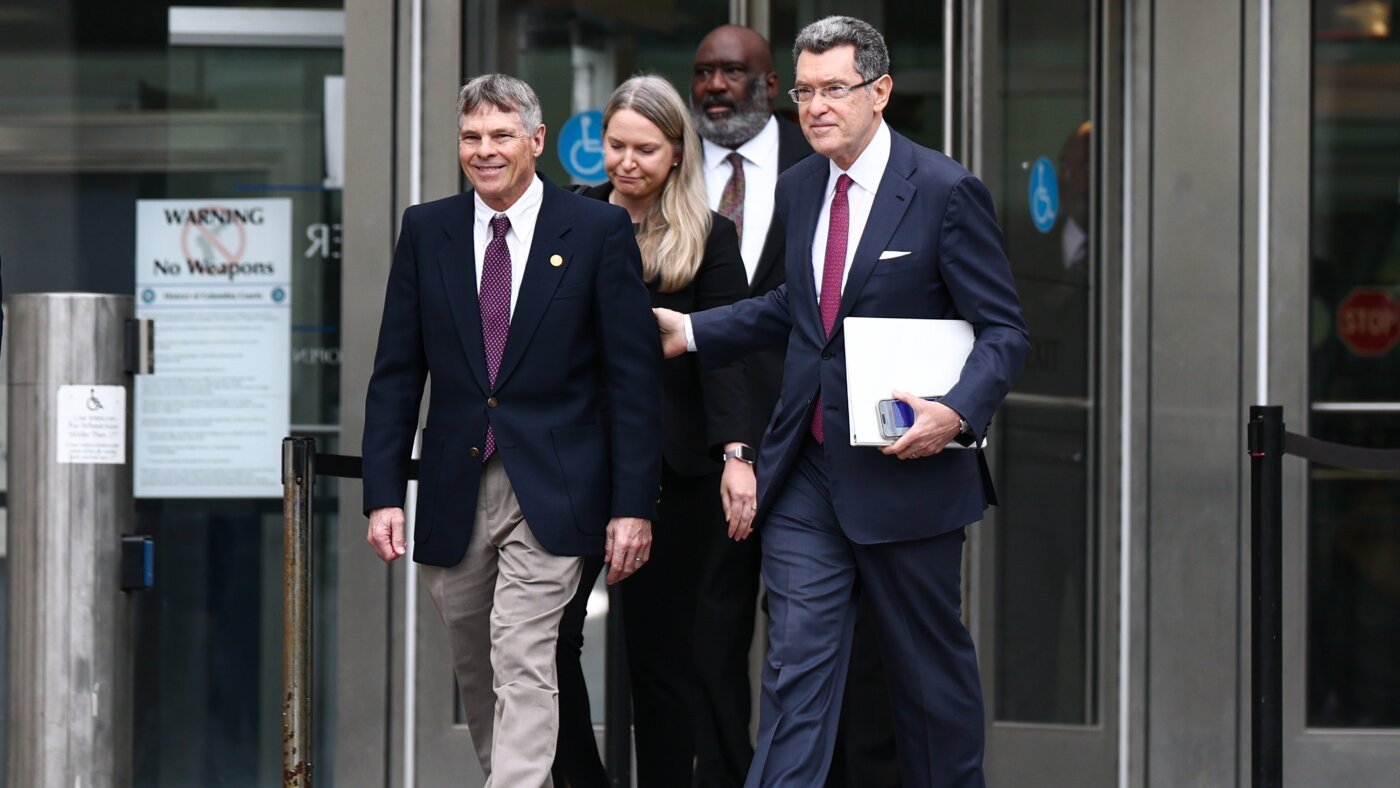
Twenty-five Canadians have been charged with swindling hundreds of American seniors out of more than $21 million through what’s known as a “grandparent scam,” federal prosecutors announced Tuesday.

The Office of the United States Attorney for the District of Vermont said in a statement that the alleged perpetrators were indicted by a federal grand jury in late February.

Advertisement

They range in age from their late-20s to mid-40s and all but one are based in Quebec province, which is home to Montreal. The announcement lists their names as well as the aliases they used, including Muscles, Elvis, Blondie, Happy, Honda and Toast.

All 25 are charged with conspiracy to defraud, while five of them are also accused of conspiring to commit money laundering.

Information about the defendants’ lawyers and court appearances was not immediately available, and the U.S. Attorney’s Office for the District of Vermont declined to elaborate as the case is ongoing.

Prosecutors say the scheme, which started in the summer of 2021, targeted elderly victims in 46 states.

“These individuals are accused of an elaborate scheme using fear to extort millions of dollars from victims who believed they were helping loved ones in trouble,” said Michael Krol, special agent in charge for Homeland Security Investigations in New England.

Advertisement

How the alleged scheme worked 

A 14-page indictment unsealed on Tuesday accuses the group of operating an elaborate scheme based out of a network of call centers in the Montreal area, using technological means to make their calls look like they were coming from the U.S.

The participants would allegedly call elderly Americans — culled from spreadsheets with their personal information, including age and household income — and pretend to be a relative, typically a grandchild, who needed money for bail after a car crash.

They would falsely claim that a “gag order” prevented their concerned victim from telling any other family members. They would then pass the call to another suspect, who posed as an attorney representing the relative in distress.

Victims were persuaded to give the money to another individual who came to their homes — in New York City, Chicago and other locations — posing as a bail bondsman or in some cases send it by mail. Prosecutors say that money was later transmitted to the suspects in Canada, a process that often involved cryptocurrency.

“These transactions obscured the source of the money and the identities of the co-conspirators who collected and controlled the money, and promoted and paid the operating expenses of the Grandparent Scam,” the indictment reads.

Advertisement

Some victims were allegedly pursued multiple times, with suspects calling back later to say the bail amount had increased and more money was needed. Suspects referred to a victim who provided substantial amounts of money as a “whale,” the indictment says.

Overall, prosecutors say the scheme defrauded hundreds of elderly victims across the U.S. until early June 2024, when Canadian law enforcement executed search warrants at the call centers.

That day, the indictment says, one defendant was found in his truck with “numerous cell phones and lists of elderly individuals in multiple states,” while more than a dozen others were found at multiple call centers “in the act of placing phone calls to elderly victims in Virginia.”

What’s next? 

All but two of the suspects were arrested in Canada on Tuesday, which American authorities say is the result of extensive cooperation between local and federal agencies in both countries.

“Today’s arrests demonstrate IRS-CI’s commitment to protecting the American people from bad actors, no matter where they are hiding,” said Thomas Demeo, acting special agent in charge of the Boston field office of the Internal Revenue Service Criminal Investigation (IRS-CI).

Advertisement

All 25 suspects are facing a charge of fraud conspiracy, which prosecutors say is punishable by up to 20 years in prison.

The five suspects accused of managing the call centers — Gareth West, Usman Khalid, Andrew Tatto, Stephan Moskwyn and Ricky Ylimaki — are also charged with conspiring to commit money laundering. They face up to 40 years in prison if convicted.

West and Ylimaki remain at large, prosecutors say.

In addition to this group, nine other people were previously charged in Vermont in connection with this same scam, the U.S. Attorney’s Office says. The individuals range in age from 27 to 39, and hail from places as varied as Miami, Los Angeles, Montreal and Guangzhou, China.

Grandparent scams are increasingly common

It’s not unusual for scammers to gain access to people’s personal information — by scouring social media or buying data from cyber thieves — and then “create storylines to prey on the fears of grandparents,” the Federal Communications Commission (FCC) says.

Advertisement

“Grandparents often have a hard time saying no to their grandchildren, which is something scam artists know all too well,” it adds.

An FBI report released last year found that scams targeting people ages 60 and up caused over $3.4 billion in losses in 2023, a roughly 11% increase from the previous year.

Authorities warn that grandparent scams have grown increasingly sophisticated in recent years, with some perpetrators using AI to clone the voices of victims’ loved ones in a hauntingly realistic touch.

The Federal Trade Commission (FTC) urges people: “Don’t trust the voice.” Anyone who gets this kind of call, especially if they are pressured to send money quickly, should call or text the person who supposedly contacted them to verify their story.

While some entities have tried to beat scammers at their own game — like the British phone company that developed an AI “granny” to waste shady callers’ time — experts have warned against scam-baiting.

Advertisement

According to the FCC, the best defense against these scams is awareness.

People can monitor resources like the AARP Fraud Watch Network Scam-Tracking Map and alerts from the Better Business Bureau. They are also encouraged to report any suspicious calls on the FTC’s website.

Any fraud victims ages 60 or older can also call the National Elder Fraud Hotline, a free resource from the U.S. Department of Justice.

News

Amazon accused of listing products from independent shops without permission

Published

on

Amazon accused of listing products from independent shops without permission

Unlock the Editor’s Digest for free

Amazon has been accused of listing products from independent retailers without their consent, even as the ecommerce giant sues start-up Perplexity over its AI software shopping without permission.

The $2.5tn online retailer has listed some independent shops’ full inventory on its platform without seeking permission, four business owners told the Financial Times, enabling customers to shop through Amazon rather than buy directly.

Two independent retailers told the FT that they had also received orders for products that were either out of stock or were mispriced and mislabelled by Amazon leading to customer complaints.

Advertisement

“Nobody opted into this,” said Angie Chua, owner of Bobo Design Studio, a stationery store based in Los Angeles.

Tech companies are experimenting with artificial intelligence “agents” that can perform tasks like shopping autonomously based on user instructions.

Amazon has blocked agents from Anthropic, Google, OpenAI and a host of other AI start-ups from its website.

It filed a lawsuit in November against Perplexity, whose Comet browser was making purchases on Amazon on behalf of users, alleging that the company’s actions risked undermining user privacy and violated its terms of service.

In its complaint, Amazon said Perplexity had taken steps “without prior notice to Amazon and without authorisation” and that it degraded a customer shopping experience it had invested in over several decades.

Advertisement

Perplexity in a statement at the time said that the lawsuit was a “bully tactic” aimed at scaring “disruptive companies like Perplexity” from improving customers’ experience.

The recent complaints against Amazon relate to its “Buy for Me” function, launched last April, which lets some customers purchase items that are not listed with Amazon but on other retailers’ sites.

Retailers said Amazon did not seek their permission before sending them orders that were placed on the ecommerce site. They do not receive the user’s email address or other information that might be helpful for generating future sales, several sellers told the FT.

“We consciously avoid Amazon because our business is rooted in community and building a relationship with customers,” Chua said. “I don’t know who these customers are.”

Several of the independent retailers said Amazon’s move had led to poor experiences for customers, or hurt their business.

Advertisement

Sarah Hitchcock Burzio, the owner of Hitchcock Paper Co. in Virginia, said that Amazon had mislabelled items leading to a surge in orders as customers believed they were receiving more expensive versions of a product at a much lower price.

“There were no guardrails set up so when there were issues there was nobody I could go to,” she said.

Product returns and complaints for the “Buy for Me” function are handled by sellers rather than Amazon, even when errors are produced by the Seattle-based group.

Amazon enables sellers to opt out of the service by contacting the company on a specific email address.

Amazon said: “Shop Direct and Buy for Me are programmes we’re testing that help customers discover brands and products not currently sold in Amazon’s store, while helping businesses reach new customers and drive incremental sales.

Advertisement

“We have received positive feedback on these programmes. Businesses can opt out at any time.”

Continue Reading

News

Trump says Venezuela will turn over 30 million to 50 million barrels of oil to US | CNN Business

Published

on

Trump says Venezuela will turn over 30 million to 50 million barrels of oil to US | CNN Business

President Donald Trump said Tuesday night that Venezuela will turn over 30 million to 50 million barrels of oil to the United States, to be sold at market value and with the proceeds controlled by the US.

Interim authorities in Venezuela will turn over “sanctioned oil” Trump said on Truth Social.

The US will use the proceeds “to benefit the people of Venezuela and the United States!” he wrote.

Energy Secretary Chris Wright has been directed to “execute this plan, immediately,” and the barrels “will be taken by storage ships, and brought directly to unloading docks in the United States.”

CNN has reached out to the White House for more information.

Advertisement

A senior administration official, speaking under condition of anonymity, told CNN that the oil has already been produced and put in barrels. The majority of it is currently on boats and will now go to US facilities in the Gulf to be refined.

Although 30 to 50 million barrels of oil sounds like a lot, the United States consumed just over 20 million barrels of oil per day over the past month.

That amount may lower oil prices a bit, but it probably won’t lower Americans’ gas prices that much: Former President Joe Biden released about four to six times as much — 180 million barrels of oil — from the US Strategic Petroleum Reserve in 2022, which lowered gas prices by only between 13 cents and 31 cents a gallon over the course of four months, according to a Treasury Department analysis.

US oil fell about $1 a barrel, or just under 2%, to $56, immediately after Trump made his announcement on Truth Social.

Selling up to 50 million barrels could raise quite a bit of revenue: Venezuelan oil is currently trading at $55 per barrel, so if the United States can find buyers willing to pay market price, it could raise between $1.65 billion and $2.75 billion from the sale.

Advertisement

Venezuela has built up significant stockpiles of crude over since the United States began its oil embargo late last year. But handing over that much oil to the United States may deplete Venezuela’s own oil reserves.

The oil is almost certainly coming from both its onshore storage and some of the seized tankers that were transporting oil: The country has about 48 million barrels of storage capacity and was nearly full, according to Phil Flynn, senior market analyst at the Price Futures Group. The tankers were transporting about 15 million to 22 million barrels of oil, according to industry estimates.

It’s unclear over what time period Venezuela will hand over the oil to the United States.

The senior administration official said the transfer would happen quickly because Venezuela’s crude is very heavy, which means it can’t be stored for long.

But crude does not go bad if it is not refined in a certain amount of time, said Andrew Lipow, the president of Lipow Oil Associates, in a note. “It has sat underground for hundreds of millions of years. In fact, much of the oil in the Strategic Petroleum Reserve has been around for decades,” he wrote.

Advertisement
Continue Reading

News

Video: Nvidia Shows Off New A.I. Chip at CES

Published

on

Video: Nvidia Shows Off New A.I. Chip at CES

new video loaded: Nvidia Shows Off New A.I. Chip at CES

transcript

transcript

Nvidia Shows Off New A.I. Chip at CES

At the annual tech conference, CES, Nvidia showed off a new A.I. chip, known as Vera Rubin, which is more efficient and powerful than previous generations of chips.

This is the Vera CPU. This is one CPU. This is groundbreaking work. I would not be surprised if the industry would like us to make this format and this structure an industry standard in the future. Today, we’re announcing Alpamayo, the world’s first thinking, reasoning autonomous vehicle A.I.

Advertisement
At the annual tech conference, CES, Nvidia showed off a new A.I. chip, known as Vera Rubin, which is more efficient and powerful than previous generations of chips.

By Jiawei Wang

January 6, 2026

Continue Reading

Trending