BASCO — For those over 6 feet tall, the ceiling still causes a crane of the neck — for some a full-on duck.
It only takes two dimes to play a game of bumper pool. Blatz remains a staple, only now it’s served from a can instead of a tap.
While Dot’s Tavern now has an outdoor beer garden, music stage and food truck, Kari Ace says the basement bar remains largely the same since a remodel in 1969. Her grandparents bought the place in 1948 and lived upstairs.
Dot’s Tavern, in the basement of a farmhouse in southern Dane County, is a throwback and a survivor when rural taverns are disappearing along with the thirsty farmers who helped keep them in business.
But here on Henry Road, just east of Highway 69, between Belleville and Paoli, this family-owned watering hole, now in its third generation, has found a path to viability.
It includes picnic tables, craft beer and seltzers, a music stage, food truck, and complimentary sunscreen and bug spray. Small painted rocks are used to anchor the cash of those who have bellied up to the outdoor bar.
People are also reading…

When the weather is warm and the rain holds off, Dot’s Tavern in Basco expands to an outdoor setting with a beer garden, music stage and food truck. The bar, in the basement of a farmhouse in southern Dane County, has been owned by one family since 1948.
And proprietors Kari and Dave Ace believe the late Dorthea “Dot” Northwick would approve of the slightly more modern improvements and the summer expansion since the COVID-19 pandemic to an outdoor space that provides sweeping views of the Sugar River watershed.
“When Dave and I bought the place, I told him, I said, ‘I want to keep it simple because Grandma was a very simple person.’ She was old school and grew up in the Depression, never threw anything away and never wanted change,” Kari Ace said, while sipping a can of Busch Light. “But I think she would be proud to see how far it’s come.”
Dot and Art Northwick bought the bar in 1948 and moved their family from Belleville into the farmhouse above the tavern. But Art died in 1959, so Dot ran the place by herself, often working seven days a week, opening at 9 a.m. and serving up beer, cooking frozen pizzas and toaster oven sandwiches, hamburgers made in the kitchen of the farmhouse and other bar food like hot nuts and pickled eggs.
There was no ice machine, so she bought bags of ice and kept them in a freezer. The bar didn’t get indoor bathrooms until the late 1960s: Men used an outhouse or a tree, but women were allowed to use the bathroom on the second floor of the farmhouse via a staircase that has since been closed off.
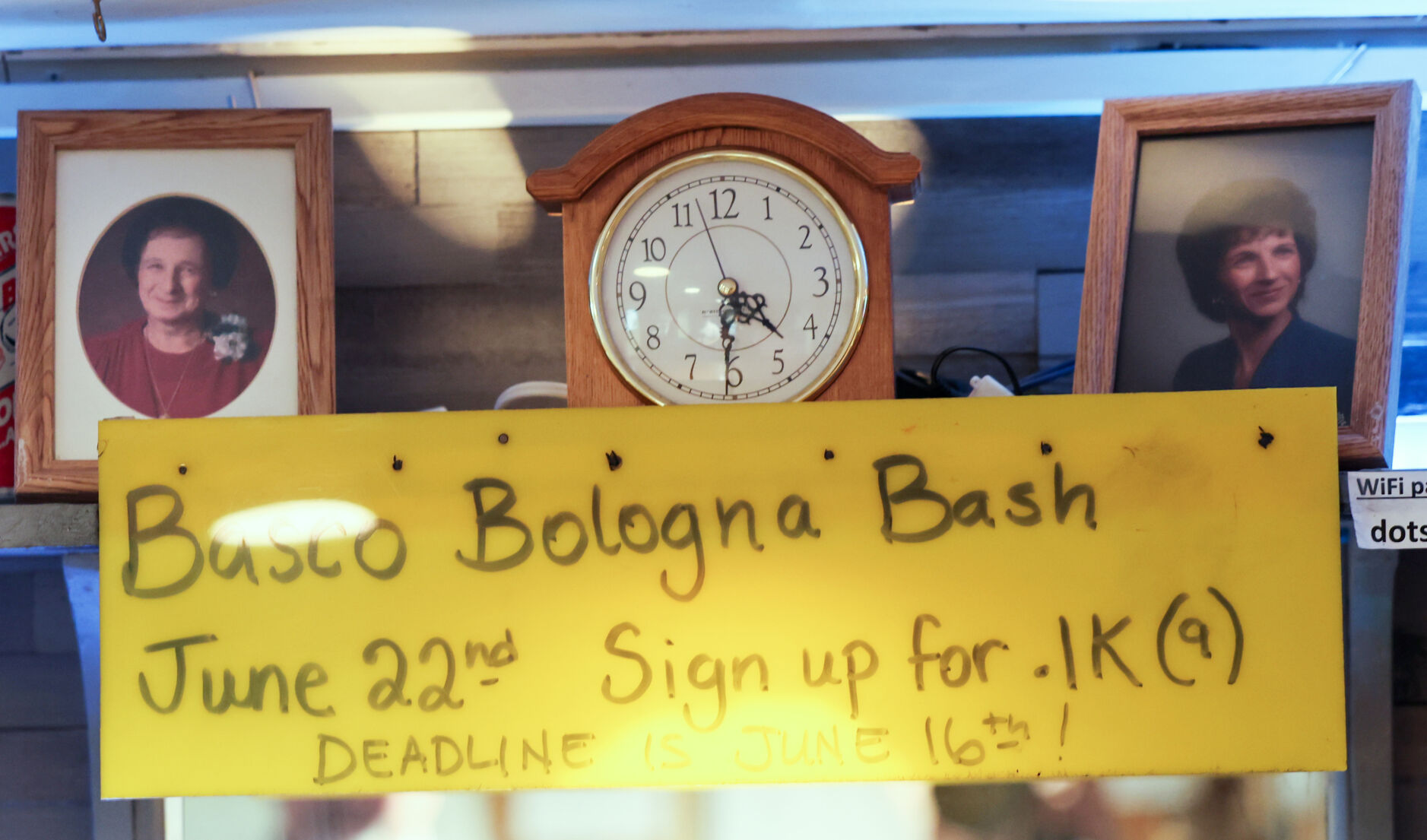
Photographs of Dot Northwick, left, who purchased Dot’s Tavern with her husband, Art, in 1948, and Dot’s daughter, Shirley Kelliher, who took over the bar after Dot died in 1995, are on display in the basement tavern. The Basco Bologna Bash was a fundraiser and drew more than 100 people to the community.
When Dot died in 1995, her sister Shirley took over the business and ran it until 2012, when she sold it to the Aces, her niece and nephew. Shirley died two years later.
‘And oh, did she ever get the crowds’
Dot’s daughter, Audrey Rear, 86, was 10 years old when the family made the move to Basco and remembers the time well, especially when drunken women would make their way to the bathroom, which was next door to the bedroom she shared with her sister Shirley. Rear moved out of the farmhouse in 1958 when she married a dairy farmer and moved to Mount Vernon but also remembers her mother’s annual dinner featuring roasted racoon.
“It was good. She had a certain recipe that used sherry,” Rear recalled. “It was almost like roast beef. And oh, did she ever get the crowds.”

Audrey Rear, 86, left, Dot’s daughter who grew up in the house with Dot’s Tavern in the basement, wasn’t pleased when her parents bought the bar in 1948. On a recent Wednesday, 76 years later, she laughed as she shared stories with her daughter, Kari Ace.
Rear was sitting at a table in the beer garden drinking a Diet Pepsi cloaked in a St. Louis Cardinals koozie. She never forgave the Braves for moving out of Milwaukee in 1966 to Atlanta, but she loathed the Chicago Cubs. So the Cards became her team. On a recent Wednesday evening, she reminisced about the past as customers began to fill picnic tables and crowd around the wooden bar while King Sies Fries, a guitar duo of Doug Sies and Bob King, played on the stage that was built in 2023. Acts used to play on the grass and a concrete pad.
The other major addition to Dot’s is the food truck. At first, Athens Grill would come out to the bar and set up shop, but a few years ago, the Aces bought the truck that is now permanently parked on the west side of the beer garden. It serves up hamburgers made with beef from Knoche’s, a former meat market in Madison whose beef business is now owned by the folks at Athens Grill. The food truck also sells gyros made with the Athens meat and recipe. It has a Friday night fish fry and tacos on Tuesday.

Lyla Kubly takes a food order from brothers Isaiah and Seb Gopin on a recent Wednesday night when gyros were the nightly special at Dot’s Tavern.
There’s also a Wednesday night beanbag league, something unheard of back in Dot’s days. Instead, Dot had Thursday night euchre leagues and served up spaghetti and meatballs to the players. Despite owning a bar, Dot never drank. Rear concurs with Kari Ace that Dot would welcome the changes.
“She would think it’s wonderful, as long as she didn’t have to do it,” Rear said. “She didn’t like to spend a lot of money.”
A community hub
The bar recently hosted its annual 0.1K Basco Bologna Bash, likely one of the shortest fundraising walks on the planet, to raise money for the Forever 56 Foundation, named in memory of Eric James O’Connor, a Belleville High School football player killed in an ATV crash in 2017.
The Aces also run the Brother Love Music Festival in Belleville. This year’s event, a tribute to Dave’s brother, Kevin, who was killed in a motorcycle crash in 2018, is July 21 at Library Park and raises money for school lunch programs in Belleville.
Back in Basco, the outdoor additions over the past four years came in the wake of the pandemic and out of necessity when Dane County ordered bars in 2020 to limit capacity to 25%. For Dot’s basement bar, that would have meant a maximum of four customers.
“It was one of the few silver linings,” Dave Ace, a retired machinist, said of the pandemic-induced changes.
Customers are no longer just farmers or those from the Basco neighborhood, a small collection of homes and apartments, including a few in the building across the street with faded wood siding that back in the day was home to a general store, post office and dance hall. Now with a cult-like following, Dot’s includes people from Madison, Belleville, New Glarus, Verona and points in between.
Unlike Paoli, there are no shops, restaurants, art galleries or a former creamery that has been transformed into a hotel, restaurant and event space.
But just like Paoli, Basco is a stop for bikers pedaling the 12.5-mile Badger State Trail between Fitchburg and Belleville. The trail crosses Henry Road a couple hundred feet from Dot’s. Only now instead of opening at 9 a.m., the business opens at 3:30 p.m.
In the summer, the basement bar is open only when it rains, although customers still have access to the bathrooms, ATM and video poker machines.
“It’s friendly and people feel comfortable here,” Kari Ace said. “Everybody knows everybody.”
Photos: Dot’s Tavern in Basco

Audrey Rear, 86, center, who’s parents, Dot and Art Northwick, started Dot’s Tavern in the basement of their home, visits with friends, including neighbor, Debbie Versnik, at left, in the outdoor area of the tavern at Rear’s childhood home in Basco, Wis., Thursday, June 20, 2024. AMBER ARNOLD, STATE JOURNAL

David Ace, owner of Dot’s Tavern with his wife, Kari, helps customers at the outdoor bar in Basco, Wis., Thursday, June 20, 2024. AMBER ARNOLD, STATE JOURNAL
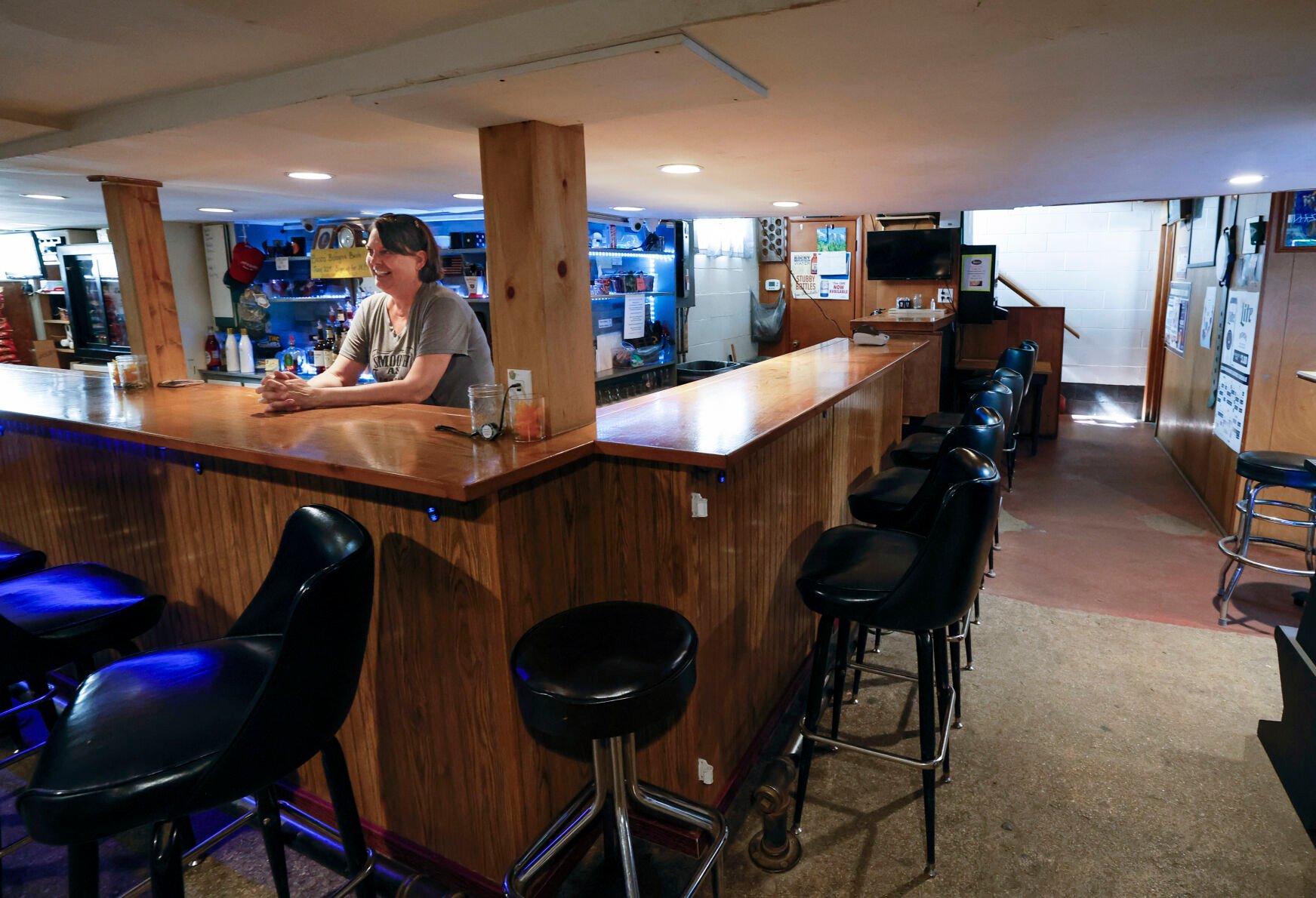
While Dot’s Tavern now has an outdoor beer garden, music stage and food truck, Kari Ace says the basement bar remains largely the same since a remodel in 1969. Her grandparents bought the place in 1948 and lived upstairs.
Photographs of Dot Northwick, left, who purchased Dot’s Tavern with her husband, Art, in 1948, and Dot’s daughter, Shirley Kelliher, who took over the bar after Dot died in 1995, are on display in the basement tavern. The Basco Bologna Bash was a fundraiser and drew more than 100 people to the community.
Audrey Rear, 86, left, Dot’s daughter who grew up in the house with Dot’s Tavern in the basement, wasn’t pleased when her parents bought the bar in 1948. On a recent Wednesday, 76 years later, she laughed as she shared stories with her daughter, Kari Ace.

Weekly special events on display at Dot’s Tavern in Basco, Wis., Thursday, June 20, 2024. AMBER ARNOLD, STATE JOURNAL
Lyla Kubly takes a food order from brothers Isaiah and Seb Gopin on a recent Wednesday night when gyros were the nightly special at Dot’s Tavern.

Kari Ace, owner of Dot’s Tavern, shows a pull down ladder to access the upstairs house from the basement bar, which used to be an exposed staircase for female customers to use the house bathroom when her grandparents owned the bar, in Basco, Wis., Thursday, June 20, 2024. A wall of photographs called “Dot’s Around the World” show customers wearing their Dot’s t-shirts all over the world. AMBER ARNOLD, STATE JOURNAL

Painted rocks are used to hold money down in the outdoor bar at Dot’s Tavern in Basco, Wis., Thursday, June 20, 2024. AMBER ARNOLD, STATE JOURNAL
When the weather is warm and the rain holds off, Dot’s Tavern in Basco expands to an outdoor setting with a beer garden, music stage and food truck. The bar, in the basement of a farmhouse in southern Dane County, has been owned by one family since 1948.
Barry Adams covers regional news for the Wisconsin State Journal. Send him ideas for On Wisconsin at 608-252-6148 or by email at badams@madison.com.