Missouri
Federal policy shifts could drive up utility costs for Missouri, Kansas families

KSHB 41 reporter Megan Abundis covers Kansas City, Missouri, including neighborhoods in the southern part of the city. Share your story idea with Megan.
—
Households in Missouri and Kansas could see a 15% increase in utility costs as tax credits for renewable energy are eliminated.
As summer temperatures rise and air conditioners run constantly, utility bills are already a concern for many households.
Federal policy shifts could drive up utility costs for Missouri, Kansas families
According to an analysis from Energy Innovation, a nonpartisan group, your electric bill is expected to increase because of changes made in President Trump’s “big beautiful bill.” Those changes include eliminating tax credits on renewable energy.
“We’ve already heard from a lot of utility companies around the country that they will have to raise prices, and the basic reason is because the United States is going to produce less energy than it was expected to,” said Michael Linden, senior policy fellow at the Washington Center for Equitable Growth.
KSHB 41
Rebates for solar panels and electric vehicle credits will phase out, too.
Linden, who previously worked in the Biden administration and the U.S. Senate, says the move will create supply and demand issues.
“The average household in Missouri and Kansas will likely see a 15% increase in their utility bills,” Linden said.
KSHB 41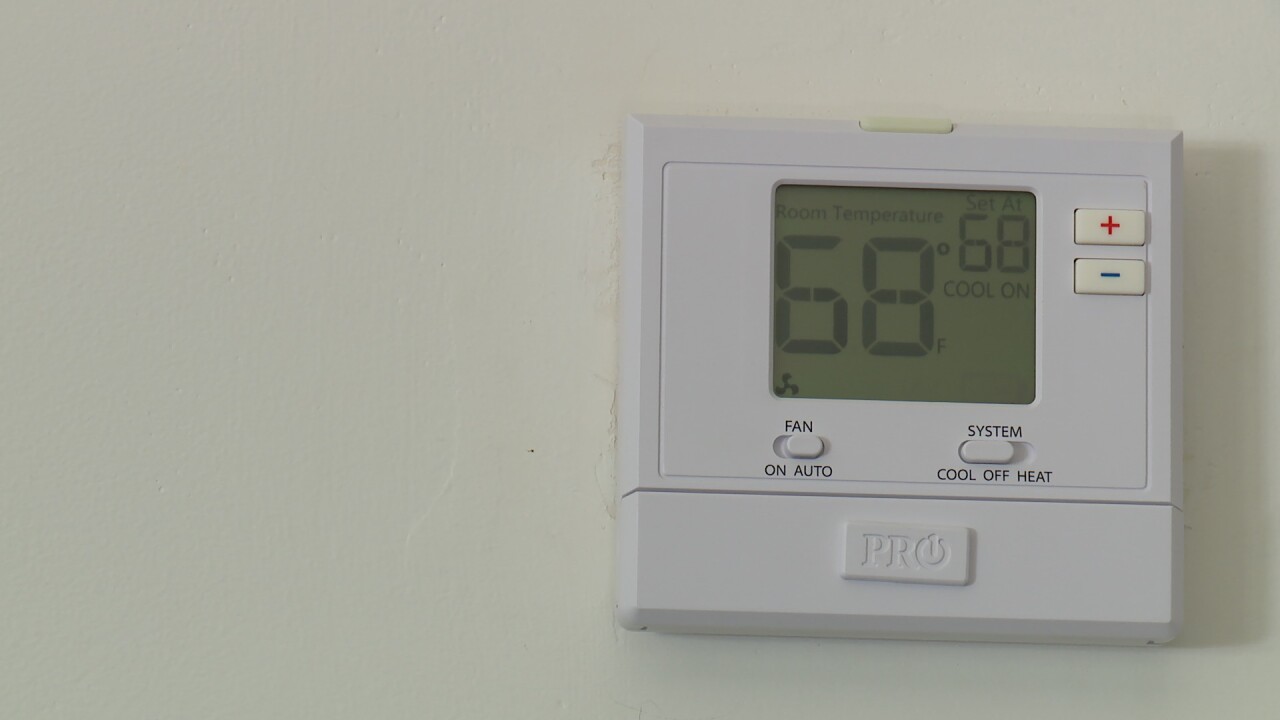
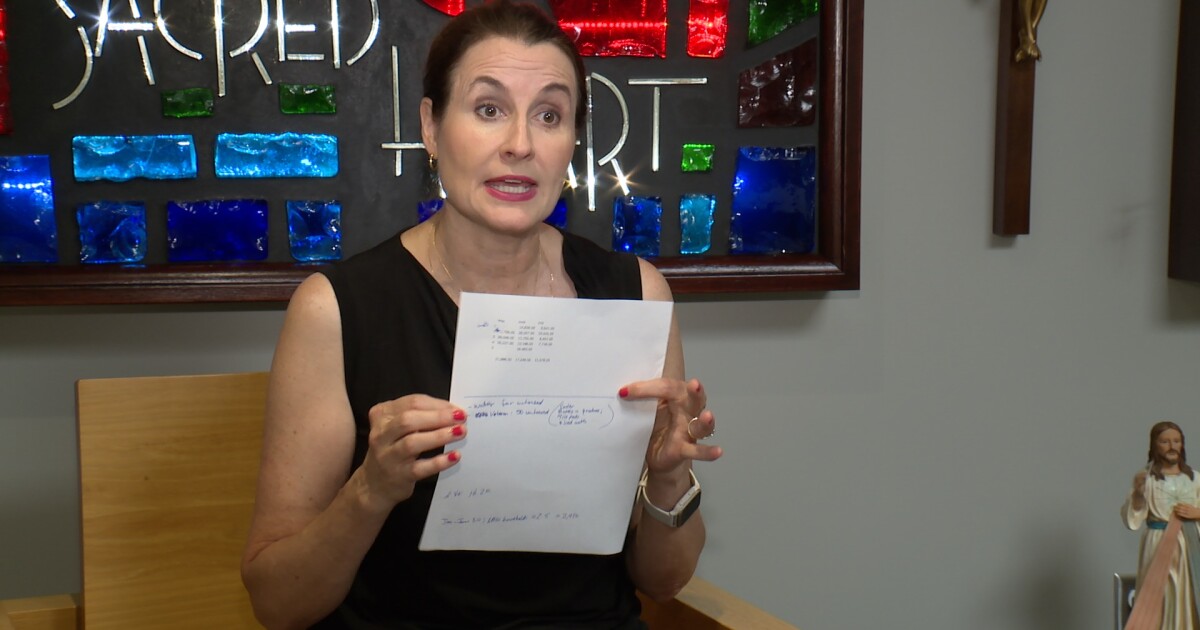
Karen Noel, CEO of Catholic Charities Kansas City, says her organization receives requests for utility bill assistance every day. In a week, these requests can amount to more than $10,000.
“Fifteen percent is not surprising,” Noel said. “The problem is it’s not just those in crisis that have been in crisis, it’s our working-class poor that are really pressured.”
Requests always spike during the heat of the summer, per Noel.
KSHB 41
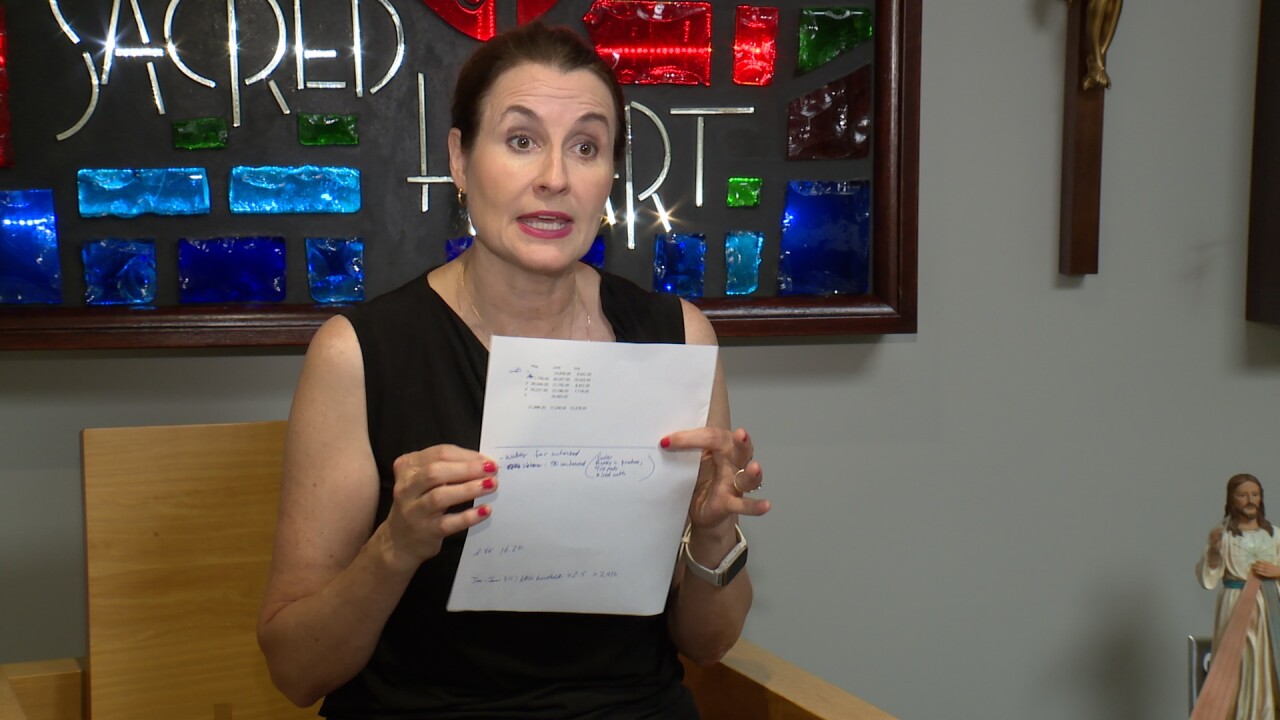
She recommends avoiding peak usage times to keep costs down.
“We just coach people: do your loads of laundry in the morning, do your heavy loads of power in the morning,” Noel said.
Despite the group’s efforts, Catholic Charities can currently only cover about 7% of requested monthly utility bills.
KSHB 41
“These are asks, not what we’ve been able to fulfill,” Noel said. “It’s not surprising we are seeing inflationary pressures. It starts at the low end and keeps building across the entire economy.”
KSHB 41 wanted to take a moment to explain which part of your bill could increase because of these changes.
If energy prices rise and your bill increases, that does not mean Evergy or another utility is raising rates. Instead, it means the cost of electricity you consume is increasing. KSHB 41
Your utility rate is the cost of Evergy or another utility to deliver you the electricity.
If a utility wanted to raise those rates, it would have to get approval from various state commissions, in addition to public comment and hearings.
“We are currently reviewing the bill and still looking to understand its full impact,” said Evergy spokeswoman Courtney Lewis.
Separately, Evergy Kansas Central is undergoing a rate review unrelated to federal policies. Under the settlement, base rates would increase 9.6%, and residential customers would see a bill increase of about 6.97%, or $9 per month.
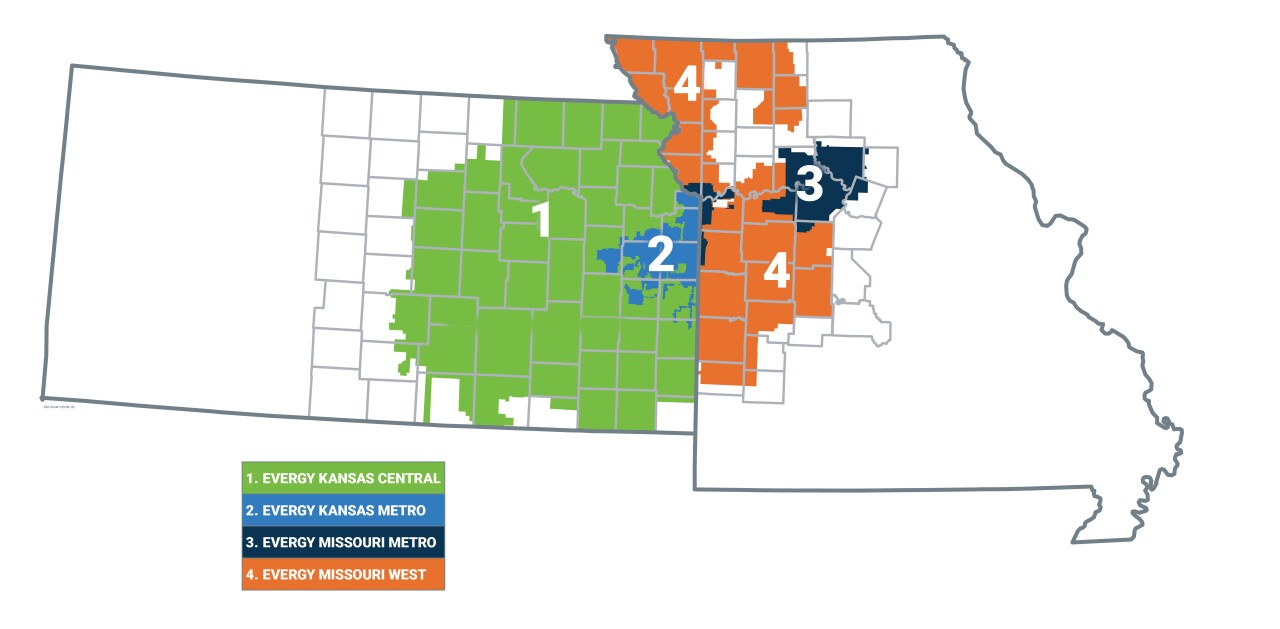
Evergy
Small to medium general service customers would see a 5.4% to 5.9% bill increase.
This would go into effect in late September if approved by the Kansas Corporation Commission.
—
This story was reported on-air by a journalist and has been converted to this platform with the assistance of AI. Our editorial team verifies all reporting on all platforms for fairness and accuracy.



This Missouri lake is among the cleanest in America
A new study tracking data from 2020 to 2025 says Missouri’s Lake of the Ozarks is the fourth cleanest lake in the country.
One of Missouri’s largest lakes is among the cleanest in the nation, according to a new report.
A study conducted by Lake.com, a vacation rental platform for properties near or on water, focused on the 100 largest lakes in the United States and their chemical data from Jan. 1, 2020, to July 15, 2025.
The lakes were tested for eight of the most commonly measured characteristics that can suggest their cleanliness, including pH, ammonia and lead.
What’s the cleanest lake in Missouri?
Lake.com rated the Lake of the Ozarks as the fourth-cleanest lake in the country.
The lake earned a 1.85 out of 10 in its pollution score, bolstered primarily by its low pH and sulfate levels, as well as its lack of lead and ammonia.
The report listed the following measurements for the lake:
- Dissolved oxygen: 7.5 mg/L
- Phosphorus: 0.01 mg/L
- Sulfate: 1.66 mg/L
- Turbidity: 2.3 NTU
- Difference from pH7: 2.3 pH
- Pollution score: 1.85/10
What did Lakes.com have to say about Lake of the Ozarks?
“With 54,000 surface acres and 1,150 miles of shoreline, more coastline than the entire state of California, it is the largest non-flood-control man-made lake in the United States. The lake’s distinctive serpentine shape, stretching 92 miles from Bagnell Dam to the lake’s western reach, earned it the nickname “The Magic Dragon.” The lake extends across four Missouri counties, Camden, Morgan, Miller, and Benton, with the city of Osage Beach at the busy southeastern junction of the main channel and the Grand Glaize arm serving as the region’s commercial hub.”
What are the cleanest lakes in the nation?
Lake.com lists these lakes as the cleanest in the nation:
- Lake Superior (Michigan/Minnesota/Wisconsin/Ontario)
- Lake Chelan (Washington)
- Lake Hartwell (Georgia/South Carolina)
- Lake of the Ozarks (Missouri)
- Lake Pend Oreille (Idaho)
- Lake Winnibigoshish (Minnesota)
- Kentucky Lake (Kentucky/Tennessee)
- Lake Norman (North Carolina)
- Lake Mead (Arizona/Nevada)
- Flathead Lake (Montana)
What are the dirtiest lakes in the nation?
Lake.com lists the following lakes as the dirtiest lakes in the nation:
- Lake Okeechobee (Florida)
- American Falls Reservoir (Idaho)
- Lake Texoma (Oklahoma, Texas)
- Eufaula Lake (Oklahoma)
- Lake Clark (Alaska)
- Lake George (Florida)
- Utah Lake (Utah)
- Oneida Lake (New York)
- Pyramid Lake (Nevada)
- Richland-Chambers Reservoir (Texas)
Missouri
First-generation-American students remind Missouri politicians why unity, freedom of speech are so important ahead of the nation’s 250th anniversary

Phoenix’s Stage 1 fire restrictions could limit where people can use fireworks ahead of Fourth of July celebrations. Phoenix leaders say professional fireworks shows are still planned, but they’re urging residents to leave the fireworks to the pros. Under the city’s updated rules, fireworks are banned on city property and within one mile of mountain preserves, desert parks and wilderness areas. Pop-up fireworks tents are appearing across the city, but police are already checking for vendors selling without permits. Anyone caught setting off fireworks illegally could face a $2,500 fine, possible jail time and even bigger costs if they start a fire.

Healthcare fraud: Hundreds charged by DOJ
Justice Department officials announced they are charging 455 defendants over schemes involving more than $6.5 billion in alleged false claims.
Fox – Fox 9
The U.S. Department of Justice has charged more than 450 people — including more than two dozen Missouri residents — in connection with global health care fraud schemes totaling a record $6.5 billion.
The DOJ wrote in a news release on June 23 that the alleged fraud and opioid abuse schemes involved 455 people across 45 states who submitted false claims to Medicare, Medicaid and other health care programs and “caused significant patient harm, including death.” Ninety doctors and other licensed medical professionals are among those charged in the schemes.
In all, 56 federal districts and 50 state Medicaid Fraud Control Units participated in the investigation ― the most in the DOJ’s history.
“Health care fraud steals from taxpayers, exploits vulnerable patients, and puts lives at risk,” U.S. Department of Health and Human Services Secretary Robert F. Kennedy, Jr. said. “Today’s historic enforcement action sends a clear message: if you use our health care system to enrich yourself at the expense of patients or the American people, we will find you, we will prosecute you, and we will hold you accountable.”
Luxury cars, fine art and a hotel in the Philippines
Since June 8, hundreds of defendants have been arrested in connection with the schemes, in what the DOJ is calling the 2026 National Health Care Fraud Takedown.
In one case in Arizona, Acting Attorney General Todd Blanche said a corporate executive allegedly took $1 billion in taxpayer funds after billing for wound grafts and charging more than $1 million per patient. The money was later allegedly used to buy million-dollar homes, luxury cars and even build a hotel in the Philippines.
In another case in Florida, three defendants were charged for their roles in an $118 million allograft fraud scheme where a nurse practitioner allegedly used the proceeds to fund their lavish lifestyle, including a luxury box at an NFL stadium and over $400,000 in fine art.
How many Missourians have been charged in the 2026 National Health Care Fraud Take Down?
Twenty-four Missourians have been charged in the state for their alleged participation in health care fraud, with three others being charged out of state. The most common charges include “false statement to receive a health care payment” and “stealing by deceit in connection with Medicaid fraud.”
Two of the complaints allege that the accused parties fraudulently pocketed more than $100,000.
- Michelle Terry, 48, of Saint Peters, was charged with Medicaid fraud and stealing. Terry, who owns an adult daycare center, is accused of submitting false claims for purported services to four Medicaid recipients from May 2023 to September 2024, collecting $114,480.32 in Medicaid funds in the process.
- Chontell Wilkes, 34, and Sandra Wilkes, 55, of St. Louis, were charged with Medicaid fraud and stealing. The pair owns Smiles Adult Day Care, and are accused of submitting 1,418 false claims for adult day care services that were not provided. Through this scheme, Medicaid paid the Wilkeses more than $121,362.20 for services not provided.
In total, the cases cost the state more than $613,000, Missouri Attorney General Catherine Hanaway said in a news release.
What is health care fraud?
The U.S. Federal Bureau of Investigation states that health care fraud is defined as intentionally deceiving the health care system to receive illegal benefits or payments. It can be committed by medical providers, patients and other individuals.
What are the most common types of health care fraud?
The FBI lists the following as some of the most common types of health care fraud committed by medical providers:
- Double-billing: Submitting multiple claims for the same service.
- Phantom billing: Billing for a service visit or supplies that the patient never received.
- Unbundling: Submitting multiple bills for the same service.
- Upcoding: Billing for a more expensive service than the patient actually received.
Common types of fraud committed by patients and other individuals include:
- Bogus marketing: Convincing people to provide their health insurance identification number and other personal information to bill for non-rendered services, steal their identity, or enroll them in a fake benefit plan.
- Identity theft/identity swapping: Using another person’s health insurance or allowing another person to use your insurance.
- Impersonating a health care professional: Providing or billing for health services or equipment without a license.
Common types of fraud involving prescriptions included:
- Forgery: Creating or using forged prescriptions.
- Diversion: Diverting legal prescriptions for illegal uses, such as selling your prescription medication.
- Doctor shopping: Visiting multiple providers to get prescriptions for controlled substances, or getting prescriptions from medical offices that engage in unethical practices.
-

 Montana5 minutes ago
Iron (MN) HS ATH Isaiah Asuma Commits to Montana State
-

 Nebraska8 minutes ago
These high school athletes defined the state of Nebraska — who’s the greatest?
-

 Nevada13 minutes ago
Lexicon Bank honors CARE Complex for aiding Southern Nevada families in need
-

 New Hampshire20 minutes ago
Concord Heights Abuse Of Corpse And Falsifying Evidence Case From May 2024 Inches Forward
-

 New Jersey23 minutes ago
The votes are in! Top 10 Jersey beaches for 2026 summer fun
-

 New Mexico28 minutes ago
11 New Mexico Towns With A Slower Pace Of Life
-

 North Dakota38 minutes ago
Bankruptcies for North Dakota and western Minnesota published June 27, 2026
-

 Ohio43 minutes ago
In Springfield, Ohio, Trump’s rhetoric becomes a grim reality

