Midwest
Missouri AG working to crack down on businesses hiring illegal immigrants

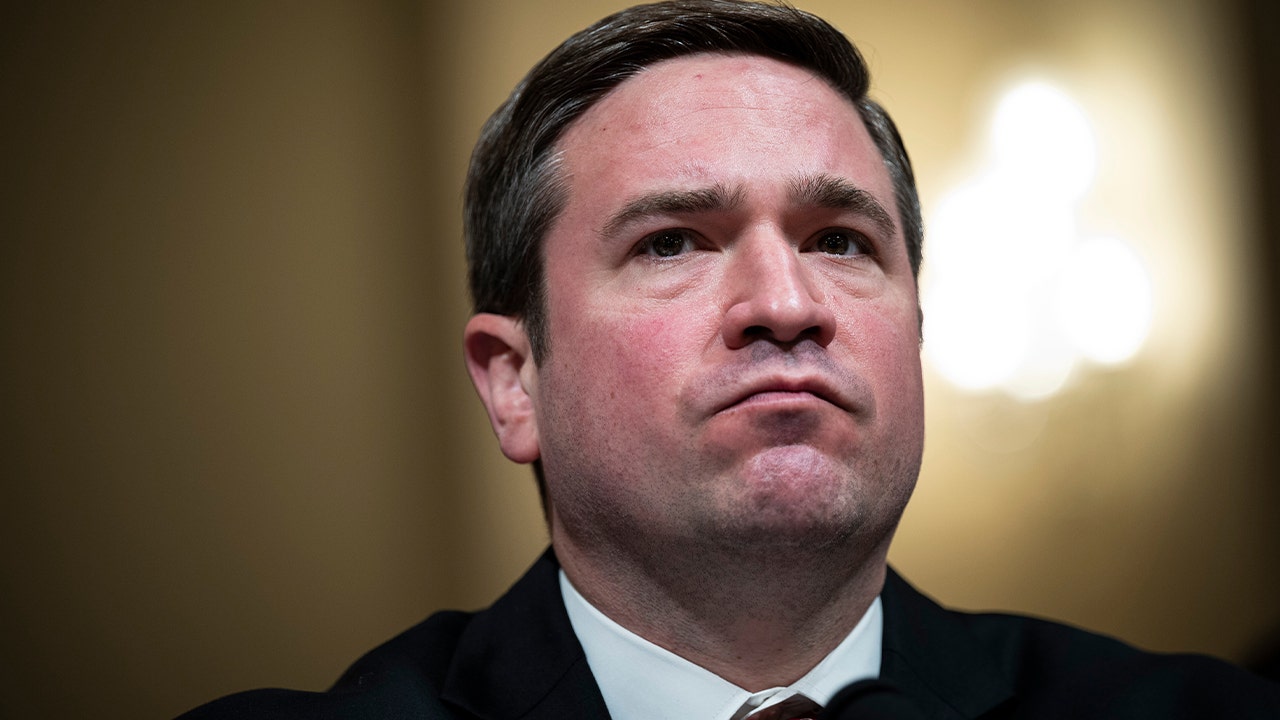
Missouri Attorney General Andrew Bailey is moving to crack down on businesses that hire illegal immigrants, vowing to “fill the vacuum created by the federal government’s ineptitude” when it comes to illegal immigration.
Bailey’s office recently began investigating a complaint that a state business was employing illegal immigrants. The AG’s office has given the business 15 days to provide appropriate proof of citizenship and eligibility to work for all of their employees.
“In the State of Missouri, we respect and honor our businesses. They are the engines of economic growth that drive the establishment of successful communities. We honor, too, the dedicated employees who produce prosperity with their hard work, skill, and devotion,” Bailey’s office wrote in a letter to the business that was shared with Fox News Digital.
“At the same time, the State of Missouri has a responsibility to ensure that workers, employers, and businesses are complying with Missouri law,” the letter continued. “Otherwise, the rule of law is undermined, and there is a potential for abuse, mistreatment, and unfairness. Upholding the rule of law is essential to ensuring that our business communities continue to thrive in this state.”
‘EXCELLENT SWIMMERS’: DEM MAYOR FLOATS MIGRANTS AS SOLUTION FOR CITY’S LIFEGUARD SHORTAGE
Missouri Attorney General Andrew Bailey and President Biden. Bailey slammed Biden’s handling of illegal immigration. (Getty Images )
If the employer is found to have violated Missouri law regarding the employment of “unauthorized aliens,” the business may be subject to the loss of its business license, permit, or exemptions, as well as other penalties, Bailey stated.
Bailey said individual states have been left to “stand in the gap as the federal government refuses to act.”
‘ENOUGH’: CONTROVERSIAL ID PROGRAM FOR ILLEGAL IMMIGRANTS TARGETED BY GOP SENATOR
Bailey continued, “Since 2021, more than eight million illegal immigrants have entered the United States. That is more than the population of Missouri. These numbers are not an accident. There is only one reason eight million people illegally cross a sovereign nation’s border: because they know they can get away with it. Since the Biden Administration’s inception, there has been an orchestrated lack of enforcement of our nation’s immigration laws.”
Missouri Attorney General Andrew Bailey is cracking down on businesses in his state that hire illegal immigrants. (Graeme Sloan/Bloomberg via Getty Images)
Back in June, Missouri joined an 18-state coalition in filing suit against the Biden administration for its proposed new “Circumvention of Lawful Pathways,” which allowed “vast numbers of aliens to enter the country and receive instant work authorization and quick access to public benefits.”
“The situation at the southern border is out of control, all thanks to Joe Biden,” Bailey previously said. “He refuses to carry out his constitutionally mandated responsibilities, so we’re taking him to court to force him to do his job.”
BIDEN TORCHED BY REPUBLICANS FOR TOUGHER IMMIGRATION RULE AHEAD OF NOVEMBER ELECTION
Andrew Bailey, Missouri’s attorney general, believes states must “stand in the gap” because of the federal government’s refusal to act on illegal immigration. (Valerie Plesch/Bloomberg via Getty Images)
Bailey added that under the law, the States would be forced to bear the cost of illegal immigrants in the country.
“In the midst of the worst border crisis in our nation’s history, the Defendants are attempting to implement a final rule that will further degrade our nation’s border security and make it even easier to illegally immigrate into the United States,” Bailey previously stated.
Similarly, last week, Iowa Attorney General Brenna Bird slammed the Biden administration and argued every state is a border state as the Biden administration has failed to secure the country’s southern border.
Bird told “FOX & Friends” that Iowa will defend immigration laws despite the Department of Justice threatening to sue the state.
Read the full article from Here

Michigan
Whitmer says she will pull Michigan National Guard from D.C. if troops used in Trump’s Safe and Beautiful Mission

Michigan Gov. Gretchen Whitmer says that the Michigan National Guard soldiers heading to Washington, D.C., will only support the America 250 Mission and threatens to pull them if they participate in patrols under President Trump’s Safe and Beautiful Mission.
In a letter to Maj. Gen. Paul Rogers on Monday, Whitmer urges Rogers to “take all necessary measures” to ensure that soldiers only provide public safety and security during events celebrating the 250th anniversary of the United States.
“If the National Guard is unable or unwilling to ensure the Michigan National Guard is only supporting the America 250 Mission, appropriately defined – and is unable or unwilling to communicate consistent with that fact – then I will end Michigan’s support for the America 250 mission,” Whitmer wrote to Rogers.
The Safe and Beautiful Mission was created under the Trump administration to deploy the National Guard to D.C. in August 2025 as part of a push to crack down on crime in the nation’s capital, despite data showing that crime had declined in recent years.
At the time, local police data showed that violent crime in the area had been declining after a spike in 2023. However, Mr. Trump criticized that data, calling them “phony numbers.”
The deployments drew criticism from officials who opposed the federal government sending the National Guard to multiple cities. In one case, Illinois and Chicago sued the Trump administration to block the deployment of troops. That suit has since been dismissed, with a judge declaring the administration’s orders to no longer be operational.
“Several governors have deployed their National Guard soldiers to support this [Safe and Beautiful] mission. As you know, I have not deployed – and will not deploy – the Michigan National Guard to support the D.C. Safe and Beautiful Mission,” Whitmer said.
CBS News Detroit reached out to the Joint Task Force for comment on Monday and has not heard back.


What to know about PCBs and their impact on the Great Lakes, Wisconsin
PCBs are a class of more than 200 chemicals that are known to cause cancer.
An invasive shrimp is swimming in Lake Superior. This is the last Great Lake to be invaded — all five Great Lakes now are infested by the crustaceans..
Researchers for the first time have confirmed a breeding population of an invasive Black Sea-native shrimp in Lake Superior.
The number and extent of the shrimp’s spread in Lake Superior is not clear. However, there is a breeding population in the Duluth.
The findings by researchers at the University of Minnesota-Duluth, Lake Superior Research Institute at the University of Wisconsin Superior, and the Hobart and William Smith Colleges in New York, published in the Journal of Great Lakes Research in April, found that the shrimp are now reproducing and surviving year-round in the Duluth-Superior Harbor, the farthest west the European species has been confirmed.
“Samples we collected in 2025 from two locations in the Duluth-Superior Harbor, a major inland shipping port in the Great Lakes, contained juveniles, adult males, and (pregnant or with young) adult females, indicating a self-sustaining population. Additionally, we document earlier evidence from 2018 samples we collected in the harbor that contained two juvenile specimens,” the article in the Journal said.
In an interview on the CBC’s “Superior Morning” show with Mary-Jane Cormier on June 10, lead researcher Donn Branstrator, of the University of Minnesota, said studies in the Duluth-Superior Harbor this spring after ice was off the lake found adult males and females.
“It’s pretty clear evidence of overwintering,” Branstrator told Cormier. “It would be very unlikely for the population to extinguish (at this point).”
Branstrator told Cormier ongoing bi-weekly research in the harbor, and along the Lake Superior shoreline will exam those questions.
According to the research, the non-native shrimp, about a quarter to half inch long, were first detected in the lower Great Lakes in 2006 in lakes Michigan and Ontario. By 2008, they were found in lakes Huron and Erie as well.
“It has also spread to Oneida and Seneca Lakes in New York … as well as the St. Lawrence River and various canals in northern New York State,” the research said.
Branstrator said the Black and Caspian sea region natives, also have spread throughout Europe into areas they were not native. He said they likely hitchhiked with ballast or bilge water, but the exact mechanism will never be known.
What we know about bloody red shrimp.
What is a bloody red shrimp?
Bloody red shrimp are small crustaceans native to the Black Sea and Caspian Sea region of Europe. They are adapted for fresh and brackish water.
This freshwater shrimp can be ivory-yellow in color or translucent, but exhibits pigmented red pigment cells in the carapax and tail, according to the USGS.
The quarter to half inch long shrimp feed on both phytoplankton and zooplankton at various stages of life.
While relatively small, they are among the larger creatures in the Great Lakes feeding on those food sources.
“They are very large bodied, at the upper end of what we consider zooplankton,” Branstrator said.
Branstrator said the shrimp live in near-shore environments and like to hide in crevices during the day, making use of dock pilings, breakwaters and other human-made structures.
They come out at night and “swarm” together in groups of up to 135 per square foot, the University of Wisconsin Sea Grant said.
Bloody red shrimp have a lifespan of about nine months, grow to adults in just 45 days, and an produce up to four generations per year. Females have been documented to carry up to 66 eggs in a clutch. Broods carried by females in the Muskegon population ranged from two to seven.
Where have the shrimp been found?
The shrimp have spread throughout Europe and now have been found in all five Great Lakes, as well as some locations away from the lakes.
The recent study found a breeding population in the Duluth, Minnesota, harbor, the first in Lake Superior.
According to the research, the non-native shrimp, about a quarter to half inch long, were first detected in the lower Great Lakes in 2006 in lakes Michigan (near Muskegon) and Ontario. By 2008, they were found in lakes Huron and Erie as well.
A single specimen was found in Duluth in 2017, and two were found in 2018. It wasn’t until 2025 that the researchers found a sustaining population when they captured 81 individuals.
How did the shrimp arrive in the Great Lakes?
The shrimp likely hitched a ride in the ballast water of ocean-going vessels, although Branstrator noted during an interview on CBC’s “Superior Morning” that we will never know for certain.
He added that the shrimp have multiple opportunities to hitch rides with vessels during the shipping season.
What impact will the shrimp have on Lake Superior and the Great Lakes?
Branstrator said that question hasn’t been answered. They feed on the same sources as other water-dwelling creatures, but they are large enough that small fish may find them to be a new food source.
Are any shrimp native to the Great Lakes?
The opossom shrimp is a Great Lakes native and looks similar to the bloody red shrimp.

Missouri sportsbooks took $256,364,814 in wagers in May 2026, the lowest monthly handle since the market launched, yet operators posted their strongest revenue month yet at $21,250,814 on an 8.29% hold. The state collected $2,131,872 in tax. Six months after going live on December 1, 2025, Missouri has flipped the usual relationship between volume and revenue: handle keeps settling while revenue keeps climbing, because hold has risen steadily as the launch-period promotions fade. Online betting made up $252,593,427, or 98.53% of all wagers. Figures come from the Missouri Gaming Commission.
Missouri Sports Betting by Month, Since Launch
| Month | Handle | Online | Retail | GGR | Hold | State Tax |
|---|---|---|---|---|---|---|
| December 2025 | $543,039,131 | $538,881,520 | $4,157,612 | $20,758,443 | 3.82% | $521,201 |
| January 2026 | $385,138,868 | $380,412,197 | $4,726,670 | $6,703,555 | 1.74% | $137,873 |
| February 2026 | $277,005,418 | $273,285,304 | $3,720,114 | $10,301,007 | 3.72% | $1,214,627 |
| March 2026 | $329,355,588 | $324,060,170 | $5,295,418 | $20,757,550 | 6.30% | $2,178,985 |
| April 2026 | $273,397,863 | $269,884,804 | $3,513,059 | $20,284,270 | 7.42% | $2,028,427 |
| May 2026 | $256,364,814 | $252,593,427 | $3,771,387 | $21,250,814 | 8.29% | $2,131,873 |
Six Months In, Revenue Sets a Record
May marks a milestone worth pausing on. Missouri’s revenue reached its highest point yet even though its handle sank to a new low, a sign the market has moved past the giveaway-heavy launch phase and into steadier economics. Across its first six months, the state has now taken roughly $2.06 billion in total wagers, produced about $100.1 million in operator revenue, and delivered $8.2 million in tax. Crossing $100 million in cumulative revenue in half a year underlines how quickly Missouri established itself as a mid-sized market.
Handle Settles as the Launch Surge Fades
The volume side keeps normalizing. December’s $543 million opening was inflated by launch-day demand and heavy sign-up promotions, and handle has stepped down almost every month since, landing at $256.4 million in May, less than half that peak. Part of the decline is seasonal, with the sports calendar thinning as the basketball and hockey postseasons wind down and football stays months away. Part is simply the novelty wearing off. Mobile sportsbooks in Missouri continue to carry the market almost entirely, at 98.53% of May handle, a share that has held above 98% in every month since launch.
The Hold Keeps Climbing
The defining trend is the win rate. Hold ran at 3.82% in December, bottomed at 1.74% in January, then rose in four straight steps to 3.72%, 6.30%, 7.42%, and 8.29% in May. That climb is the engine behind the record revenue: as operators pull back the free bets and bonus play that suppressed early margins, more of each wagered dollar sticks. An 8.29% hold is still below the double-digit figures common in older markets, which suggests Missouri’s margin has further room to firm up as the market matures.
Compare All U.S. States
-

 Michigan6 minutes ago
Whitmer says she will pull Michigan National Guard from D.C. if troops used in Trump’s Safe and Beautiful Mission
-

 Massachusetts9 minutes ago
Massachusetts dad on ‘adventure of a lifetime’ left fighting for his life in Fiji after noticing bug bite
-

 Minnesota14 minutes ago
Invasive ‘bloody red shrimp’ reach Lake Superior
-

 Mississippi21 minutes ago
Mississippi Lottery Mississippi Match 5, Cash 3 results for June 30, 2026
-

 Missouri24 minutes ago
Missouri Sports Betting May 2026: $256.4M Handle, Record $21.3M Revenue
-
Montana29 minutes ago
Montana Lottery Mega Millions, Big Sky Bonus results for June 30, 2026
-

 Nebraska36 minutes ago
Erstad joins Nebraska golf program
-

 Nevada39 minutes ago
‘Arrive Alive’ initiative with Nevada Department of Public Safety, FOX5

