Illinois
Illinois deputy fired, charged in fatal shooting of Black woman at her home


SPRINGFIELD: A former Illinois sheriff’s deputy pleaded not guilty to murder on Thursday, according to court documents, one day after he was fired, arrested and charged in the fatal shooting of a 36-year-old Black woman during a call for help at her home.
Sean Grayson, 30, fired three shots, striking Sonya Massey one time in the face as she ducked for cover behind a kitchen counter separating the two, according to court documents. The shooting followed a verbal exchange about a pot on the stove.
Massey, a mother of two teenagers, had called police regarding a suspected intruder in her Springfield home, said Ben Crump, the prominent U.S. civil rights lawyer representing the family. It is the latest in a running list of high-profile police killings of Black people, including George Floyd, Trayvon Martin and Roger Fortson, that Crump has counseled.
“While nothing can undo the heinous actions of this officer, we hope the scales of justice will continue to hold him accountable and we will demand transparency at every step,“ Crump said in a statement.
A grand jury indicted Grayson, who is white, on five charges, including three counts of murder in the first degree, one count of aggravated battery and one count of official misconduct. He was arraigned in Illinois’ Seventh Judicial Circuit Court on Thursday and pled not guilty to all charges. He was jailed until his next court date on August 26.
Grayson’s attorney, Daniel Fultz, did not immediately respond to a request for comment.
Grayson and another Sangamon County sheriff’s deputy were called to Massey’s home for a suspected prowler at 12:50 a.m. July 6. About 30 minutes later, Massey was shot.
According to the indictment, Massey had placed a pot of possibly hot water on the counter on Grayson’s instructions. Grayson was in the living room when he then drew his firearm and threatened to shoot Massey in the face, prompting her to put her hands in the air, say, “I’m sorry,“ and duck for cover behind a counter separating the two.
Grayson moved closer, yelled at Massey to put the pot down and opened fire, the document said. He then activated his body camera, though his partner’s camera was activated upon arriving on the scene. He is twice her size, according to court files.
Grayson did not render aid and discouraged the other deputy not to provide help. The second deputy, who was not named, stayed by Massey until medics arrived. She was pronounced dead at St. John’s Hospital.
The family has viewed body-camera footage, which officials plan to release on Monday with minimal redactions, according to State’s Attorney John Milhiser.
The shooting was investigated by the Illinois State Police. The Sangamon County Sheriff’s Office said on Wednesday it fired Grayson after the investigation found he did not follow proper training and standards.
“With our badge we accept enormous responsibility, and if that responsibility is abused, there should be consequences,“ the office said in a post on Facebook.
Illinois Governor J.B. Pritzker said in a statement Massey deserved protection rather than being “gunned down.”
“My heart breaks for Sonya’s children, for her family and friends and for all who knew and loved her, and I am enraged that another innocent Black woman had her life taken from her at the hands of a police officer,“ he said.
The killing comes roughly two months after a Florida deputy shot and killed Fortson, a 23-year-old Black airman with the U.S. Air Force, at Fortson’s home in Fort Walton Beach. Eddie Duran, the deputy, was later fired amid an investigation into the shooting, though charges have not been filed.



Some communities saw their bills rise 75% or more.
The median property tax bill for Chicago homeowners rose by a record last year, and some parts of the city saw much steeper increases than others.
The citywide median rise was 16.7%, according to a report from the Cook County Treasurer’s office on bills for tax year 2024.
Many poor communities in Chicago saw the largest increases. In 15 areas on the South and West sides, property taxes shot up 30% because of rising home values. In West Garfield Park, North Lawndale, Englewood, West Pullman and West Englewood, property tax bills rose 75% or more.
Chicago homeowners have suffered in recent years. While property taxes did increase in some Cook County suburbs in 2024, city homeowners felt the bulk of the pain. That’s because assessed values on downtown commercial buildings fell 7.2%, reducing taxes on those properties.
Lower commercial assessments don’t reduce what the city expects to collect in property taxes — it just means homeowners pay a larger share.
Other reasons for Chicago homeowners’ high bills this year included a 6.3% increase in the levy, or what taxing bodies request. That rise was driven by a larger request from Chicago Public Schools and a higher amount earmarked for Tax Increment Financing districts. TIF districts collected 10.4% more year over year in 2024, totaling over $1.3 billion.
For 2024 the total Cook County levy was $19.2 billion, up about 4.8% from the previous year. The Chicago-area inflation rate was closer to 3.5%.
Cook County property taxes have outpaced inflation for a long time. Since 1995, they’ve gone up 181%, from $6.8 billion in 1995 to $19.2 billion in 2024, according to the county treasurer. Adjusted for inflation, that’s a 48% increase. If property taxes had risen on pace with inflation, the 2024 levy would have been $13 billion rather than $19.2 billion.
This rising burden can’t continue. Since 2019, more than 1,000 Cook County homeowners — including 125 senior citizens — have lost their homes and all their equity over a property tax debt smaller than the price of a 10-year-old Chevy Impala.
The U.S. Supreme Court has found the practice of taking more than the tax owed to be unconstitutional, but the Illinois General Assembly has yet to change the law to stop it. Cook County Treasurer Maria Pappas delayed the property tax lien sale scheduled for last August, but it’s now set for March.
Of the Illinois residents who moved out in 2024, 95% went to lower-tax states. Lawmakers must reduce the property tax burden. They should cap how long TIFs can last and limit how many times they can be extended. Returning that money to general use would bring much-needed transparency and real property tax relief for Illinois residents.
Also, legislators are allowed to work as property tax appeal lawyers, enabling them to profit from ever-growing tax hikes. Imprisoned former Illinois House Speaker Mike Madigan did that, as did former Chicago Ald. Ed Burke. This practice should not be prohibited.
The best way to reduce the property tax burden is to reform its largest driver: public-sector pensions. In Chicago, 80% of property taxes go toward its growing pension debt. Rather than seeking to control spending, Gov. J.B. Pritzker recently signed a “pension sweetener” for Chicago police and firefighters that will increase liabilities by $11.1 billion.
Reforming the state constitution would allow for moderate pension changes, increasing the fiscal health of those systems and reducing the property tax burden on Chicago homeowners.
Until changes are made, Cook County homeowners will continue to see their property tax bills climb.

It was a particularly heinous crime. Four workers at a cemetery near Chicago dug up more than 100 bodies and dumped the remains elsewhere in the grounds, in order to resell the burial plots for profit.
Now, nearly two decades after the scandal broke at Burr Oak cemetery in Alsip, Illinois, scientists have released details of how a tiny clump of moss became crucial forensic evidence that helped convict the grave robbers.
Dr Matt von Konrat, head of botanical collections at the Field Museum in Chicago, was drawn into the case in 2009 when he received a phone call from the FBI. “They asked if I knew about moss and brought the evidence to the museum,” he said.
An investigation by local police had found human remains buried under inches of earth at the cemetery, a site of enormous historical importance. Several prominent African Americans are buried at the cemetery, including Emmett Till, whose murder in 1955 became a catalyst for the civil rights movement, and the blues singer Dinah Washington.
Alongside the re-buried remains, forensic specialists spotted various plants, including a piece of moss about the size of a fingertip. Hoping that it would help them crack the case, the FBI asked von Konrat to work out where the moss came from and how long it had been there.
After examining the moss under a microscope and comparing it with dried specimens in the museum’s collection, the scientists identified it as common pocket moss, or Fissidens taxifolius. A survey at the cemetery found that the species did not grow where the corpses were discovered, but was abundant in a lightly shaded area beneath some trees where police suspected the bodies had been dug up. The moss had evidently been moved with the bodies.
But when was the crime committed? The answer lay in a quirk of moss biology. “This is the cool thing about moss,” von Konrat said. “When we’re dead, we’re dead, but with mosses, it’s bizarre. Even when we might think they’re dead, they can still have an active metabolism.” The metabolism drops slowly over time as cells gradually die off.
One way to measure moss metabolism is to bathe it in light and see how much is absorbed by the chlorophyll used to make food through photosynthesis, and how much light is re-emitted. The scientists ran tests on the moss found with the bodies, on a fresh clump from the cemetery, and other specimens from the museum’s collection.
“We concluded that the moss had been buried for less than 12 months and that was important because the accused’s whole line of defence was that the crime took place before their employment. They were arguing that it happened years and years earlier,” said von Konrat. Details are published in Forensic Sciences Research.
Doug Seccombe, a former FBI agent who worked on the case and a co-author of the study, said the plant material from the cemetery was “key” to securing the convictions when the case went to trial.
Von Konrat, who is a fan of the BBC forensic science drama Silent Witness, never expected to be working on a criminal case, but now wants to highlight how important mosses might be for forensic investigations. “I had no idea we’d be using our science, our collections, in this manner,” he said. “It underscores how important natural history collections are. We never know how we might apply them in the future.”
Illinois
Andretti family’s popular go karting and gaming facility opening first Illinois location. See inside

A popular indoor go karting and gaming company is opening up its first Illinois location in a Chicago suburb this week.
Andretti Indoor Karting & Games announced it will open its doors on a brand new Schaumburg location at 4 p.m. on March 10, with a grand opening event slated for March 14.
The facility will feature numerous attractions, including “high-speed electric Superkarts on a multi-level track” and an arcade with professional racing simulators and two-story laser tag arena, in a 98,000-square-foot facility. There’s also bowling, a movie theater and more, the company said.
The Schaumburg location, at 1441 Thoreau Dr., will mark Andretti’s 13th facility in the U.S.
“We’re thrilled to open our thirteenth location in the thriving village of Schaumburg,” said Eddie Hamman, managing member. “Andretti is the perfect addition to all the amazing experiences across Chicagoland, and we look forward to meeting the communities that make this market a top destination.”
The company said it plans to host a “sneak preview” event beginning at 11 a.m. on March 10, where several guests will “be treated to free racing, attractions, and arcade play with food and beverage options available for purchase.” The Andretti family will also be on-hand for autograph sessions that afternoon.
A limited number of spots will be made available to RSVP to the preview.
Then on March 14, the first 100 guests to visit the facility to be given one hour of free arcade play and entered to win a raffle for a free birthday party. Ten guests could also win free arcade play for a year.

GLP-1 Drugs Linked to Osteoporosis and Gout: Here’s How To Stay Safe
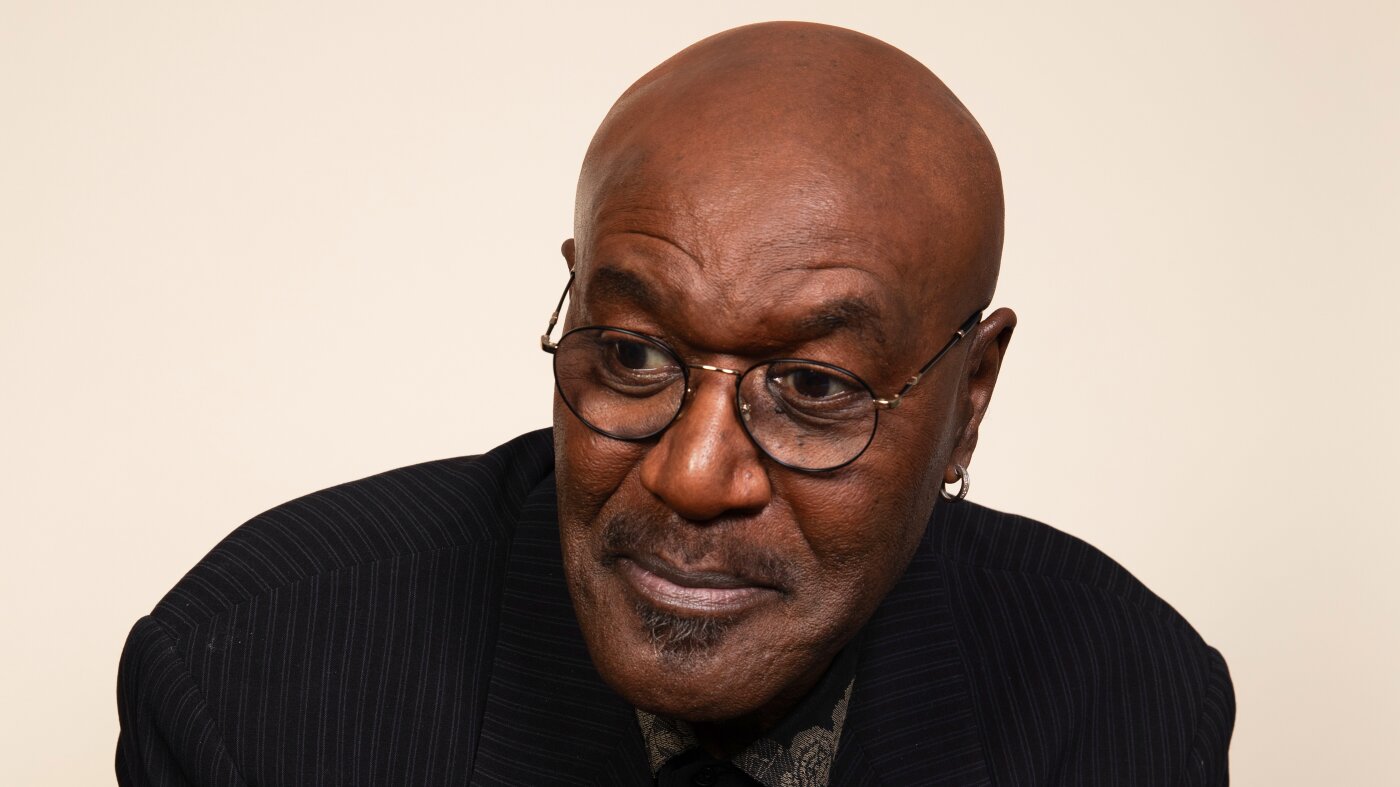
No matter what happens at the Oscars, Delroy Lindo embraces ‘the joy of this moment’

Amazon.com says things are fixed after some issues with logging in and checking out

Private flights account for 30% of departures from Oman airport as wealthy evacuate Middle East

DOJ continues Biden autopen probe despite former president unlikely to face charges

Florida High School Football Rankings: Top 25 teams – Oct. 21

Cleary's 21 help Le Moyne down Central Connecticut State 69-64 in OT

How old is Bo Nix? What to know about Oregon quarterback ahead of 2024 NFL Draft

99th annual Pony Swim held in Virginia

Indiana Members Credit Union announced as new anchor tenant at Bottleworks District
DOJ continues Biden autopen probe despite former president unlikely to face charges
Fact check: Did French border guards mock influencers returning from Dubai amid Iran war?

Iran’s fight for survival / The widening war / Trump’s nebulous goals : Sources & Methods

Map: 4.9-Magnitude Earthquake Shakes Louisiana

Paxton vows he’s ‘staying in this race’ even if Trump backs Cornyn in Texas GOP clash
-

 World1 week ago
Exclusive: DeepSeek withholds latest AI model from US chipmakers including Nvidia, sources say
-

 Wisconsin4 days ago
Setting sail on iceboats across a frozen lake in Wisconsin
-

 Massachusetts1 week ago
Mother and daughter injured in Taunton house explosion
-

 Maryland5 days ago
AM showers Sunday in Maryland
-

 Massachusetts3 days ago
Massachusetts man awaits word from family in Iran after attacks
-

 Florida5 days ago
Florida man rescued after being stuck in shoulder-deep mud for days
-

 Denver, CO1 week ago
10 acres charred, 5 injured in Thornton grass fire, evacuation orders lifted
-

 Oregon6 days ago
2026 OSAA Oregon Wrestling State Championship Results And Brackets – FloWrestling