Lifestyle
'Liars' is an autopsy of a bitterly disappointing marriage

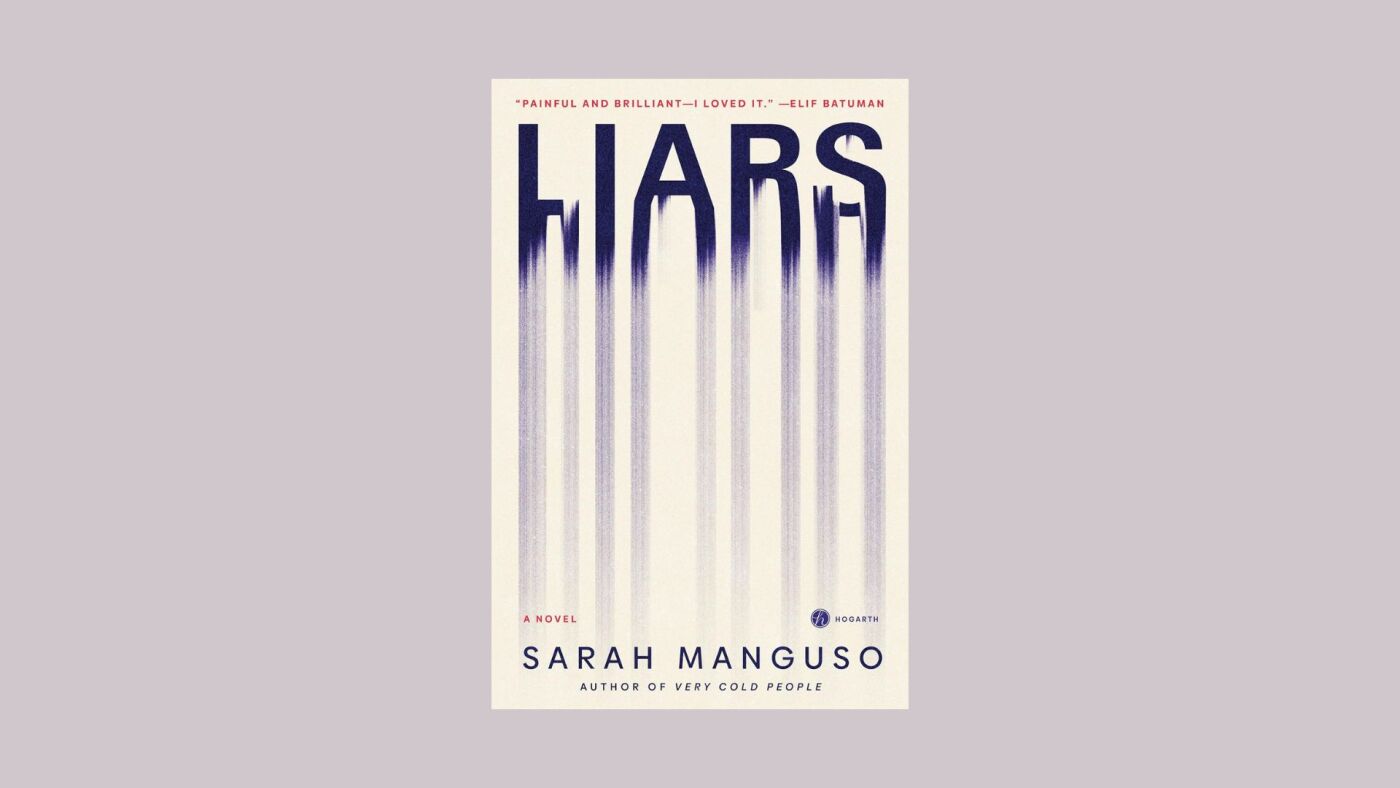
“Elegies are the best love stories because they’re the whole story,” Sarah Manguso writes in her fierce second novel, Liars, an autopsy of a bitterly disappointing marriage, from first meeting to painful aftermath.
Of course, there are always at least two sides to every story, and especially every marriage. But this requiem for a failed relationship is from the point of view of a survivor, the wife left behind. Elegiac is not a word I would use to describe it.

The novel’s narrator is a successful writer named Jane who bears more than a passing resemblance to the author we know from Manguso’s three incisive memoirs. Jane discounts her husband’s side of the story because she considers him such a liar. In this scathing account of their 14-year marriage, she cites many examples of his selfish behavior, distorted self-image, and the falsehoods he peddles about her mental instability. She repeatedly tries to reframe and succinctly encapsulate their increasingly unsatisfactory situation in order to process it. “I began to understand what a story is,” she writes. “It’s a manipulation. It’s a way of containing unmanageable chaos.”
Manguso’s chilling first novel, Very Cold People, along with her celebrated memoirs, which include Ongoingness and 300 Arguments, feature short, sharply honed, double-spaced paragraphs that scrutinize aspects of life made more difficult by autoimmune disease, depression, and the aftermath of trauma.

Liars is similarly distilled, though it is her longest book yet. It’s a tour de force, but it is also relentless. Like Leslie Jamison’s Splinters, it is an old, oft-told tale about the challenges of not losing one’s autonomy when hitching one’s wagon to another person, and of combining marriage and motherhood with a successful writing career. Its pages are filled with rage and lined with red flags, which the narrator deliberately chooses not to heed until that strategy becomes untenable. I kept wanting to avert my eyes — or shout warnings.
Here’s how the novel starts:
In the beginning, I was only myself. Then I married a man, as women do. My life became archetypal, a drag show of nuclear familyhood. I got enmeshed in a story that had already been told ten billion times.
The couple meet at a film festival in upstate New York. Jane is attracted to John Bridges, a Canadian filmmaker, whose work she admires. Both are in their early 30s and live in New York City. She is drawn to his calm and his drive. “[H]e thought clearly, felt deeply, worked hard, made art, was dark and handsome, and wanted to marry me. I’d ordered à la carte and gotten everything I wanted,” she writes.
But she soon discovers John’s hidden flaws. He lied to her about his relationship status. His writing was barely literate, and he was terrible with money. He sulked and undermined her when her career advanced and his didn’t.
She essentially takes over as his unpaid assistant, and her life is filled with “a thousand tasks,” including teaching him how to open and sort mail into four piles — shred, trash, file, action items.
“And yet,” she writes, “no woman I knew was any better off, so I determined to carry on.” She adds disturbingly, “After investing five years of my life, I didn’t want to have to start over again.”

So, reader — no surprise, and no spoiler alert necessary — she not only marries him, but has a child with him. Which of course eats into her writing time. Repeated moves between New York and California for her husband’s work — several failed startups which earn him a full-time salary with health insurance while the last — undercut her ability to get a tenure-track teaching job, so she’s stuck with low-paying adjunct positions, plus full responsibility for childcare and housekeeping. “I was in charge of everything and in control of nothing,” she writes. “What could I do? I kept going for the child’s sake.”
Jane acknowledges that she’s “a control freak, a neat freak, a crazy person,” and that her constant disappointment in John must have been hard on him. For her part, she finds her husband’s disdain and lack of attention and respect soul-sapping.
Questions that haunt the narrator include: Why did she marry him? And why had she stayed with him so long? Is commitment a trap or a gift?
We can’t help but wonder: If this “maestro of dishonesty” is so terrible, why is this woman so “annihilated” when he leaves her?
Well, for starters, because rejection never feels good. And he cheated on her. Plus, despite her many gripes, she’d loved his calm, and his body, and the idea of a long marriage in which the couple was a team. But perhaps most upsetting, the decision was taken out of her hands, heightening her sense of powerlessness.
Hoping to swear off future entrapment, Jane reminds herself that “A husband might be nothing but a bottomless pit of entitlement.”
Bitterness is never attractive. But good writing is. Liars makes an old story fresh.



Sydney (Ayo Edebiri) and Carmy (Jeremy Allen White).
FX
hide caption
toggle caption
FX
There has always been a metaphorical parallel between The Bear, the television show, and The Bear, the fictional restaurant on the television show. Even as Carmy (Jeremy Allen White) and Sydney (Ayo Edebiri) transformed the Italian beef joint into the fancy restaurant of their dreams and wished for a Michelin star, there were undoubtedly locals who thought, “This is great and all, and I’m sure the food is good, but … I liked the beef sandwiches.” There’s still a window at The Bear to get them, but the focus is certainly elsewhere.
When it started, The Bear was mostly about the work that took place in the kitchen. The stresses of too many orders, territoriality from Richie (Ebon Moss-Bachrach), the arrival of Sydney, and the tightly wound but undeniably talented Carmy, making everybody both extremely stressed and significantly better. Over time, it shifted and grew, putting together beloved departure episodes like “Fishes” in Season 2, which introduced a boatload of guest stars for a flashback story of a disastrous family dinner before Mikey (Jon Bernthal) died. It spent time with Sydney’s family, it explored the way Tina (Liza Colón-Zayas) and Mikey originally met, it followed Marcus (Lionel Boyce) to Copenhagen, and it went with Richie to work for Andrea (Olivia Colman). All these episodes were excellent. And there was still a kitchen. But the focus seemed to be elsewhere.

At times, the show seemed to have disappeared up its own nose, to the point where you weren’t watching the show The Bear as much as you were watching the phenomenon The Bear. There were too many real-life chef cameos, until it seemed like those chefs were checking a box on a list of “things all the cool kids do.” There were too many other cameos, culminating in a rare miss from the reliably charismatic John Cena. The show placed a lot of narrative weight on Carmy’s love interest, Claire (Molly Gordon) — weight that the underwritten character couldn’t support. But even if every experiment and every diversion had worked, viewers couldn’t be blamed for missing the close focus on the kitchen and the camaraderie — for thinking, “This is all really special, but I do miss the beef sandwiches.”
The fifth and final season dispenses with the departure episodes, and it mostly dispenses with cameos. It all takes place on one day, just after Carmy tells Richie and Sydney that he wants to step back from the restaurant and give it to them and Sugar (Abby Elliott) to run, and it mostly takes place right there at The Bear. Now that the clock set by Jimmy (Oliver Platt) has run out, his money has run out as well, and a series of cascading disasters puts Sydney, Carmy and Richie behind the 8-ball from very early in the day, not least because of the tension hanging over all three of them as they prepare to tell the staff about Carmy’s decision to leave.

Tina (Liza Colón-Zayas).
FX
hide caption
toggle caption
FX
We spend this day mostly with the people we know best: our three leads, along with Sugar, Tina, Marcus, and the rest of the staff — including Luca (Will Poulter), who has stayed around to keep working with Marcus. Jimmy is running around with Computer (Brian Koppelman) and a young apprentice of his named Cheese (Elsie Fisher of Eighth Grade), trying to figure out what to do about his finances since it is Jimmy, and not just the restaurant, who’s out of money.
This day takes a while to get cooking, so to speak. The first three episodes of the season are slow, the first two in particular. It’s pouring rain outside, the lighting is dim, and the score maintains the same contemplative melancholy for a long, long time. For about two and a half episodes, it feels like one extended, low-energy scene.
But after that, there’s a shift in tone as the staff looks to get through service, and through seven episodes (FX did not make the finale available in advance for critics), the rest of the season is terrific. What you see is the core story of The Bear, which is people trying to serve food and overcome problems, but through the lens of everything that has happened over the show’s run: Carmy’s retreat from his obsessiveness, Richie’s expansive (and inspiring) discovery of his gift for hospitality; Sydney’s stepping forward from second-in-command to leader; Tina’s complex relationship with the restaurant and her grief over Mikey; Sugar and Carmy’s relationship with Donna (Jamie Lee Curtis); the arrival of Marcus as a high-end pastry chef.
The question the show asks over the last four episodes is: Given all those digressions and flashbacks, given all those visits with families and others, given everything we know about where all these people have been and what they’ve experienced, how does a high-pressure service — of the same kind we used to see in that first season — look now? How do they behave differently, and how does their behavior read differently? How are they the same people we have always known, but at a different juncture, in a different context? How do their wins mean more to them, and to the audience?
On the one hand, making a season this way, there are fewer surprising grace notes, like “Napkins,” the Tina/Mikey flashback episode in Season 3, or “Worms,” the episode in Season 4 where Sydney hung out with her cousin (Danielle Deadwyler) and her cousin’s kid. The Bear feels less daring and more conventional.
But oh, when they have victories under pressure? Victories, large or small? It is immensely, richly satisfying. There’s also more comedy other than just the goofy Faks family than we’ve had in a few seasons; Richie is perhaps the MVP of the season, and that’s partly because of how often he gets to be really funny. Ayo Edebiri continues to be the show’s best reactor, showing Syd eternally a little bit surprised (dismayed?) that she’s chosen to throw in her lot with these people.
There are a couple of questions yet to answer in the finale, both little plot items and broader character resolutions. Over these seven episodes, though, there is much to cheer.


Lifestyle
John Cena wanted to step away from the WWE ring before he became ‘too slow for the show’ : Wild Card with Rachel Martin

A note from Wild Card host Rachel Martin: First a confession: I have never watched a WWE match in its entirety. Don’t get me wrong, I appreciate the athleticism and the performance, it’s just not my thing. But there is something about John Cena I’ve never been able to shake.
Yes, he is a wrestling legend, but he has built a career as an entertainer that transcends the ring. The first time I saw him lead a cast was the 2019 family movie “Playing with Fire” and his rapport with kids in that film didn’t seem like acting at all. The man contains multitudes!
He co-stars with Eric Andre in his newest film, “Little Brother.”

Xie Miao and Yang Enyou in The Furious.
Norachai Kajchapanont/Lionsgate
hide caption
toggle caption
Norachai Kajchapanont/Lionsgate
There have been some fantastic movies released this year, and we know you can’t see them all. So we’re recommending four recent movies we missed that you should add to your watchlist: The Furious, Tuner, She’s The He, and Heresy.
If you need a few more fun film recommendations, check out these episodes:
Fun movies you may have missed
Our favorite movies on Tubi
We debate the best movies to watch on an airplane
Connect with Pop Culture Happy Hour:
Letterboxd / Facebook
Our weekly newsletter
Support Pop Culture Happy Hour+
-

 Los Angeles, Ca1 hour ago
Woman ambushed, violently attacked by robber in downtown Long Beach
-

 Detroit, MI2 hours ago
Where to watch Houston Astros vs Detroit Tigers: TV channel, start time, streaming for June 26
-
San Francisco, CA2 hours ago
I own a Turkish Restaurant in San Francisco. Turkey’s World Cup match here has changed my business.
-

 Dallas, TX2 hours ago
Australia advances at World Cup, how to buy Australia soccer tickets
-

 Miami, FL2 hours ago
2 detained after police pursuit ends with bailout, neighborhood search in NW Miami-Dade – WSVN 7News | Miami News, Weather, Sports | Fort Lauderdale
-

 Boston, MA2 hours ago
Delta flight returns to Logan after smoke scare in cockpit – Boston News, Weather, Sports | WHDH 7News
-

 Denver, CO2 hours ago
Pat Surtain II Gets More Bad News Amid Broncos’ Uncertainty
-

 Seattle, WA2 hours ago
The World Cup 2026 Pride Match between Egypt and Iran that Seattle hopes can ‘unite football community’

