Health
Just 1 in 10 back pain treatments work, study says — what to do instead


Chronic back pain is the most common type of pain, affecting around 16 million American adults — and now a new study has revealed some discouraging findings about potential treatments.
Only around one in every 10 treatments was found to be effective in relieving lower back pain, according to a new study published in BMJ Evidence-Based Medicine.
Many of them are “barely better than a placebo” in terms of pain relief, as stated in a press release from the University of New South Wales (UNSW) in Sydney, Australia.
‘DEAD BUTT SYNDROME’ COULD HAPPEN AFTER SITTING TOO LONG, HERE’S HOW TO AVOID THE CONDITION
“Our review did not find reliable evidence of large effects for any of the included treatments,” said lead study author Dr. Aidan Cashin, deputy director of the Centre for Pain IMPACT at Neuroscience Research Australia (NeuRA) and conjoint senior lecturer in the School of Health Sciences at UNSW Sydney.
Only around one in every 10 treatments was found to be effective in relieving lower back pain, according to a new study. (iStock)
The researchers reviewed 301 randomized, controlled trials that included data on 56 non-surgical treatments for adults experiencing acute low back pain, chronic low back pain or a combination of both types, comparing them to groups that received placebos.
“Treatments included in the research were pharmacological, such as non-steroidal anti-inflammatory drugs – or NSAIDs – and muscle relaxants, but also non-pharmacological, like exercise and massage,” Cashin said.
Effective and ineffective treatments
Ineffective treatments for acute low back pain included exercise, steroid injections and paracetamol (acetaminophen), the study found.
For chronic low back pain, antibiotics and anaesthetics were also “unlikely to be suitable treatment options,” the study found.
Around 16 million adults experience persistent or chronic back pain, data shows. (iStock)
For acute low back pain, non-steroidal anti-inflammatory drugs (NSAIDs) could be effective, the study found.
For chronic low back pain, therapies including exercise, taping, spinal manipulation, antidepressants and transient receptor potential vanilloid 1 (TRPV1) agonists may be effective — “however, those effects were small,” Cashin noted.
“Things like stress, sleep quality, fatigue, fear, social situations, nutrition, sickness and previous history of pain all play a role in how we experience pain.”
The findings were “inconclusive” for many other treatments due to the “limited number of randomized participants and poor study quality,” the researchers stated.
“We need further high-quality, placebo-controlled trials to understand the efficacy of treatments and remove the uncertainty for both patients and clinical teams,” Cashin said.
Dr. Stephen Clark, a physical therapist and chief clinical officer at Confluent Health in Georgia, noted that the study was looking at “isolated interventions.”
“They excluded studies where it was not possible to isolate the effectiveness of the target intervention,” Clark, who was not involved in the study, told Fox News Digital.
‘Complex condition’
Pain is a complex condition influenced by many different factors, according to Clark.
“Determining a specific cause of low back pain, particularly when the pain is persistent, is difficult, as the BMJ study points out,” he said.
For acute low back pain, non-steroidal anti-inflammatory drugs (NSAIDs) could be effective, the study found. (iStock)
“Things like stress, sleep quality, fatigue, fear, social situations, nutrition, sickness and previous history of pain all play a role in how we experience pain.”
Clark recommends “multimodal” treatments for pain, including multiple interventions tailored to each individual patient’s experience.
CLICK HERE TO SIGN UP FOR OUR HEALTH NEWSLETTER
“Physical therapy research shows that manual therapy (joint mobilization/manipulation, soft tissue techniques), active interventions like exercise, and education about why you hurt and what to do about it is the ticket,” he said.
“It’s also important to remember that what worked for someone else might not be the exact pathway that works for you,” one physical therapist said. (iStock)
“It’s also important to remember that what worked for someone else might not be the exact pathway that works for you.”
While surgical intervention can be effective for some patients, Clark noted that it can present its own challenges and should be a “last resort” for non-emergency situations.
For more Health articles, visit www.foxnews.com/health
“While surgery is indicated in some cases, it’s almost never the answer in isolation,” he said. “Understanding pain and the complexity around a person’s situation must be in view.”
“In many cases, conservative care can prevent or delay the need for invasive procedures.”



Use left and right arrow keys to navigate between menu items.
Use escape to exit the menu.
Sign Up
Create a free account to access exclusive content, play games, solve puzzles, test your pop-culture knowledge and receive special offers.
Already have an account? Login

NEWYou can now listen to Fox News articles!
Top stories
→ Some 80-year-olds still have razor-sharp brains — and now scientists know why
→ One father’s nightly bathroom habit was missed sign of common cancer
→ 5 ways to preserve vision as you age, according to an ophthalmologist
SuperAger Ralph Rehbock sits with his wife in his home. (Shane Collins, Northwestern University)
On the lookout
→ Heart disease threat projected to climb sharply for key demographic
→ Heavy snow is recipe for serious heart attack risk, experts say
→ Flu season could linger into spring as doctors warn of second wave
A doctor says the second wave of flu season may be worse than previous years. (iStock)
Conversation starters
→ One type of olive oil has a surprising effect on brainpower in aging adults
→ Common vision issue linked to type of lighting used in homes
→ Some supplements may pose risks for people with diabetes, experts say
Medical advances
→ Alzheimer’s symptoms could be predicted years in advance through one simple test
→ Combination nasal spray vaccine could protect against COVID, flu and pneumonia
→ Weight-loss medications could impact sexual health in unexpected ways
Stat of the week
More than 59% of women may have high blood pressure by 2050, according to a new report from the American Heart Association.
CLICK HERE FOR MORE HEALTH STORIES

NEWYou can now listen to Fox News articles!
A new report by the American Heart Association (AHA) included some troubling predictions for the future of women’s health.
The forecast, published in the journal Circulation on Wednesday, projected increases in various comorbidities in American females by 2050.
More than 59% of women were predicted to have high blood pressure, up from less than 49% currently.
The review also projected that more than 25% of women will have diabetes, compared to about 15% today, and more than 61% will have obesity, compared to 44% currently.
As a result of these risk factors, the prevalence of cardiovascular disease and stroke is expected to rise to 14.4% from 10.7%.
The prevalence of cardiovascular disease and stroke in women is expected to rise to 14.4% from 10.7% by 2050. (iStock)
Not all trends were negative, as unhealthy cholesterol prevalence is expected to drop to about 22% from more than 42% today, the report stated.
CLICK HERE TO DOWNLOAD THE FOX NEWS APP
Dr. Elizabeth Klodas, a cardiologist and founder of Step One Foods in Minnesota, commented on these “jarring findings.”
“The fact that on our current trajectory, cardiometabolic disease is projected to explode in women within one generation should be a huge wake-up call,” she told Fox News Digital.
NEARLY 90% OF AMERICANS AT RISK OF SILENT DISEASE — HERE’S WHAT TO KNOW
“Hypertension, diabetes, obesity — these are all major risk factors for heart disease, and we are already seeing what those risks are driving. Heart disease is the No. 1 killer of women, eclipsing all other causes of death, including breast cancer.”
Cardiovascular disease is the leading cause of death for women in the U.S. and around the world. (iStock)
Klodas warned that heart disease starts early, progresses “stealthily,” and can present “out of the blue in devastating ways.”
The AHA published another study on Thursday revealing one million hospitalizations, showing that heart attack deaths are climbing among adults below the age of 55.
The more alarming finding, according to Klodas, is that young women were found more likely to die after their first heart attack than men of the same age.
DOCTOR SHARES 3 SIMPLE CHANGES TO STAY HEALTHY AND INDEPENDENT AS YOU AGE
“This is all especially tragic since heart disease is almost entirely preventable,” she said. “The earlier you start, the better.”
Children can show early evidence of plaque deposition in their arteries, which can be reversed through lifestyle changes if “undertaken early enough and aggressively enough,” according to the expert.
Moving more is one part of protecting a healthy heart, according to experts. (iStock)
Klodas suggested that rising heart conditions are associated with traditional risk factors, like smoking, high blood pressure, high cholesterol, diabetes, obesity and a sedentary lifestyle.
CLICK HERE FOR MORE HEALTH STORIES
Doctors are also seeing higher rates of preeclampsia, or high blood pressure during pregnancy, as well as gestational diabetes. Klodas noted that these are sex-specific risk factors that don’t typically contribute to complications until after menopause.
The best way to protect a healthy heart is to “do the basics,” Klodas recommended, including the following lifestyle habits.
CLICK HERE TO SIGN UP FOR OUR HEALTH NEWSLETTER
Klodas especially emphasized making improvements to diet, as the food people eat affects “every single risk factor that the AHA’s report highlights.”
“High blood pressure, high blood sugar, high cholesterol, excess weight – these are all conditions that are driven in part or in whole by food,” she said. “We eat multiple times every single day, which means what we eat has profound cumulative effects over time.”
“Even a small improvement in dietary intake, when maintained, can have a massive positive impact on health,” a doctor said. (iStock)
“Even a small improvement in dietary intake, when maintained, can have a massive positive impact on health.”
The doctor also recommends changing out a few snacks per day for healthier choices, which has been proven to “yield medication-level cholesterol reductions” in a month.
TEST YOURSELF WITH OUR LATEST LIFESTYLE QUIZ
“Keep up that small change and, over the course of a year, you could also lose 20 pounds and reduce your sodium intake enough to avoid blood pressure-lowering medications,” Klodas added.
“Women should not view the AHA report as inevitable. We have power over our health destinies. We just need to use it.”
Related Article


How to have the best Sunday in L.A., according to Andy Richter

Why Iran resists giving up its nuclear program, even as Trump threatens strikes
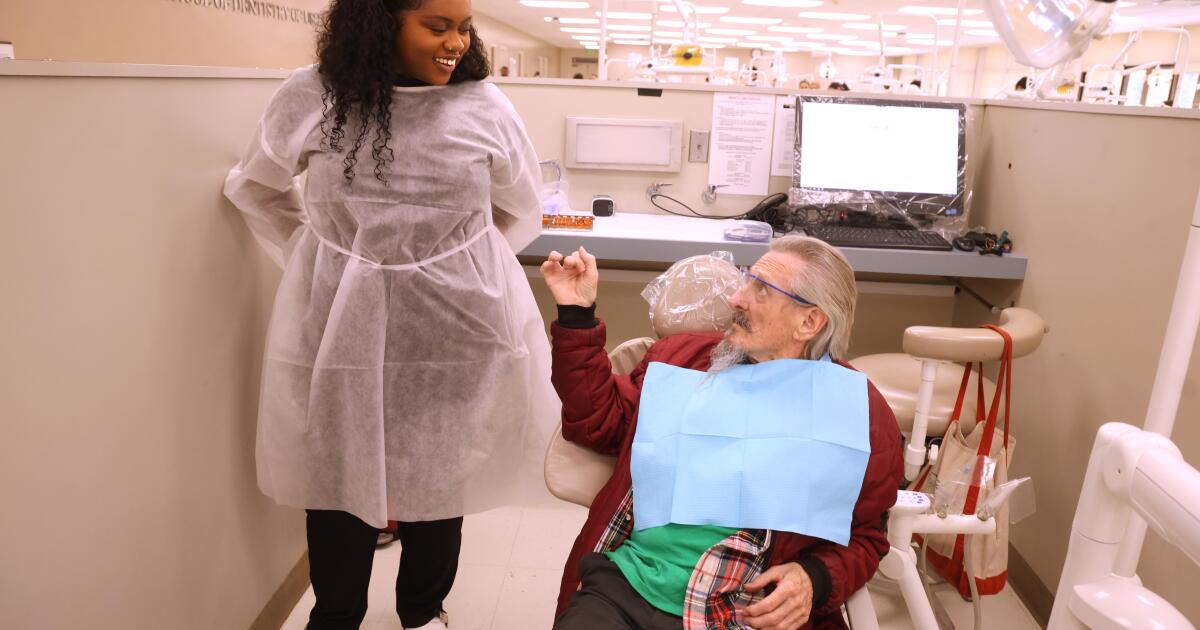
Commentary: My toothache led to a painful discovery: The dental care system is full of cavities as you age

Prep talk: Councilmember looking into helping fix fire damage at Encino Franklin Fields

Israel strikes two schools in Iran, killing more than 50 people

Florida High School Football Rankings: Top 25 teams – Oct. 21

Cleary's 21 help Le Moyne down Central Connecticut State 69-64 in OT

How old is Bo Nix? What to know about Oregon quarterback ahead of 2024 NFL Draft

99th annual Pony Swim held in Virginia

Indiana Members Credit Union announced as new anchor tenant at Bottleworks District
Israel strikes two schools in Iran, killing more than 50 people

Anthropic CEO says he’s sticking to AI “red lines” despite clash with Pentagon

ICE blasts Washington mayor over directive restricting immigration enforcement

Did the EU bypass Hungary’s veto on Ukraine’s €90 billion loan?

How the federal government is painting immigrants as criminals on social media
-

 World2 days ago
Exclusive: DeepSeek withholds latest AI model from US chipmakers including Nvidia, sources say
-

 Massachusetts3 days ago
Mother and daughter injured in Taunton house explosion
-

 Montana1 week ago
2026 MHSA Montana Wrestling State Championship Brackets And Results – FloWrestling
-

 Louisiana5 days ago
Wildfire near Gum Swamp Road in Livingston Parish now under control; more than 200 acres burned
-

 Denver, CO3 days ago
10 acres charred, 5 injured in Thornton grass fire, evacuation orders lifted
-

 Technology1 week ago
YouTube TV billing scam emails are hitting inboxes
-

 Technology1 week ago
Stellantis is in a crisis of its own making
-

 Politics1 week ago
OpenAI didn’t contact police despite employees flagging mass shooter’s concerning chatbot interactions: REPORT