Fitness
The #1 Most Effective Exercise for Weight Loss


If you’re on a mission to shed some extra pounds, you need to have a solid fitness plan in place. When it comes to weight loss, not all exercises are created equal, and finding the right ones can make or break your success in achieving your weight-loss goals. But what if we told you there’s one exercise that stands out among the rest in terms of its effectiveness for melting away body fat? We spoke with TJ Mentus, CPT, a certified personal trainer at Garage Gym Reviews, who unveils the number one most effective exercise that can kickstart your weight-loss journey and transform the way you approach fitness.
It’s no secret that maintaining a healthy weight is crucial for overall health and well-being. Studies show that weight management is associated with significant reductions in chronic disease risk, such as heart disease, diabetes, and high blood pressure. Beyond the physical health benefits, keeping a healthy weight can also improve your mental health. For example, a 2021 meta-review concluded that having a healthy body weight can support good mental health by enhancing confidence and instilling a positive mindset.
Read on to learn more about the top trainer-recommended weight loss exercise and how to incorporate it into your workout routine. Then, when you’re finished, be sure to check out The #1 Daily At-Home Workout To Lose Weight—for Good.
What is the most effective exercise for weight loss?
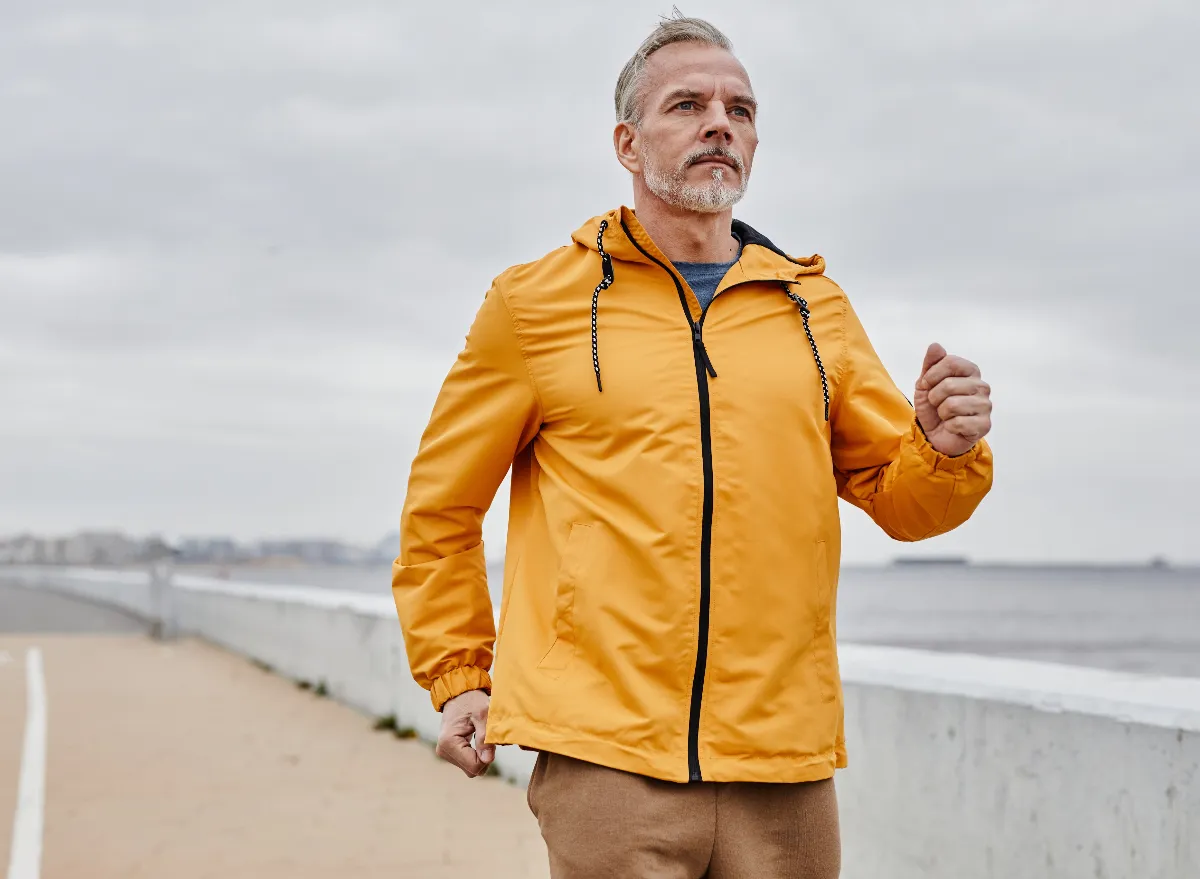
So just what is the best exercise for shedding extra pounds? According to Mentus, it’s power walking. “Power walking can be done almost anywhere, no equipment is required, and all you need is a good pair of walking shoes,” says Mentus. “Plus, walking is low-impact and creates little wear and tear on the body, meaning you can recover quickly and go for a long walk daily. This repeatability means you’ll burn more calories over the course of a week than tougher, more intense workouts that you can only do for short periods and need to take a rest day from.”
Not only is power walking a highly versatile exercise for weight loss, but it requires no special equipment and is a low-impact activity that minimizes stress on your body while torching calories.
How does power walking support weight management?
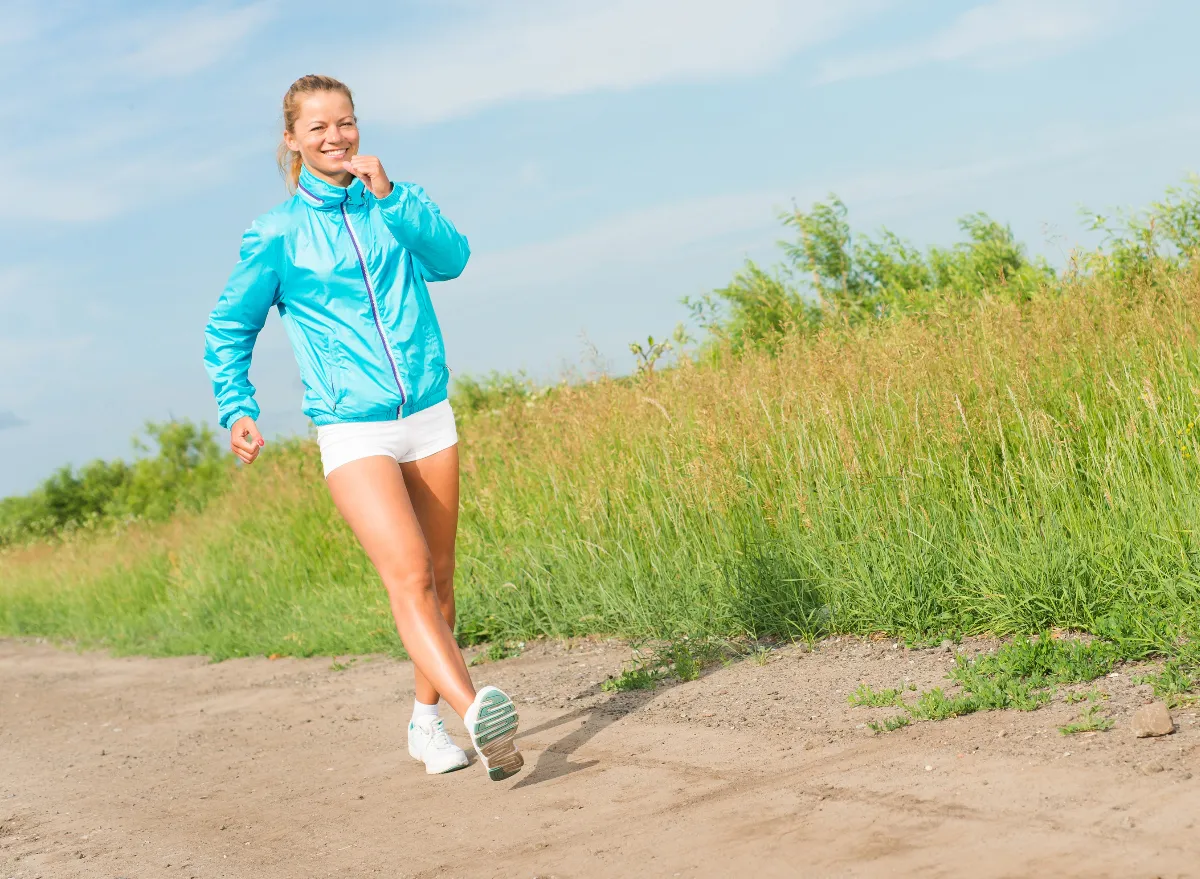
While the total number of calories burned while walking may be less than that of a higher-intensity workout, power walking provides a more sustainable approach to weight management without putting excess strain on your joints and muscles. Plus, there’s plenty of research out there that links walking to weight loss.
“Walking puts your heart rate in a zone where fat is the main energy source,” Mentus explains. “This means that most calories burned from a walk will be from fat. So the overall calories may be less than a boot camp-style workout, but instead of burning carbs, your body will willingly burn fat.”
How much power walking should you do for weight loss?
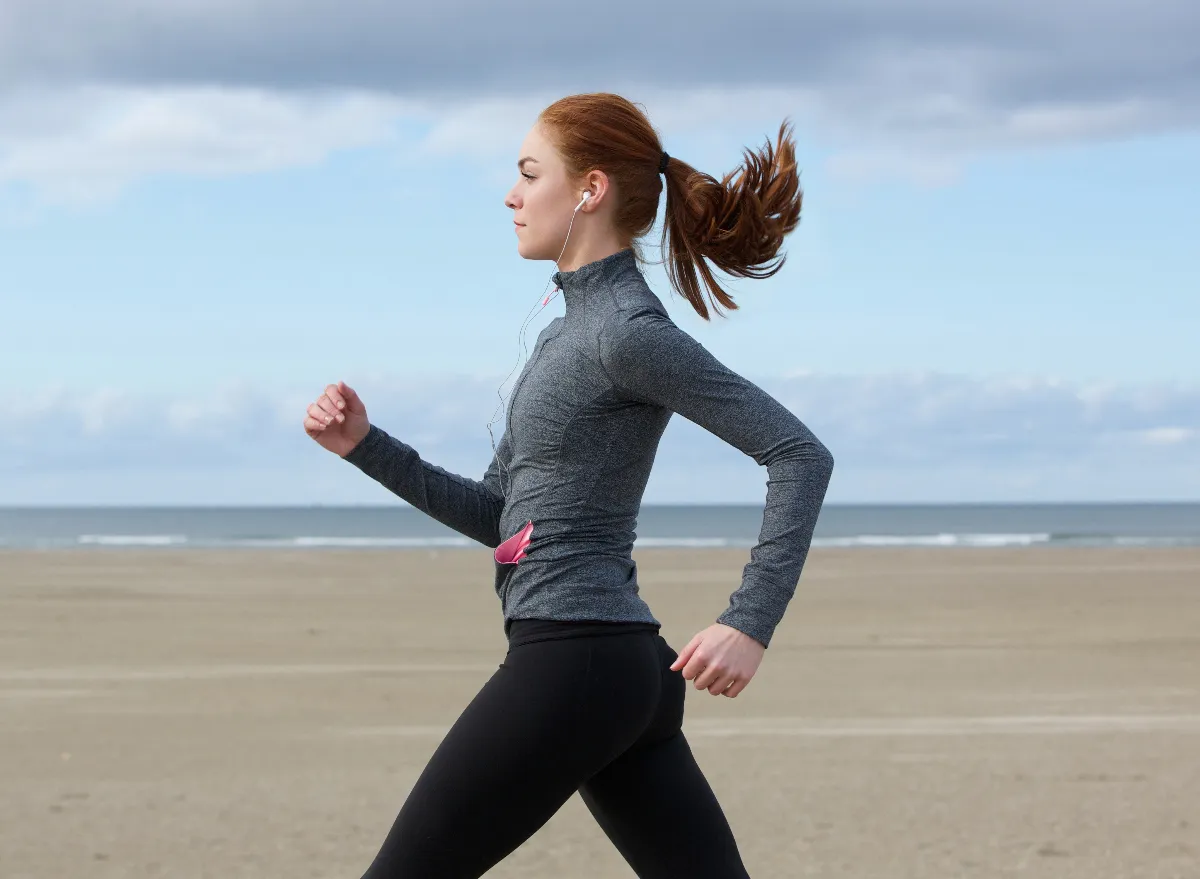
“Go for at least a 30-minute walk daily,” suggests Mentus. “However, if you’re committed to losing weight, I suggest doing two 30-minute walks, one in the morning and one in the afternoon or evening. If 30 minutes seems too long, start with a 10-minute walk and try to go multiple times a day until you can comfortably walk for 30 minutes without stopping.”
Starting with shorter, more frequent walks can help you gradually improve your endurance until you can walk for 30 minutes uninterrupted. That being said, be sure to talk to your doctor or healthcare provider before starting any new exercise routine.
Try this power walking workout for weight loss.
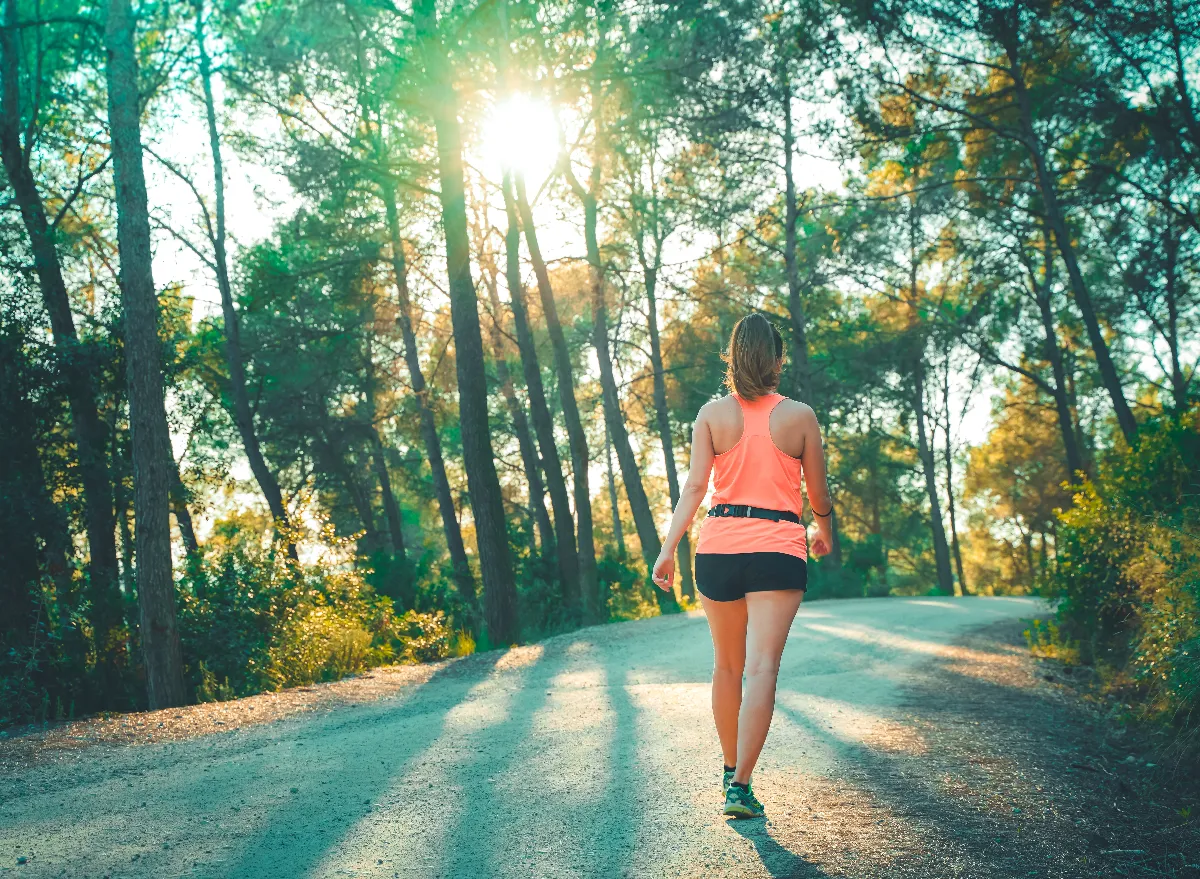
For an effective power walking workout aimed at weight loss, Mentus recommends starting with a brisk warm-up for five minutes. Follow this with 20 minutes of power walking at a pace that keeps your heart rate elevated. Finish with a five-minute cooldown, and gradually reduce your pace. Feel free to add some hills or inclined to your walk to increase the intensity and incinerate more calories. Following this daily power walking routine will help you achieve your weight loss goals while boosting your cardiovascular health and fitness.

Sign up for our newsletter!
Adam Meyer



Fitness
Angela Rippon, 81, reveals the one exercise she never skips for strong legs: ‘I do it every morning without fail’

At 81, Angela Rippon is one of the UK’s most energetic and active broadcasters. A long-time advocate for movement, the former ballet dancer has often credited simple, consistent habits with helping her stay strong, mobile and independent as she gets older. And among her daily rituals is one surprisingly simple exercise she swears by: pliés.
‘I’ll do 20 pliés in the morning, because that’s really good for your balance, your knees, your posture, your core strength, for everything,’ she told Good Housekeeping. ‘Ballet is a wonderful thing for keeping your legs in good shape. It builds the right muscles in your calves and thigh. I go to class whenever I can. I’m a great advocate for dance being the best form of exercise for your mind and your body.’
Pliés are an easy move that require no equipment and Rippon’s 20 reps take less than a minute to do, yet experts agree that they can offer a host of benefits, from improving balance and posture to building lower-body strength and supporting healthy joints. As Women’s Health Fashion Editor and dance instructor Isabelle Knevett says, ‘Plies strengthen the legs, glutes and inner thighs simultaneously. They also require core activation in order to maintain an upright posture, which helps train your balance and stability.’
Research backs Rippon’s morning habit, too. A 2024 study found that a 10-week classical ballet programme improved lower-body strength and physical function in women over 50, suggesting ballet-inspired movements may help support mobility and independence as we age.
And Angela has one more non-negotiable within her morning routine: stretching. ‘I do it every day without fail. Even if I’m on a really tight schedule and in a very small hotel room. Think about a cat. A cat might sleep for five hours, but when they get up, they stretch absolutely everything. I feel that after I’ve been sleeping, that’s what I need to do to get everything moving again.’
As for its benefits for longevity, a recent study published in the Scandinavian Journal of Medicine & Science in Sports found that greater flexibility was associated with a lower risk of early death, while other research found that a 10-minute at-home stretching routine can counteract significant decreases in strength, flexibility and jumping performance caused by low physical activity levels. Consider us influenced.

One of our most frequently asked questions here at Women’s Health? How to build muscle and burn fat at the same time. So, we asked superstar trainer Oyinda Okunowo exactly how to do it. In this 4-week plan – created exclusively for Women’s Health COLLECTIVE members – you’ll get the workouts and nutrition guidance needed to help you on your way to better body composition. Tap the link below to unlock 14 days of free access to Oyinda’s plan and start training today.
GET THE PLAN
As Women’s Health UK’s fitness director and a qualified Pilates and yoga instructor, Bridie Wilkins has been passionately reporting on exercise, health and nutrition since the start of her decade-long career in journalism.
After earning a first-class degree in journalism and NCTJ accreditation, she secured her first role at Look Magazine, where she launched the magazine’s health and fitness column, Look Fit, before going on to become Health and Fitness writer at HELLO!
Since, she has written for Stylist, Glamour, Cosmopolitan, Marie Claire, Elle, The Metro, Runner’s World and Red. Today, she oversees all fitness content across Women’s Health online and in print, spearheading leading cross-platform franchises, such as ‘Fit At Any Age’, which showcases the women proving that age is no barrier to exercise.
She has also represented the brand on BBC Radio London, plus various podcasts and Substacks – all with the aim to encourage more women to exercise and show them how. Outside of work, find her trying the latest Pilates studio, testing her VO2 max for fun (TY, Oura), or posting workouts on Instagram.
Fitness
The ‘Greek God Method’ May be the Most Efficient Way to Build an Aesthetic Physique After 40

You probably already train hard in the gym, making sure you hit every muscle group with enough volume consistently. But building the muscles necessary for an aesthetic physique can take a more tailored approach.
According to coach Alain Gonzalez, the answer may not be training harder, but training smarter, especially for men over 40. In a recent video, Gonzalez broke down what he calls the ‘Greek God method’ – a training approach designed to build what’s often known as an X-frame physique. That means broad shoulders, a tapered waist and wide legs.
‘It’s the shape people are picturing when they think of the Greek god physique,’ says Gonzalez. ‘And the best part is you don’t have to build a ton of muscle to have it. You just need to know which muscles create it and how to build them.’
What Is the Greek God Method?
The Greek God Method focuses on developing the muscles that have the biggest visual impact. According to Gonzalez, many men assume a balanced training plan will naturally focus on these muscles, but that’s not always true. Functional training and standard splits certainly have their place, but Gonzalez’s method is more aesthetics-focused.
‘Most guys believe that if they just keep training hard, follow a proven split and stay disciplined, they’ll eventually develop a head-turning physique,’ he says. ‘But here’s the truth. Balanced training will never build the X-frame.’
The method prioritises three key areas: the lats, the outer quads and the mid delts. ‘We’re not talking about the biggest muscles in your body or the ones that move the most weight,’ says Gonzalez. ‘We’re talking about the ones that have the biggest visual impact on your physique because those are two very different things.’
What Are the Benefits for Men Over 40?
For men over 40, Gonzalez says the method works because recovery is not unlimited. ‘Your body has a limited capacity to recover from and adapt to training stress,’ he says. ‘And after 40, that capacity is even lower.’
By reducing non-priority work and filler exercises, and focusing on the lats, outer quads and mid delts, the method directs more effort towards the muscles that change how your physique looks. ‘The Greek God method changes that by concentrating your effort where it actually shows,’ he says.
How to Do the Greek God Method
To try the Greek God method, you don’t need to overhaul your entire training plan. The aim is to prioritise the muscles that create the biggest visual change, while keeping the rest of your body ticking over.
You can start by making these three areas your focus and including some of the suggested exercises:
Lats: pull-ups or lat pulldowns
Outer quads: leg extensions or quad-dominant lower-body work
Mid delts: dumbbell lateral raises, cable lateral raises or cable Y-raises
For each of these priority muscles, aim for 8-12 hard sets per week, split across at least two sessions. Gonzalez recommends training them before fatigue builds and performance drops. ‘Put them at the beginning of your workout when your energy is high,’ he says.
The sets should be challenging. Take each one to, or close to, failure, using a weight you can control properly. For most people, Gonzalez recommends staying in the 8–12 rep range, rather than including very high-rep burnout sets that may add more fatigue than benefit. ‘Stay in the 8–12 rep range where you’re recruiting those high-threshold motor units earlier in the set and the recovery costs are still low,’ he says.
Everything else should be reduced to maintenance volume. That means giving non-priority muscles around 2–3 sets per week, rather than trying to grow every muscle group at once. ‘That’s just enough to maintain what you’ve built while freeing up enough resources to grow your priority muscles more effectively,’ says Gonzalez.
You can apply this to most training splits. For example, if you follow a push-pull-legs split, train side delts and lats first on push and pull days, then start leg day with quad-focused work. If you follow an upper/lower split, train delts and lats first on upper days, and begin lower-body days with quad-dominant exercises.
Follow the method consistently for 12 weeks, keeping the focus on quality sets, progressive overload, adequate nutrition and recovery, and you should start to see changes in your physique that are worth the effort.
If there’s one thing Kori Sampson knows, it’s how to optimise your body composition for performance. To tap into his knowledge as an elite athlete and coach, we asked him to create a 4-week plan to help you move faster, recover quicker and keep pushing when the fatigue sets in – all while improving your muscle-to-fat ratio.
Ready to build muscle, burn fat and come out the other side looking, feeling and performing better? Click here to get 14 days of free access to the plan via the Men’s Health app.

Fitness
Busy mum Gemma Atkinson uses this exercise to build strong shoulders fast – here’s why it’s so time efficient

Gemma Atkinson is a busy woman. When she’s not parenting her two children, six-year-old Mia and two-year old Thiago, she’s busy hosting on Hits Radio or managing her health and beauty brand Gem & Tonic. So, when it comes to working out, choosing exercises that maximise both efficiency and results is essential.
To build shoulder muscle, there’s one move she swears by: the seated shoulder press. In a video she recently posted on Instagram, she demonstrated the move and wrote: ‘Like I said, shoulders like boulders. Last set needs some F bombs to get me through. Always!’ Speaking of the importance of keeping your legs still in order to strictly isolate your shoulder muscles to prevent “cheating”, she added: ‘P.S. Elliot my PT will be screaming down the phone for me to keep my legs still.’
The seated shoulder press is a no-brainer for time-poor women looking to build muscle in minimal time as it’s a compound movement, meaning it trains several major shoulder and upper-body muscles simultaneously while allowing you to use relatively heavy loads safely with minimal setup time or effort required. In practical terms, a few challenging sets of seated shoulder presses can provide the stimulus equivalent to doing several isolation exercises separately, such as front raises and lat raises.
Personal trainer and Men’s Health UK fitness writer Kate Neudecker says that performing the move seated makes it especially effective: ‘Sitting down reduces the demand on balance, stability and bracing, so you can put more effort into the muscles you’re actually trying to train. That often means you can lift with more control, use a heavier load, and create more mechanical tension through the shoulders and triceps, which is one of the key drivers of muscle growth. There can also be a tendency to bounce at the knees to increase momentum on the standing shoulder press; the seated press eliminates this.’
She adds that it targets the ‘deltoids, especially the front and side deltoids while also working the triceps as they extend the elbows. Depending on the bench angle, the upper chest can contribute too, while the upper traps and shoulders’ stabilising muscles help control the movement.’ Here’s how to do with proper form, plus how many reps and sets to do, and how to progress.
How to do the seated shoulder press
- Sit, with your shoulders against the bench, chest proud, head facing forward with a dumbbell in each hand. Bend the elbows at 90 degrees with the dumbbells at ear level and palms facing forward.
- Now straighten your arms and press the dumbbells towards the ceiling, then return to the start. Repeat.
How to work it into your workout
Neudecker advises: ‘Always tailor reps and sets to your own abilities and needs but for muscle growth, a good starting point is 3-4 sets of 8-12 reps using a load that leaves around 1-3 reps in reserve on most sets. Evidence indicates that a large range of reps and sets contribute to muscle growth but for good technique and results, that should be sufficient. Place it early in an upper body workout if shoulder strength or size is a priority, so that you can use max muscle power.’
When it comes to progressing, Neudecker says ‘You can add weight, add reps, increase sets or improve your control and range of motion over time to contribute to progressive overload. Because balance and coordination are less of a limiting factor, it can be easier to apply progressive overload directly to the shoulders.’

One of our most frequently asked questions here at Women’s Health? How to build muscle and burn fat at the same time. So, we asked superstar trainer Oyinda Okunowo exactly how to do it. In this 4-week plan – created exclusively for Women’s Health COLLECTIVE members – you’ll get the workouts and nutrition guidance needed to help you on your way to better body composition. Tap the link below to unlock 14 days of free access to Oyinda’s plan and start training today.
GET THE PLAN
As Women’s Health UK’s fitness director and a qualified Pilates and yoga instructor, Bridie Wilkins has been passionately reporting on exercise, health and nutrition since the start of her decade-long career in journalism.
After earning a first-class degree in journalism and NCTJ accreditation, she secured her first role at Look Magazine, where she launched the magazine’s health and fitness column, Look Fit, before going on to become Health and Fitness writer at HELLO!
Since, she has written for Stylist, Glamour, Cosmopolitan, Marie Claire, Elle, The Metro, Runner’s World and Red. Today, she oversees all fitness content across Women’s Health online and in print, spearheading leading cross-platform franchises, such as ‘Fit At Any Age’, which showcases the women proving that age is no barrier to exercise.
She has also represented the brand on BBC Radio London, plus various podcasts and Substacks – all with the aim to encourage more women to exercise and show them how. Outside of work, find her trying the latest Pilates studio, testing her VO2 max for fun (TY, Oura), or posting workouts on Instagram.
-
 San Diego, CA7 minutes ago
San Diego Unified leaders propose policy to limit technology in classrooms
-
 Milwaukee, WI10 minutes ago
Racine’s Greek community reflects on Giannis’ celebration of Greek culture
-
Atlanta, GA15 minutes ago
Report: Atlanta Falcons agree to terms with Kyle Pitts on contract extension
-

 Minneapolis, MN22 minutes ago
Mayor Frey outlines timeline for selecting next Minneapolis police chief
-

 Indianapolis, IN24 minutes ago
Rain & storms will return soon, hot & humid next week
-

 Pittsburg, PA30 minutes ago
Will Howard, Drew Allar Huge Winners of Steelers QB News
-

 Augusta, GA37 minutes ago
Richmond County school board member Walter H. Eubanks dies
-

 Washington, D.C40 minutes ago
First Nebraska civics bee champion crowned, will head to Washington, D.C. for national competition


