Movie Reviews
‘Hen’ movie review: György Pálfi pecks at Europe’s migrant crisis through the eyes of a chicken


A rogue chicken observes the world around it—and particularly the plight of immigrants in Greece—in Hen, which premiered at last year’s Toronto International Film Festival and is now playing in Prague cinemas (and with English subtitles at Kino Světozor and Edison Filmhub). This story of man through the eyes of an animal immediately recalls Robert Bresson’s Au Hasard Balthazar (and Jerzy Skolimowski’s more recent EO), but director and co-writer György Pálfi (Taxidermia) maintains a bitter, unsentimental approach that lands with unexpected force.
Hen opens with striking scenes inside an industrial poultry facility, where eggs are laid, processed, and shuttled along assembly lines of machinery and human hands in an almost mechanized rhythm of production. From this system emerges our protagonist: a black chick that immediately stands apart from the others, its entry into the world defined not by nature, but by an uncaring food industry.
The titular hen matures quickly within this environment before being loaded onto a truck with the others, presumably destined for slaughter. Because of her black plumage, she is singled out by the driver and rejected from the shipment, only to be told she will instead end up as soup in his wife’s kitchen. During a stop at a gas station, however, she escapes.
What follows is a journey through rural Greece by the sea, including an encounter with a fox, before she eventually finds refuge at a decaying roadside restaurant run by an older man (Yannis Kokiasmenos), his daughter (Maria Diakopanayotou), and her child. Discovered by the family’s dog Titan, she is placed in a coop alongside other chickens.
After finding a mate in the local rooster, she lays eggs that are regularly collected by the man; in one quietly unsettling scene, she watches him crack them open and cook them into an omelet. The hen repeatedly attempts to escape, as we slowly observe the true function of the property: it is being used as a transit point for migrants arriving in Greece by boat, facilitated by local criminal figures.
Like Au Hasard Balthazar and EO, Hen largely resists anthropomorphizing its animal protagonist. The hen behaves as a hen, and the humans treat her accordingly, creating a work that feels unusually grounded and almost documentary in texture. At the same time, Pálfi allows space for the audience to project meaning onto her journey, never fully closing the gap between instinct and interpretation.
There are moments, however, where the film deliberately leans into stylization. A playful montage set to Ravel’s Boléro captures her repeated escape attempts from the coop, while a romantic musical cue underscores her brief pairing with the rooster. These sequences do not break the realism so much as refract it, gently encouraging us to read emotion into behavior that remains, on the surface, purely animal.
One of the film’s central narrative threads is the hen’s search for a safe space to lay her eggs without them being taken away by the restaurant owner. This deceptively simple instinct becomes a powerful thematic mirror for the film’s human subplot involving migrant trafficking. Pálfi draws a stark, often uncomfortable parallel between the treatment of animals as commodities and the treatment of displaced people as disposable bodies moving through a similar system of exploitation.
The film takes an increasingly bleak turn toward its climax as the migrant storyline comes fully into focus, sharpening its allegorical intent. The juxtaposition of animal and human vulnerability becomes more explicit, reinforcing the film’s central critique of systemic indifference and violence. While effective, this escalation feels unusually dark, and our protagonist’s unknowing role feels particularly cruel.
The use of animal actors in Hen is remarkable throughout. The hen—played by eight trained chickens—is seamlessly integrated into the film’s world, with seamless editing (by Réka Lemhényi) and staging so precise that at times it feels almost impossible without digital augmentation. While subtle effects work must assist at certain moments, the result is convincing throughout, including standout sequences involving a fox and a dog.
Zoltán Dévényi and Giorgos Karvelas’ cinematography is also impressive, capturing both the intimacy of the hen’s low vantage point and the broader Greek landscape with striking clarity. The camera’s proximity to the animal world gives the film a distinct visual grammar, grounding its allegory in tactile observation rather than abstraction.
Hen is a challenging but often deeply affecting allegory that extends the tradition of animal-centered cinema while pushing it into harsher political territory. Pálfi’s approach—unsentimental, patient, and often confrontational—ensures the film lingers long after its final images. It is not an easy watch, nor a comfortable one, but it is a strikingly original piece of filmmaking that uses its unusual perspective to cast familiar human horrors in a stark, unsettling new light.


Earnest, preachy and melodramatic to a fault, “Mississippi Scholar” is exactly the sort of movie that the independent cinema was born to create.
Director and co-writer Marcus Bleecker’s film may traffic in tropes and cliches. But it has a vivid sense of place and a clear notion of the message it wants to send, and that message’s relevence.
Set in an unnamed small Mississippi city — it was filmed in Baldwyn, Saltillo and Fulton — the film is “a mind is a terrible thing to waste” in cinematic form. Our “Scholar” was born into a world of substance abuse, the racist legal traps of the country’s remaining marijuana laws and has a baby-mama-in-waiting and a drunken parent whom our teen hero is responsible for as his burdens.
But he has a world of promise that one dedicated teacher, his dead father (whom he still converses with) and even he himself can see if he can just “stay focused” and keep his eyes on this very personal prize — college and a better life beyond Ole Miss.
Shannon Brown is James, a kid with great grades and an ill-tempered mother (Gisla Stringer) who crawled into the bottle a long time ago and has no interest in crawling out.
But he’s got an ad hoc support system helping him through his senior year. His aunt (GiGi Marie Gaines) feeds him and keeps him advised of his mother’s latest tumbles. His dead dad (co-writer Obba Babatundé) passes on wisdom about his mother in fortune cookie-sized bites when father and son chat — at the cemetary or elsewhere.
“Hurt people hurt people.”
His English teacher, Mr. Keating (Sonny Marinelli) has high hopes for him, hopes he’s willing to nag the kid to achieve — “It takes only five seconds to get in trouble, and 25 years to get out of it!”
His school principal (Lance E. Nichols) expects greatness, but has learned to never get his hopes up over any Black boy at his integrated high school.
Even Ray-Ray (Jeremy Isaiah Earl), the ex-con drug dealer, takes a brotherly interest in the kid who is his “best distributor.” That money is what keeps a roof over James’ and his mother’s heads, and pays for his Jordans.
His white boy bestie (Dominic Arvielo) may act “Black,” but will he have James’ back when things get real?
And girlfriend Tammy (Aysa Branch) may be far and away the prettiest girl in school. But she’s taking the easy route, relying on her looks to achieve the limited goals the script sketches out for her.
“We’re gonna have ourselves a baby as soon as we graduate!”
Bleecker’s film covers all of the bases, all of the tropes and most of the cliches as James faces Big Choices with perils to his plan at every turn. Maybe taking him to visit the football-mad University of Mississippi isn’t the deal-maker his teacher hopes it is, as James doesn’t “see anybody who looks like me.”
Only a real civil rights hero (Dr. Donald Cole) can set him straight, relating the story of what James Meredith and generations before him did to give James this chance. Or can he?
“Mississippi Scholar” is well-crafted and an easy film to like, with relatable if “stock” characters and decent performances from all but the most amateurish (James’ classmates) cast members. But it’s entirely too predictable to surprise and too pre-digested to have an edge.
Worthy subject and novel setting aside, we’ve seen this story on the big screen and the small one too many times to count, seen this kid’s hand played out in every variation the cards have to offer.
But it makes a fine calling card for its cinematographer turned director, and let’s hope we see Bleecker’s name and hear his voice in another Deep South indie film, and soon.

Rating: TV-14, violence, profanity
Cast: Shannon Brown, Gisla Stringer, Sonny Marinelli, Jeremy Isiaah Earl, Aysa Branch and
Obba Babatundé
Credits: Directed by Marcus Bleecker, scripted by
Obba Babatundé, Marcus Bleecker and P.J. Leonard. A Narrative Distribution release on Amazon Prime.
Running time: 1:24


By ABBIE BERNSTEIN / Staff Writer
Posted: July 11th, 2026 / 10:07 PM
EVIL DEAD BURN movie poster | ©2026 New Line Cinemas / Screen Gems
Rating: R
Stars: Soheila Yacoub, Tandi Wright, Hunter Doohan, Luciane Buchanan, Errol Shand, Maude Davey, George Pullar, Greta van den Brink
Writers: Sébastien Vaniček & Florent Bernard, based on characters created by Sam Raimi
Director: Sébastien Vaniček
Distributor: New Line Cinema/Screen Gems
Release Date: July 12, 2026
The first THE EVIL DEAD was released in 1982, launching the careers of (among others) filmmaker Sam Raimi and actor Bruce Campbell. The film had two direct sequels, 1987’s EVIL DEAD II and 1992’s ARMY OF DARKNESS, both also directed by Raimi and starring Campbell. A three-season TV series, ASH VS EVIL DEAD (2015-2018), executive-produced by Raimi and again starring Campbell, continued the narrative.
The franchise was resurrected for the big screen with a quasi-remake, 2013’s EVIL DEAD, followed by 2023’s EVIL DEAD RISE, and now EVIL DEAD BURN. The latter three have Raimi and Campbell among the producers, but not as immediate creative participants.
The Raimi-directed EVIL DEAD movies centered on Campbell’s Ash, who found himself battling relentless Deadites (think chatty, sadistic rotting undead) summoned by the (fictional) forbidden text THE NECRONOMICON (originally invented by writer H.P. Lovecraft in the 1920s for his Cthulhu Mythos). The Deadites delight in transforming luckless humans into, well, the evil dead.
The first three films and the TV series were splat-stick comedy, with jokes cheek and jowl with the gore.
The subsequent films have flashes of humor, but they are much more focused on straight horror, as well as family drama.
This is absolutely the case with EVIL DEAD BURN, written by Sébastien Vaniček & Florent Bernard and directed by Vaniček.
Here, the family at the center of events is on the verge of imploding, even without demonic intervention.
EVIL DEAD BURN is tangentially related to EVIL DEAD RISE, insofar as the earlier film’s wraparound deposited Deadite Jessica (Anna-Maree Thomas) in a lake. At the start of BURN, two unfortunate fishermen snag a Deadite played by Greta van den Brink, who was Thomas’s stunt double on RISE, so this may be the same character.
Meanwhile, Joseph (Hunter Doohan) is in a dusty upstairs room, curiously perusing clippings, writings, reel-to-reel tape recordings and more amassed by his grandfather. We’ll learn that Grandpa is considered the family flake because he declined to spend time with his wife and daughters in favor of traveling the world investigating the occult.
A recording Joseph’s grandfather left behind conveniently provides us with what we (and Joseph) need in terms of exposition. This includes a bit about the Kandarian dagger, which the Deadites want to obtain and destroy, as it’s the only item that can permanently kill them. Grandad has left it somewhere on the premises.
It’s Joseph’s birthday, and there’s a celebration for him at the party club owned by his older brother Will (George Pullar) and Will’s French wife Alice (Soheila Yacoub). Joseph’s supportive girlfriend Thya (Luciane Buchanan) tries to mediate as Will first condescends to his little brother, then gets into an aggressive fight with Alice.
The argument spills into the club parking lot, where we see further evidence of Will’s controlling, contemptuous and violent personality before he gets into his car and drives away at top speed.
Meanwhile, our lake Deadite has taken to the road, where she easily causes Will to crash. The car erupts in flames.
At the sparse funeral held at a crematorium, Alice is wearing running shoes, to the great displeasure of her grieving in-laws Susan (Tandi Wright) and Edgar (Errol Shand). Susan’s elderly mother Polly (Maude Davey) is in a wheelchair and keeps confusing Susan with Susan’s deceased sibling Bonnie.
Susan and Edgar generally resent Alice and blame her for Will’s death. They also disapprove of Joseph, who they view as a slacker. He hasn’t done a good job of maintaining the isolated two-story family home he’s been given by his parents, and Susan takes a very dim view of Joseph’s investigation into his grandfather’s interests.
So, this is a toxic setup even before Edgar decides he must take one last look at Will in his coffin before the cremation. Then everybody heads back – Edgar is infected, but not “showing” yet – to the house.
From here, EVIL DEAD BURN goes pretty much where we anticipate, and where the subgenre demands, with almost nonstop violence, excellent practical effects, lots of gore, and admirable acting of that encompasses unhappiness, terror, and taunting Deadite glee.
Director Vaniček makes sure to incorporate some of the EVIL DEAD touchstones, including the racing low-to-the-ground shots (using one for a nice in-joke), chainsaws, and some catchphrases. At the same time, there are plenty of new set pieces and types of physical altercations.
With no forcing at all, EVIL DEAD BURN serves as a solid metaphor for both spousal abuse and what happens when parents turn a willful blind eye to the nature of a favored child, to the detriment of everyone and everything in the vicinity.
For those who care about these things (does this really even count as a spoiler?), the dog dies, albeit there’s at least a plot logistics reason here.
There are a couple inconsistencies, like why some people become infected so fast while others take much more time and still others seem immune. Mostly, though, EVIL DEAD BURN does what it’s supposed to do as a horror movie overall and as part of its specific lineage.
Related: Movie Review: CORPORATE RETREAT
Related: Movie Review: TIME OF DEATH
Related: Movie Review: CHAPTER 51
Related: Movie Review: MINIONS & MONSTERS
Related: Movie Review: LOCKBOX
Related: Movie Review: SUPERGIRL
Related: Movie Review: THE GET OUT
Related: Movie Review: CAMP
Related: Movie Review: LEVITICUS
Related: Movie Review: DISCLOSURE DAY
Related: Movie Review: KRAKEN
Related: Movie Review: FIND YOUR FRIENDS
Related: Movie Review: CHUM
Related: Movie Review: CAROLINA CAROLINE
Related: Movie Review: THE SUMMONING
Related: Movie Review: BACKROOMS
Related: Movie Review: SPEED DEMON
Related: Movie Review: PRESSURE
Related: Movie Review: PASSENGER
Related: Movie Review: I LOVE BOOSTERS
Related: TV Review: GREAT PERFORMANCES: STAGEBOUND
Related: Movie Review: OBSESSION
Related: Movie Review: LIFEHACK
Related: Movie Review: IS GOD IS
Related: Movie Review: AFFECTION
Related: Movie Review: ITCH!
Related: Movie Review: HOKUM
Related: Movie Review: ANIMAL FARM
Related: Movie Review: OVER YOUR DEAD BODY
Related: Movie Review: LEE CRONIN’S THE MUMMY
Related: Movie Review: HAPPY HALLOWEEN
Related: Movie Review: NORMAL
Related: Movie Review: FACES OF DEATH
Related: Movie Review: EXIT 8
Related: Movie Review: READY OR NOT 2: HERE I COME
Follow us on Twitter at ASSIGNMENT X
Like us on Facebook at ASSIGNMENT X
Article Source: Assignment X
Article: Movie Review: EVIL DEAD BURN
Related
Related Posts:

Unanswered//Butterfly is far from the first anime to be released as a video game extra—in this case the Echoes of Aincrad Ultimate Edition. However, rather than an extra episode or OVA, Unanswered//Butterfly is a full on feature film that clocks in at just under two hours in length.
At its core, Unanswered//Butterfly has a fantastic hook. The heretical-seeming idea of series hero Kirito massacring people in the early days of Sword Art Online is more than enough to get any fan invested. Moreover, the idea of having the story be told not from the viewpoint of Kirito but of two new characters—a pair out for revenge on the Black Swordsman—is likewise compelling. Unfortunately, the application of these ideas is a mixed bag at best.
On the positive side of things, Rex, the first of our characters out to kill Kirito, is an interesting character from top to bottom. Due to an error with how the NerveGear interacts with his brain, he is unable to attack—leaving him only able to use a shield for defence. This weakness weighs upon him—as does having to rely on Emirun, a 14-year-old that he tutored in the real world. He is serious and goal oriented—which clashes with Emirun’s immature and flighty personality. He also has more than a few layers of hidden depths that completely change how we view his character over the course of the film—making him the movie’s stand-out character.
Emirun, on the other hand, is completely unsuited for her role in the plot—i.e., as a young woman driven to get revenge on a man by killing him. Her flighty and impulsive nature are taken to insane extremes. In the span of just a few minutes, she goes from depressed and angry at the murder of her friends during their funeral, to throwing a childish tantrum in response to another players provocations. This is followed immediately by her enjoyably chowing down on food and fangirling out at a concert. Over the course of the film, her constantly jumping from one emotional extreme to another is exhausting at best, annoying at worst. And while her bouncing back easily is a main facet of her character—and one acknowledged by the plot—she is so rarely focused on revenge that it makes her main goal seem secondary.
Her personality also gives the film an uneven tone. While fun and silly things do happen in Sword Art Online, at this point in the story, things are relatively dire. The survivors are still figuring out the best way to clear floors, people continue to die in sizable numbers, and PKers have begun their murder sprees. But Emirun often treats Sword Art Online like the game it was supposed to be rather than the life-or-death struggle it actually is. The film itself plays along with this—with the music and direction emphasizing the fun to the point that I can’t help but wonder if this aspect of the movie is supposed to be a kind of commercial for the attached game.
As for the main pair of Sword Art Online heroes, Asuna plays the role of Emirun and Rex’s mentor—training them in the more advanced aspects of the game. However, little does she know that the person they are out to kill is Kirito. And, at the same time, she herself is hunting Kirito, trying to understand why the person she has gotten to know more than any other has become a murderer.
Meanwhile, the Kirito we catch glimpses of is not himself. He is always on edge, eyes wildly looking at those he meets as the orange criminal icon hovers above his head. It serves as a scarlet letter of sorts, leaving him isolated from society as other players flee from him while the system itself prevents him from entering towns. Viewing him from the outside, he’s legitimately intimidating and the mystery of his sudden fall keeps the film engaging throughout.
The other issue with the film is a visual one. Now, to be clear, this is not a dig at the animation team. While it’s odd at first glance that this film was done by Polygon Pictures rather than Sword Art Online‘s usual studio A-1 Pictures, the 3DCG animation fits this VR world well and the fight scenes range from adequate to absolutely awesome.
The actual problem comes in the form of the characters. Emirun’s character design (along with the Echoes of Aincrad characters) clashes with those of the returning and background characters. The two tone nature of her hair, the flower accessories she wears, and even the colors of her armor do not match the established visual aesthetic for the early days of Sword Art Online. It breaks the immersion of the world in an odd way as she clearly doesn’t seem to belong there.
On the music side of things, the general soundtrack is passable and the insert song, “Reach for the Rainbow” by Iori (Kato LEIA) and LaLa (Rina), is good enough to sell the idol characters as such.
All in all, I like what Unanswered//Butterfly i trying to do more than what it actually does. Emirun is so out of place both visually and in personality that it undercuts the story the film is attempting to tell. On the other hand, Rex is an interesting character to add into the chaos of Sword Art Online and the entire mystery surrounding Kirito’s murderous turn keeps viewer investment in the plot high—especially if you’re a long time fan.
And while I feel this film is certainly worth watching to anyone who loves Sword Art Online, the fact that the bar to entry is $110—a full $40 above buying the Echoes of Aincrad game on its own—feels ludicrous. If you have the money to burn—and you’re super interested in both the game and this film—then by all means, go for it. If not… well, maybe Crunchyroll or some other streaming service will get the rights to it sometime in the future.
-
 Lifestyle44 minutes ago
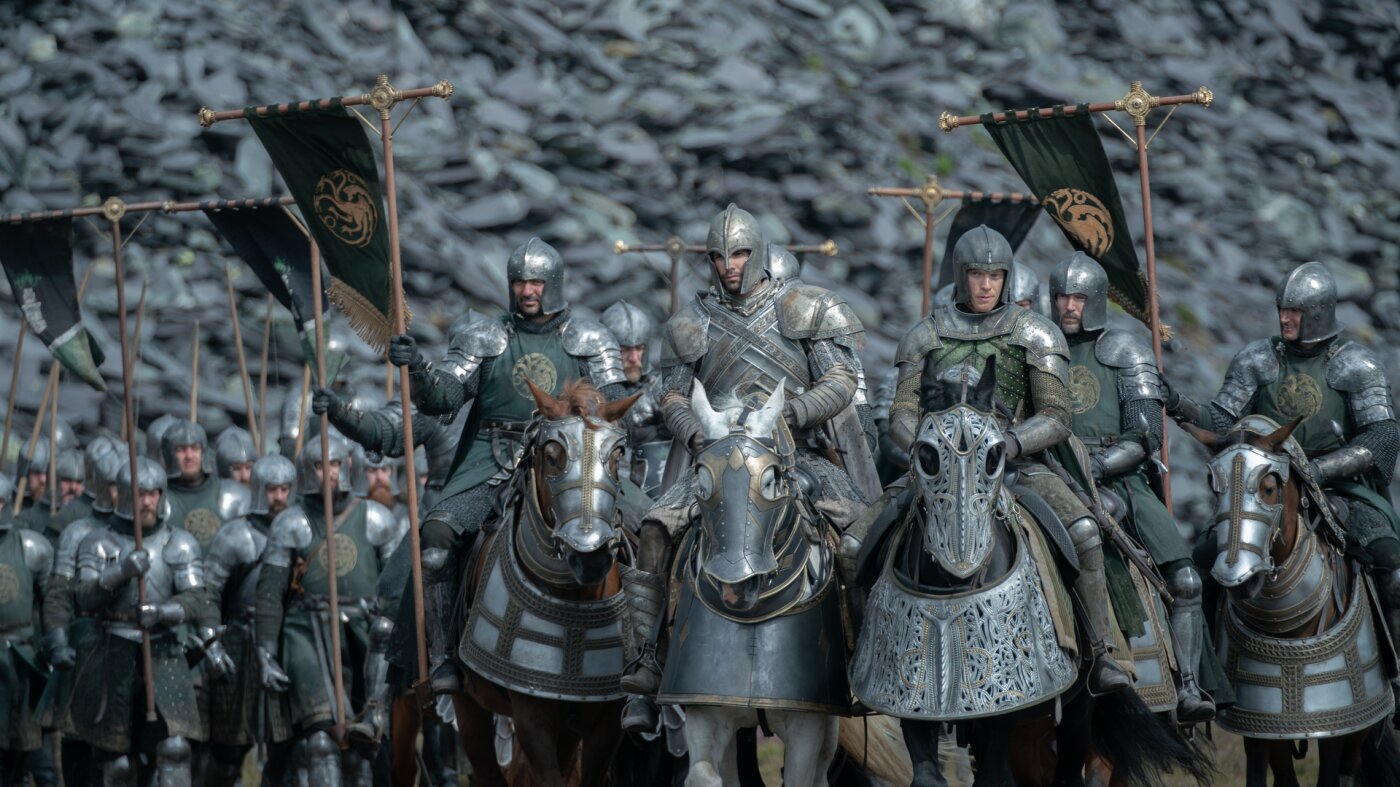
‘House of the Dragon,’ Season 3, Episode 4: “Now we begin?” It’s Season 3!
-

 Technology56 minutes ago
Lorde says Ray-Ban Meta AI glasses are ‘not sexy’
-

 World1 hour ago
Four Americans caught in horrific Mexico highway pileup that killed at least 10
-

 Politics1 hour ago
Medical examiner releases preliminary findings in Lindsey Graham’s death as death certificate remains pending
-

 Health1 hour ago
Terminally ill man marries longtime love in hospital as final wish comes true
-

 Sports1 hour ago
Stefon Diggs, still seeking new NFL home, insists no team has a better No 2 receiver ‘than me’
-

 Technology1 hour ago
Google may use your photos and voice to train AI
-
 Business2 hours ago
‘Moana’ loses its way at the box office with a $43-million domestic opening

